

Leçons de Ténèbres
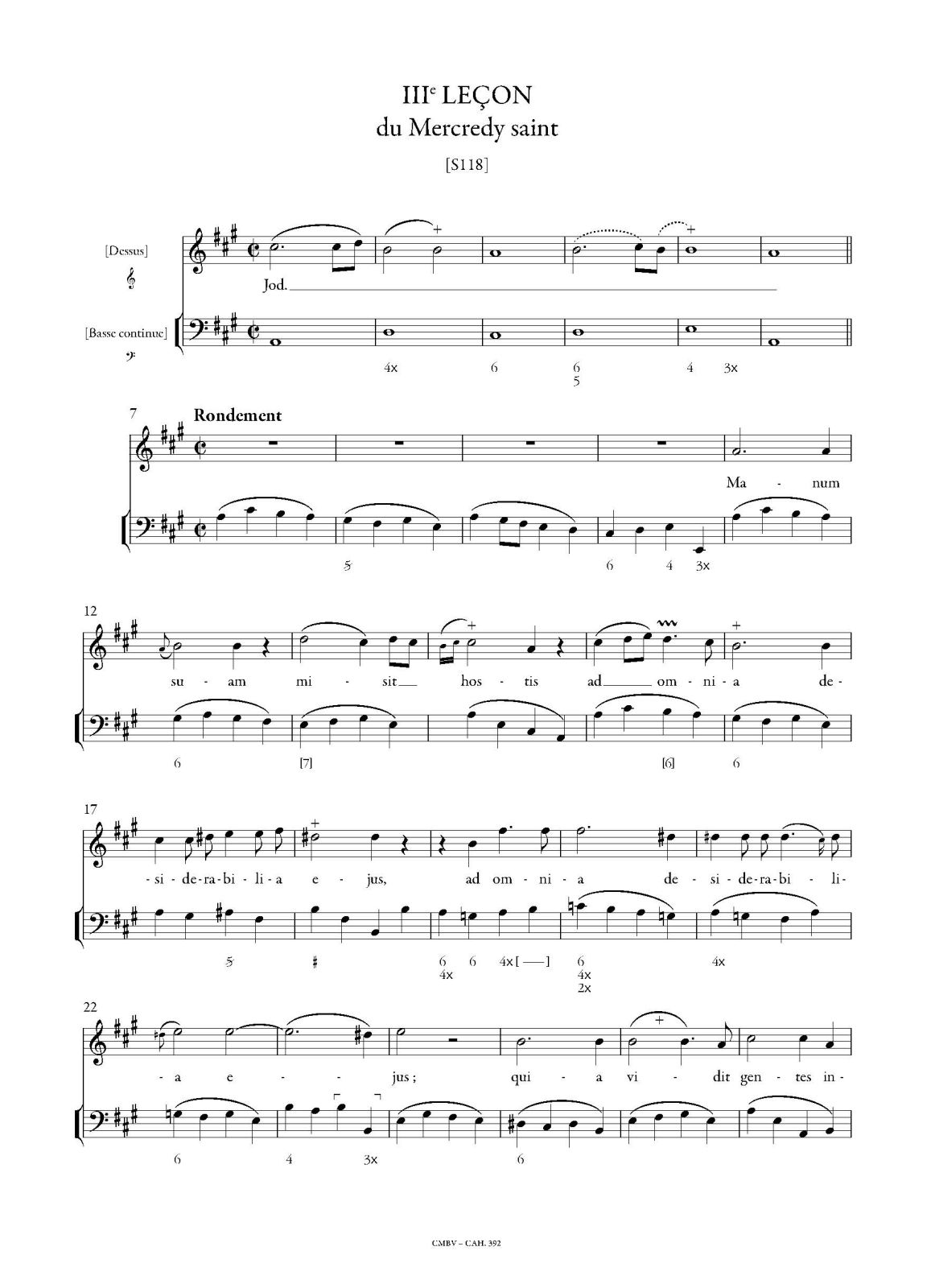


Published by the Centre de musique baroque de Versailles, Michel-Richard de Lalande’s three Leçons de Ténèbres form part of the Tenebrae service, the celebration of which enjoyed immense popularity with the public in Paris between the 1660s and 1735. The major congregations would call upon lay singers to enhance the splendour of an already elaborate liturgical event. The publication, for high voice and continuo, is also available in a version with a realisation of the continuo part. Both specialists and amateurs will be able to make these sublime works their own; they are emblematic of the ‘theatre of faith’ in the 18th century.
Charpentier, Couperin, Gilles, Lambert … To this long list of inspired Lessons – which, through their limited instrumentation, embody the sobriety and restraint befitting Holy Week – Michel-Richard de Lalande makes a truly remarkable contribution. He alternates between declamatory passages, akin to recitative, and more measured passages, often built on closed forms with repeats. He adds a palette of contrasting emotions by varying the tempo and character. To guide the listener, he uses recurring elements in the text or the music, such as the final call for the conversion of Jerusalem.
Of the complete cycle, only these three Leçons de Ténèbres by Lalande have survived; the fact that they were published four years after the composer’s death suggests that he revised them. Are these the ones that could be heard at the Sainte-Chapelle in Paris in 1680? Or were they the ones performed at the Dames de l’Assomption, sung by the Demoiselles Lalande before 1711? Thomas Leconte traces the history of these Lessons in a comprehensive preface, which also examines the composer’s system of ornamentation.
The Centre de musique baroque de Versailles also publishes a version with a realisation of the basso continuo, designed to make these masterpieces of French Baroque music more accessible to musicians of all levels.
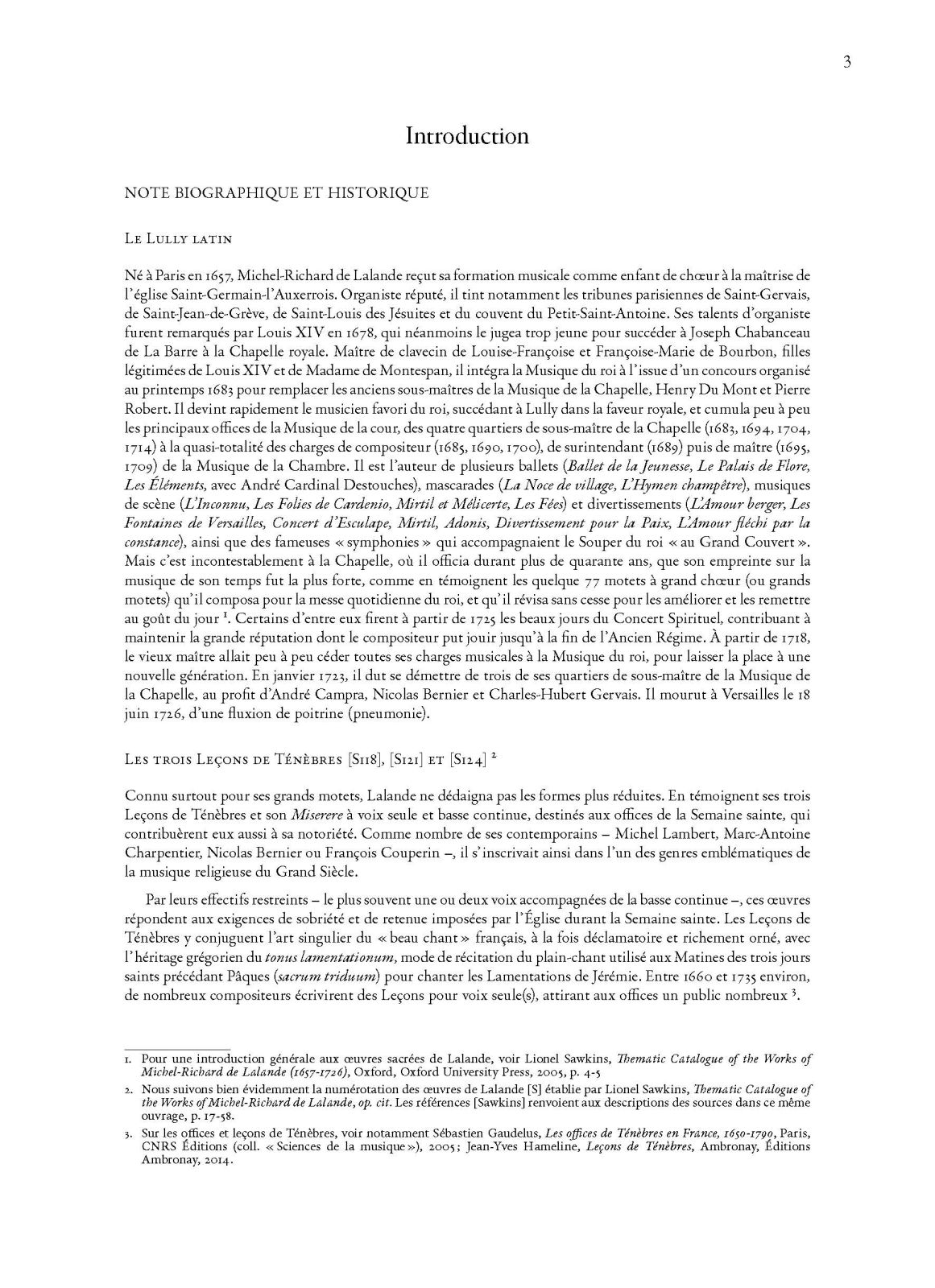
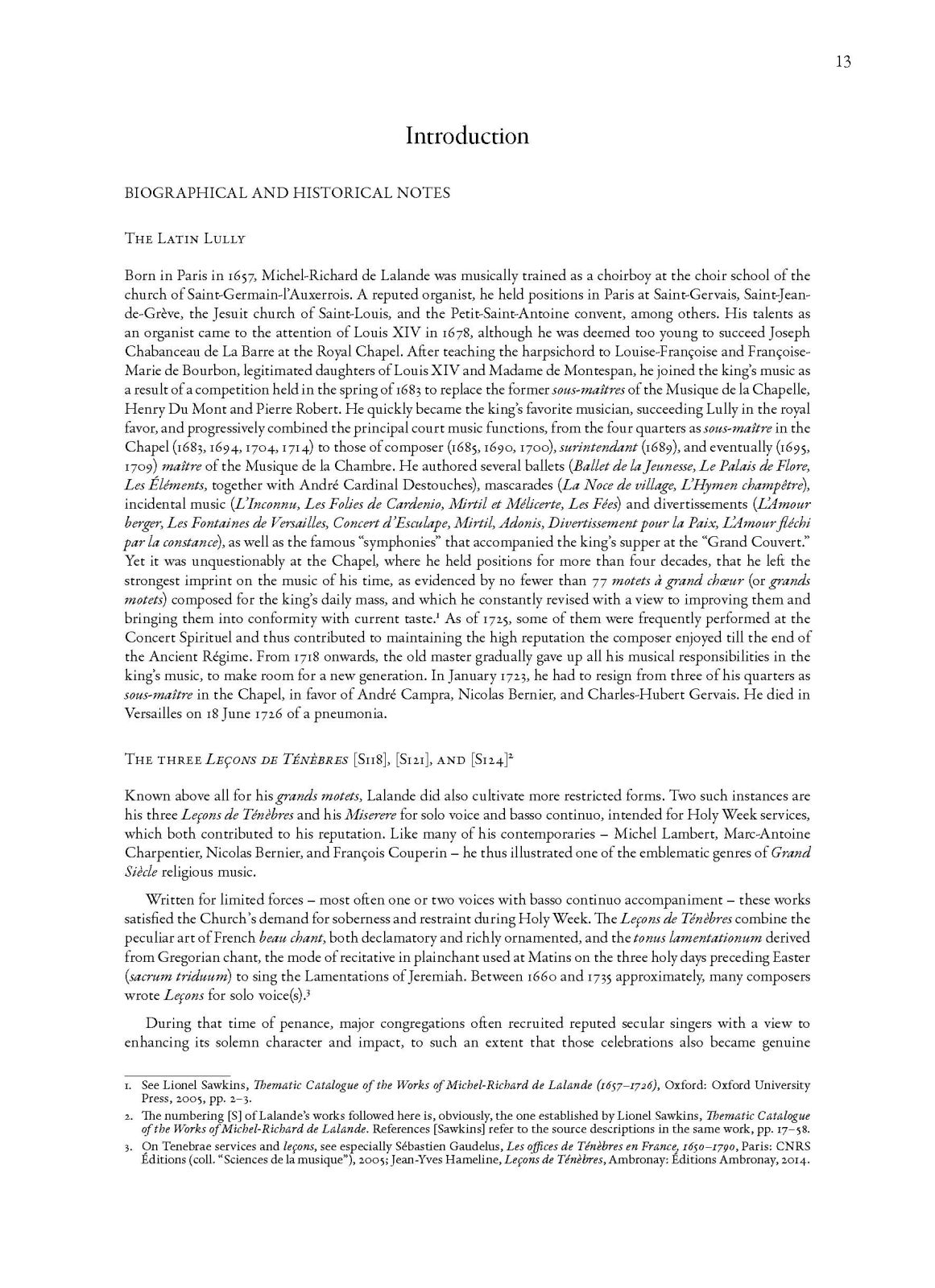
Born in Paris in 1657, Michel-Richard de Lalande (1657–1726) received his musical training at the choir school of Saint-Germain-l’Auxerrois. A renowned organist, he held several posts in Paris. As harpsichord master to Louis XIV’s legitimised daughters, he joined the Musique du roi in 1683. He gradually took on various posts within the court’s musical establishment, progressing from the four positions of sous-maître of the Chapelle to the three principal offices (superintendent, master and composer) of the Musique de la Chambre. He composed ballets, masquerades, stage music and court entertainments, as well as the famous Symphonies for the King’s suppers. It was at the Chapelle that his influence was felt most strongly. Of the 77 grand motets he composed, some of them were the highlight of the Concert Spirituel’s repertoire right up until the end of the Ancien Régime.


