

Issé
Pastorale héroïque premiered 14 October 1708 at the Académie royale de musique, Paris
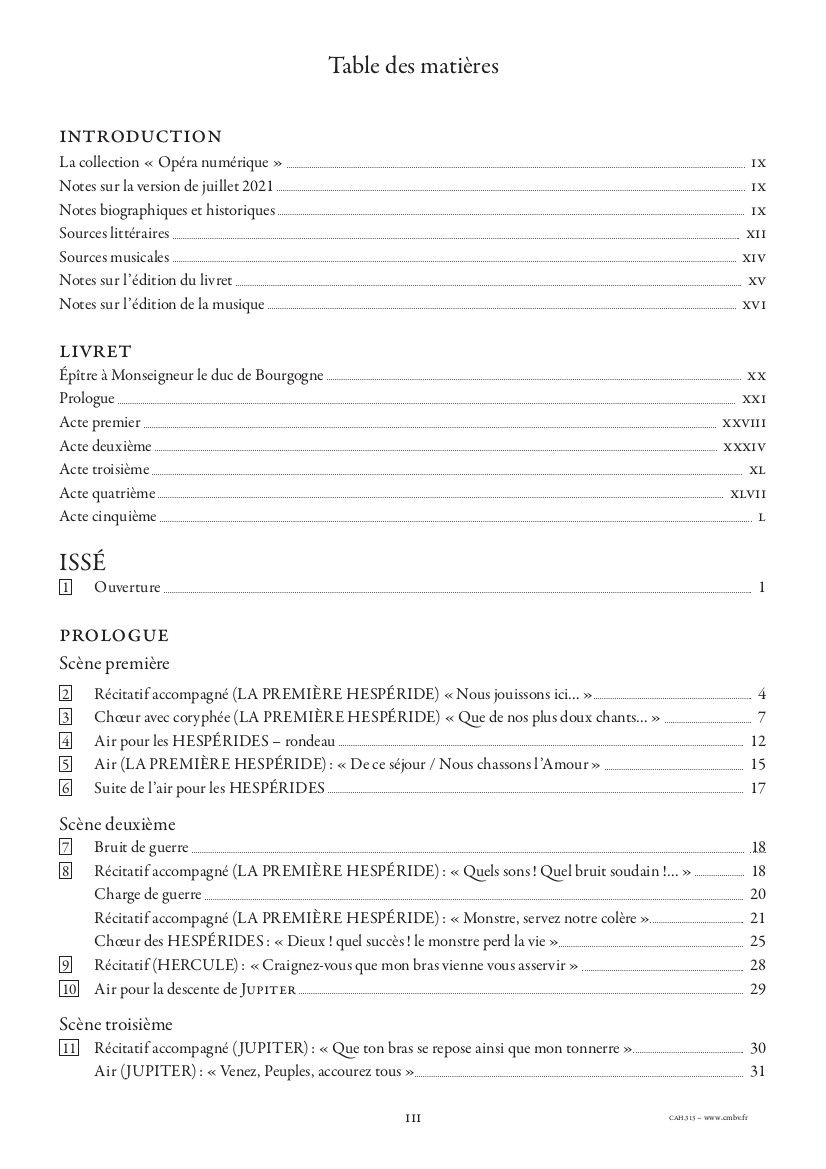
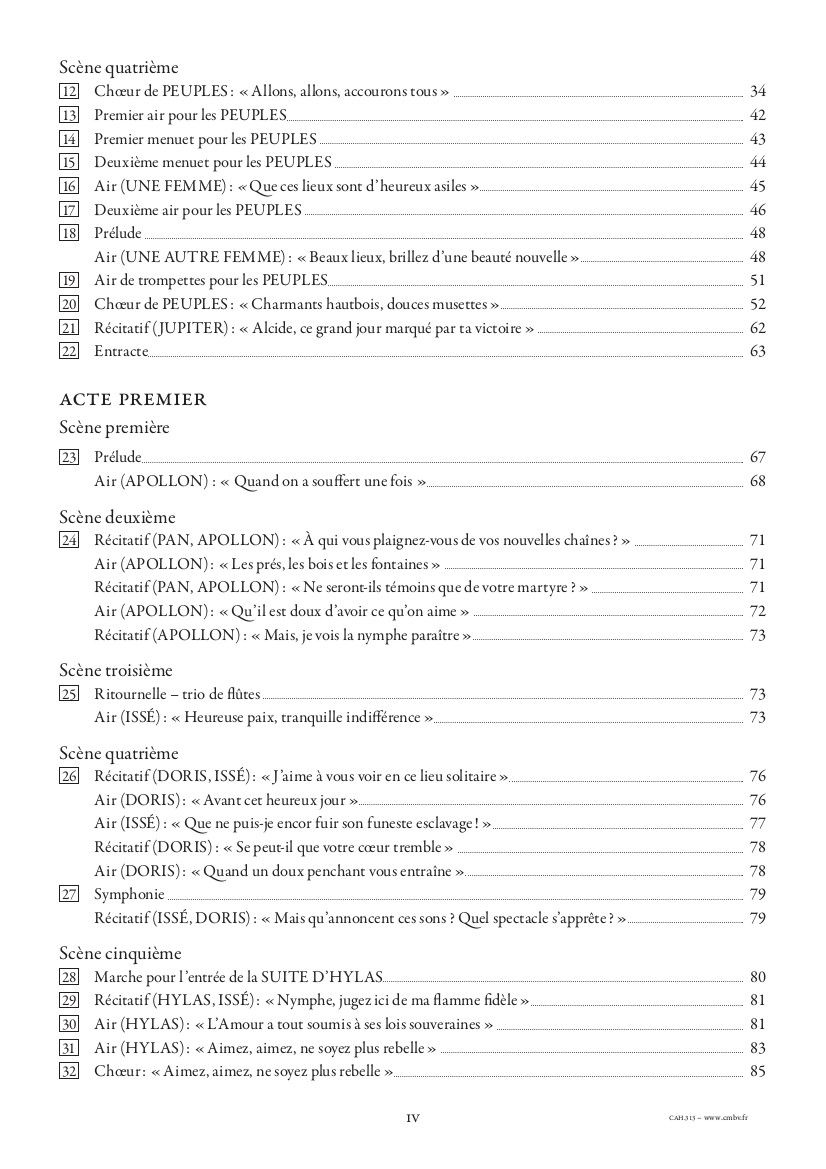
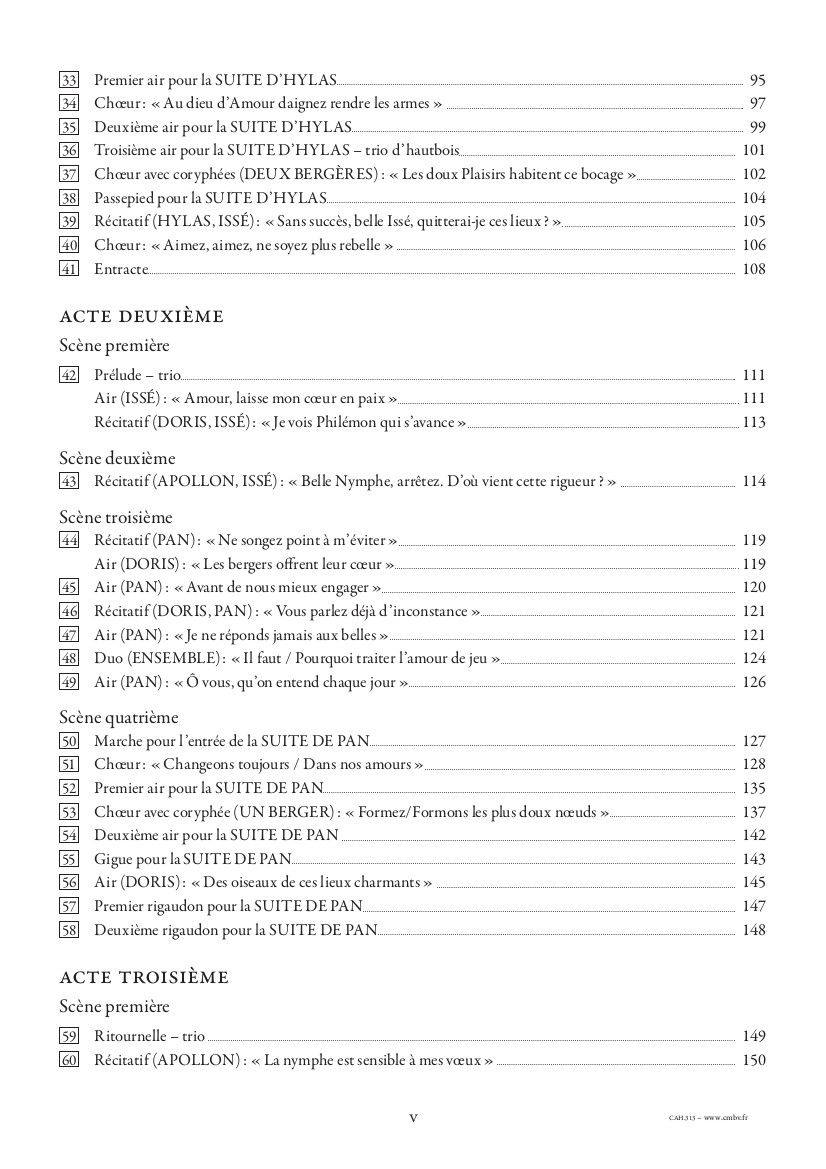
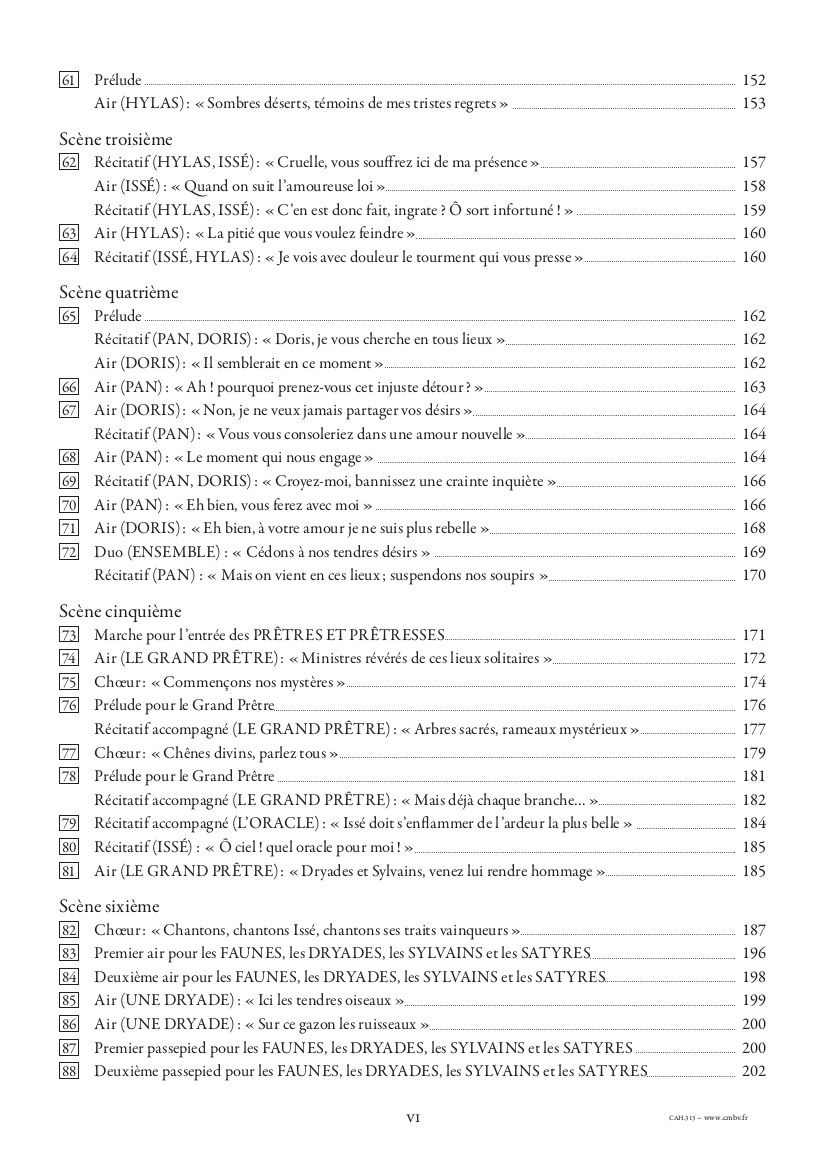
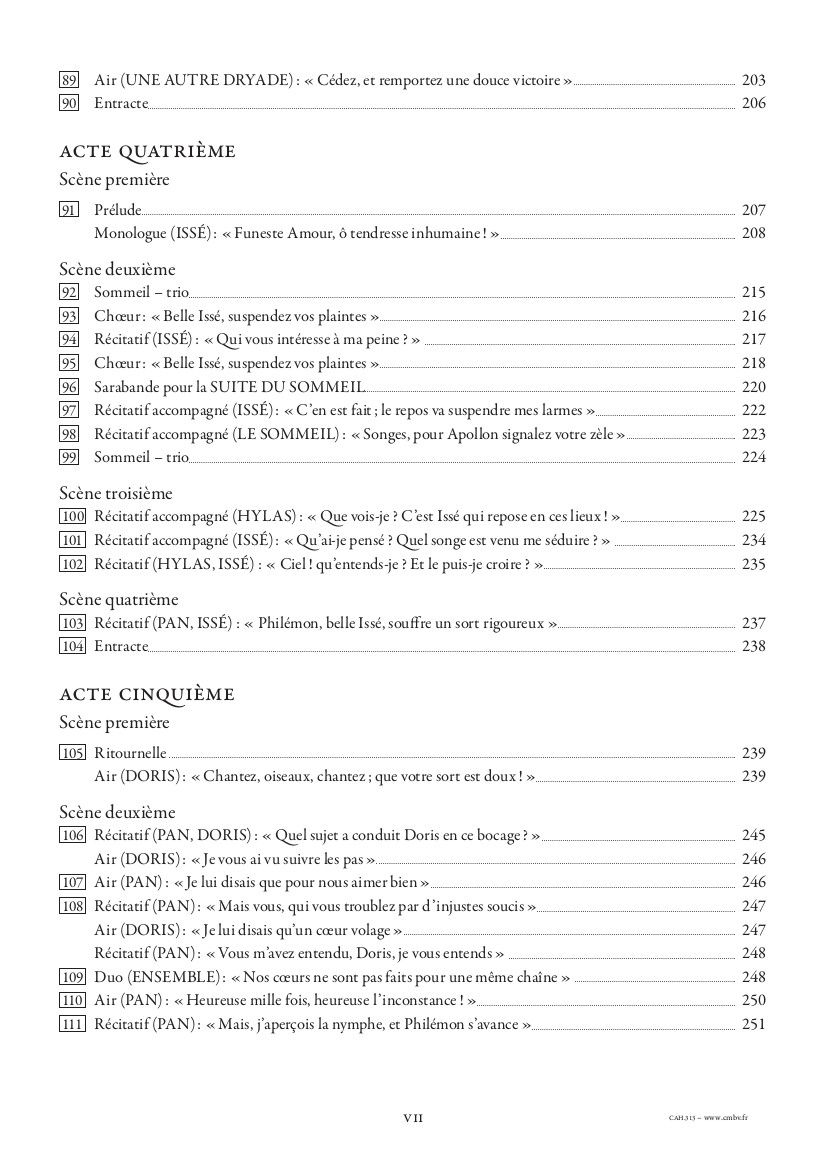
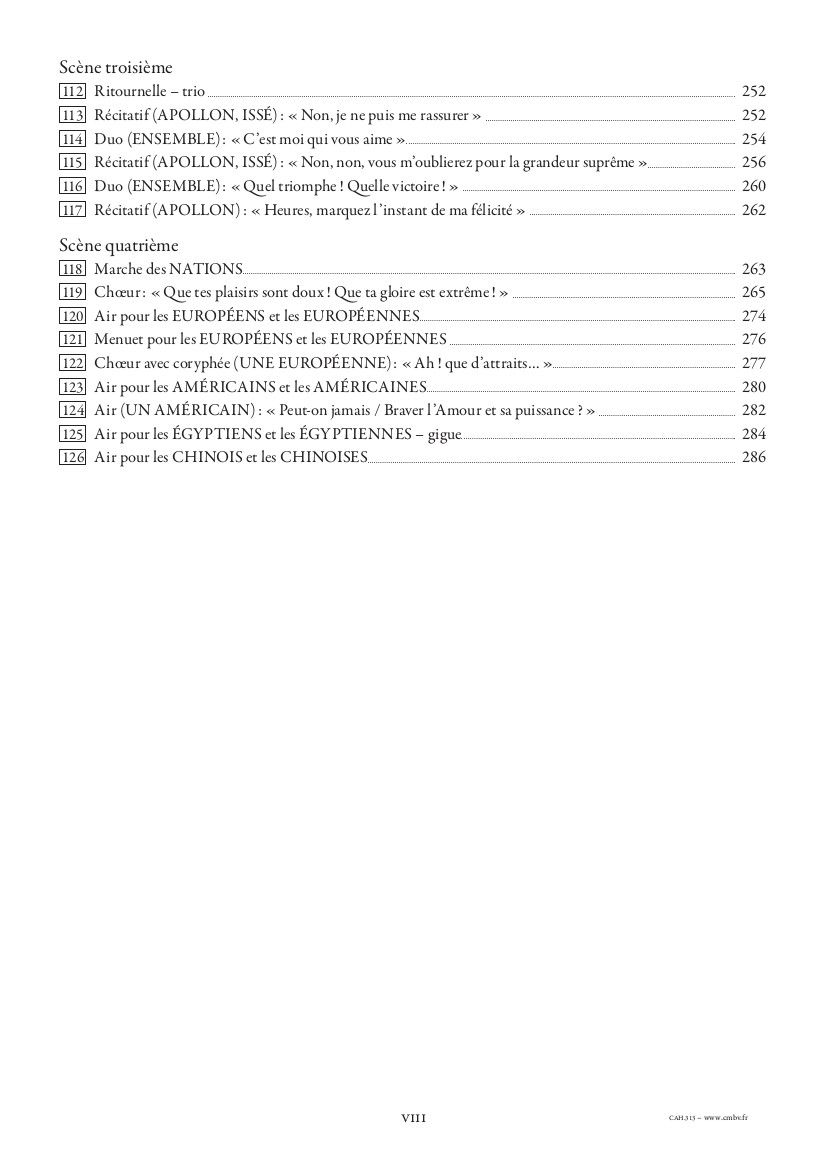
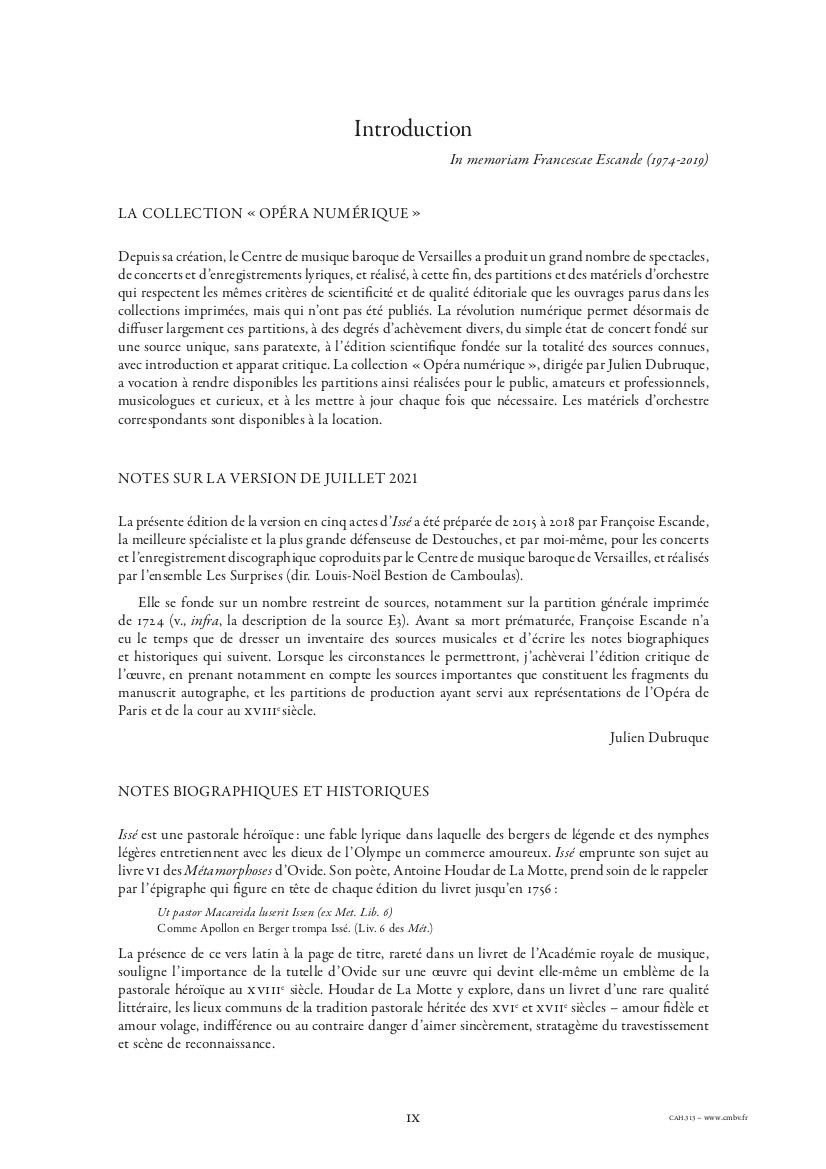
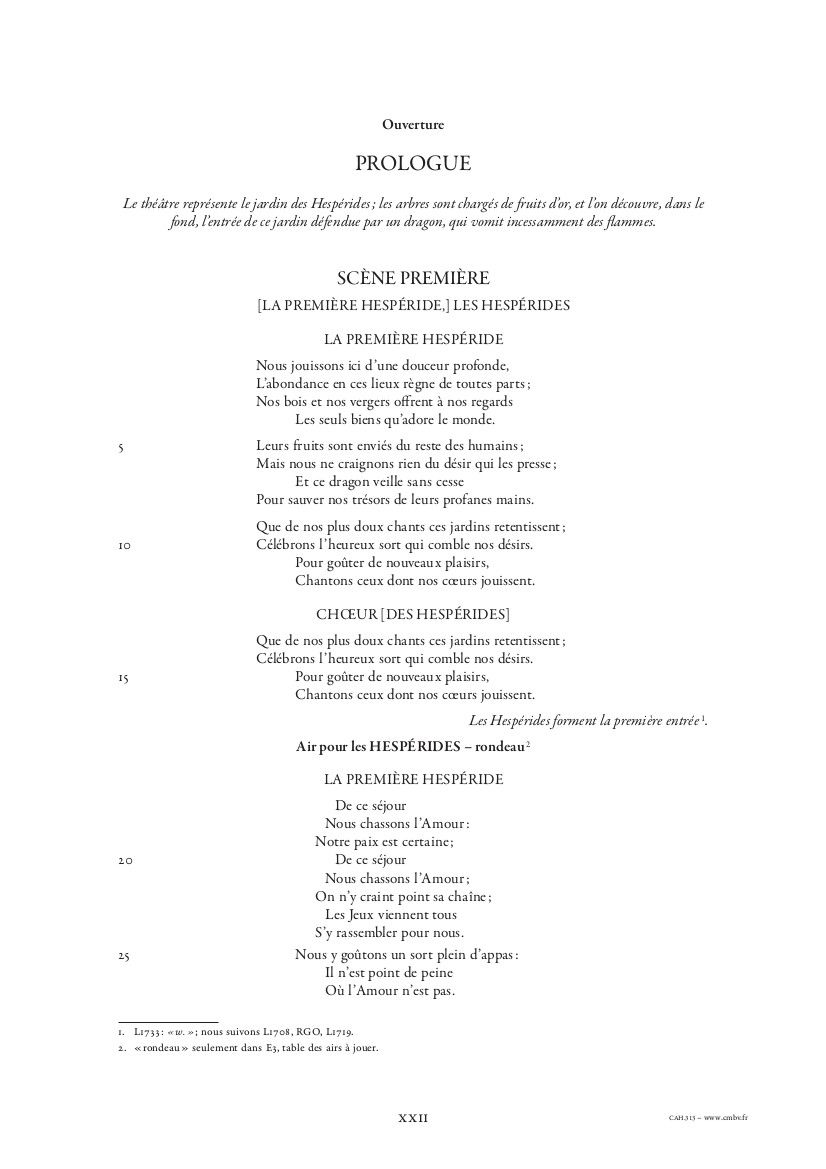
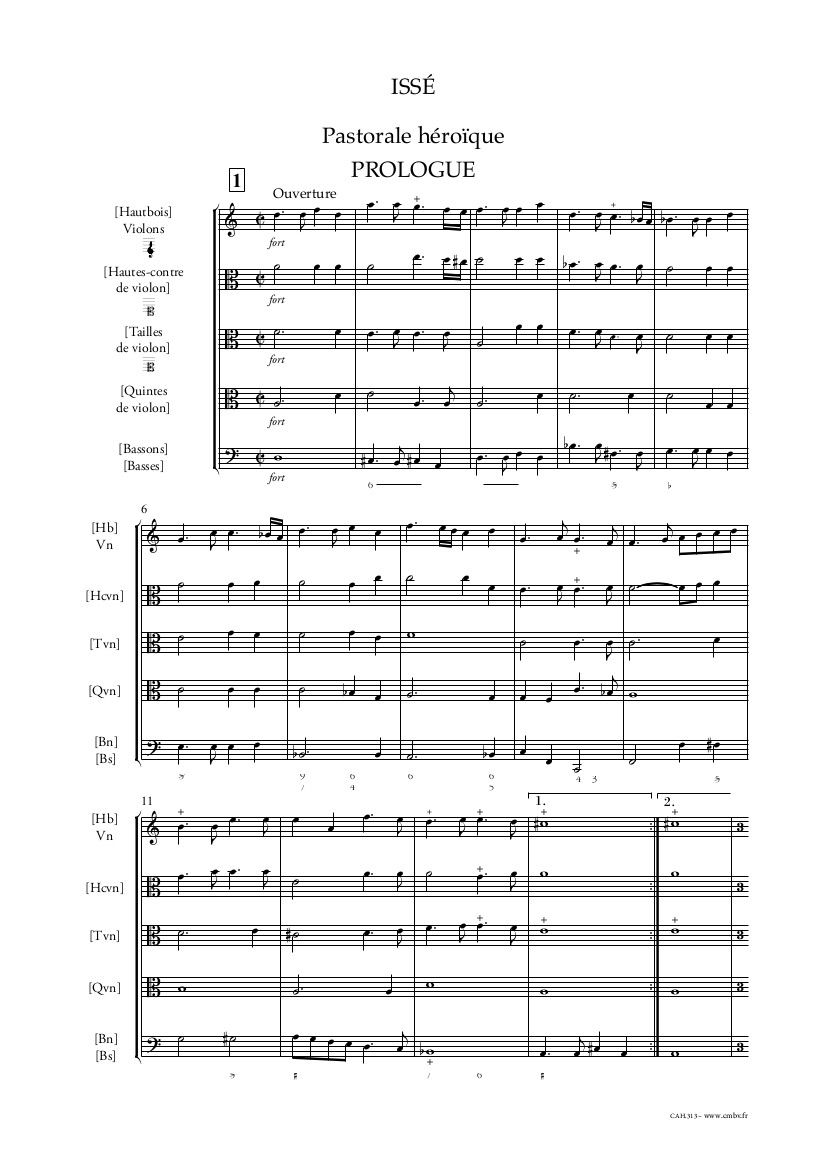
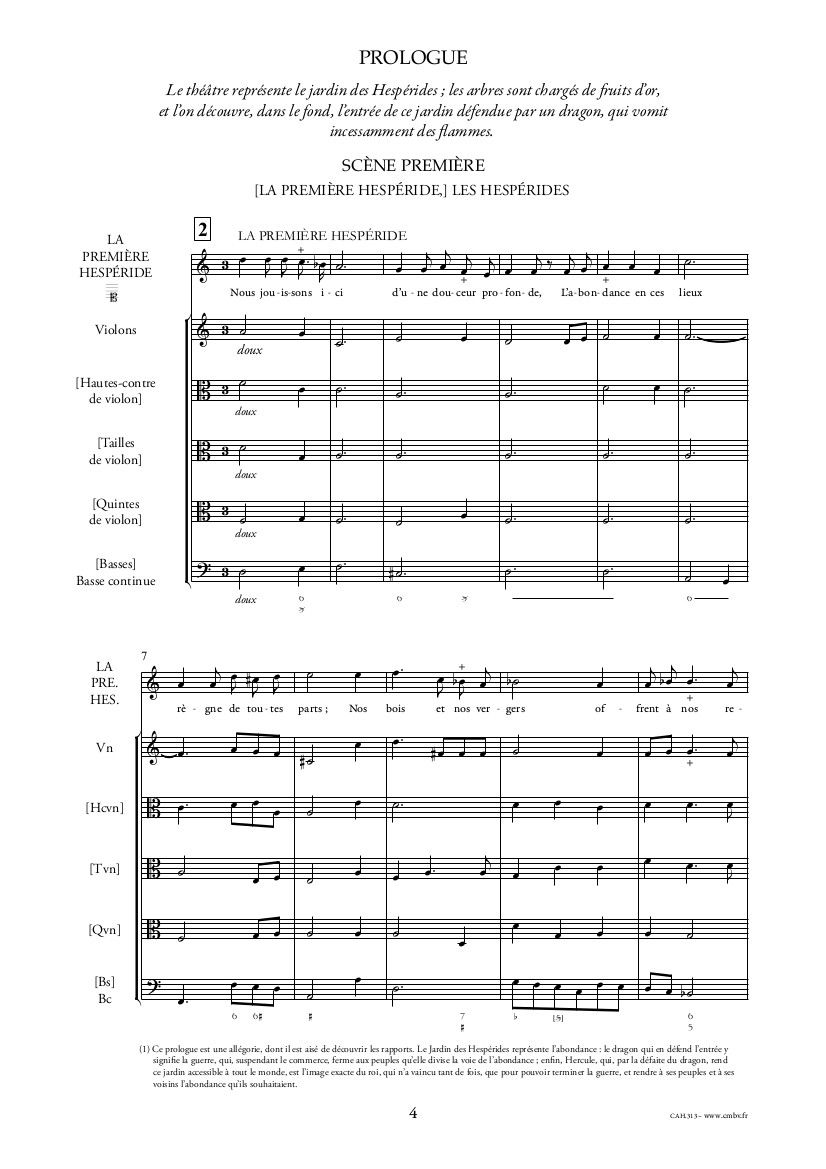
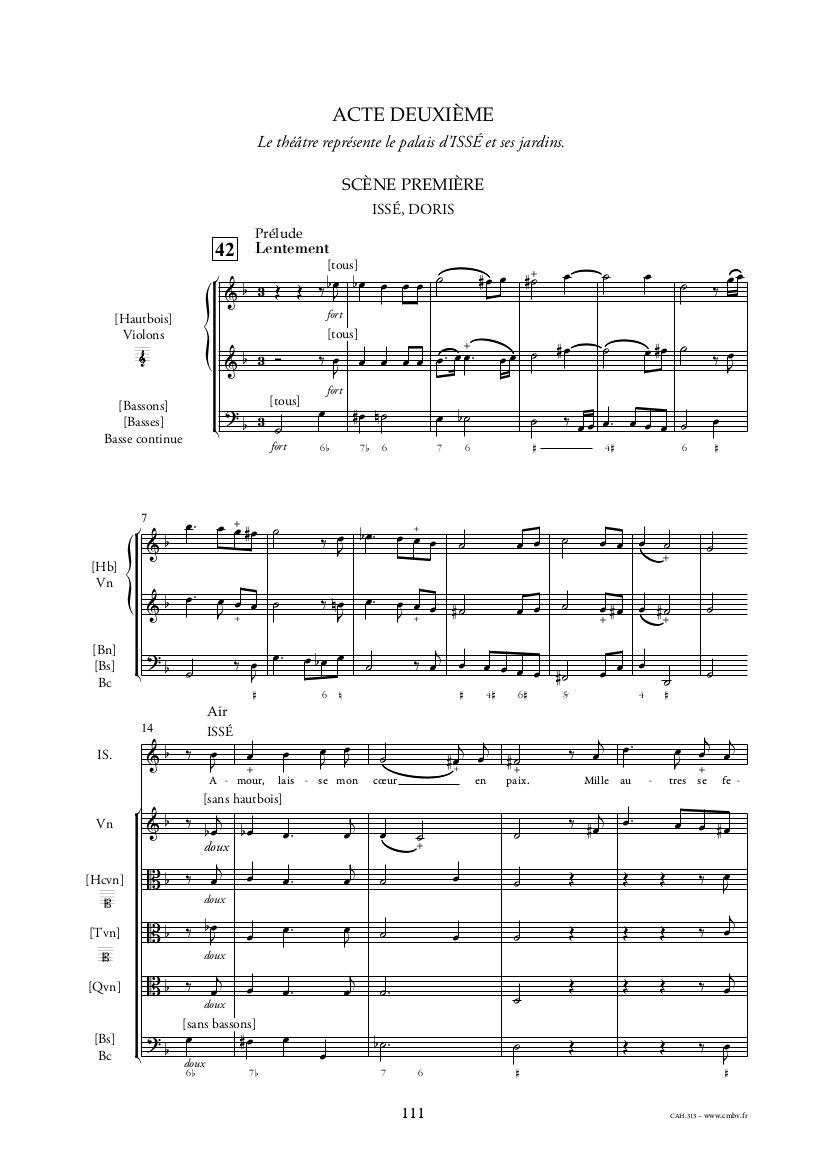
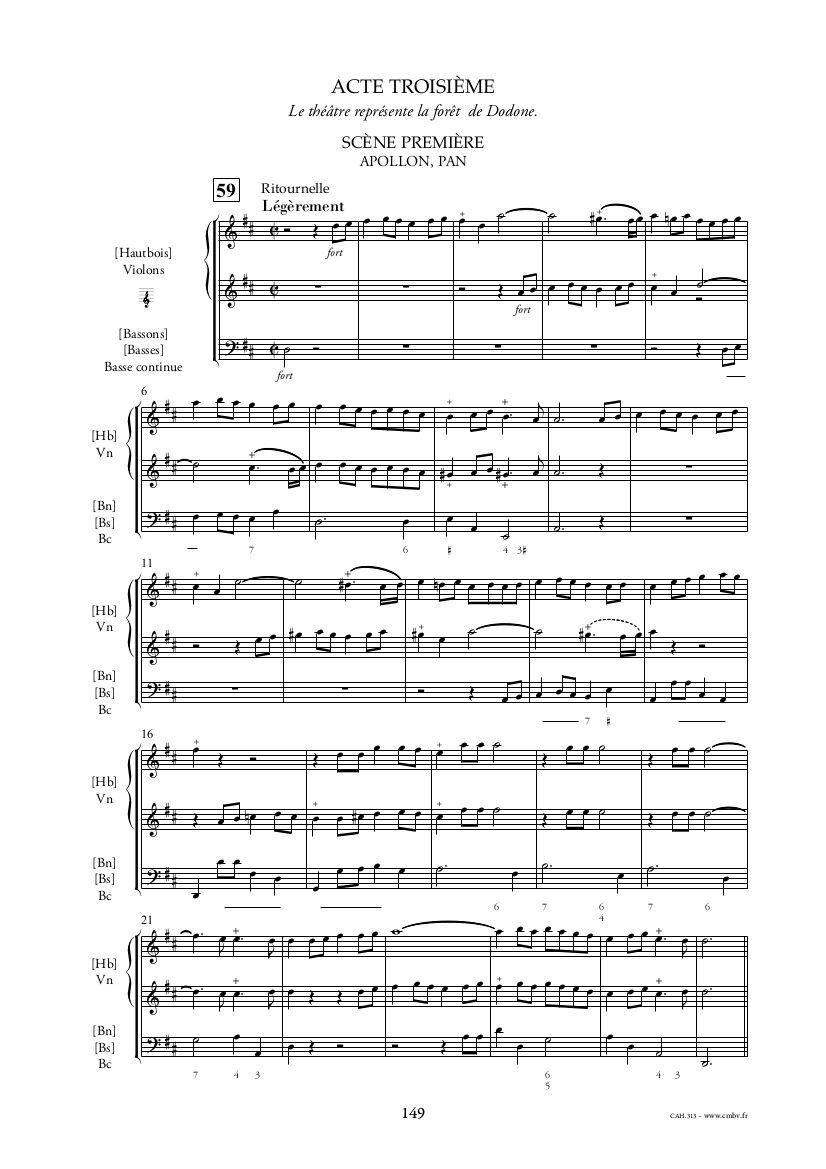
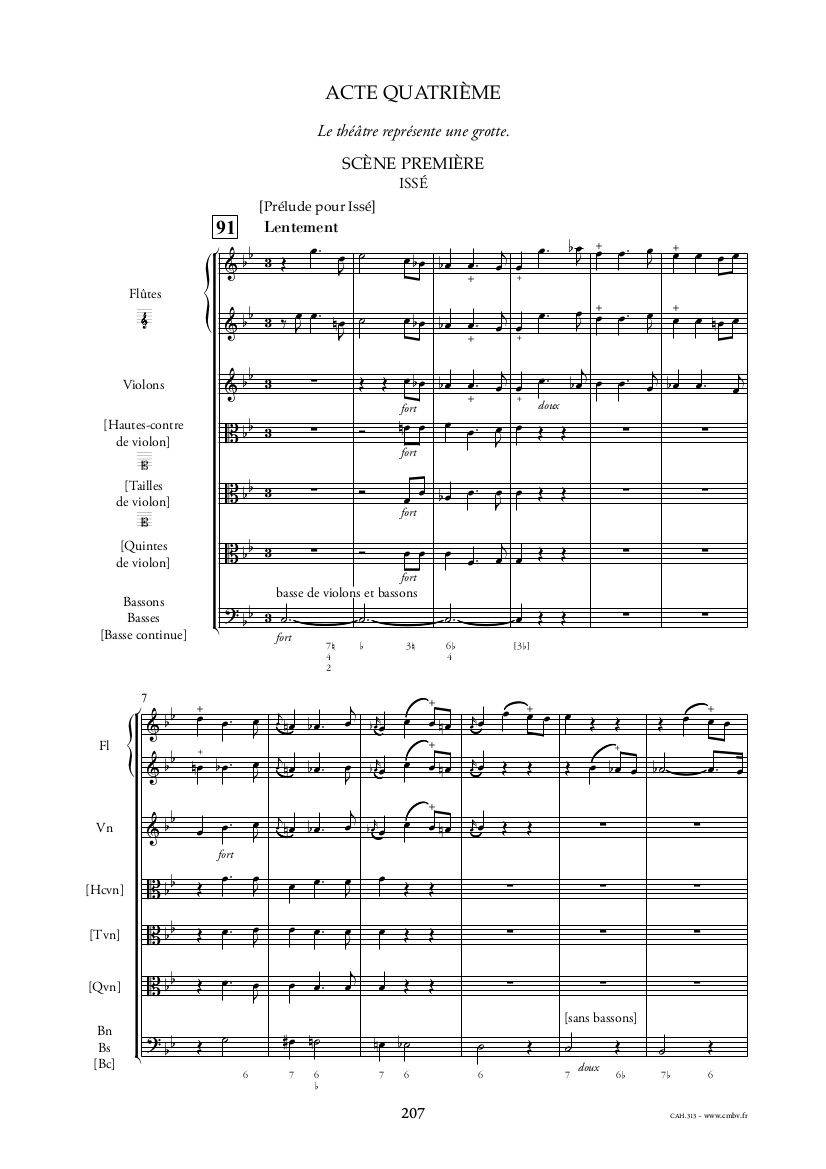
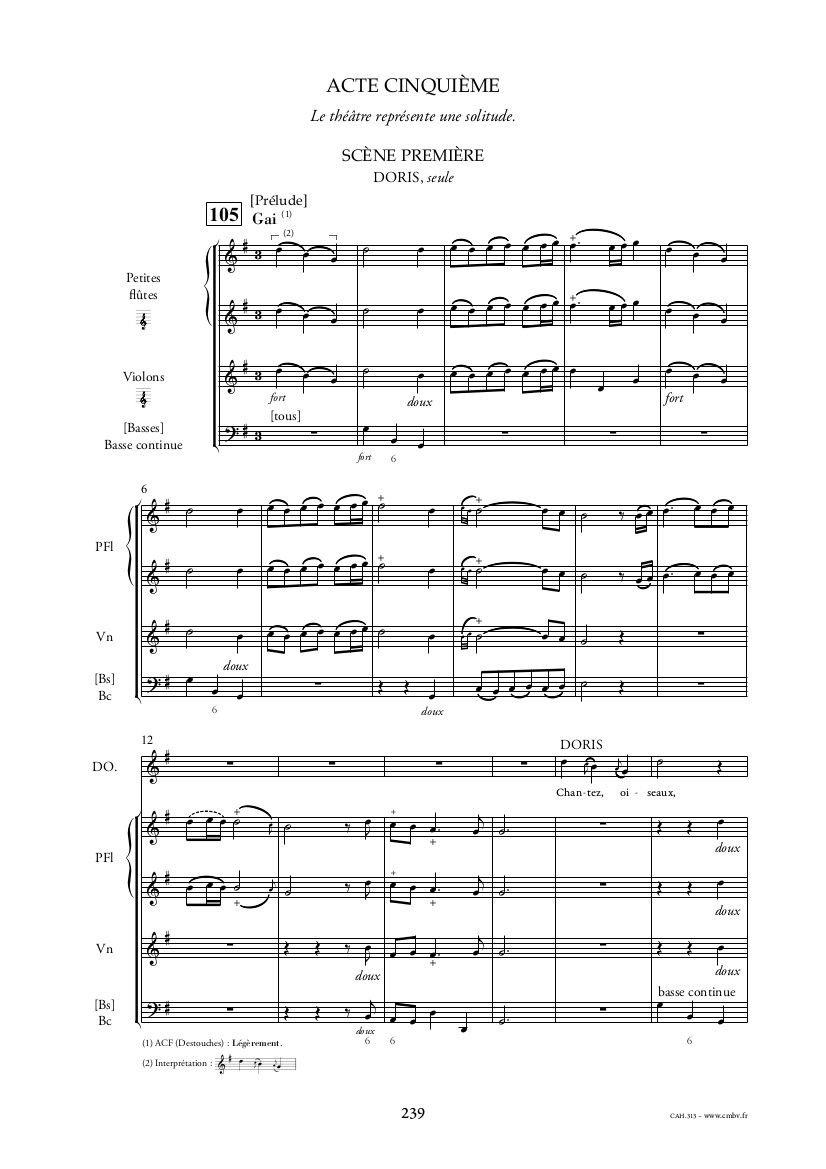


Issé is a heroic pastoral: an operatic fable in which legendary shepherds and light-hearted nymphs maintain a love affair with the gods of Olympus. Its poet, Antoine Houdar de La Motte, in a libretto of rare literary quality, borrows his subject from Book VI of Ovid’s Metamorphoses.
Issé is one of the most eminent successes of the pastoral genre at the Opéra. Born at the very end of the Grand Siècle, at Trianon on the occasion of a princely wedding, it is the first work by a young twenty-five-year-old composer, André Cardinal Destouches, who had just left the corps of the Black Musketeers, where he had participated in the siege of Namur, and the second libretto by Antoine Houdar de La Motte, after L'Europe galante de Campra, premiered the same year. In 1708, the authors reworked the piece for an operatic revival, in a prologue and five acts. It was in this form that the work became one of the most successful pieces in the operatic repertoire of the eighteenth century.
This edition is based on the score published by Jean-Baptiste-Christophe Ballard in 1724, the version closest to the 1708 reworking. The latter is not content to spread the action of the three acts of 1697 over five acts: the rewriting really perfects the work. It sublimates whole sections of it and augments it with remarkable pages. Houdar de La Motte rewrote a few lines while Destouches largely reworked the rhythm and instrumental dressing of the great arias (such as Issé’s, "Heureuse paix, tranquille indifference", I, 3) without altering the vocal melodic contour, so that the dramatic material remained recognisable. The rewriting preserves the idea of one and the same work despite the transition to five acts. Issé thus succeeded in reconciling all the qualities that the eighteenth-century spectator appreciated in the pastoral spectacle: through its double love plot mixing gods and shepherds, the work combines the noble and the picturesque, grandeur and innocence in a single aesthetic ideal.
It is worth noting how Destouches, from 1697 onwards and with more maturity in 1708, contributed to renewing the orchestral colouring of French opera by the frequent use of lighter forces. He was particularly fond of "dessus" trios (the scoring for flutes or violins and a female voice without basso continuo was the most striking) and thus stood out from the frequent "large choir" ensembles, in five parts, more massive, dear to Collasse or Desmarest.
If you wish to perform this work, a print option is available: contact us.
The works
Recommendations


