

Sheet music
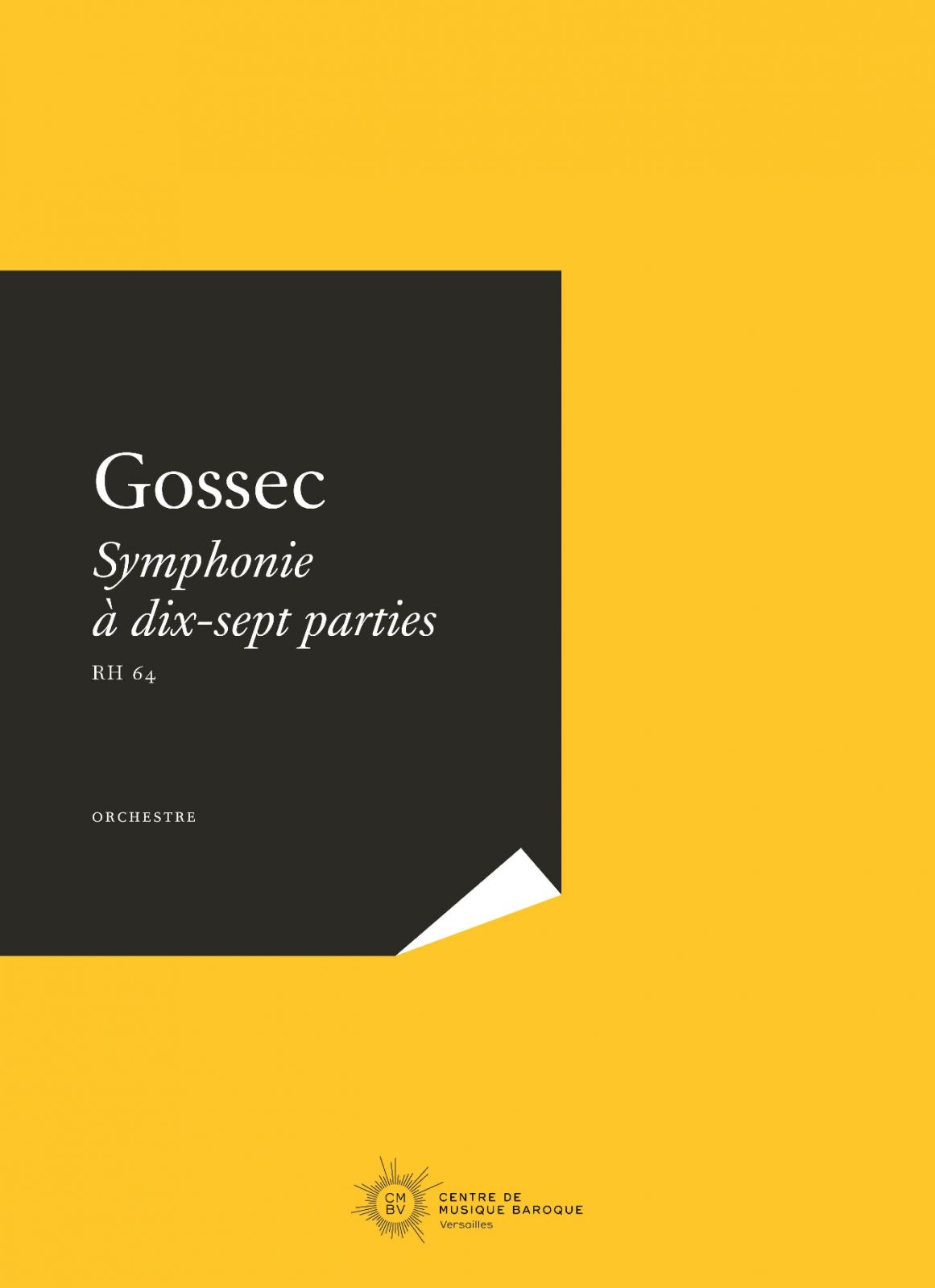
Symphonie à dix-sept parties
François-Joseph GOSSEC
(1734-1829)


Reference: CAHIERS-125
Format:
22,5x31 cm
Binding: Paperback
42,00 € TTC
In stock
François-Joseph GOSSEC
(1734-1829)
Editor(s):
Louis CASTELAIN
Collection:
Orchestra
Type of publication:
Full score
Publisher:
Editions du Centre de musique baroque de Versailles
This reference includes:
1 ex. Conducteur
Presintation:
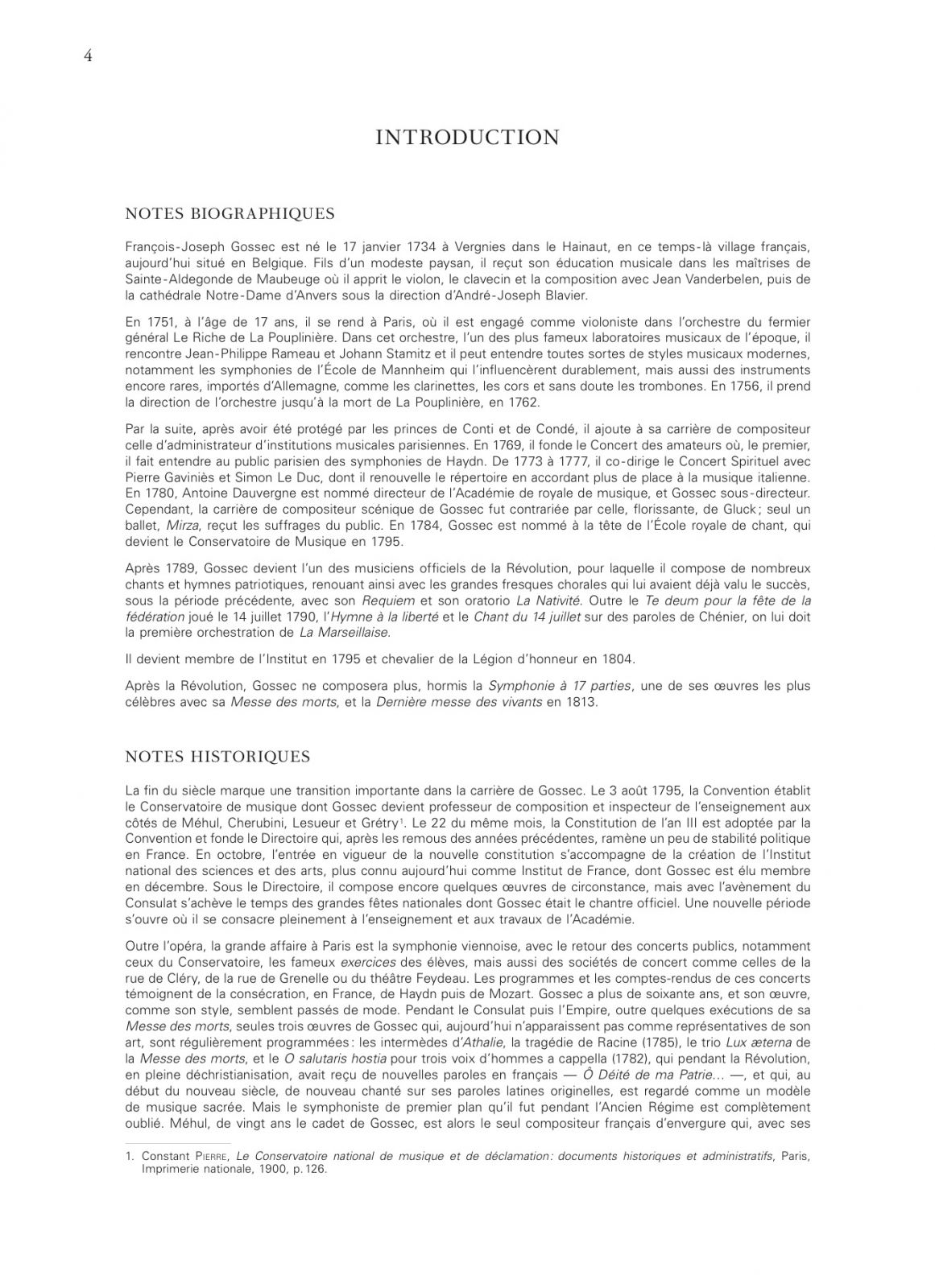
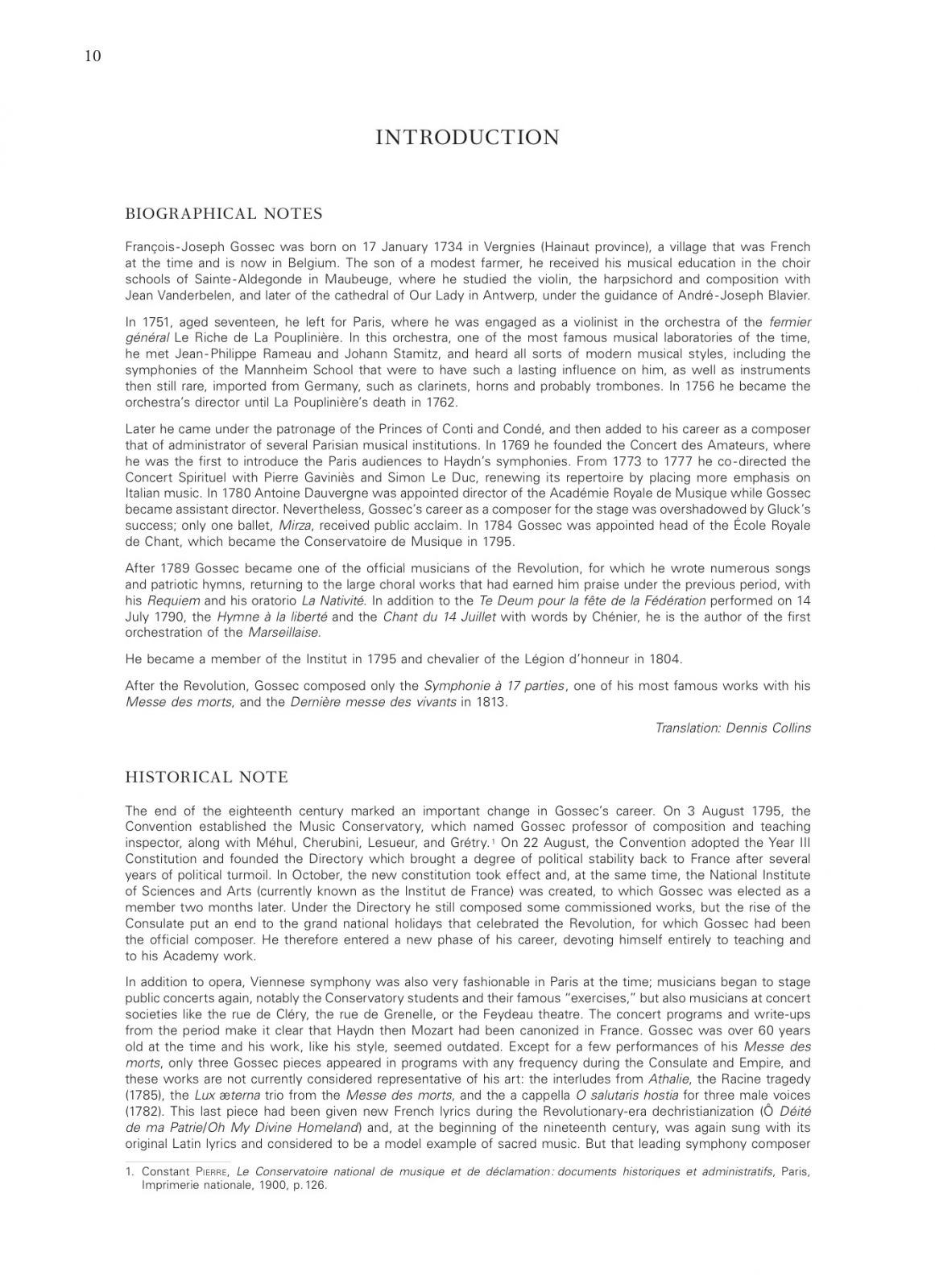
François-Joseph Gossec’s Symphonie à dix-sept parties (Symphony in 17 parts) is one of the composer’s best-known works, along with his Messe des Morts, but also one of his most enigmatic. This new edition by the Centre de musique baroque de Versailles offers a high-quality musical text and a precise overview of our current understanding of the work.----
First mentioned in the catalogue of François-Joseph Gossec’s works in 1903, the Symphonie à dix-sept parties was composed in the 1800s, based on an earlier overture. In the absence of any documentation on the work’s genesis, much has been written about whether it was a tribute to Haydn or to the Revolution, but nothing supports these theories. The fact remains that the composer, in full command of his forces, delivers a symphony with an innovative orchestration, the culmination of his research and experience in writing for winds and brass.
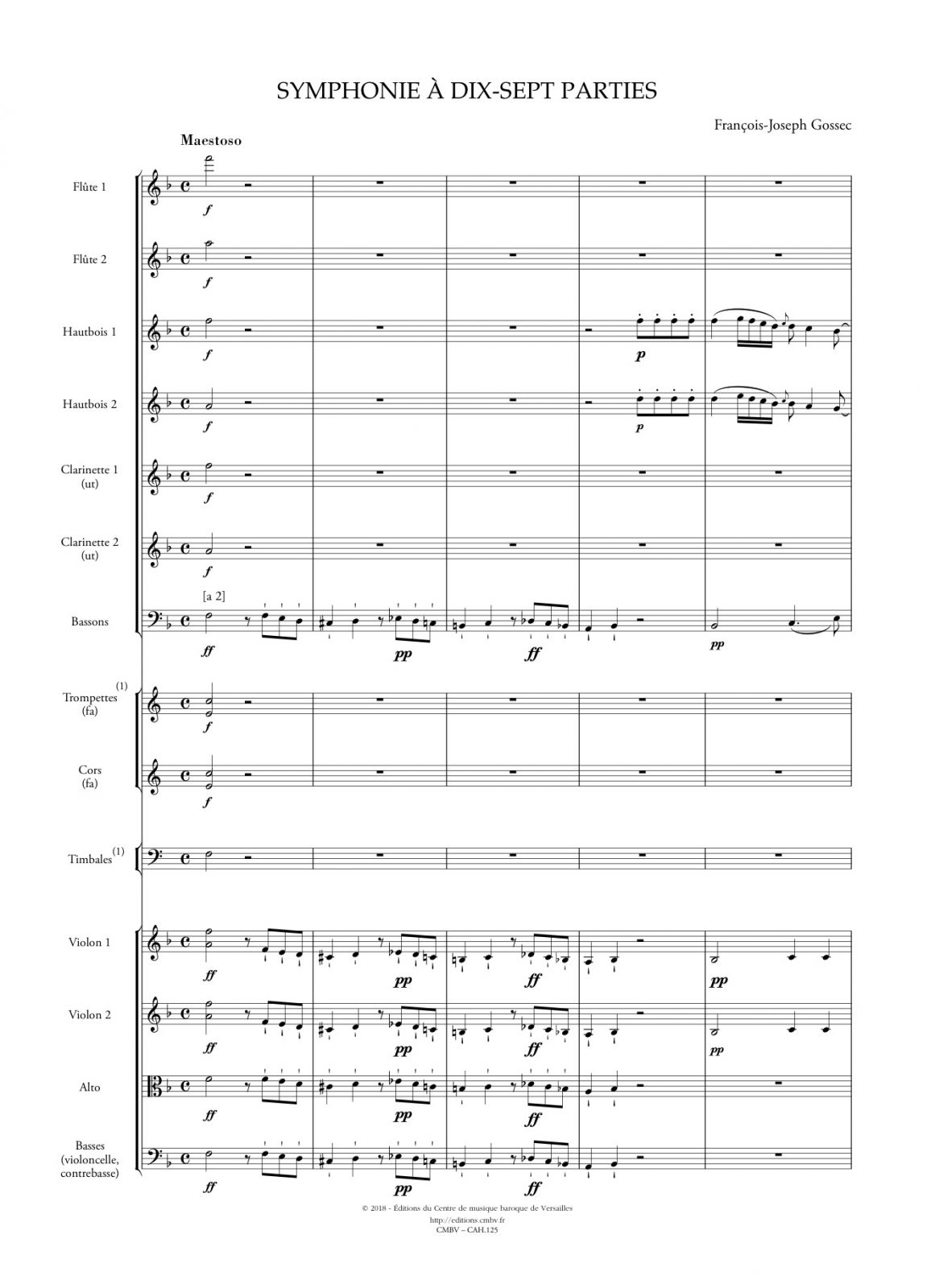
The symphony’s title refers to its scoring for 2 flutes, 2 oboes, 2 clarinets, 2 bassoons, 2 trumpets, 2 horns, timpani, violins 1, violins 2, violas and basses (cellos and double basses). Written in four movements (Maestoso – Allegro molto, Larghetto, Menuet and Allegro molto) in an accomplished Viennese style, the work lasts almost half an hour. It is suitable for all symphony orchestras.
First mentioned in the catalogue of François-Joseph Gossec’s works in 1903, the Symphonie à dix-sept parties was composed in the 1800s, based on an earlier overture. In the absence of any documentation on the work’s genesis, much has been written about whether it was a tribute to Haydn or to the Revolution, but nothing supports these theories. The fact remains that the composer, in full command of his forces, delivers a symphony with an innovative orchestration, the culmination of his research and experience in writing for winds and brass.
The symphony’s title refers to its scoring for 2 flutes, 2 oboes, 2 clarinets, 2 bassoons, 2 trumpets, 2 horns, timpani, violins 1, violins 2, violas and basses (cellos and double basses). Written in four movements (Maestoso – Allegro molto, Larghetto, Menuet and Allegro molto) in an accomplished Viennese style, the work lasts almost half an hour. It is suitable for all symphony orchestras.
Pages:
144
Publication date:
2018-12
Introduction (language):
French/English
ISMN 979-0-56016-125-9