

Ballet des Fâcheux
Music for the comedy by Molière
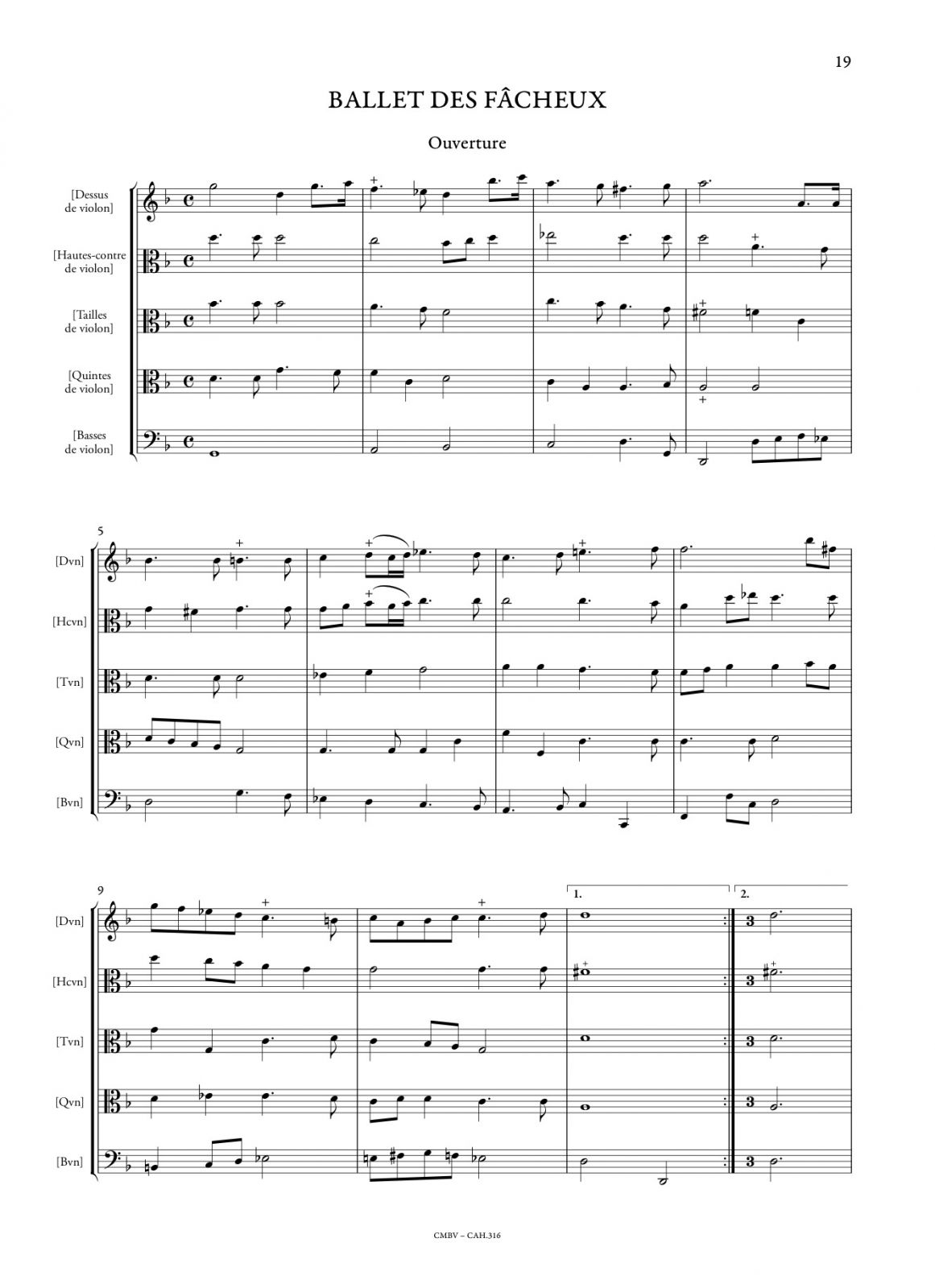
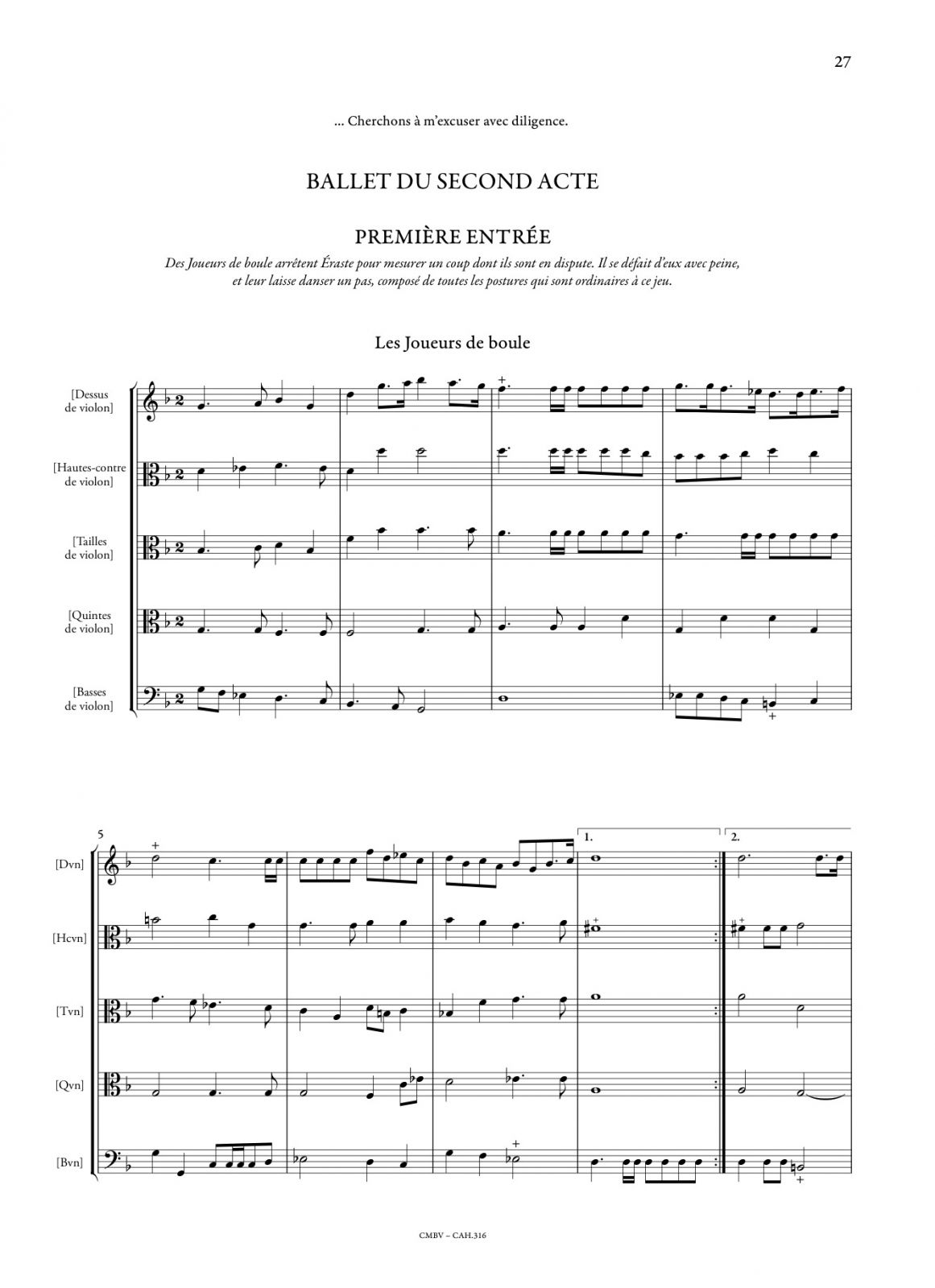
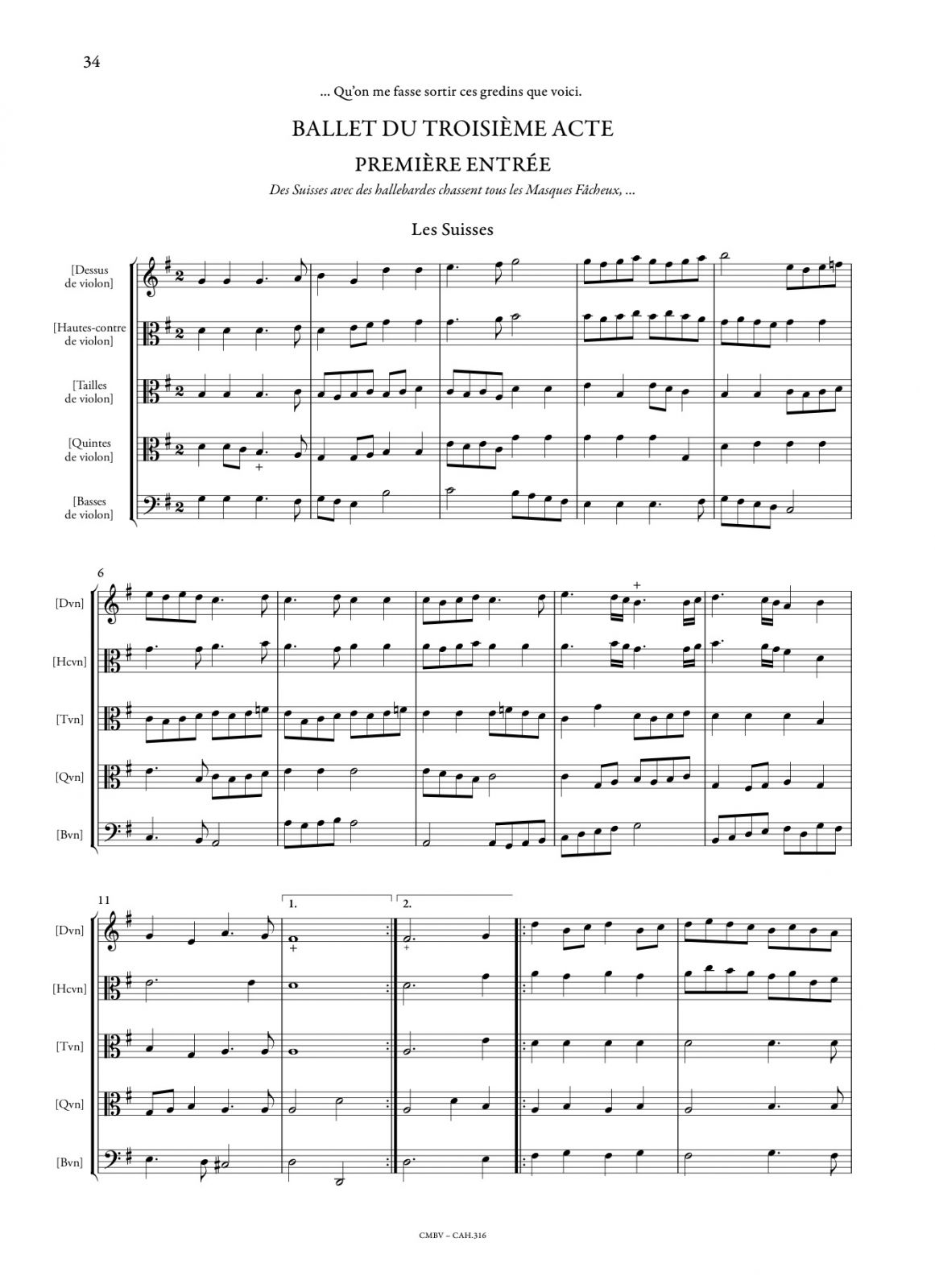


Molière’s comedy Les Fâcheux is the very first union of comedy, music and dance. Its resounding success contributed to the birth of a genre, the comédie-ballet. With this new musical publication by the Centre de musique baroque de Versailles, the work can finally regain all its artistic dimensions.
The comedy Les Fâcheux was created during the famous party in Vaux-le-Vicomte organized by Fouquet in honour of Louis XIV. The few dancers available made it impossible to perform a ballet, so it was decided to place a ballet scene at each intermission of the play in order to give the artists time to change. Molière and Beauchamps then had the idea of turning it into a show in itself. The first of a long and successful series, including Le Malade imaginaire and Le Bourgeois gentilhomme.
Molière structured his three acts around a parade of unfortunate people whose interventions are, as with the dancing characters, always unique. This way of offering the spectator the most ingenious diversity possible of characters is itself reinforced by the exploration of the different registers of dance, pastoral, comic or even grotesque, as portrayed by Beauchamps.
This complete edition of the music makes it possible to consider integrating the original music into Molière’s comedy. It proposes several hypotheses for the number of performers: :
- In the theatre, a string orchestra with 4 parts – dessus, haute-contre, taille and basse de violon (violins, 2 violas and cello) – to which oboes ad libitum are occasionally added. :
- At court, a 5-part string orchestra (it was the Vingt-Quatre Violons du Roi who premièred the score), with dessus, haute-contre, taille, quinte and basse de violon (violins, 3 violas and cellos) with oboes, always ad libitum.
Courante by Jean-Baptiste Lully sung and danced by Lysandre (act I, scene 3)
The works
Recommendations


