

Concert d'Esculape
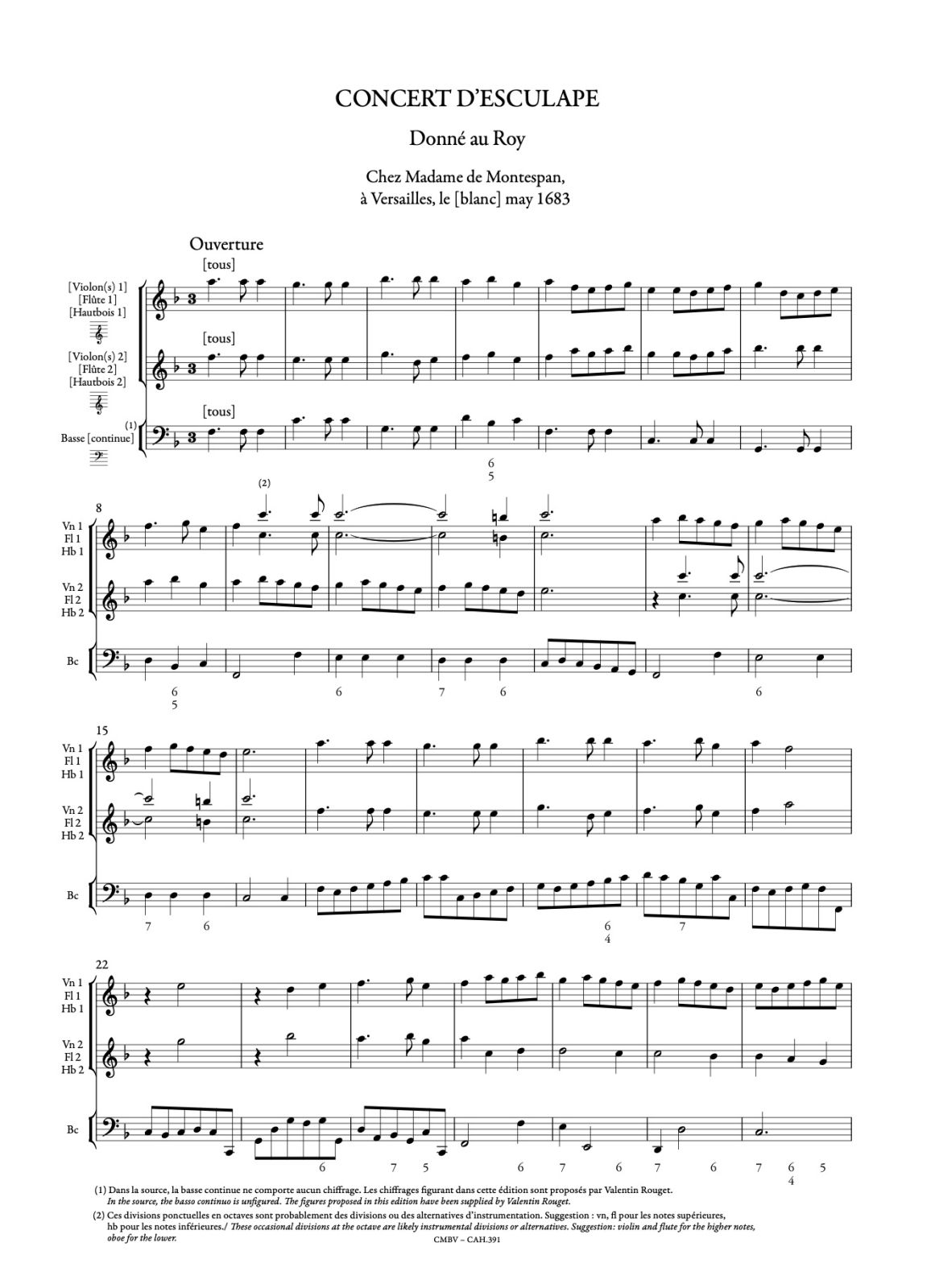
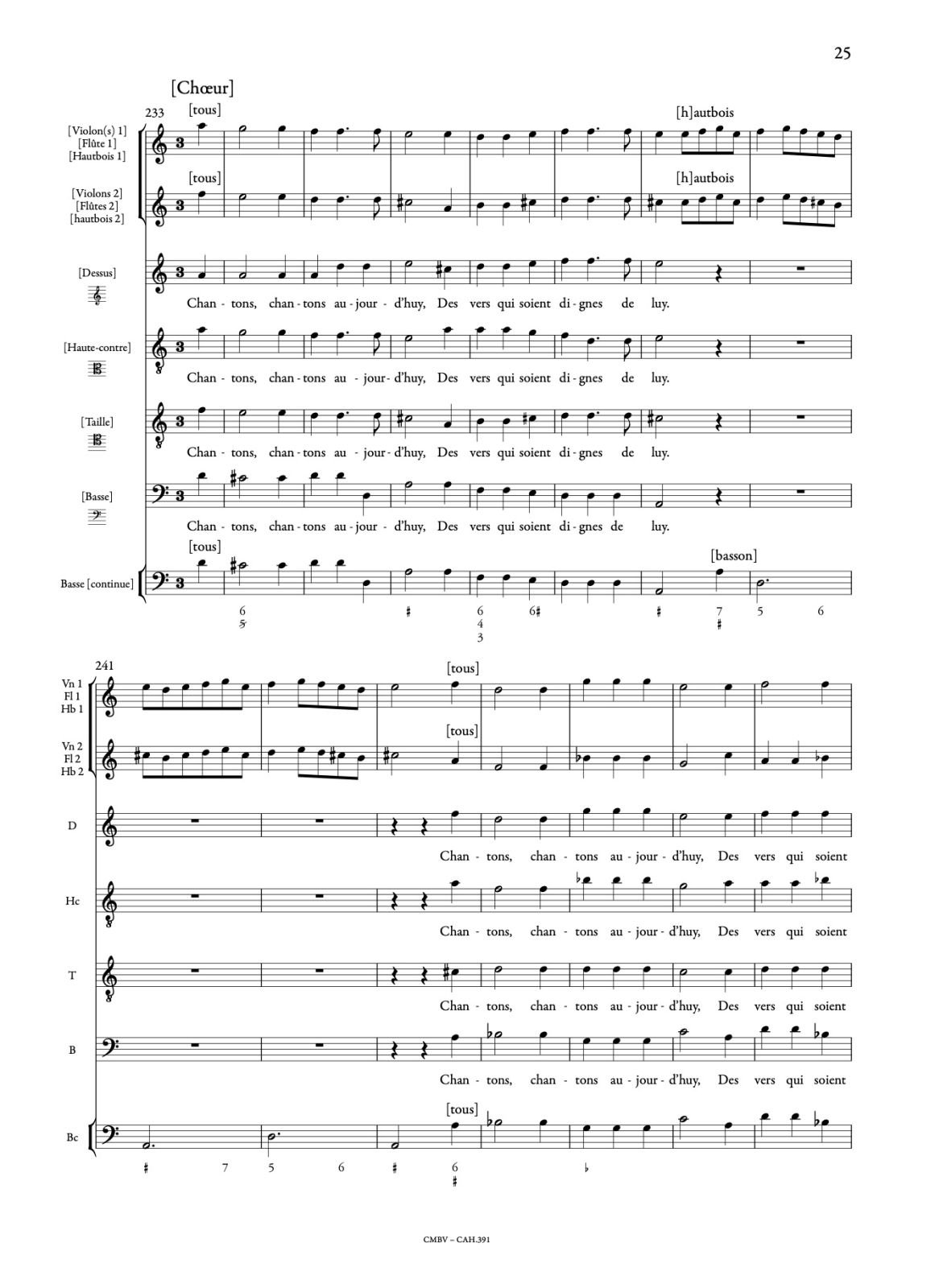
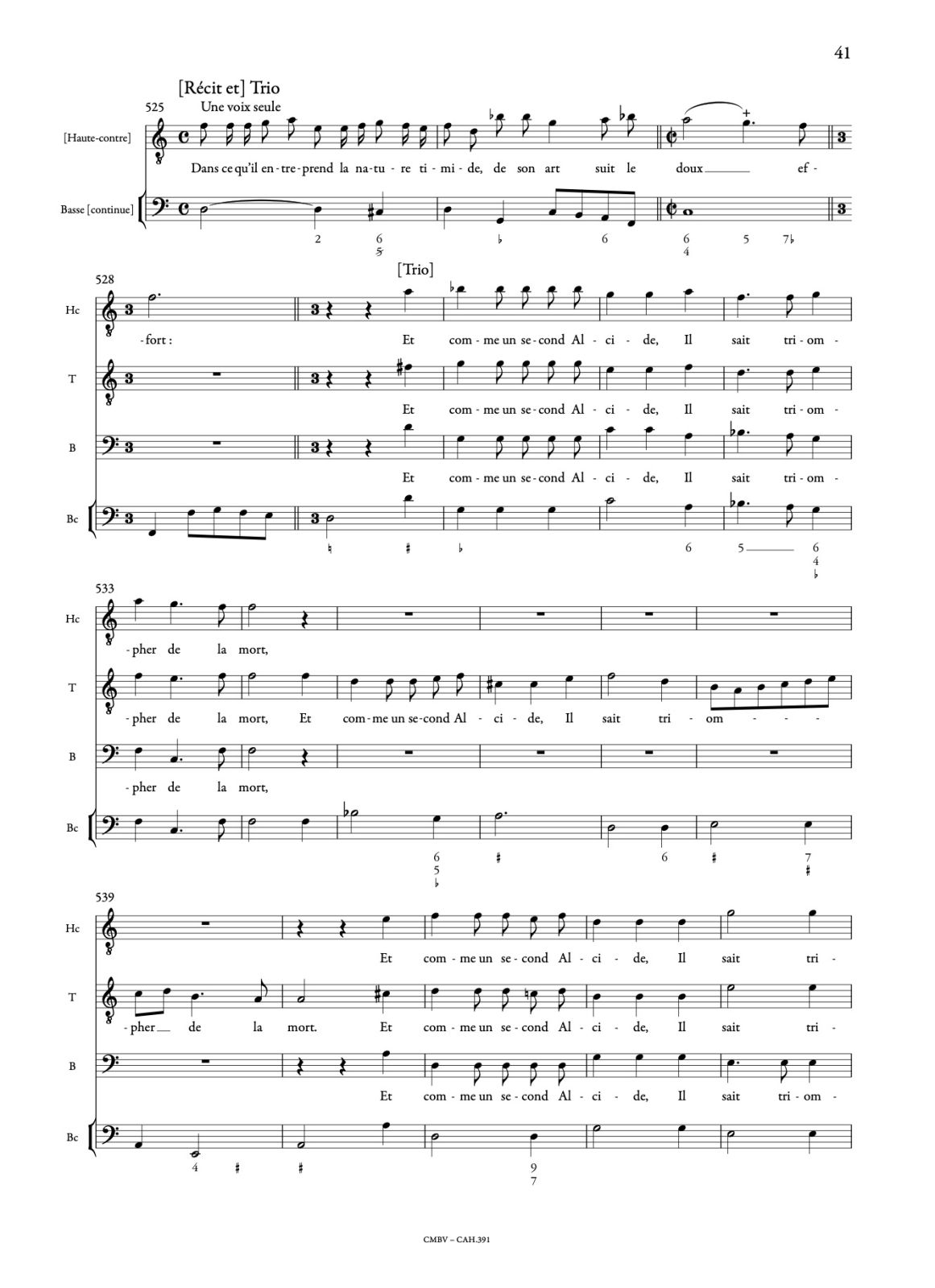
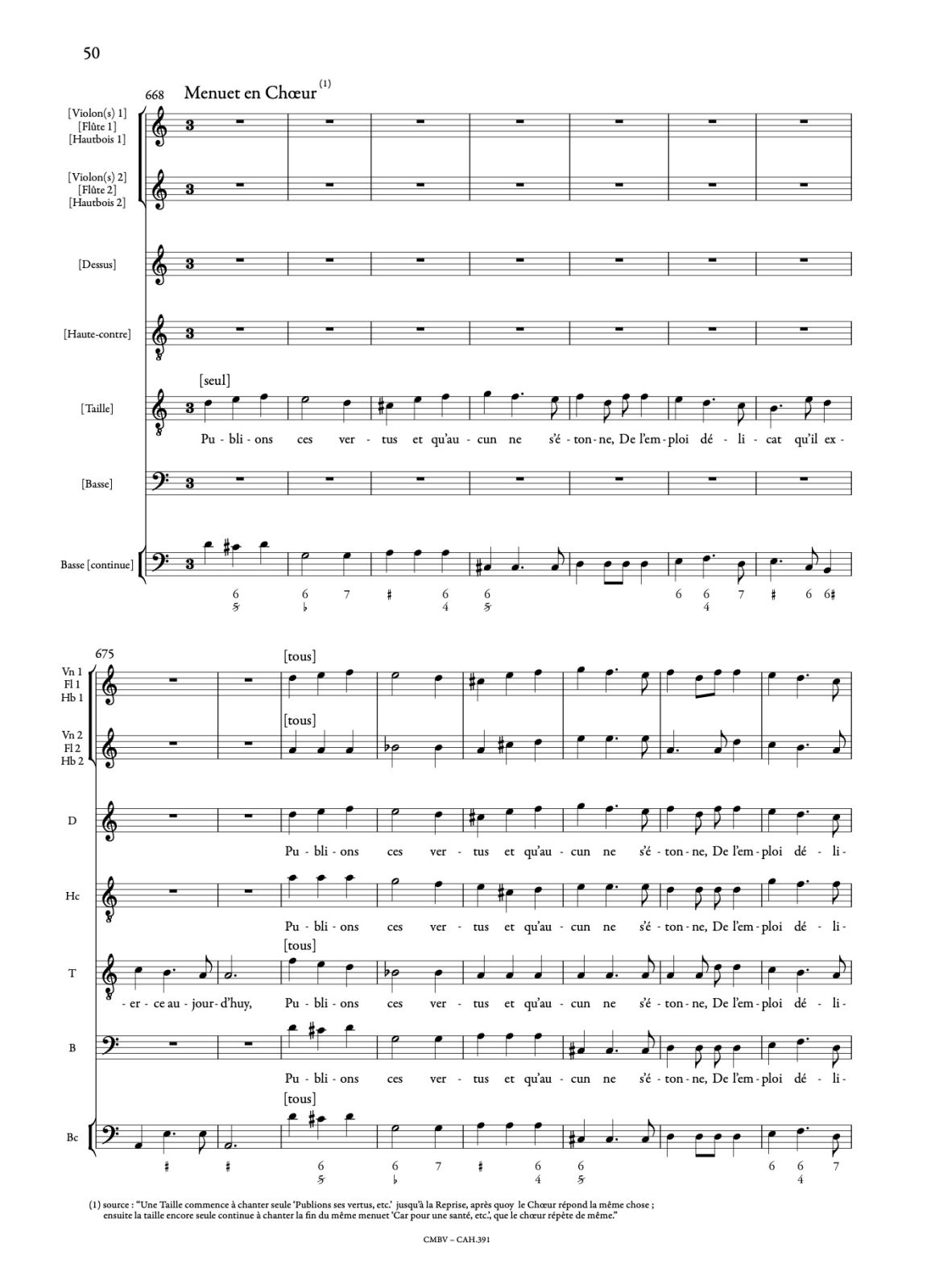


Lalande’s Le Concert d’Esculape, published by the Centre de musique baroque de Versailles in the Voix soliste / Ensemble vocal series, is an unusual vocal work. Closer in style to a cantata than to a divertissement, this piece for four singers and an instrumental trio offers us an intimate glimpse into the world of the court, the king and his mistress, Madame de Montespan.
The work, written in 1683, the same year as Les Fontaines de Versailles, was performed in the apartments that Madame de Montespan still occupied at the château of Versailles, on the upper floor overlooking the royal courtyard. A select, even intimate, circle, in the presence of the king, listened to a eulogy whose meaning rested on a web of allusions and codes specific to court culture, rooted in mythology. Is the tribute addressed to the physician Jean-Baptiste Moreaux or to the Dauphine? The preface provides a detailed account of the context and circumstances that enabled the young Lalande, having just been appointed sous-maître of the Chapelle royale, to provide musical accompaniment for the court, which had recently taken up residence at Versailles.
The libretto, attributed to Antoine Morel, is, like Les Fontaines de Versailles, an allegorical tribute, devoid of dramatic effects. Lasting approximately twenty minutes, Le Concert d’Esculape requires at least four reciting voices (dessus, haute-contre, taille, basse-taille and/or bass), possibly reinforced by a chorus, as well as a trio of instruments, including violins, flutes and oboes.
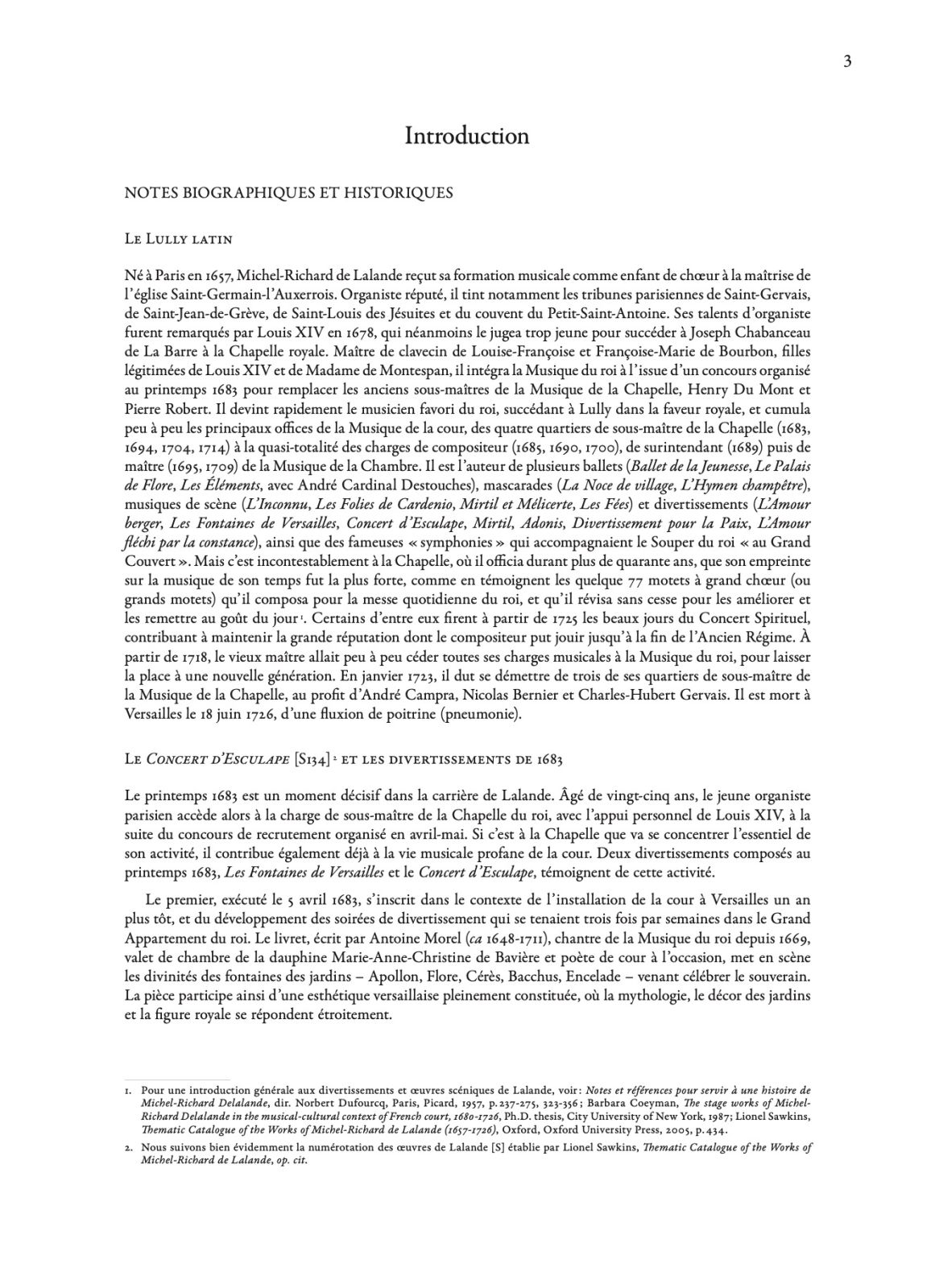
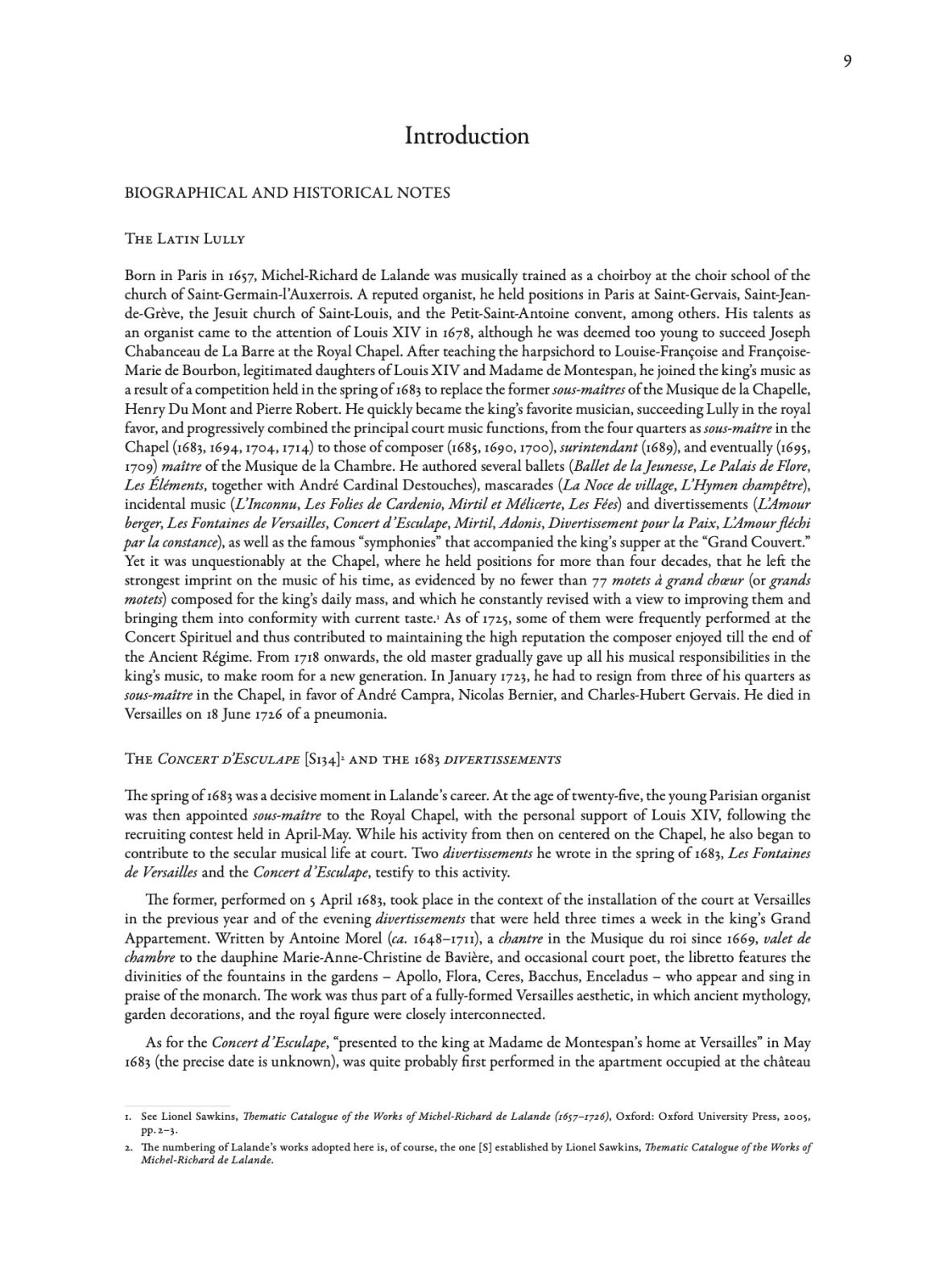
Born in Paris in 1657, Michel-Richard de Lalande (1657–1726) received his musical training at the choir school of Saint-Germain-l’Auxerrois. A renowned organist, he held several posts in Paris. As harpsichord master to Louis XIV’s legitimised daughters, he joined the Musique du roi in 1683. He gradually took on various posts within the court’s musical establishment, progressing from the four positions of sous-maître of the Chapelle to the three principal offices (superintendent, master and composer) of the Musique de la Chambre. He composed ballets, masquerades, stage music and court entertainments, as well as the famous Symphonies for the King’s suppers. It was at the Chapelle that his influence was felt most strongly. Of the 77 grand motets he composed, some of them were the highlight of the Concert Spirituel’s repertoire right up until the end of the Ancien Régime.


