

Sheet music
Dixit Dominus (Expodcast#1)
André CAMPRA
(1660-1744)
[Attribution]
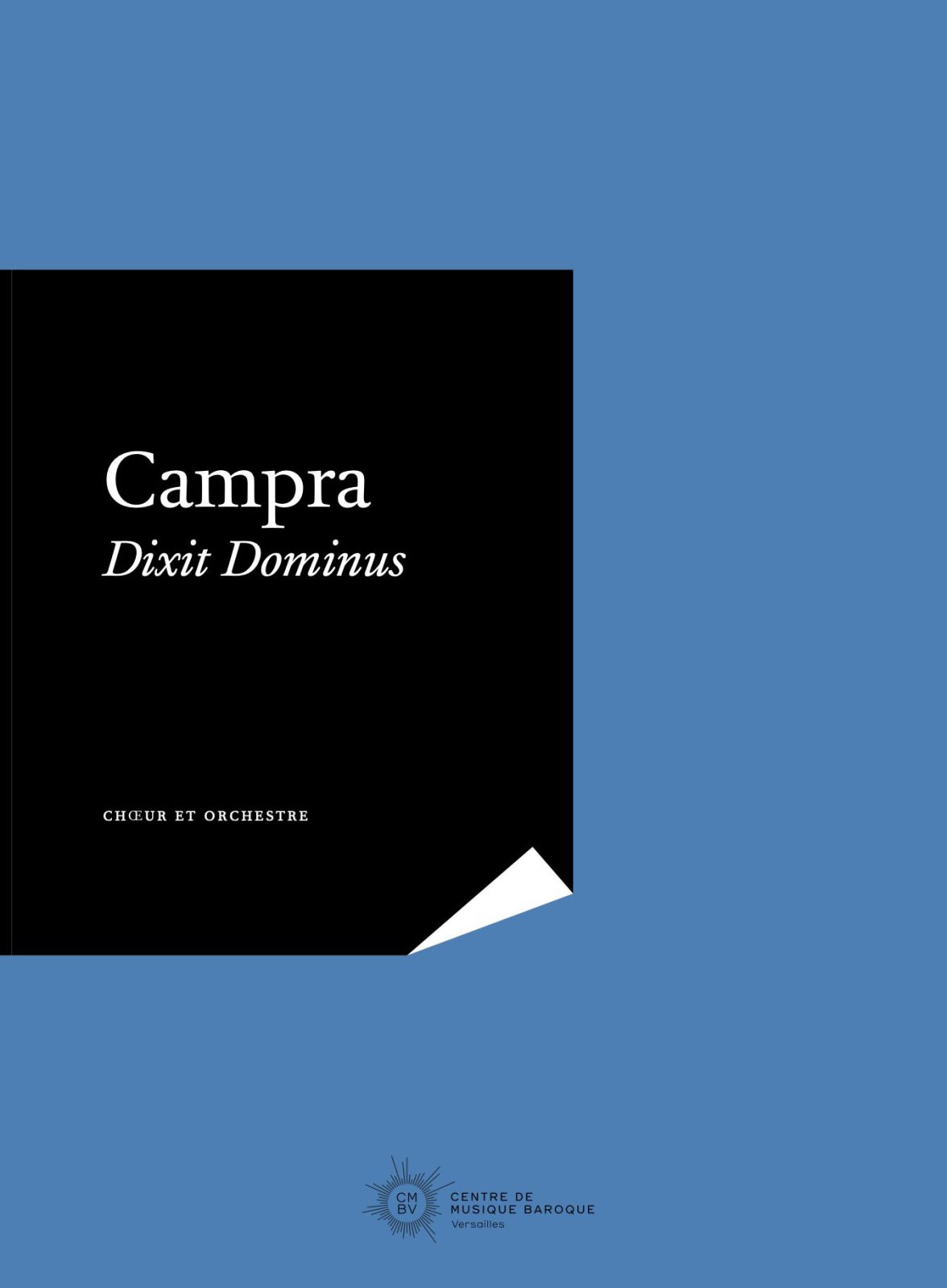


Reference: CAHIERS-222
Format:
22,5x31 cm
Binding: Paperback
22,50 € TTC
In stock
André CAMPRA
(1660-1744)
[Attribution]
Editor(s):
Françoise TALVARD
Collection:
Choir and orchestra
Type of publication:
Full score
Publisher:
Editions du Centre de musique baroque de Versailles
Presintation:
Born in 1660, André Campra studied music with Guillaume Poitevin, maître de chapelle at the Saint-Sauveur choir school at the cathedral of Aix-en-Provence, where he trained several renowned musicians (including Jean Gilles). After leaving Aix-en-Provence, Campra, whose life seems to have been eventful, obtained several appointments in the south of France. In 1694, he moved to Paris and was appointed Master of Notre-Dame Cathedral. He resigned in 1700 to devote himself freely to an equally exceptional operatic career, which led him to become director of the Académie royale de musique in 1730. In 1723, Philippe d’Orléans entrusted him with one of the quarters of the Chapelle royale, replacing Lalande. Campra composed or reworked most of the great motets that have come down to us. He died in 1744.
This work belongs to the magnificent musical collection of Le Puy-en-Velay Cathedral, discovered in 1994. This collection, comprising over 700 works, includes two great motets attributed to André Campra: a Grand Dixit Dominus, also known from the Aix collection of the Saint-Sauveur choir school, and this Dixit Dominus, previously unknown. The numbers used (in particular the Dominus a dextris chorus) and certain writing techniques not widely used by Campra cast doubt on the attribution of the manuscript. The work carried out by the CHEC research team in Clermont-Ferrand will undoubtedly reveal more about the origin of this collection, its use and the way it was put together.
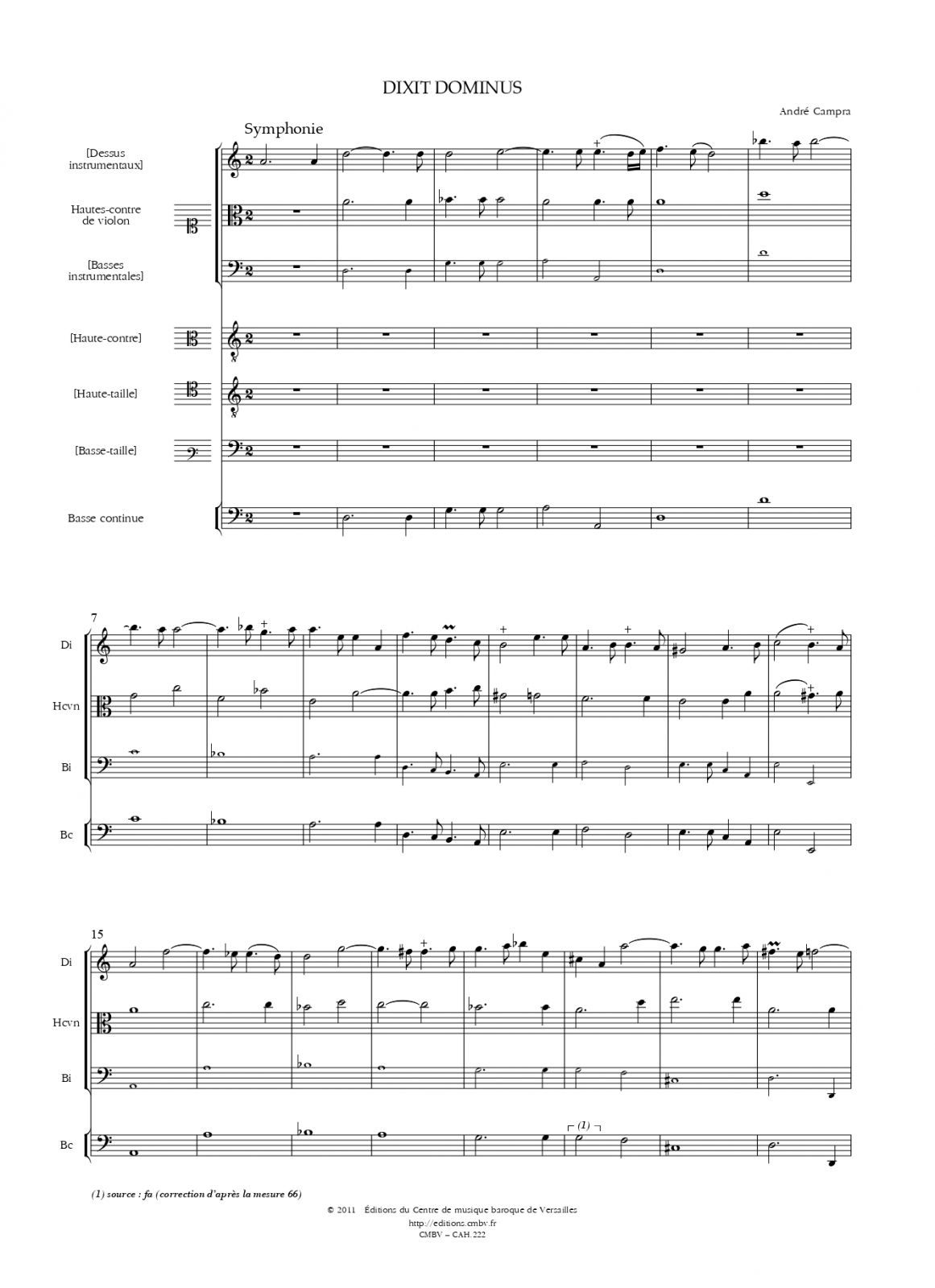
This grand motet Dixit Dominus, taken from Psalm 109, features 6 soloists (2 dessus, hautes-contre, haute-taille, basse-taille and basse), a 5-voice choir (dessus, hautes-contre, hautes-taille, basses-taille and basses) and a 3-part orchestra (dessus 1& 2, hautes-contre, basses) with woodwinds and basso continuo. It is entirely different from the Grand Dixit Dominus already published by the Centre de Musique Baroque de Versailles from the Aix collection. Slightly longer (620 bars), the musical division of the verses and the instrumental and vocal forces are entirely different.
This edition is offered in the "Patrimoine musical en Midi-Pyrénées" series by Françoise Talvard. Clarinetist, conservatory music teacher, researcher and associate editor of the Centre de Musique Baroque de Versailles (CMBV), her work focuses on musicians active in the Midi-Pyrénées region in the 18th century. She has published two articles in Les Bas chœurs d'Auvergne et du Velay : le métier de musicien d'Eglise aux XVIIe et XVIIIe siècles by Bernard Dompnier (ed.) (Presses universitaires Blaise Pascal, 2010), and is a contributor to the CHEC under the direction of Philippe Bourdin.
This work belongs to the magnificent musical collection of Le Puy-en-Velay Cathedral, discovered in 1994. This collection, comprising over 700 works, includes two great motets attributed to André Campra: a Grand Dixit Dominus, also known from the Aix collection of the Saint-Sauveur choir school, and this Dixit Dominus, previously unknown. The numbers used (in particular the Dominus a dextris chorus) and certain writing techniques not widely used by Campra cast doubt on the attribution of the manuscript. The work carried out by the CHEC research team in Clermont-Ferrand will undoubtedly reveal more about the origin of this collection, its use and the way it was put together.
This grand motet Dixit Dominus, taken from Psalm 109, features 6 soloists (2 dessus, hautes-contre, haute-taille, basse-taille and basse), a 5-voice choir (dessus, hautes-contre, hautes-taille, basses-taille and basses) and a 3-part orchestra (dessus 1& 2, hautes-contre, basses) with woodwinds and basso continuo. It is entirely different from the Grand Dixit Dominus already published by the Centre de Musique Baroque de Versailles from the Aix collection. Slightly longer (620 bars), the musical division of the verses and the instrumental and vocal forces are entirely different.
This edition is offered in the "Patrimoine musical en Midi-Pyrénées" series by Françoise Talvard. Clarinetist, conservatory music teacher, researcher and associate editor of the Centre de Musique Baroque de Versailles (CMBV), her work focuses on musicians active in the Midi-Pyrénées region in the 18th century. She has published two articles in Les Bas chœurs d'Auvergne et du Velay : le métier de musicien d'Eglise aux XVIIe et XVIIIe siècles by Bernard Dompnier (ed.) (Presses universitaires Blaise Pascal, 2010), and is a contributor to the CHEC under the direction of Philippe Bourdin.
Pages:
44
Publication date:
2011-02
Introduction (language):
French
ISMN 979-0-56016-222-5
The works
Text language:
Latin
Genre:
motet
Liturgical season:
Psaume 109
Key:
Ré Majeur
Duration:
entre 20' et 29'
Recommendations


34€
Available in a digital version


