

Book
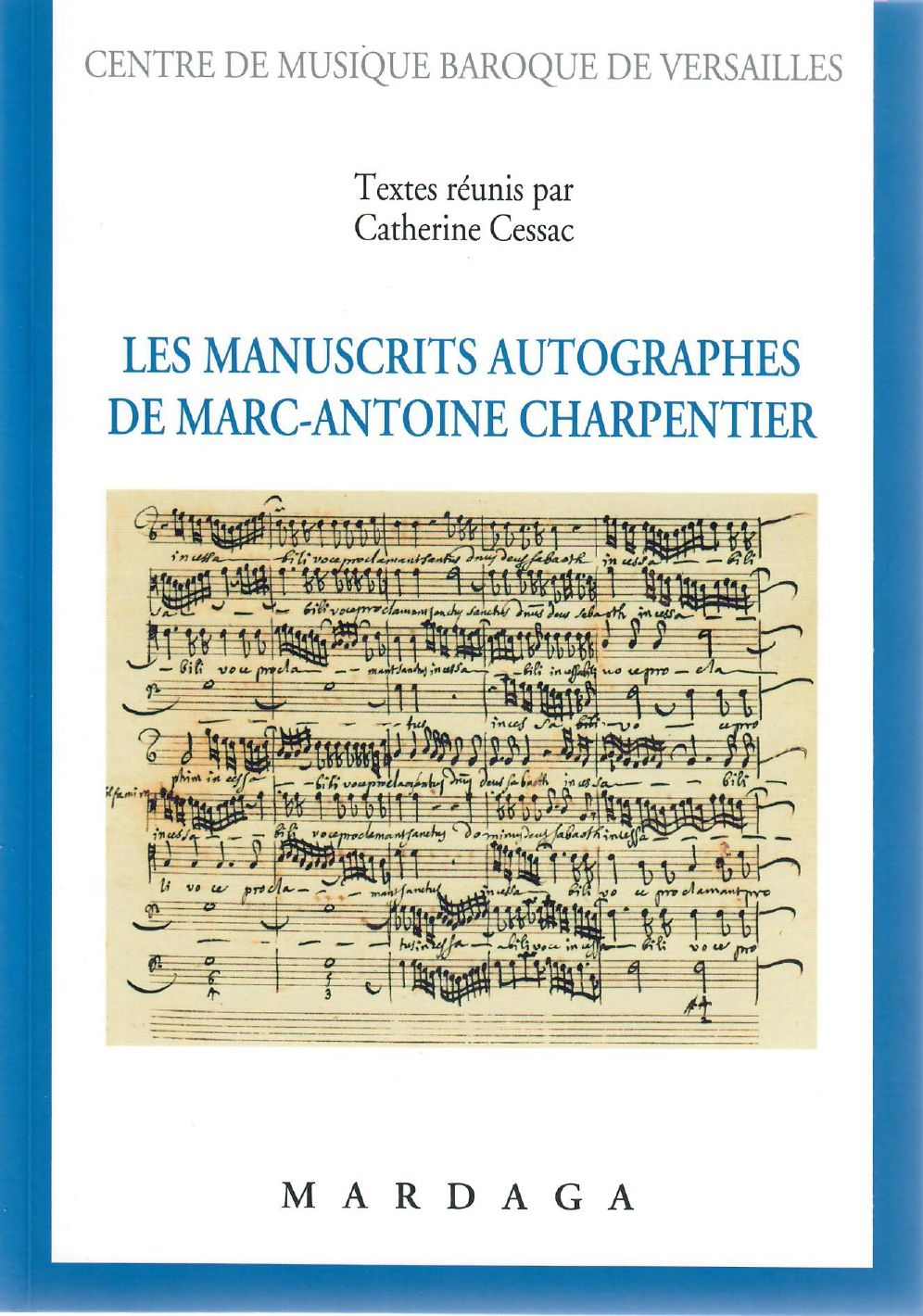
Les Manuscrits autographes de Marc-Antoine Charpentier


Reference: CMBV-B006
Binding: paperback
42,00 € TTC
In stock
Collection:
Go further
Publisher:
Editions Mardaga
Presintation:
Marc-Antoine Charpentier and his work are intimately linked. Even though he was only able to publish a limited number of pieces during his lifetime, the composer always took great care over his works, which he notated one by one in large notebooks now housed in the Music Department of the Bibliothèque nationale de France. Known as the Mélanges, the 28 surviving volumes constitute one of the finest collections of autograph manuscripts of all time.
This exceptional testimony to the materiality of Charpentier’s creative activity is undoubtedly the most relevant and fascinating approach to his music. Unlike publication, which implies something definitive, a manuscript, especially when it is autograph, proves to be the ideal lens through which the creative process can be seen in its most immediate and moving aspects, the work potentially remaining open to later revision. Charpentier’s autograph manuscripts attest to all the gestures that animated their author and his way of working: composition, arrangement, copying, ordering, interpretation, conservation.
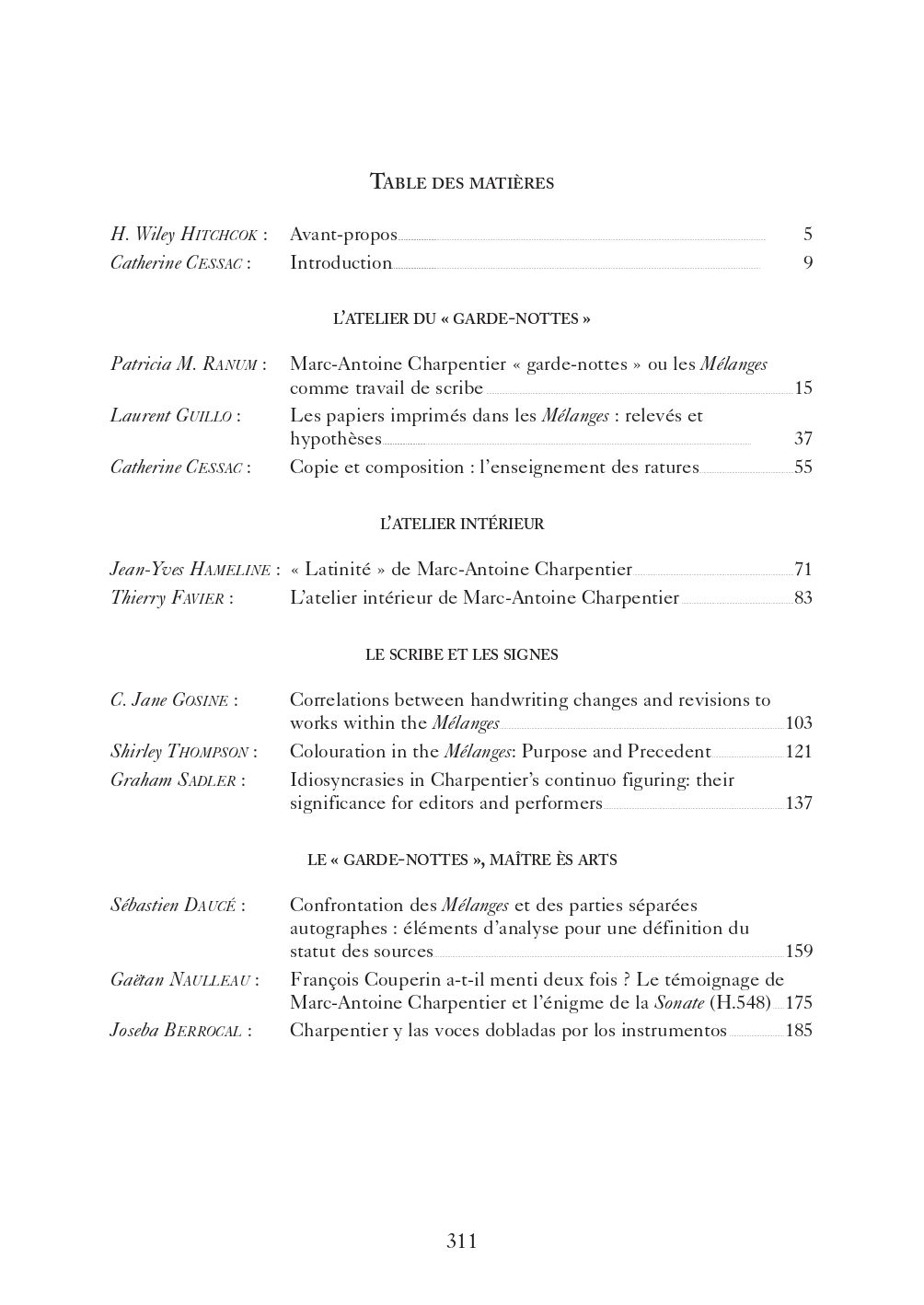
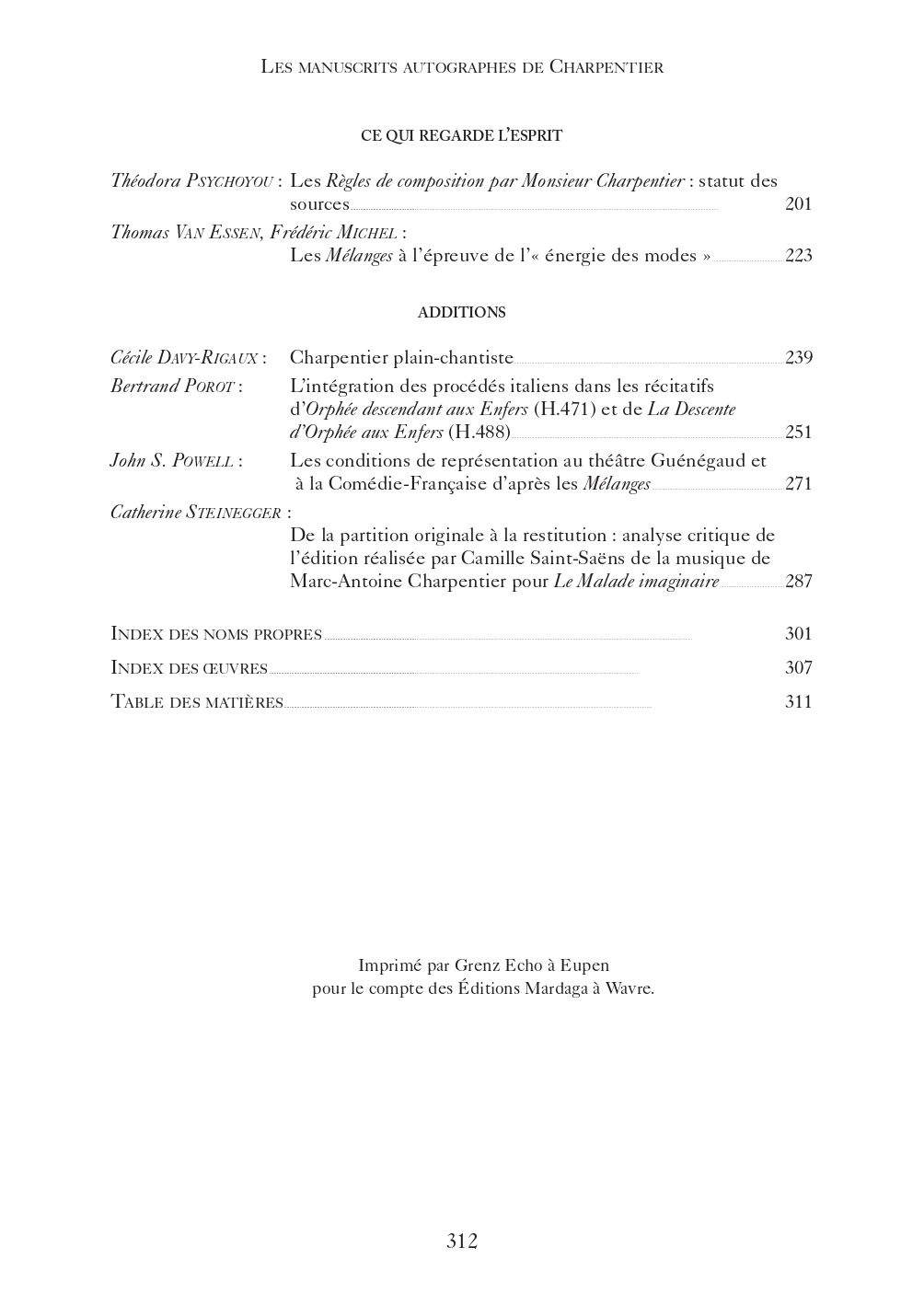
This corpus constitutes the primary point of reference from which all reflection on the work must develop, from the most concrete to the most subjective: paper, handwriting, chronology, the particularities of notation, musical forces and commissioners, study of literary and musical texts, what lies behind the originality of the style and its evolution. Through the diversity of its approaches, this book hopes to contribute to a definition of the status of Charpentier’s manuscripts.
Catherine Cessac, director of research at the CNRS, works at the Centre de Musique Baroque de Versailles. A Charpentier specialist, she has already published Marc-Antoine Charpentier, un musicien retrouvé (Mardaga, 2005).
This exceptional testimony to the materiality of Charpentier’s creative activity is undoubtedly the most relevant and fascinating approach to his music. Unlike publication, which implies something definitive, a manuscript, especially when it is autograph, proves to be the ideal lens through which the creative process can be seen in its most immediate and moving aspects, the work potentially remaining open to later revision. Charpentier’s autograph manuscripts attest to all the gestures that animated their author and his way of working: composition, arrangement, copying, ordering, interpretation, conservation.
This corpus constitutes the primary point of reference from which all reflection on the work must develop, from the most concrete to the most subjective: paper, handwriting, chronology, the particularities of notation, musical forces and commissioners, study of literary and musical texts, what lies behind the originality of the style and its evolution. Through the diversity of its approaches, this book hopes to contribute to a definition of the status of Charpentier’s manuscripts.
Catherine Cessac, director of research at the CNRS, works at the Centre de Musique Baroque de Versailles. A Charpentier specialist, she has already published Marc-Antoine Charpentier, un musicien retrouvé (Mardaga, 2005).
Pages:
314
Publication date:
2007-01
Introduction (language):
French
ISBN 978-2-87009-941-4
Recommendations


Free
Available in a digital version


