

Sheet music
Motets manuscrits
Pierre ROBERT
(ca 1622-1699)
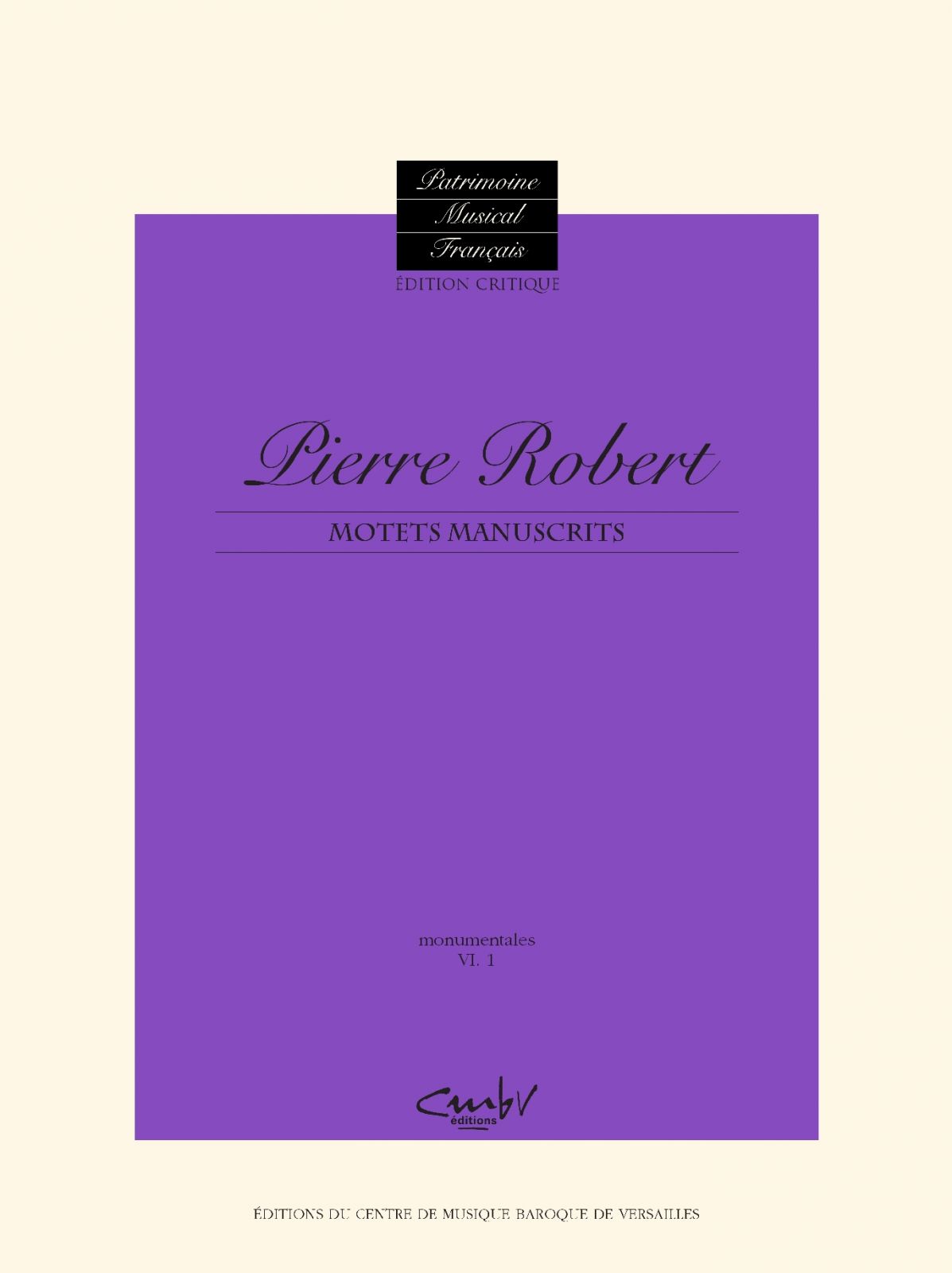


Reference: CMBV_059
Format:
23x31 cm
Binding: Paperback
147,00 € TTC
In stock
Pierre ROBERT
(ca 1622-1699)
Editor(s):
Thomas LECONTE
Collection:
Monumental series
Pierre Robert
Type of publication:
Critical edition
Publisher:
Editions du Centre de musique baroque de Versailles
Presintation:
This volume opens the sixth series in the Monumentales series published by the Centre de musique baroque de Versailles, devoted to the work of Pierre Robert, a French "Parnassus" composer who is unjustly overlooked today, despite being one of the most important composers of the reign of Louis XIV.
Pierre Robert (c. 1622–1699) inherited the great polyphonic tradition of the late Renaissance through his training at the Paris Cathedral choir school, and his work in three of the kingdom’s most important cathedrals: Senlis (1643–1650 and 1652–1653), Chartres (1650–1652) and Paris (1653–1662). In 1663, together with Henry Du Mont, he was recruited by Louis XIV as sous-maître of the Musique de la Chapelle du roi, a prestigious position he held until 1683. He actively contributed to the emergence of new forms of religious music, participating in the elaboration of a specific repertoire for the Chapelle du roi, thus laying the foundations for French grand and petit motets.
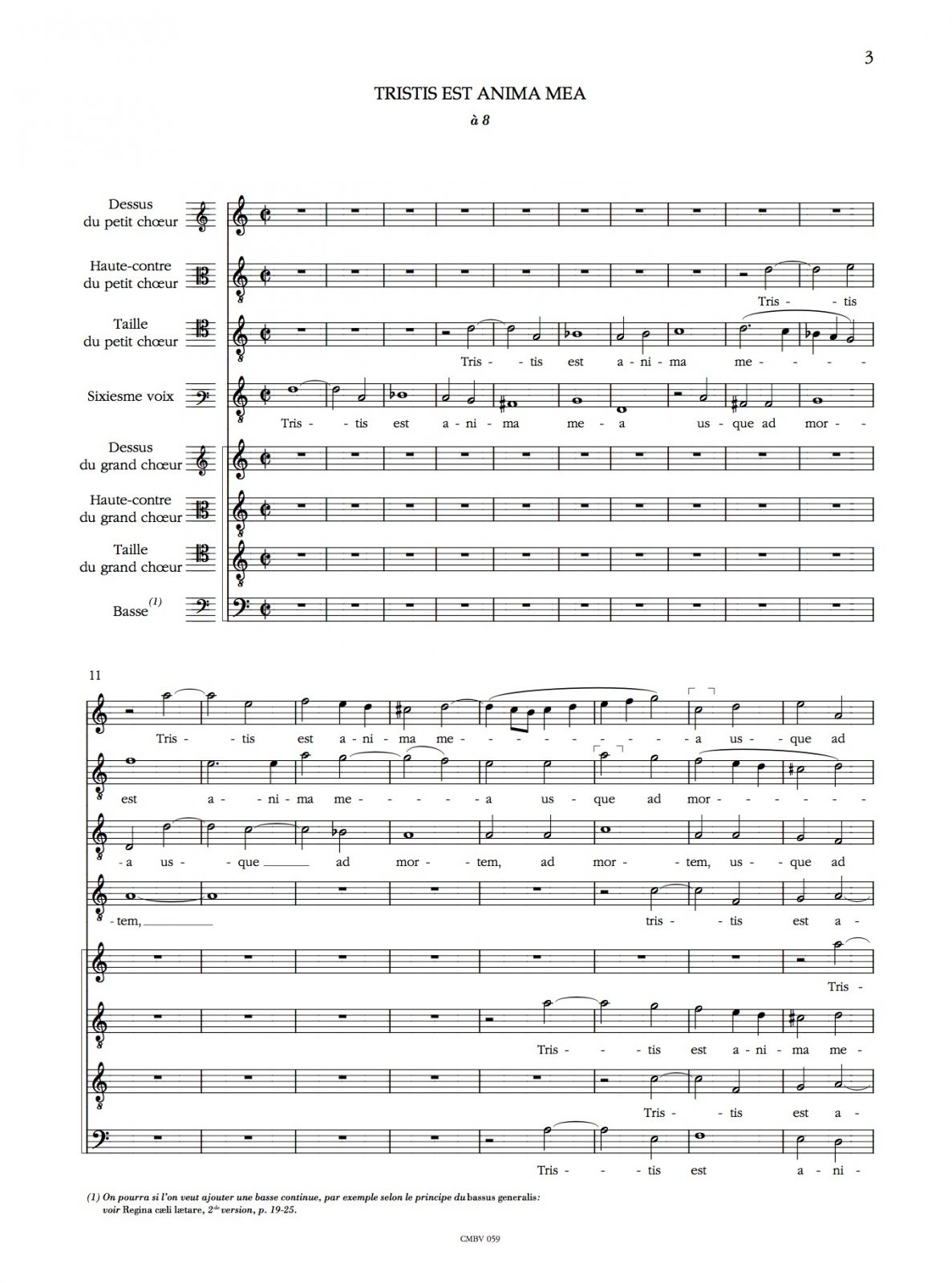
This volume brings together all of Pierre Robert’s works that have come down to us in manuscript form. Witness to the composer’s two "eras", these religious pieces vary in nature and aesthetic, falling into two "manners", addressed in this volume in two distinct sections. The first is made up of three motets maîtrisiens – or of the chapelle – written in old-style counterpoint, and originating from the Parisian convent of the Petits-Pères de Notre-Dame-des-Victoires, relating to the first phase of the artist’s career in the service of large choirs. The second section comprises eleven surviving elevations from the repertoire of petits motets for the Chapelle du roi. These works, in a more concertante style, demonstrate a musical language that uniquely synthesizes the great contrapuntal tradition with an astonishing modernity.
Thomas Leconte is a researcher and editorial director of the critical editions of the Centre de musique baroque de Versailles (whose research department is associated with the CESR - UMR7323). A specialist in musique de société (air and ballet de cour) and French spiritual music of the early 17th century, he has published a catalogue of these repertoires in the PHILIDOR database (Ressources numériques du Centre de musique baroque de Versailles), a book on ballet de cour (Brepols, 2012), and is currently preparing a critical edition of the works of Antoine Boesset (1587–1643). His research also focuses on the genesis of the grand motet of the time of Louis XIV (1643–1683), both historically and interpretively, a field of study to which he has devoted several works (articles, musical editions, performance practice seminars etc.).
Pierre Robert (c. 1622–1699) inherited the great polyphonic tradition of the late Renaissance through his training at the Paris Cathedral choir school, and his work in three of the kingdom’s most important cathedrals: Senlis (1643–1650 and 1652–1653), Chartres (1650–1652) and Paris (1653–1662). In 1663, together with Henry Du Mont, he was recruited by Louis XIV as sous-maître of the Musique de la Chapelle du roi, a prestigious position he held until 1683. He actively contributed to the emergence of new forms of religious music, participating in the elaboration of a specific repertoire for the Chapelle du roi, thus laying the foundations for French grand and petit motets.
This volume brings together all of Pierre Robert’s works that have come down to us in manuscript form. Witness to the composer’s two "eras", these religious pieces vary in nature and aesthetic, falling into two "manners", addressed in this volume in two distinct sections. The first is made up of three motets maîtrisiens – or of the chapelle – written in old-style counterpoint, and originating from the Parisian convent of the Petits-Pères de Notre-Dame-des-Victoires, relating to the first phase of the artist’s career in the service of large choirs. The second section comprises eleven surviving elevations from the repertoire of petits motets for the Chapelle du roi. These works, in a more concertante style, demonstrate a musical language that uniquely synthesizes the great contrapuntal tradition with an astonishing modernity.
Thomas Leconte is a researcher and editorial director of the critical editions of the Centre de musique baroque de Versailles (whose research department is associated with the CESR - UMR7323). A specialist in musique de société (air and ballet de cour) and French spiritual music of the early 17th century, he has published a catalogue of these repertoires in the PHILIDOR database (Ressources numériques du Centre de musique baroque de Versailles), a book on ballet de cour (Brepols, 2012), and is currently preparing a critical edition of the works of Antoine Boesset (1587–1643). His research also focuses on the genesis of the grand motet of the time of Louis XIV (1643–1683), both historically and interpretively, a field of study to which he has devoted several works (articles, musical editions, performance practice seminars etc.).
Pages:
CXXXV-144
Publication date:
2015-07
Illustrations, facsimiles (number):
10
Introduction (language):
French/English
ISMN 979-0-707034-59-0
Annexes:
Splendor arternae gloriae
Et valde mane
Et valde mane
The works
Text language:
Latin
Genre:
motet
Liturgical calendar
Répons de la semaine sainte
Key:
ré mineur
Duration:
moins de 10'
Text language:
Latin
Genre:
motet
Liturgical calendar
antienne à la Vierge
Key:
Fa Majeur
Duration:
moins de 10'
Text language:
Latin
Genre:
motet
Liturgical calendar
antienne à la Vierge
Key:
Fa Majeur
Duration:
moins de 10'
Text language:
Latin
Genre:
motet
Liturgical season:
élévations pour la chapelle du roi
Key:
La Majeur
Duration:
moins de 10'
Text language:
Latin
Genre:
motet
Liturgical season:
élévations pour la chapelle du roi
Key:
sol mineur
Duration:
moins de 10'
Text language:
Latin
Genre:
motet
Liturgical season:
élévations pour la chapelle du roi
Key:
Do Majeur
Duration:
moins de 10'
Text language:
Latin
Genre:
motet
Liturgical season:
élévations pour la chapelle du roi
Key:
sol mineur
Duration:
moins de 10'
Text language:
Latin
Genre:
motet
Liturgical season:
élévations pour la chapelle du roi
Key:
sol mineur
Duration:
moins de 10'
Text language:
Latin
Genre:
motet
Liturgical season:
élévations pour la chapelle du roi
Key:
sol mineur
Duration:
moins de 10'
Text language:
Latin
Genre:
motet
Liturgical season:
élévations pour la chapelle du roi
Key:
Sol Majeur
Duration:
moins de 10'
Text language:
Latin
Genre:
motet
Liturgical season:
élévations pour la chapelle du roi
Key:
sol mineur
Duration:
moins de 10'
Text language:
Latin
Genre:
motet
Liturgical season:
élévations pour la chapelle du roi
Key:
sol mineur
Duration:
moins de 10'
Text language:
Latin
Genre:
motet
Liturgical season:
élévations pour la chapelle du roi
Key:
La Majeur
Duration:
moins de 10'
Text language:
Latin
Genre:
motet
Liturgical season:
élévations pour la chapelle du roi
Key:
La Majeur
Duration:
moins de 10'
Text language:
Latin
Genre:
motet
Liturgical season:
élévations pour la chapelle du roi
Key:
Do Majeur
Duration:
moins de 10'
Text language:
Latin
Genre:
motet
Liturgical season:
élévations pour la chapelle du roi
Key:
sol mineur
Duration:
entre 10' et 19'
Recommendations


35€
Available in a digital version


