

CD
Brillez, astres nouveaux !
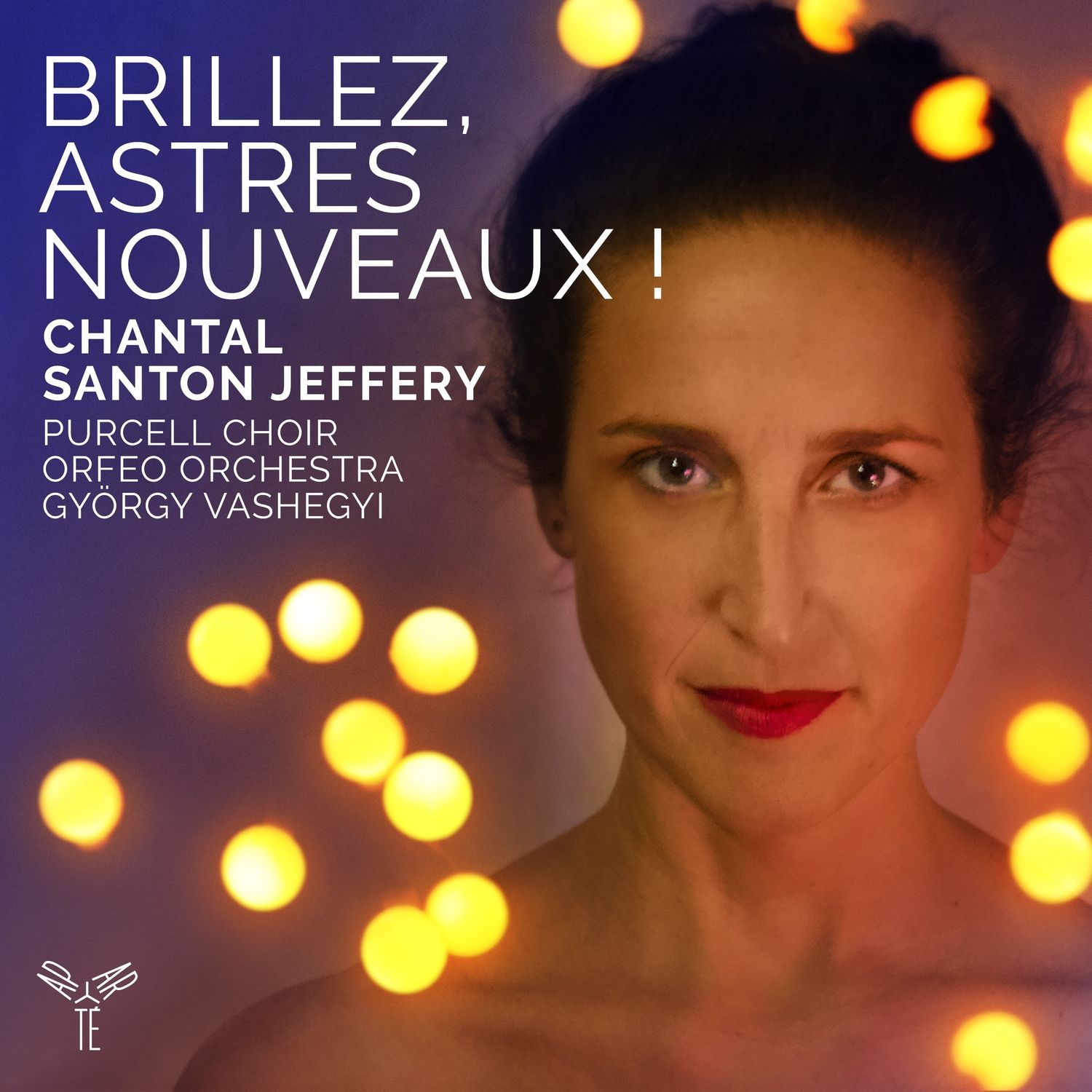

Reference: AP223
18,00 € TTC
In stock
Publisher:
Aparté
Presintation:
Chantal Santon Jeffery and the Orfeo Orchestra, under the direction of György Vashegyi, invite us on a musical journey to the heart of the French Enlightenment. The glorious days of virtuoso sopranos, whose large tessitura and agile voices allowed for all sorts of brilliance and bravura, were the period when French opera reached its peak.
While the splendour of the court under Louis XIV is well known, that of his successor, Louis XV, equalled it in beauty and abundance: audiences flocked to the Opéra to delight in the brilliant vocalisations of the young ladies, the true stars of the performance.
A specialist in French Baroque, Chantal Santon Jeffery has joined forces with the Centre de Musique Baroque de Versailles to restore this repertoire to its full glory. Through a recital featuring many previously unrecorded works, Chantal Santon Jeffery demonstrates all her experience and the full breadth of her talent to revive a spectacle whose splendours still radiate today, and shines thanks to her in all its glory.----
Brillez, astres nouveaux ! (Shine, new stars!)
Founded in 1672, the Paris Opéra – then called the "Académie royale de musique" – changed very little throughout the 18th century, until its legal transformation in 1791, in the midst of the French Revolution. The institution was, for the time, unique: the king intended it to be permanent, active year-round, and, above all, emblematic of his power and wealth. The Paris Opéra thus possessed an orchestra, a choir, a troupe of soloists, a corps de ballet, a team of stagehands, costume and set-design workshops and collections, as well as a library with its own copyists. No other theatre in Europe was so richly endowed at the time.
Among all the artists, singers were the most prominent: five generations succeeded one another during a little over a century in the various roles. Among the men, the troupe included hautes-contre (tenors), tailles (baritones), and basse-tailles (basses); among the women, dessus (lyric sopranos), grands dessus (mezzo-sopranos), and dessus légères (agile sopranos). These singers with agile and brilliant voices were entrusted with virtuoso arias in divertissements, often in the middle of ballets and choruses: they were the favorites of the public who listened patiently through the tragic scenes, waiting to be able to applaud ariettas, cantatilles and other "show" pieces. If, in Lully’s time, tragedy was more popular, in Rameau’s time the trend was reversed. As early as 1714, the Mercure galant noted that, "as defective as modern operas are, I have no doubt that they will soon replace the old ones; we only have to continue to include a few cantatas. Every day we see a little aria sung by some distinguished voice calling many people back to operas that they found languid, because they are too beautiful; beauty overwhelms them, they only need the pretty." From this period dates the rise of the opéra-ballet, which eventually supplanted the tragédie en musique. According to Rémond de Saint-Mard, "these little divertissements are much better performed than our operas; for that, we have light and very pretty voices" (Réflexions sur l’Opéra, 1741).
According to Mancini, to succeed in light music, singers must possess certain skills, starting with "strength, harmony, lightness above all, and a great range in both the low and high registers. Anyone whose voice does not possess all these qualities would attempt the study of this genre in vain." (L’Art du chant figuré, 1776). Agility "is particularly employed in bravura ariettas; it is there that the voice displays all its lightness and performs, so to speak, its feats of strength," he asserts. In France, it is also expressed in the art of decorating the melodic line with vocal ornaments. Unlike other European countries, where virtuosity was judged primarily on flamboyant da capo arias, France valued the flexibility of a voice primarily on its ability to shape the decorative notes added to melodies (called “notes de goût”) according to the rules of “taste in singing”. Although all voices could demonstrate agility, some were more directly concerned by this quality: according to the Encyclopédie, “the high voice” (voix de dessus) is “naturally easy, light and sensitive.” Robinet explains it in his own way: “If women spoke less, they would not sing so well. […] The continual chatter of women maintains the suppleness of the organ; the volubility of the tongue disposes the voice to liveliness in roulades.” (De la Nature, 1761). More generally, Rameau himself encourages singers to perfect themselves until they “achieve all the flexibility necessary to perform the greatest difficulties.” (Code de musique pratique, 1760). [...]
While the splendour of the court under Louis XIV is well known, that of his successor, Louis XV, equalled it in beauty and abundance: audiences flocked to the Opéra to delight in the brilliant vocalisations of the young ladies, the true stars of the performance.
A specialist in French Baroque, Chantal Santon Jeffery has joined forces with the Centre de Musique Baroque de Versailles to restore this repertoire to its full glory. Through a recital featuring many previously unrecorded works, Chantal Santon Jeffery demonstrates all her experience and the full breadth of her talent to revive a spectacle whose splendours still radiate today, and shines thanks to her in all its glory.----
Brillez, astres nouveaux ! (Shine, new stars!)
Founded in 1672, the Paris Opéra – then called the "Académie royale de musique" – changed very little throughout the 18th century, until its legal transformation in 1791, in the midst of the French Revolution. The institution was, for the time, unique: the king intended it to be permanent, active year-round, and, above all, emblematic of his power and wealth. The Paris Opéra thus possessed an orchestra, a choir, a troupe of soloists, a corps de ballet, a team of stagehands, costume and set-design workshops and collections, as well as a library with its own copyists. No other theatre in Europe was so richly endowed at the time.
Among all the artists, singers were the most prominent: five generations succeeded one another during a little over a century in the various roles. Among the men, the troupe included hautes-contre (tenors), tailles (baritones), and basse-tailles (basses); among the women, dessus (lyric sopranos), grands dessus (mezzo-sopranos), and dessus légères (agile sopranos). These singers with agile and brilliant voices were entrusted with virtuoso arias in divertissements, often in the middle of ballets and choruses: they were the favorites of the public who listened patiently through the tragic scenes, waiting to be able to applaud ariettas, cantatilles and other "show" pieces. If, in Lully’s time, tragedy was more popular, in Rameau’s time the trend was reversed. As early as 1714, the Mercure galant noted that, "as defective as modern operas are, I have no doubt that they will soon replace the old ones; we only have to continue to include a few cantatas. Every day we see a little aria sung by some distinguished voice calling many people back to operas that they found languid, because they are too beautiful; beauty overwhelms them, they only need the pretty." From this period dates the rise of the opéra-ballet, which eventually supplanted the tragédie en musique. According to Rémond de Saint-Mard, "these little divertissements are much better performed than our operas; for that, we have light and very pretty voices" (Réflexions sur l’Opéra, 1741).
According to Mancini, to succeed in light music, singers must possess certain skills, starting with "strength, harmony, lightness above all, and a great range in both the low and high registers. Anyone whose voice does not possess all these qualities would attempt the study of this genre in vain." (L’Art du chant figuré, 1776). Agility "is particularly employed in bravura ariettas; it is there that the voice displays all its lightness and performs, so to speak, its feats of strength," he asserts. In France, it is also expressed in the art of decorating the melodic line with vocal ornaments. Unlike other European countries, where virtuosity was judged primarily on flamboyant da capo arias, France valued the flexibility of a voice primarily on its ability to shape the decorative notes added to melodies (called “notes de goût”) according to the rules of “taste in singing”. Although all voices could demonstrate agility, some were more directly concerned by this quality: according to the Encyclopédie, “the high voice” (voix de dessus) is “naturally easy, light and sensitive.” Robinet explains it in his own way: “If women spoke less, they would not sing so well. […] The continual chatter of women maintains the suppleness of the organ; the volubility of the tongue disposes the voice to liveliness in roulades.” (De la Nature, 1761). More generally, Rameau himself encourages singers to perfect themselves until they “achieve all the flexibility necessary to perform the greatest difficulties.” (Code de musique pratique, 1760). [...]
Chantal Santon-Jeffery
Purcell Choir
Orfeo Orchestra
György Vashegyi (conductor)
Includes:
1. Bernard de Bury, Les Caractères de la Folie (1743) | Ouverture
2. Jean-Joseph Cassanéa de Mondonville, Les Fêtes de Paphos (1758) | « Dieu des amants »
3. Jean-Philippe Rameau, La Naissance d’Osiris (1754) | Musette tendre
4. Jean-Philippe Rameau, Le Temple de la Gloire (1745) | « Tout rang, tout sexe, tout âge »
5. Pancrace Royer, Le Pouvoir de l’Amour (1743) | « Quelle vengeance ! quelle horreur »
6. Jean-Baptiste Cardonne, Omphale (1769) | « Que le jour pâlissant »
7. « Que tout serve en ces lieux »
8. Premier Air pour les magiciens
9. « Pluton répond à nos souhaits »
10. Jean-Philippe Rameau, Les Fêtes d’Hébé (1739) | « Dieux qui me condamnez »
11. Pancrace Royer, Le Pouvoir de l’Amour | Ritournelle
12. Jean-Philippe Rameau, Les Fêtes d’Hébé | « Veillez sur ces guerriers »
13. « Dieu tout puissant »
14. Jean-Marie Leclair, Scylla et Glaucus (1746) | Symphonie pour la descente de Vénus
15. Jean-Philippe Rameau, Dardanus (1744) | « Courez à la victoire »
16. Jean-Philippe Rameau, Les Fêtes d’Hébé | « Éclatante trompette, annoncez notre gloire »
17. Pancrace Royer, Le Pouvoir de l’Amour | Ouverture
18. Jean-Joseph Cassanéa de Mondonville, Le Carnaval du Parnasse (1749) |
« Que votre gloire vous rassemble »
19. Jean-Philippe Rameau, Les Paladins (1760) | « Triste séjour, solitude ennuyeuse »
20. Jean-Joseph Cassanéa de Mondonville, Les Fêtes de Paphos | « Laissons de mon amour »
21. Antoine Dauvergne, Canente (1760) | Air pour les magiciens
22. « Où suis-je ? qui prendra ma défense »
23. « Tremble, c’est l’amour jaloux »
24. « Qui peut me délivrer »
25. « Calmez, de vos fureurs »
26. Pancrace Royer, Le Pouvoir de l’Amour | Marche
27. Joseph Bodin de Boismortier, Daphnis et Chloé (1747) | « Cesse de répandre des larmes »
28. Charles-Hubert Gervais, Pomone (1720) | « Quels doux concerts »
29. Joseph Bodin de Boismortier, Les Voyages de l’Amour (1736) | « Doux sommeil… »
30. Antoine Dauvergne, Polyxène (1763) | Premier et deuxième Airs
31. Jean-Philippe Rameau, Le Temple de la Gloire | « Vole, charmant Amour »
32. Bernard de Bury, Les Caractères de la Folie | « Charmant Amour, âme du monde »
33. Jean-Philippe Rameau, Castor et Pollux (1737) | « Brillez, astres nouveaux… ! »
Purcell Choir
Orfeo Orchestra
György Vashegyi (conductor)
Includes:
1. Bernard de Bury, Les Caractères de la Folie (1743) | Ouverture
2. Jean-Joseph Cassanéa de Mondonville, Les Fêtes de Paphos (1758) | « Dieu des amants »
3. Jean-Philippe Rameau, La Naissance d’Osiris (1754) | Musette tendre
4. Jean-Philippe Rameau, Le Temple de la Gloire (1745) | « Tout rang, tout sexe, tout âge »
5. Pancrace Royer, Le Pouvoir de l’Amour (1743) | « Quelle vengeance ! quelle horreur »
6. Jean-Baptiste Cardonne, Omphale (1769) | « Que le jour pâlissant »
7. « Que tout serve en ces lieux »
8. Premier Air pour les magiciens
9. « Pluton répond à nos souhaits »
10. Jean-Philippe Rameau, Les Fêtes d’Hébé (1739) | « Dieux qui me condamnez »
11. Pancrace Royer, Le Pouvoir de l’Amour | Ritournelle
12. Jean-Philippe Rameau, Les Fêtes d’Hébé | « Veillez sur ces guerriers »
13. « Dieu tout puissant »
14. Jean-Marie Leclair, Scylla et Glaucus (1746) | Symphonie pour la descente de Vénus
15. Jean-Philippe Rameau, Dardanus (1744) | « Courez à la victoire »
16. Jean-Philippe Rameau, Les Fêtes d’Hébé | « Éclatante trompette, annoncez notre gloire »
17. Pancrace Royer, Le Pouvoir de l’Amour | Ouverture
18. Jean-Joseph Cassanéa de Mondonville, Le Carnaval du Parnasse (1749) |
« Que votre gloire vous rassemble »
19. Jean-Philippe Rameau, Les Paladins (1760) | « Triste séjour, solitude ennuyeuse »
20. Jean-Joseph Cassanéa de Mondonville, Les Fêtes de Paphos | « Laissons de mon amour »
21. Antoine Dauvergne, Canente (1760) | Air pour les magiciens
22. « Où suis-je ? qui prendra ma défense »
23. « Tremble, c’est l’amour jaloux »
24. « Qui peut me délivrer »
25. « Calmez, de vos fureurs »
26. Pancrace Royer, Le Pouvoir de l’Amour | Marche
27. Joseph Bodin de Boismortier, Daphnis et Chloé (1747) | « Cesse de répandre des larmes »
28. Charles-Hubert Gervais, Pomone (1720) | « Quels doux concerts »
29. Joseph Bodin de Boismortier, Les Voyages de l’Amour (1736) | « Doux sommeil… »
30. Antoine Dauvergne, Polyxène (1763) | Premier et deuxième Airs
31. Jean-Philippe Rameau, Le Temple de la Gloire | « Vole, charmant Amour »
32. Bernard de Bury, Les Caractères de la Folie | « Charmant Amour, âme du monde »
33. Jean-Philippe Rameau, Castor et Pollux (1737) | « Brillez, astres nouveaux… ! »
Publication date:
2020-01


