

Book
Les Fées des forêts de Saint-Germain, 1625 (Expodcast#2)
A royal ballet of "bouffonesque humour"


Reference: CMBV-HC016
Binding: paperback
80,00 € TTC
In stock
Collection:
Go further
Publisher:
Editions Brepols
Presintation:
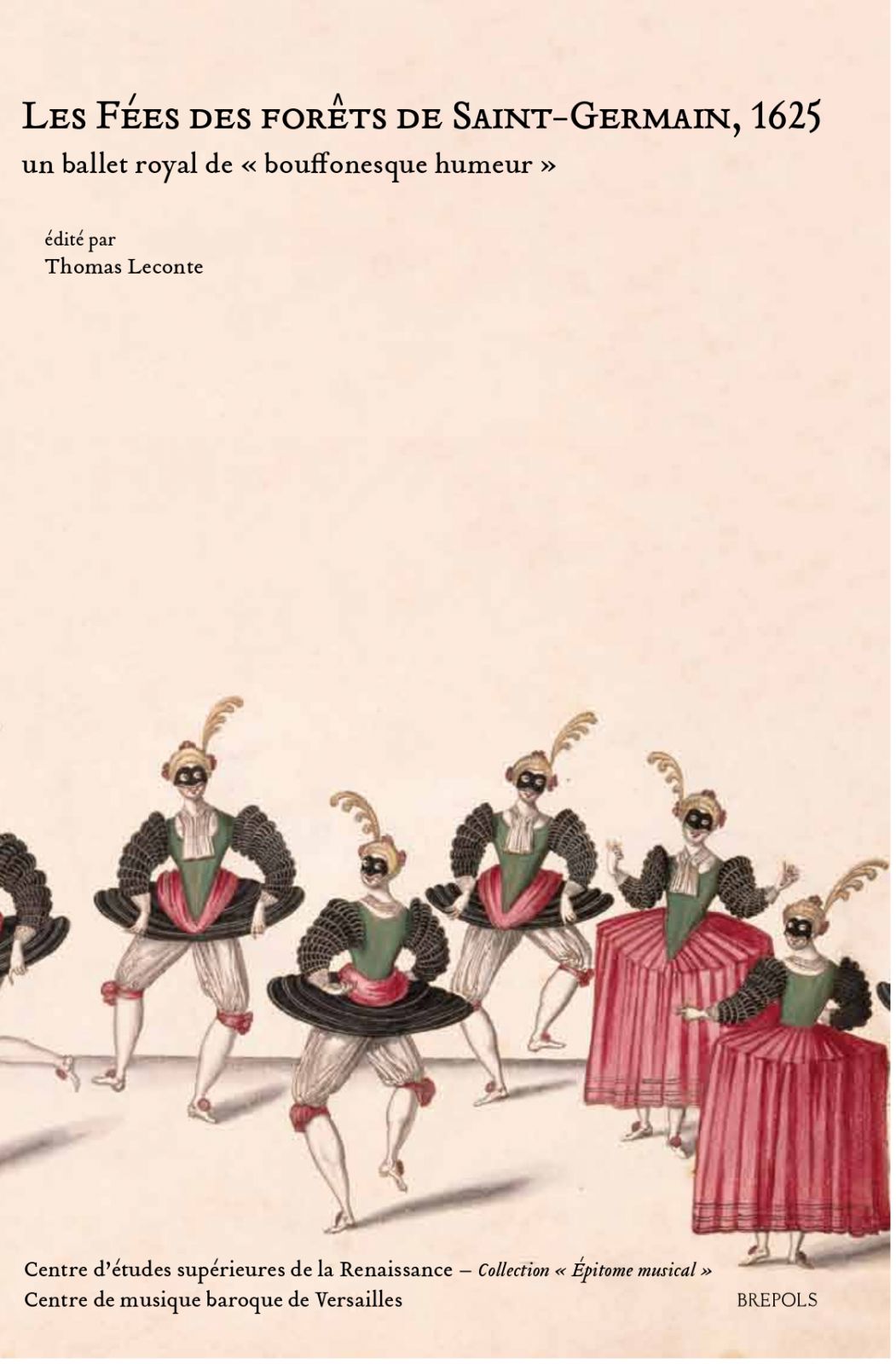
An emblematic genre of the performing arts of the first seventeenth century in France, a total spectacle combining poetry, music and visual arts, a mirror of an aristocratic society that often satirically stages its concerns, its passions, its even its foibles, the court ballet remains, despite precious studies that are essential references, difficult to grasp today. The traces that have come down to us, often in fragmentary and scattered ways, bear witness to a fascinating universe, full of references and symbols, then perfectly intelligible, more hermetic today. More particularly, the "king’s ballet", danced with magnificence every year at the time of the Carnival, was an important event in the life of the court; The sovereign himself mounted the stage to "represent" to the court and his subjects the very image of majesty. Beyond entertainment – and indeed sometimes of unbridled fantasy – the "king’s ballet", whether mythological, allegorical or whimsical, thus gave form to a symbolic arsenal serving an underlying political purpose.
"Ballet du Roi" danced by Louis XIII at the Louvre on 11 February 1625, the Ballet of the fairies of the forests of Saint Germain is, along with Renaud’s very political Ballet de la Deliverance (1617), one of the best-preserved ballets of the reign: poetic, musical, iconographic sources, archival documents and contemporary memoirs testify to the brilliance of the show, but also record its importance and solemnity. If it is the "king’s ballet", and therefore an official show supposed to promote the majesty of the prince, the Ballet of the fairies of the forests of Saint Germain is also the first court ballet with a predominantly burlesque theme: an astonishing paradox in that this royal ballet openly makes fun of "serious ballets". This book, more a case study than a study of the genre, seeks better to understand the issues and mechanisms of this apparent contradiction by deciphering the many sources of this important ballet of the reign of Louis XIII. Brought together around these whimsical fairies, art, literature, dance and music historians invite, through unpublished analyses of the significant components of the show, the publication of remarkable documentary pieces and a critical reconstruction of the ballet, to penetrate its "fabric" and to grasp the very essence of this emblematic genre of seventeenth-century court society.
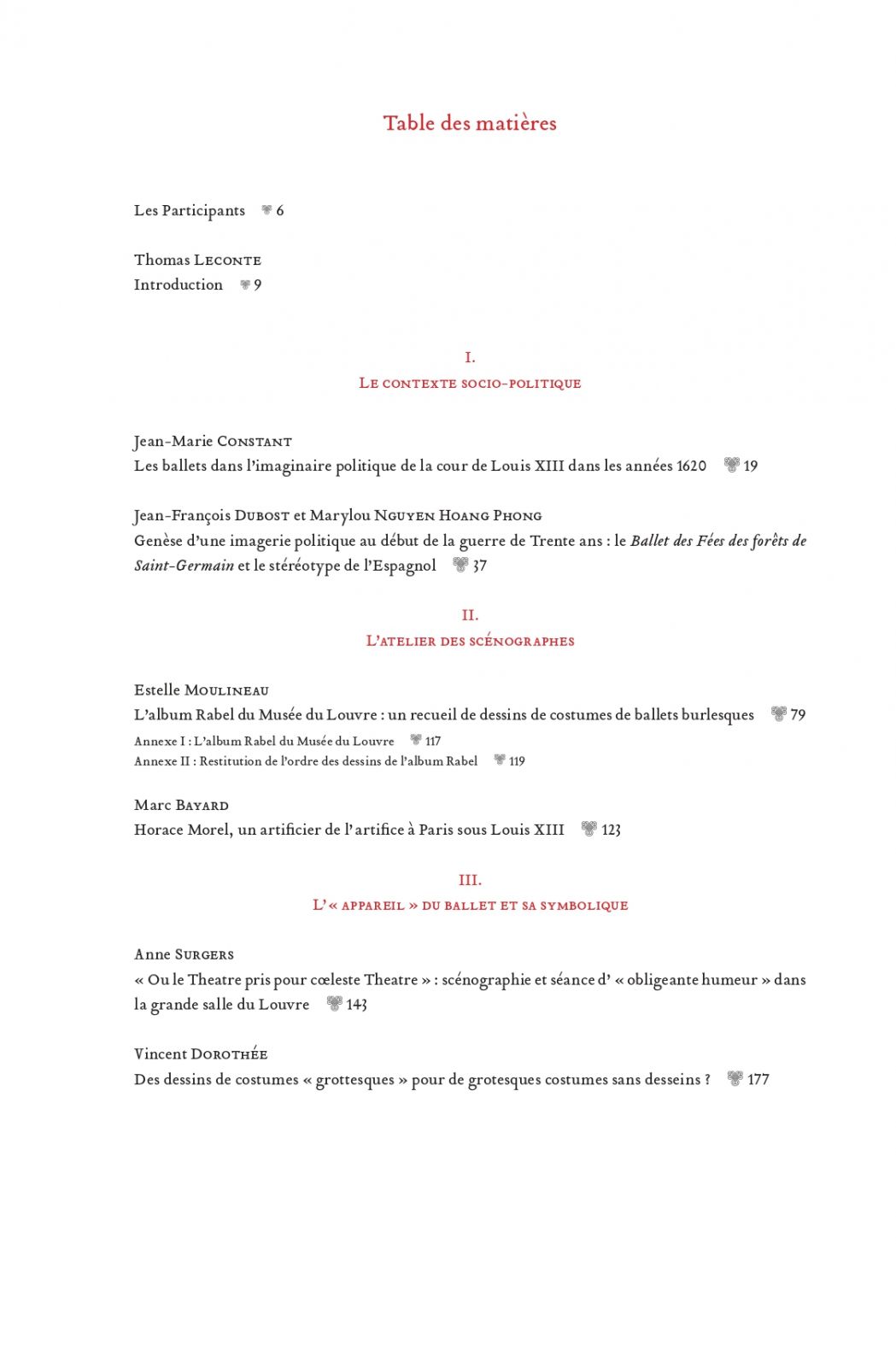
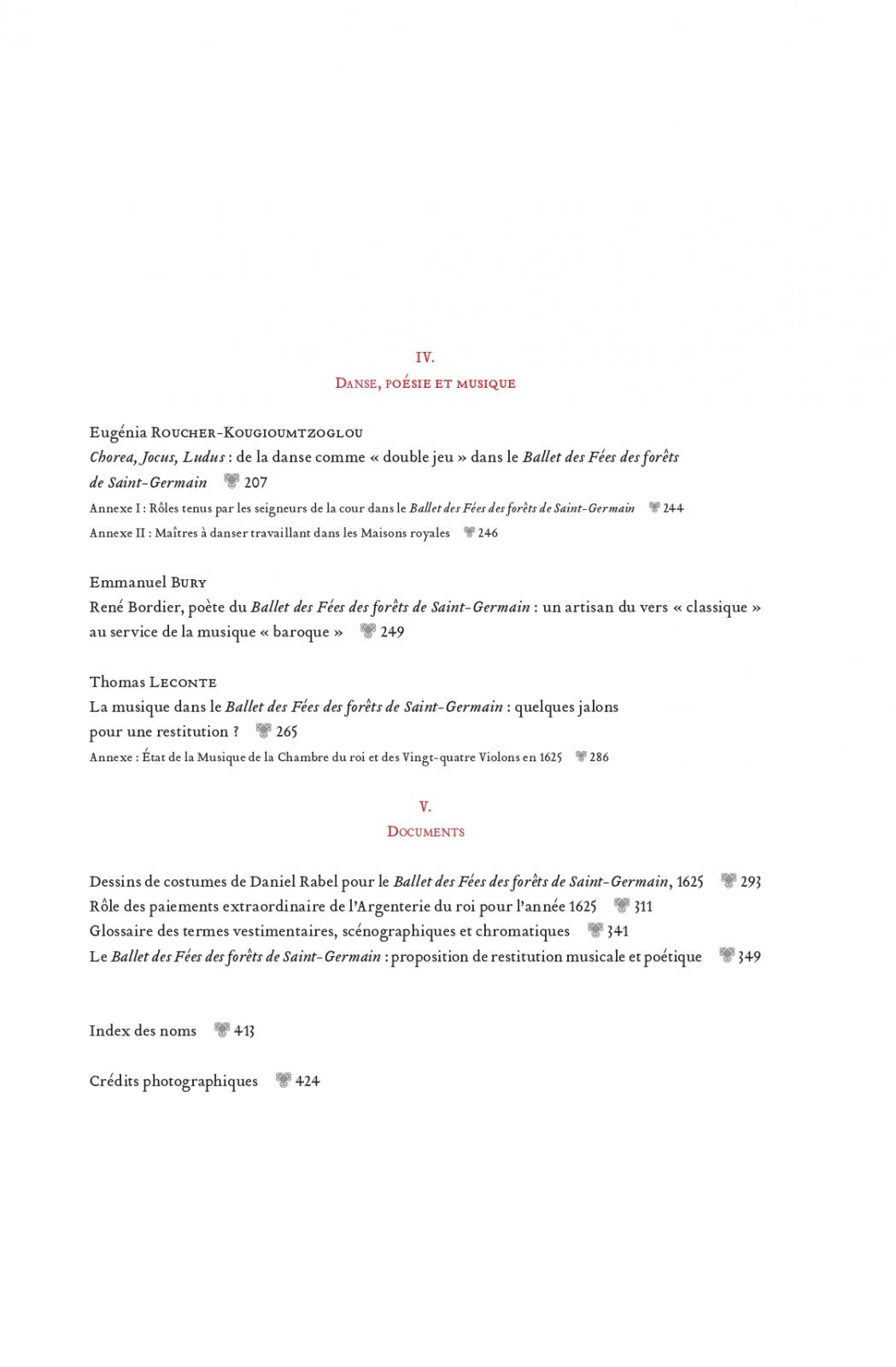
Edited by Thomas Leconte, researcher and editor at the Centre de musique baroque de Versailles, this book brings together studies by Marc Bayard, Emmanuel Bury, Jean-Marie Constant, Vincent Dorothée, Jean-François Dubost, Estelle Moulineau, Marylou Nguyen Hoang Phong, Eugénia Roucher-kougioumtzoglou and Anne Surgers.
"Ballet du Roi" danced by Louis XIII at the Louvre on 11 February 1625, the Ballet of the fairies of the forests of Saint Germain is, along with Renaud’s very political Ballet de la Deliverance (1617), one of the best-preserved ballets of the reign: poetic, musical, iconographic sources, archival documents and contemporary memoirs testify to the brilliance of the show, but also record its importance and solemnity. If it is the "king’s ballet", and therefore an official show supposed to promote the majesty of the prince, the Ballet of the fairies of the forests of Saint Germain is also the first court ballet with a predominantly burlesque theme: an astonishing paradox in that this royal ballet openly makes fun of "serious ballets". This book, more a case study than a study of the genre, seeks better to understand the issues and mechanisms of this apparent contradiction by deciphering the many sources of this important ballet of the reign of Louis XIII. Brought together around these whimsical fairies, art, literature, dance and music historians invite, through unpublished analyses of the significant components of the show, the publication of remarkable documentary pieces and a critical reconstruction of the ballet, to penetrate its "fabric" and to grasp the very essence of this emblematic genre of seventeenth-century court society.
Edited by Thomas Leconte, researcher and editor at the Centre de musique baroque de Versailles, this book brings together studies by Marc Bayard, Emmanuel Bury, Jean-Marie Constant, Vincent Dorothée, Jean-François Dubost, Estelle Moulineau, Marylou Nguyen Hoang Phong, Eugénia Roucher-kougioumtzoglou and Anne Surgers.
Pages:
425
Publication date:
2013-01
Introduction (language):
French
ISBN 978-2-503-54793-0
Recommendations

Free
Available in a digital version


