

Te Deum
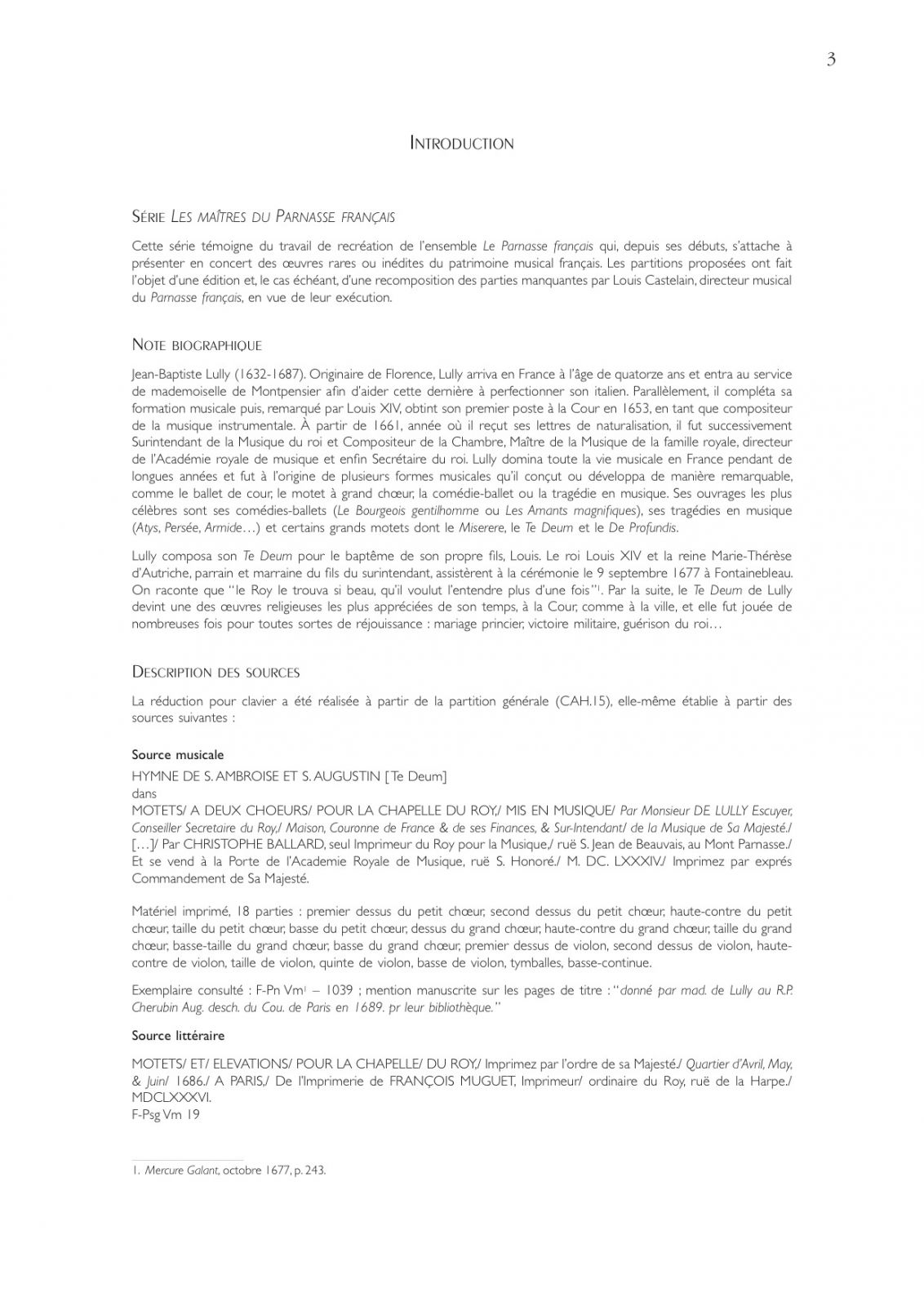
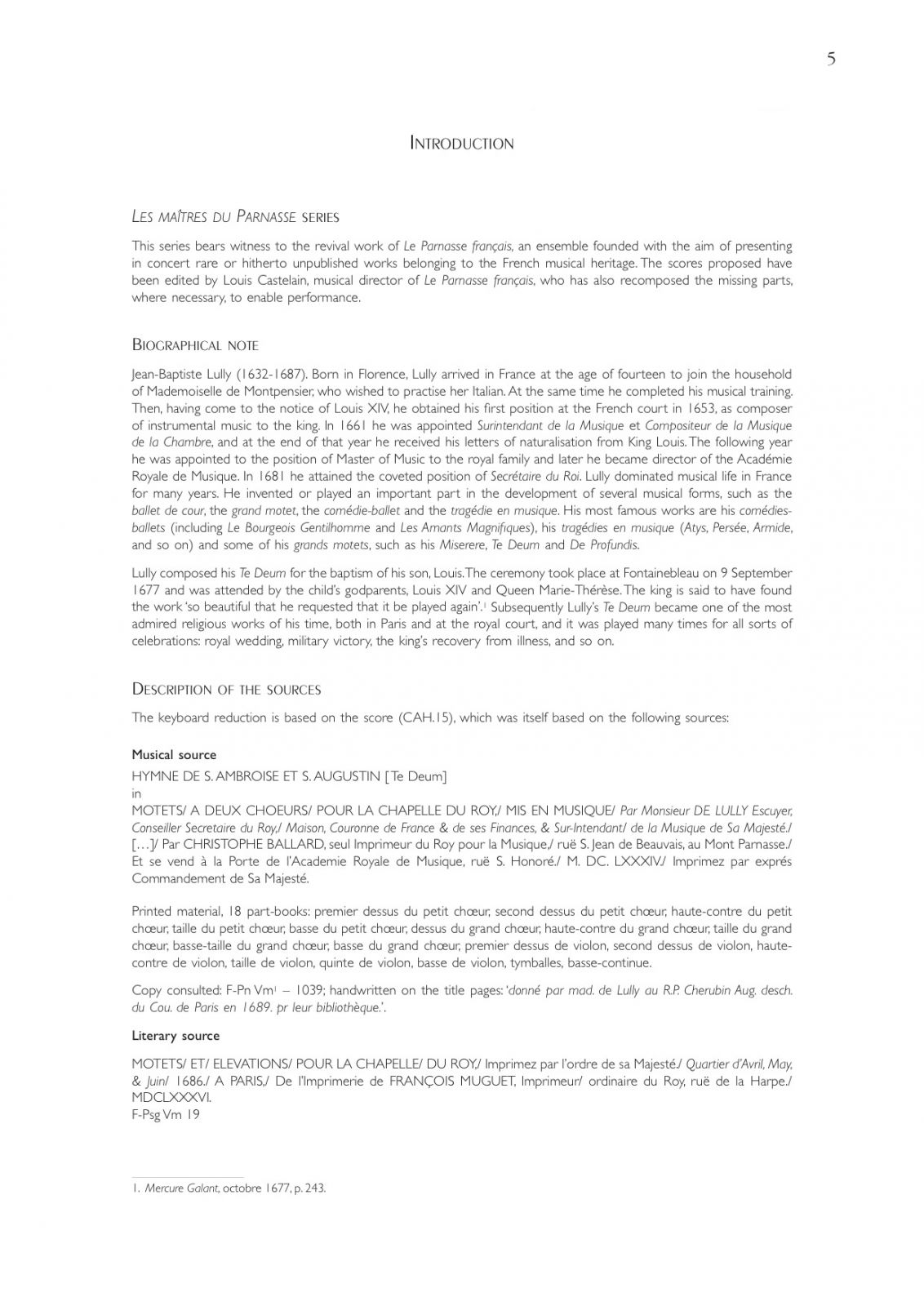


Lully’s Te Deum was one of the most popular works of French religious music of its time, appreciated first and foremost by King Louis XIV himself. Lully composed the work in 1677 for the christening of his own son, which the king attended as godfather. A masterpiece of musical architecture, Lully’s Te Deum was subsequently used to accompany numerous festivities: royal weddings, military victories, the king’s recovery from illness etc.
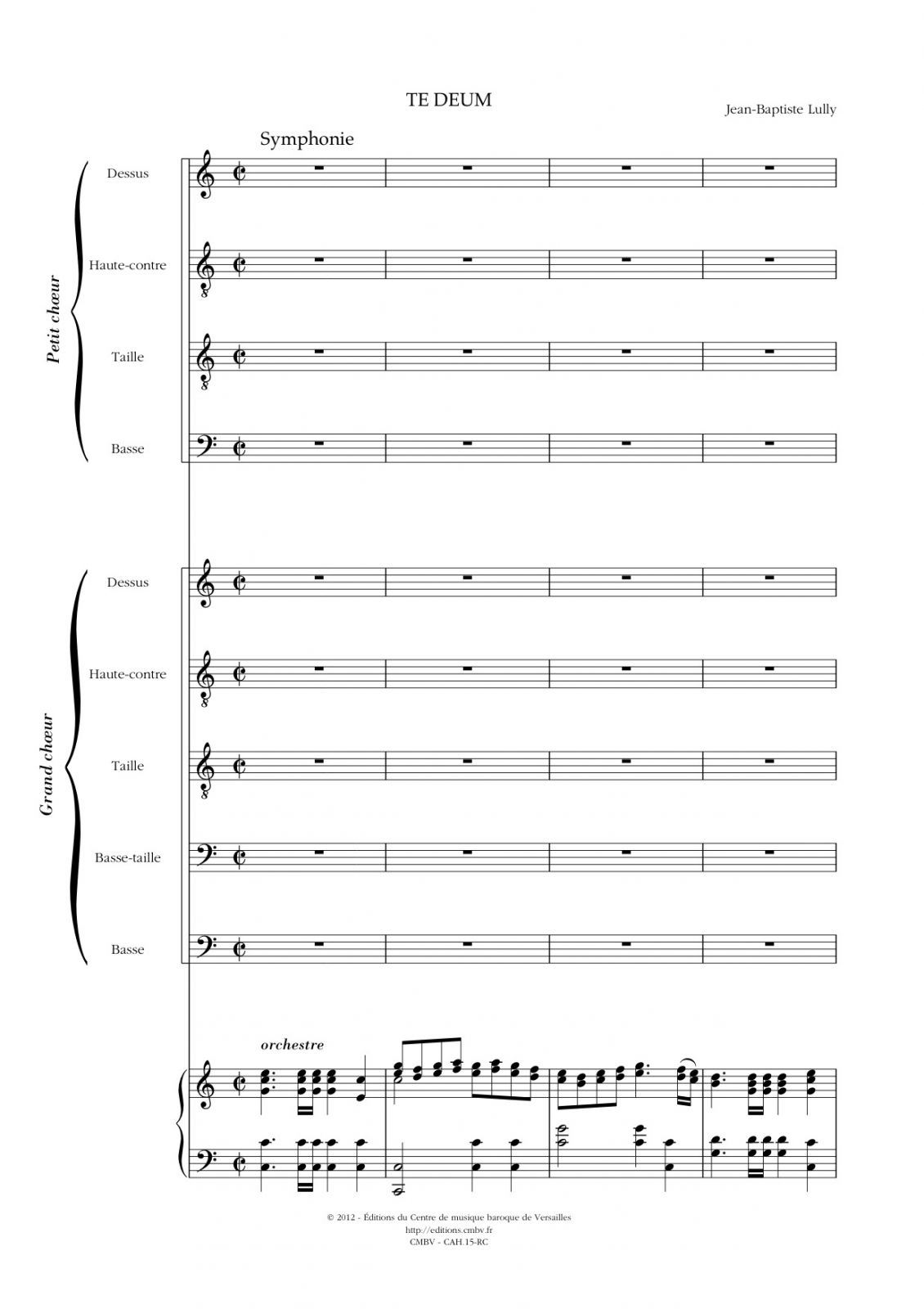
This is the first Te Deum for a large ensemble: a small choir, a large choir and an orchestra with trumpets and timpani. This score can be performed by a variety of vocal and orchestral forces: at least 5 soloists (2 dessus, haute-contre, taille, basse), a 5-voice choir (dessus, haute-contre, taille, basse-taille, basse), a string orchestra, with 2 trumpets and a positive organ.
This score from the Les Maîtres du Parnasse français series, proposed by Louis Castelain, reflects the re-creation work by the Le Parnasse français ensemble, which has been committed from the outset to presenting in concert rare or unpublished works from France’s musical heritage. The scores performed have been edited and, where necessary, the missing parts reworked by musical director Louis Castelain.
The works
Recommendations


