

Book
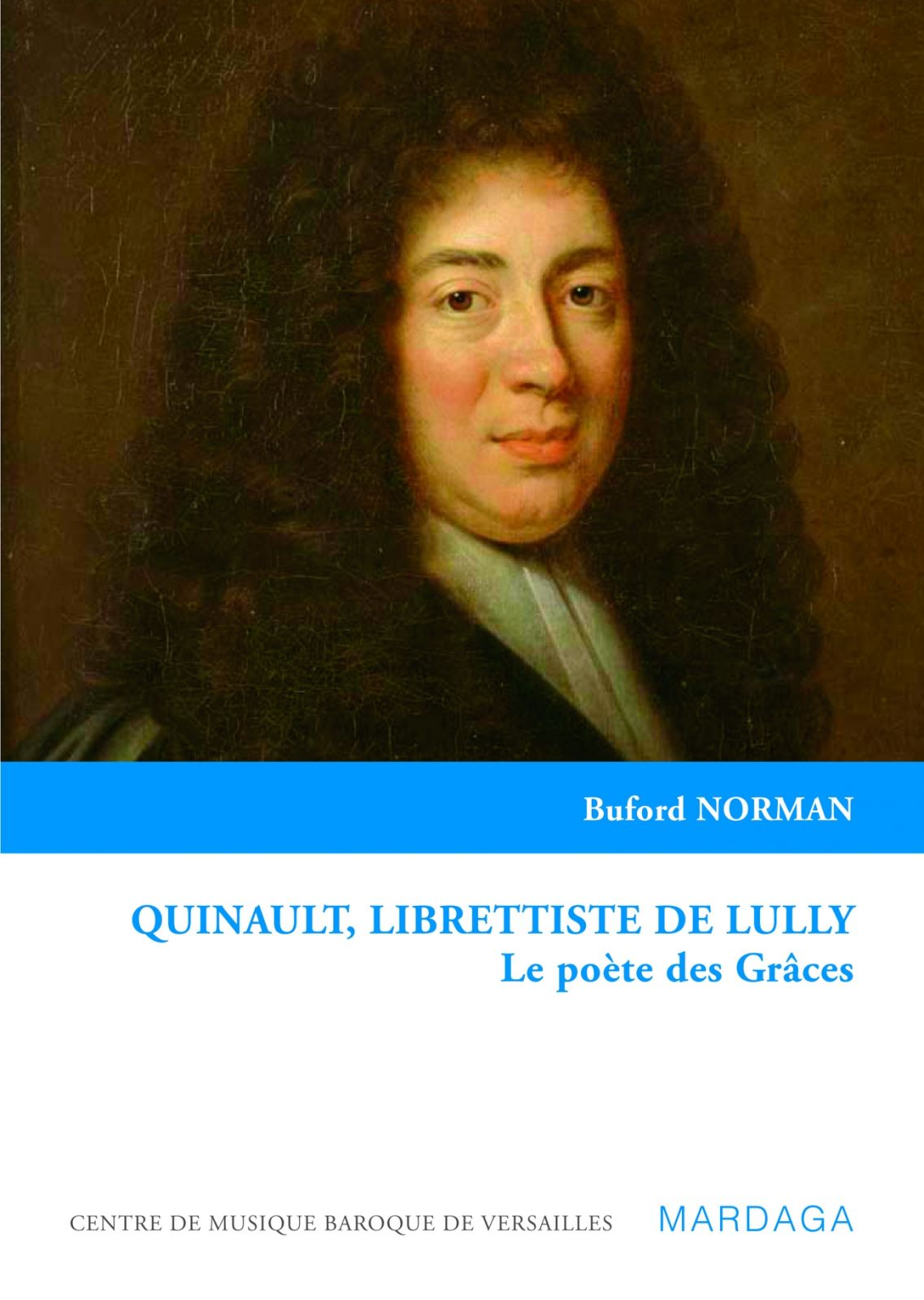
Quinault, Lully’s librettist (Expodcast#2)
le Poète des Grâces


Reference: CMBV-B007
Binding: paperback
38,00 € TTC
In stock
Collection:
Go further
Publisher:
Editions Mardaga
Presintation:
Literary history has long neglected Quinault’s work as it has neglected lyric theatre in general, even though the popularity of the operas he wrote for Lully eclipsed that of Racine’s tragedies, and Quinault was the most frequently performed and best-paid dramatist of the reign of Louis XIV. The recent success of several of these operas demonstrates not only the essential role of the "poem" in evoking beauty and emotion in a musical tragedy, but also the value of these texts as literary works. Our understanding of French classicism will therefore remain imperfect if we continue to neglect these works, and the aim of this book – the first to be devoted exclusively to Quinault’s libretti – is to raise awareness of these texts, which delighted audiences for over a century and continued to be published until the end of the nineteenth century.
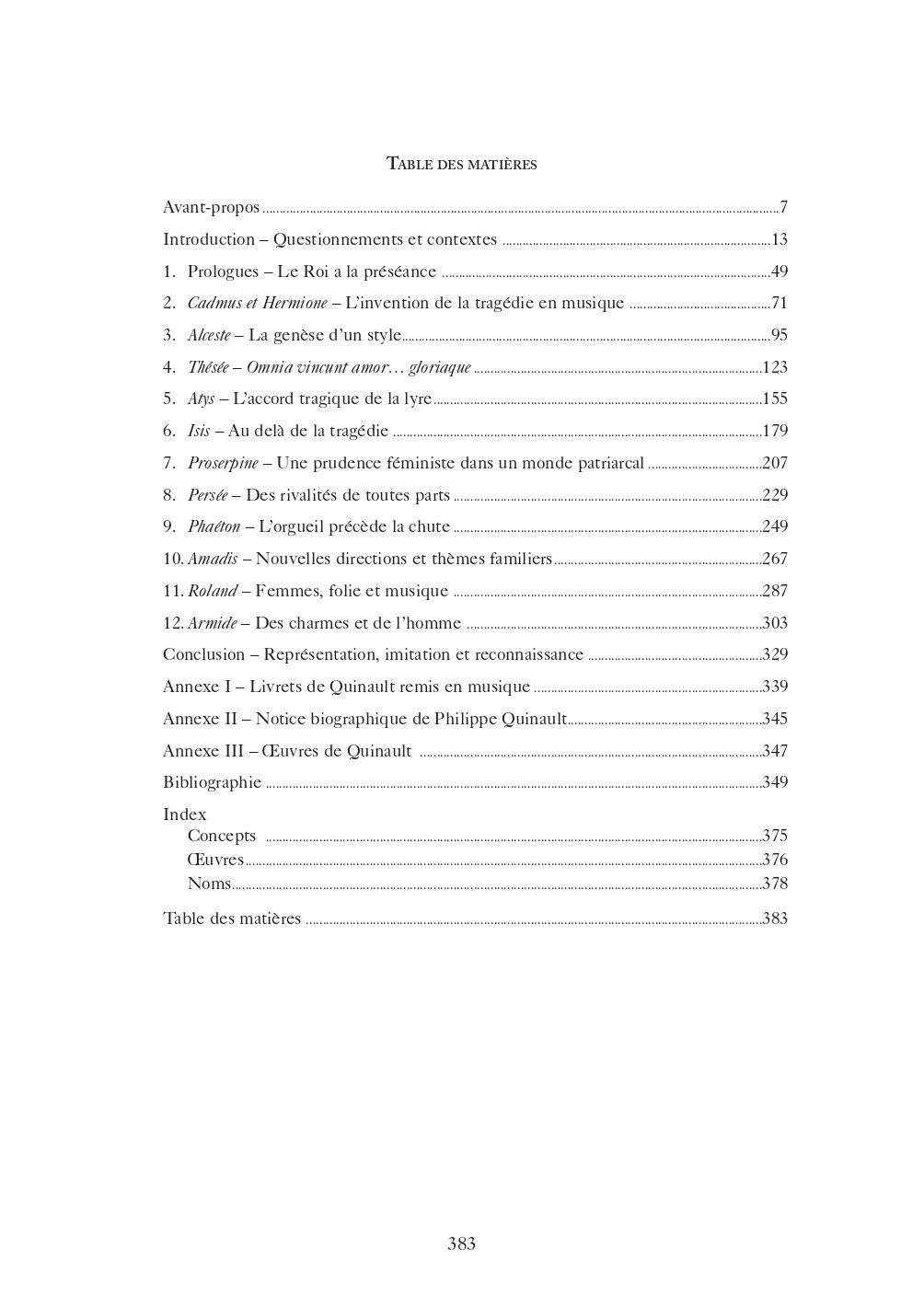
The book comprises preface, introduction, a chapter on the prologues, chapters on each of the eleven librettos, and conclusion. The introduction sets the tragédie en musique in the context of modern opera, and introduces the theoretical concepts that are essential to understanding it. The many components of opera (words, music, action, costumes, sets, dance and their many subdivisions) each have an "aesthetic weight". If, as is often the case, too much emphasis is placed on plot, the emotional effects that are essential to the success of an opera are overlooked, and the balance between words, music and dance that characterises lyric tragedy is misunderstood. In particular, we need to look closely at certain aspects of this special genre: verisimilitude, stylisation and entertainment.
Buford Norman received his doctorate from Yale University in 1971, with a thesis on Pascal. He was a professor at Iowa State University before being appointed to the University of South Carolina, where he was Jesse Chapman Alcorn Memorial Professor of Foreign Languages until his retirement in 2005. He has published a book (Portraits of Thought, Ohio State University Press, 1987) and several articles on Pascal, as well as on Cyrano, La Rochefoucauld, Nicole, Molière and Racine. More recently, his research has focused on the relationship between music and literature in the 17th century. He is the author of several articles on Quinault and tragedy in music, a critical edition of Quinault’s librettos (Littératures Classiques, 1999, second revised edition 2005), and a book on his librettos (Touched by the Graces, Summa Publications, 2001). He is currently working on a book on Racine and music, and the continuation of the Opera performances in Paris and at court, 1659-1715: an annotated chronology database, published on the website of the Centre de Musique Baroque de Versailles.
The book comprises preface, introduction, a chapter on the prologues, chapters on each of the eleven librettos, and conclusion. The introduction sets the tragédie en musique in the context of modern opera, and introduces the theoretical concepts that are essential to understanding it. The many components of opera (words, music, action, costumes, sets, dance and their many subdivisions) each have an "aesthetic weight". If, as is often the case, too much emphasis is placed on plot, the emotional effects that are essential to the success of an opera are overlooked, and the balance between words, music and dance that characterises lyric tragedy is misunderstood. In particular, we need to look closely at certain aspects of this special genre: verisimilitude, stylisation and entertainment.
Buford Norman received his doctorate from Yale University in 1971, with a thesis on Pascal. He was a professor at Iowa State University before being appointed to the University of South Carolina, where he was Jesse Chapman Alcorn Memorial Professor of Foreign Languages until his retirement in 2005. He has published a book (Portraits of Thought, Ohio State University Press, 1987) and several articles on Pascal, as well as on Cyrano, La Rochefoucauld, Nicole, Molière and Racine. More recently, his research has focused on the relationship between music and literature in the 17th century. He is the author of several articles on Quinault and tragedy in music, a critical edition of Quinault’s librettos (Littératures Classiques, 1999, second revised edition 2005), and a book on his librettos (Touched by the Graces, Summa Publications, 2001). He is currently working on a book on Racine and music, and the continuation of the Opera performances in Paris and at court, 1659-1715: an annotated chronology database, published on the website of the Centre de Musique Baroque de Versailles.
Pages:
383
Publication date:
2009-01
Illustrations, facsimiles (number):
30
Introduction (language):
French
ISBN 978-2-87009-995-7
Annexes:
Quinault’s librettos set to music - Biographical note on Philippe Quinault - Catalogue of Philippe Quinault’s works - Bibliography - Index of concepts and events - Index of works by frequently-cited authors - Index of proper names
Recommendations

Free
Available in a digital version


