

CD
The Sun King’s Opera
Anthology
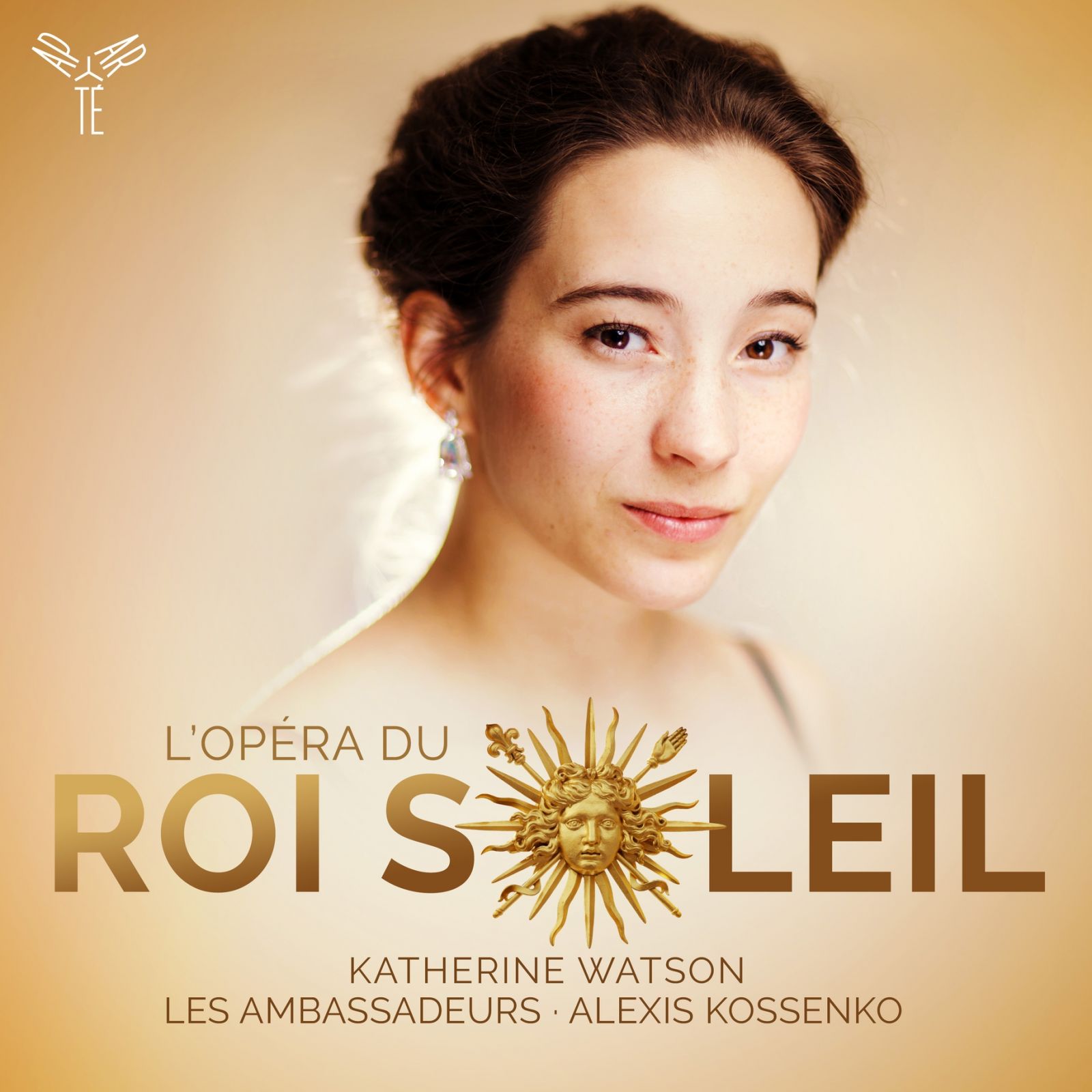

Reference: AP209
18,00 € TTC
In stock
Anthology
Publisher:
Aparté
Presintation:
1 009 / 5 000
The splendours of Versailles come to life in this operatic programme built around the young soprano Katherine Watson and led by flautist and conductor Alexis Kossenko, under the aegis of the Centre de musique baroque de Versailles.
Blending operatic arias and instrumental pieces, this Baroque anthology highlights the key works of the reign of the Sun King, from André Campra to Marin Marais, and rediscovers several forgotten works, such as that of Louis de Lully.
It also allows us to glimpse the dramatic significance of the roles of principal lovers, the queens of tragédie lyrique, for which Katherine Watson proves to be the ideal interpreter. Magnified by the velvety tone and the clarity of the playing of Les Ambassadeurs, under the direction of conductor and flautist Alexis Kossenko, these French airs explore the depths of the human soul, often mistreated by covetous gods, tormented by the pangs of love, but always imbued with nobility.
LARMES D’OPÉRAS (Operatic tears)
The programme imagined for Katherine Watson’s first recital on disc bears witness to the art of tenderness at the Opéra in the 17th and 18th centuries. Charming, touching, moving – such was the employment of the tender and pathetic heroines of tragédie lyrique and opéra-ballet. By her voice, her charisma, and even her physiognomy, Katherine Watson seems destined to embody these typical roles of French Baroque opera... So much the better, because this is the repertoire she loves the most and for which she has been in demand, all over the world, for several years. This recording is therefore an artistic project; but it is also an institutional project. It was born under the auspices of the Centre de musique baroque de Versailles, keen to introduce rare repertoire and to encourage historically informed interpretations, questioning and renewing instrumental, vocal and theatrical practices. Under the expert baton of Alexis Kossenko, the orchestra Les Ambassadeurs has scrupulously respected extant sources and contemporary accounts, in the choice of instruments, scoring, tempos, even down to their "French-style" bowing.
From its inception in 1672, the troupe of the Académie royale de musique was structured into distinct categories of singers: for women, the most sought-after role – because it was the most appreciated by the public – was that of tender or pathetic "principal lover"; that of princesses and nymphs.
Fidelity, courage and resignation were their main virtues; sincerity and fragility made them prime victims. Tender and pathetic roles perfectly embody the taste for tears that developed in France in the mid-17th century: on the tragic stage, and even more so on the operatic stage, the pleasure of seeing others cry – and of crying in return – became almost a guilty pleasure. This taste profoundly shaped theatrical and operatic writing. Librettists imagined heroines plunged into guilty or contradictory passions, desperate situations and impossible choices: whether melancholic, elegiac or heroic, women wept at the Opéra, even in the high-status parts like Armide, Medea or Dido.
To best fulfill tender and pathetic roles, singers were required to have a smooth or unctuous voice, according to the accepted terms of the time. Unctuous meant "tender or suave" but above all "rich, abundant or thick". In pictorial terms, unctuousness evokes "a certain softness of color, [...] a choice of bold, well-blended and harmonious tones, with fluid contours, in a design where there nothing is too strongly pronounced". A unctuous voice will therefore be thick, round, deep, colorful, sensual: we will readily say it is mellow, at once "full and sweet". But in the 18th century, unctuousness also describes what is "pathetic, pious, full of unction, penetrating", relating to a "touching eloquence", a "pious movement", a "captivating piety", a "penetrating tone" and a "pathetic turn" or, more generally, things "that touch the heart and lead to devotion". A smooth voice will therefore naturally be inclined to tragic beauty, noble pathos and theatrical sublimity.
Total duration: 01:13:25
Blending operatic arias and instrumental pieces, this Baroque anthology highlights the key works of the reign of the Sun King, from André Campra to Marin Marais, and rediscovers several forgotten works, such as that of Louis de Lully.
It also allows us to glimpse the dramatic significance of the roles of principal lovers, the queens of tragédie lyrique, for which Katherine Watson proves to be the ideal interpreter. Magnified by the velvety tone and the clarity of the playing of Les Ambassadeurs, under the direction of conductor and flautist Alexis Kossenko, these French airs explore the depths of the human soul, often mistreated by covetous gods, tormented by the pangs of love, but always imbued with nobility.
LARMES D’OPÉRAS (Operatic tears)
The programme imagined for Katherine Watson’s first recital on disc bears witness to the art of tenderness at the Opéra in the 17th and 18th centuries. Charming, touching, moving – such was the employment of the tender and pathetic heroines of tragédie lyrique and opéra-ballet. By her voice, her charisma, and even her physiognomy, Katherine Watson seems destined to embody these typical roles of French Baroque opera... So much the better, because this is the repertoire she loves the most and for which she has been in demand, all over the world, for several years. This recording is therefore an artistic project; but it is also an institutional project. It was born under the auspices of the Centre de musique baroque de Versailles, keen to introduce rare repertoire and to encourage historically informed interpretations, questioning and renewing instrumental, vocal and theatrical practices. Under the expert baton of Alexis Kossenko, the orchestra Les Ambassadeurs has scrupulously respected extant sources and contemporary accounts, in the choice of instruments, scoring, tempos, even down to their "French-style" bowing.
From its inception in 1672, the troupe of the Académie royale de musique was structured into distinct categories of singers: for women, the most sought-after role – because it was the most appreciated by the public – was that of tender or pathetic "principal lover"; that of princesses and nymphs.
Fidelity, courage and resignation were their main virtues; sincerity and fragility made them prime victims. Tender and pathetic roles perfectly embody the taste for tears that developed in France in the mid-17th century: on the tragic stage, and even more so on the operatic stage, the pleasure of seeing others cry – and of crying in return – became almost a guilty pleasure. This taste profoundly shaped theatrical and operatic writing. Librettists imagined heroines plunged into guilty or contradictory passions, desperate situations and impossible choices: whether melancholic, elegiac or heroic, women wept at the Opéra, even in the high-status parts like Armide, Medea or Dido.
To best fulfill tender and pathetic roles, singers were required to have a smooth or unctuous voice, according to the accepted terms of the time. Unctuous meant "tender or suave" but above all "rich, abundant or thick". In pictorial terms, unctuousness evokes "a certain softness of color, [...] a choice of bold, well-blended and harmonious tones, with fluid contours, in a design where there nothing is too strongly pronounced". A unctuous voice will therefore be thick, round, deep, colorful, sensual: we will readily say it is mellow, at once "full and sweet". But in the 18th century, unctuousness also describes what is "pathetic, pious, full of unction, penetrating", relating to a "touching eloquence", a "pious movement", a "captivating piety", a "penetrating tone" and a "pathetic turn" or, more generally, things "that touch the heart and lead to devotion". A smooth voice will therefore naturally be inclined to tragic beauty, noble pathos and theatrical sublimity.
Total duration: 01:13:25
Katherine WATSON, soprano
Les Ambassadeurs
Alexis KOSSENKO (dir.)
contents:
1. L. de Lully, Orphée (1690) : Ah ! que j'éprouve bien que l'amoureuse flamme...
2. M. Marais, Alcyone (1706) : Ouverture
3. M. Marais, Ariane et Bacchus (1696) : Croirai-je, juste ciel ! ce que je viens d'entendre ?
4. M. Marais, Ariane et Bacchus (1696) : Symphonie du sommeil
5. M. Marais, Ariane et Bacchus (1696) : Air pour les flûtes
6. A. Campra, Idoménée (1712, version de 1731) : Chaconne
7. J.-B. Lully, Acis et Galatée (1686) : Enfin, j'ai dissipé la crainte...
8. H. Desmarest, Circé (1694) : Sombres marais du Styx, Cocyte, Phlégéton...
9. H. Desmarest, Circé (1694) : Calmez votre violence...
10. J.-B. Lully, Psyché (1671) : Deh, piangete al pianto mio...
11. J.-B. Stuck, Air ajouté à Thétis et Pélée (1708) : Non sempre guerriero...
12. A. Campra, L'Europe galante (1697) : Mes yeux, ne pourrez-vous jamais...
13. A. Campra, Téléphe (1713) : Sarabande
14. A. Campra, Téléphe (1713) : Soleil, dans ta vaste carrière...
15. A. Campra, Téléphe (1713) : Charmant Père de l'harmonie...
16. M. Marais, Ariane et Bacchus (1696) : Rondeau
17. A. Campra, Téléphe (1713) : Quelle épaisse vapeur tout à coup m’environne ?
18. M. Marais, Alcyone (1706) : Marche pour les Matelots
19. A. Campra, Idoménée (1712) : Espoir des malheureux, plaisir de la vengeance…
20. M. Marais, Alcyone (1706) : Deuxième Air des Matelots
21. M. Pignolet de Montéclair, Les Fêtes de l'été (1716) : Mais, tout parle d’amour dans ce riant bocage !
22. A. Campra, Idoménée (1712, version de 1731) : Coulez, ruisseaux ; dans votre cours…
23. J.-B. Lully, Le Bourgeois gentilhomme (1670) : Marche pour la cérémonie des Turcs
24. J.-B. Stuck, Polydore (1720) : C’en est donc fait : le roi n’a plus de fils…
Les Ambassadeurs
Alexis KOSSENKO (dir.)
contents:
1. L. de Lully, Orphée (1690) : Ah ! que j'éprouve bien que l'amoureuse flamme...
2. M. Marais, Alcyone (1706) : Ouverture
3. M. Marais, Ariane et Bacchus (1696) : Croirai-je, juste ciel ! ce que je viens d'entendre ?
4. M. Marais, Ariane et Bacchus (1696) : Symphonie du sommeil
5. M. Marais, Ariane et Bacchus (1696) : Air pour les flûtes
6. A. Campra, Idoménée (1712, version de 1731) : Chaconne
7. J.-B. Lully, Acis et Galatée (1686) : Enfin, j'ai dissipé la crainte...
8. H. Desmarest, Circé (1694) : Sombres marais du Styx, Cocyte, Phlégéton...
9. H. Desmarest, Circé (1694) : Calmez votre violence...
10. J.-B. Lully, Psyché (1671) : Deh, piangete al pianto mio...
11. J.-B. Stuck, Air ajouté à Thétis et Pélée (1708) : Non sempre guerriero...
12. A. Campra, L'Europe galante (1697) : Mes yeux, ne pourrez-vous jamais...
13. A. Campra, Téléphe (1713) : Sarabande
14. A. Campra, Téléphe (1713) : Soleil, dans ta vaste carrière...
15. A. Campra, Téléphe (1713) : Charmant Père de l'harmonie...
16. M. Marais, Ariane et Bacchus (1696) : Rondeau
17. A. Campra, Téléphe (1713) : Quelle épaisse vapeur tout à coup m’environne ?
18. M. Marais, Alcyone (1706) : Marche pour les Matelots
19. A. Campra, Idoménée (1712) : Espoir des malheureux, plaisir de la vengeance…
20. M. Marais, Alcyone (1706) : Deuxième Air des Matelots
21. M. Pignolet de Montéclair, Les Fêtes de l'été (1716) : Mais, tout parle d’amour dans ce riant bocage !
22. A. Campra, Idoménée (1712, version de 1731) : Coulez, ruisseaux ; dans votre cours…
23. J.-B. Lully, Le Bourgeois gentilhomme (1670) : Marche pour la cérémonie des Turcs
24. J.-B. Stuck, Polydore (1720) : C’en est donc fait : le roi n’a plus de fils…
Publication date:
2019-10
Introduction (language):
French/English


