

Ariane consolée par Bacchus
cantata for bass voice
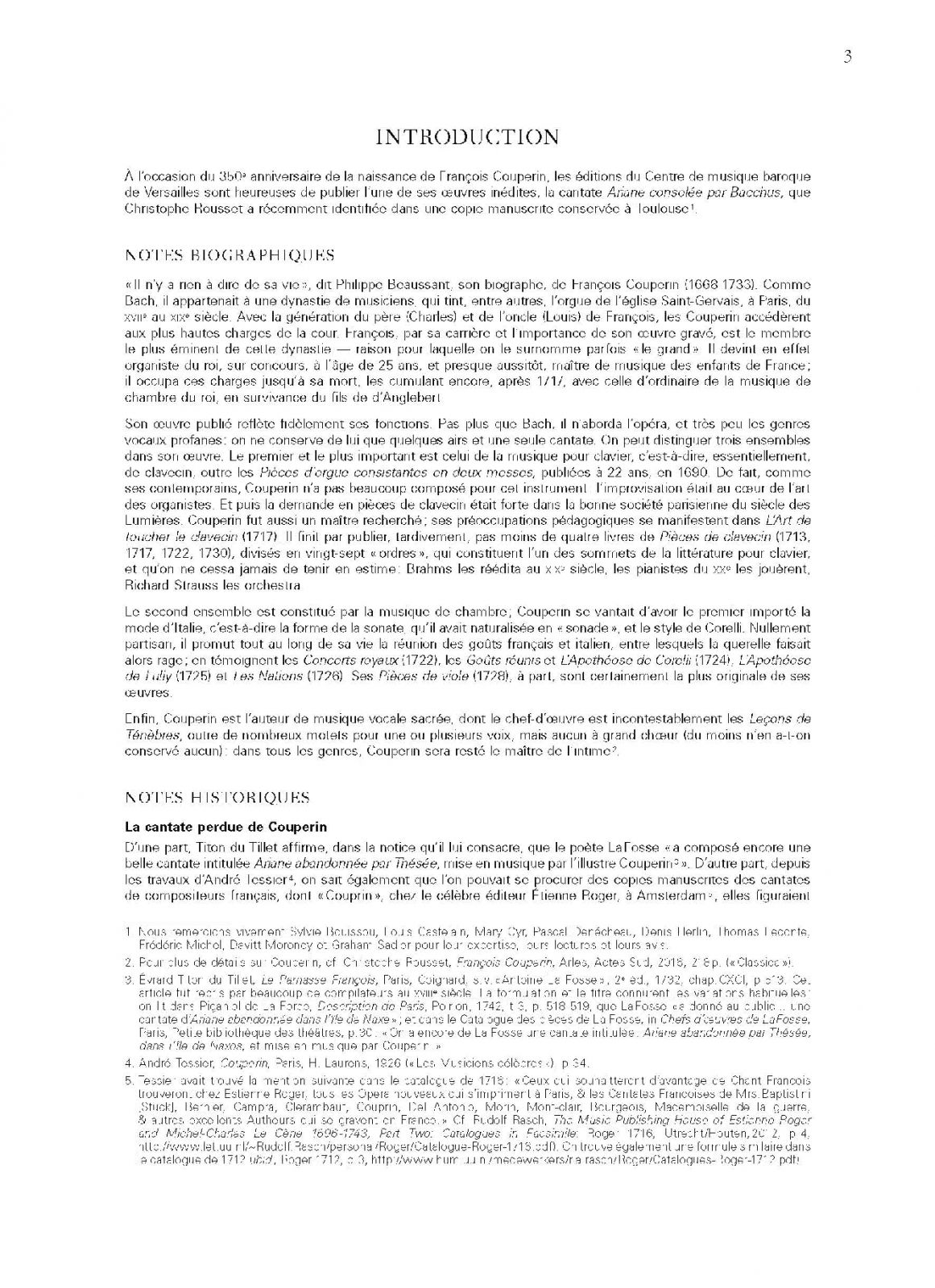
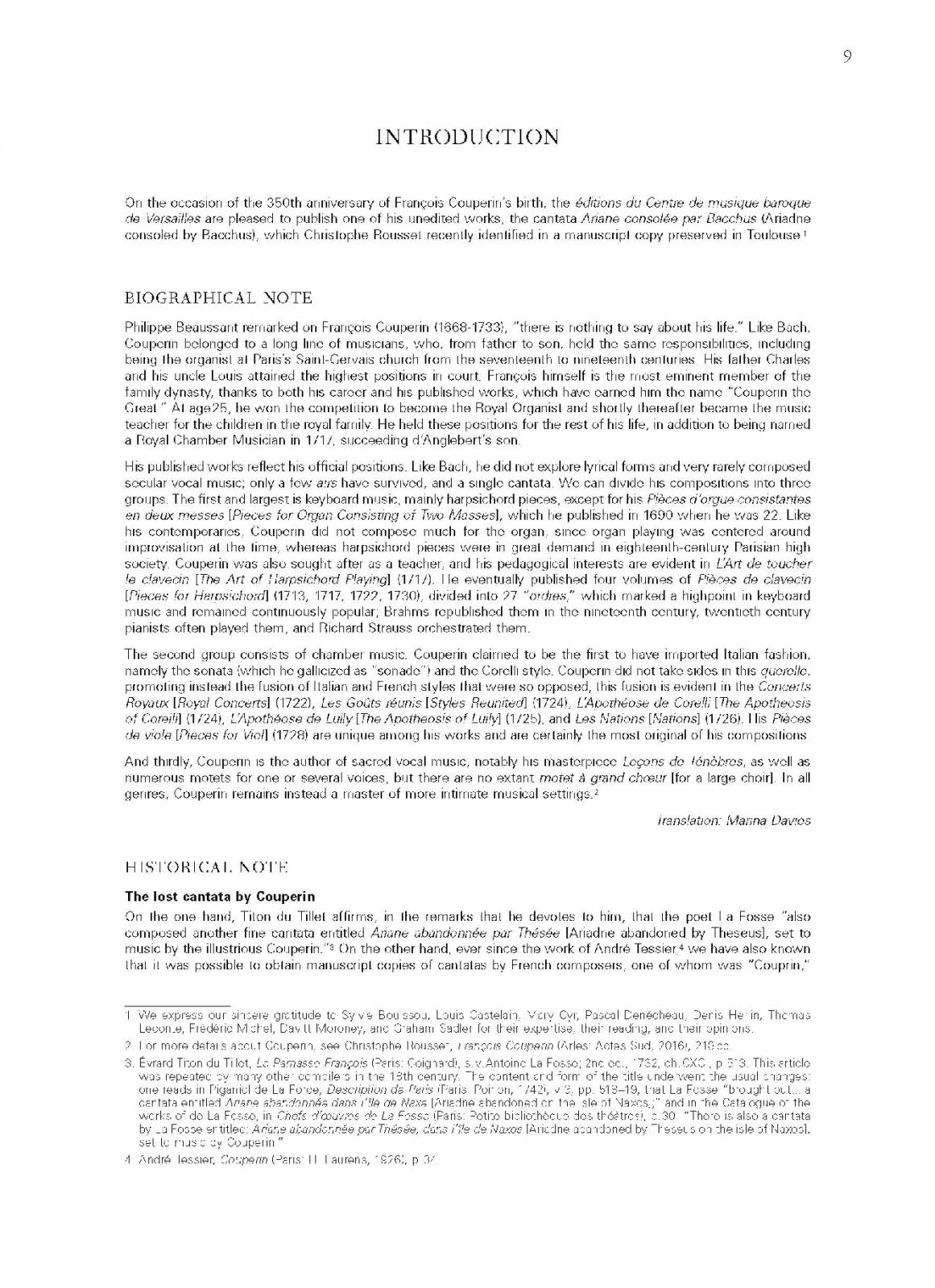
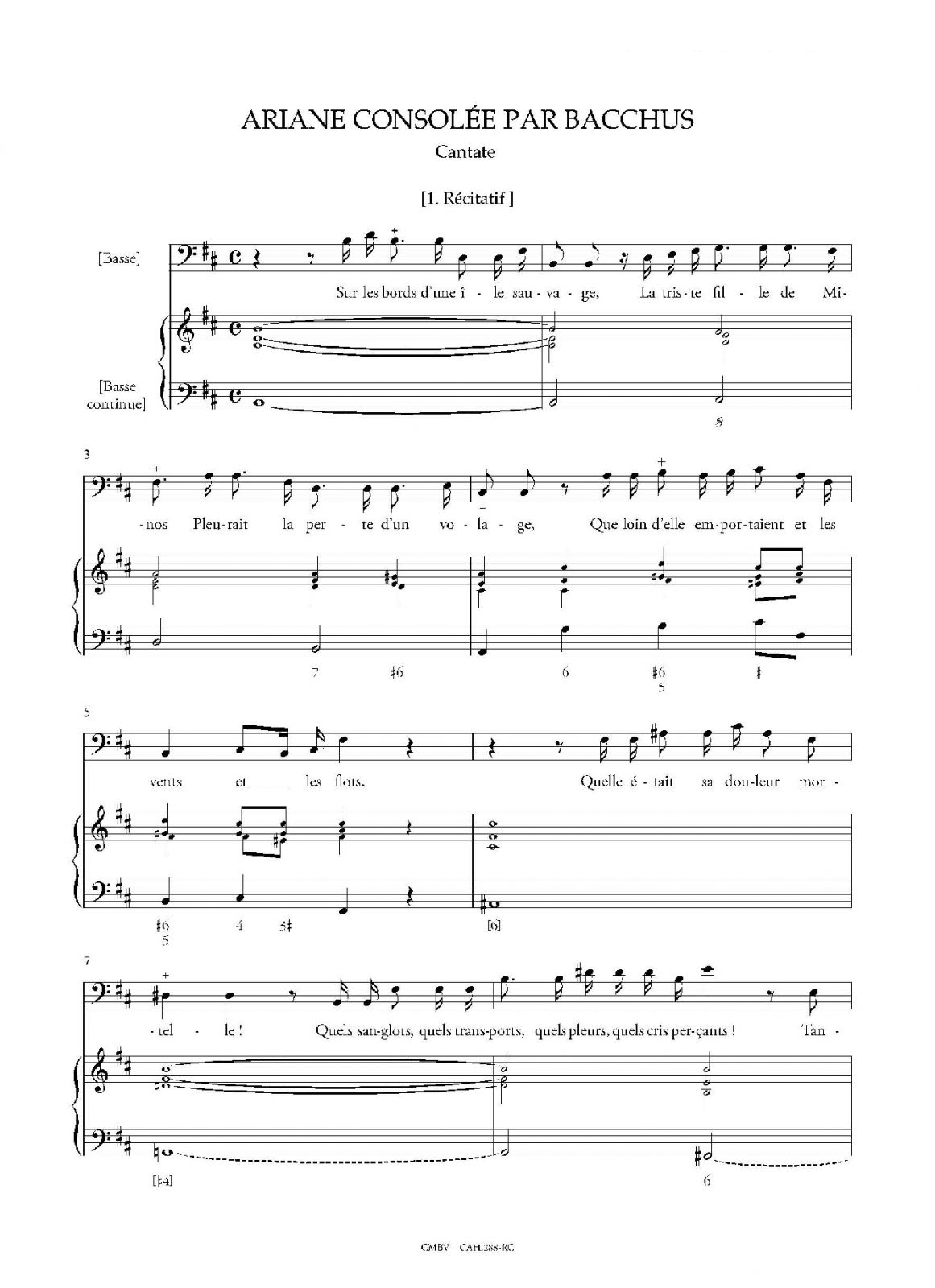


It is a rare event to be able to offer the public an unpublished work by François Couperin. After the release of a magnificent recording with Stéphane Degout, the harpsichordist and conductor Christophe Rousset publishes, with the musicologist Julien Dubruque, Ariane consolée par Bacchus, which has been attributed to Couperin le Grand; this cantata for bass voice and viole de gambe obbligato, on a poem attributed to Antoine de La Fosse, has been found in a manuscript collection kept in Toulouse. The inestimable loss of this work, which Philippe Beaussant deplored in 1980 in his biography of the composer, is thus repaired.
Among the French cantatas of the early eighteenth century, Ariane has chosen its side: it leans towards Italy, like those of Morin, Bernier or Stuck, and not towards French opera, like those of Campra or Clérambault. Its structure in three recitatives and three arias, its tonal architecture, its repetitions of words reflect Couperin’s attempt to take command of the genre. It is far from the case, however, that Ariane consolée par Bacchus is devoid of French influences. The subject, the singer’s rather restricted tessitura, the absence of vocalises, evoke a vocal style closer to French drinking songs. The last air is particularly fascinating: the singer, the obbligato viole and the harpsichord sometimes all enunciate the same melodic line, but in a subtly different way.
The cantatas proposed by the Centre de musique baroque de Versailles are beginning to constitute a fine set of 12 volumes.
The works
Recommendations


