

Sheet music
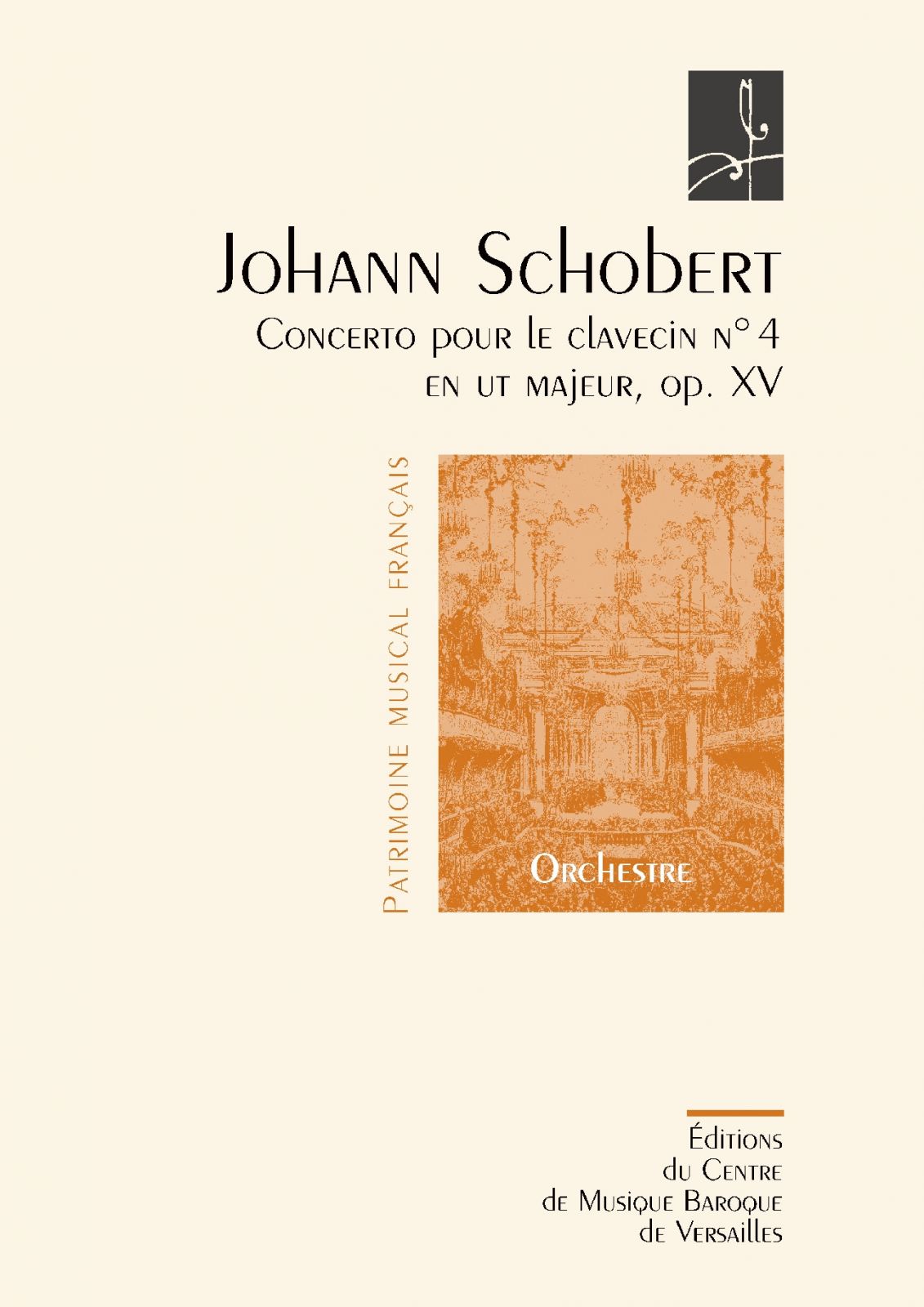
Concerto pour le clavecin n°4 in C major, op. XV
Johann SCHOBERT
(ca 1735-1767)


Reference: CAHIERS-179
Format:
21x29,7 cm
Binding: Paperback
24,00 € TTC
In stock
Johann SCHOBERT
(ca 1735-1767)
Collection:
Orchestra
Type of publication:
Full score
Publisher:
Editions du Centre de musique baroque de Versailles
Presintation:
Johann Schobert’s all-too-short career was a brilliant one. Born in Silesia around 1735, he was hired as harpsichordist by the Prince de Conti as soon as he arrived in Paris, ensuring him an audience at one of the capital’s most prestigious salons. At the height of his fame, he died suddenly on 28 August 1767 from eating poisonous mushrooms. Composer of some twenty works, including five harpsichord concertos, he contributed significantly to the renewal of genres and forms of instrumental keyboard music. In particular, he popularised the harpsichord sonata with violin accompaniment, as well as the keyboard trio and quartet. His music was particularly appreciated by the young Mozart, who used many of the themes in his own works.
His keyboard concertos, built on the model of the Italian solo concerto, were among the first to appear in Paris. Their three-movement structure (fast–slow–fast) and alternating solo and tutti sections set the standard for future classical concertos.
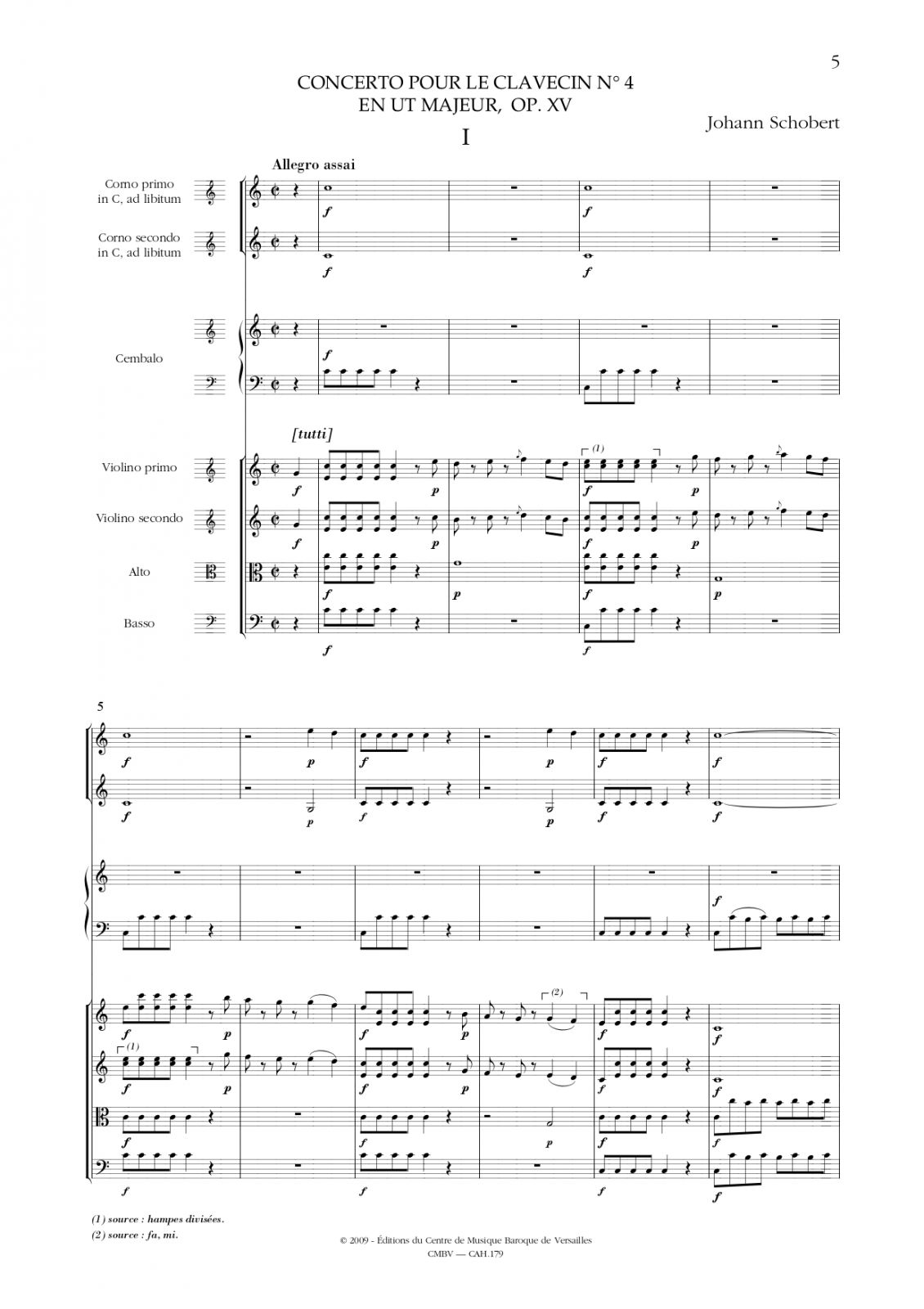
Concerto No. 4 in C major op. XV was published around 1765. Lasting a little over twenty minutes, it comprises three movements: Allegro assai, Adagio, Allegro assai. Although intended for the harpsichord, it can also be played on a fortepiano. Particularly brilliant, it is intended for accomplished musicians who will seek, behind the velocity, to highlight the expressive style characteristic of this period. The orchestra comprises four "Italian" string parts (violins 1 & 2, violas and basses), to which two horn parts can be added ad libitum.
His keyboard concertos, built on the model of the Italian solo concerto, were among the first to appear in Paris. Their three-movement structure (fast–slow–fast) and alternating solo and tutti sections set the standard for future classical concertos.
Concerto No. 4 in C major op. XV was published around 1765. Lasting a little over twenty minutes, it comprises three movements: Allegro assai, Adagio, Allegro assai. Although intended for the harpsichord, it can also be played on a fortepiano. Particularly brilliant, it is intended for accomplished musicians who will seek, behind the velocity, to highlight the expressive style characteristic of this period. The orchestra comprises four "Italian" string parts (violins 1 & 2, violas and basses), to which two horn parts can be added ad libitum.
Pages:
63
Publication date:
2009-05
Introduction (language):
French
ISMN 979-0-56016-179-2
The works
Genre:
concerto
Key:
Do Majeur
Duration:
entre 30' et 39'
Recommendations


35€
Available in a digital version

