

Livre
Numérique
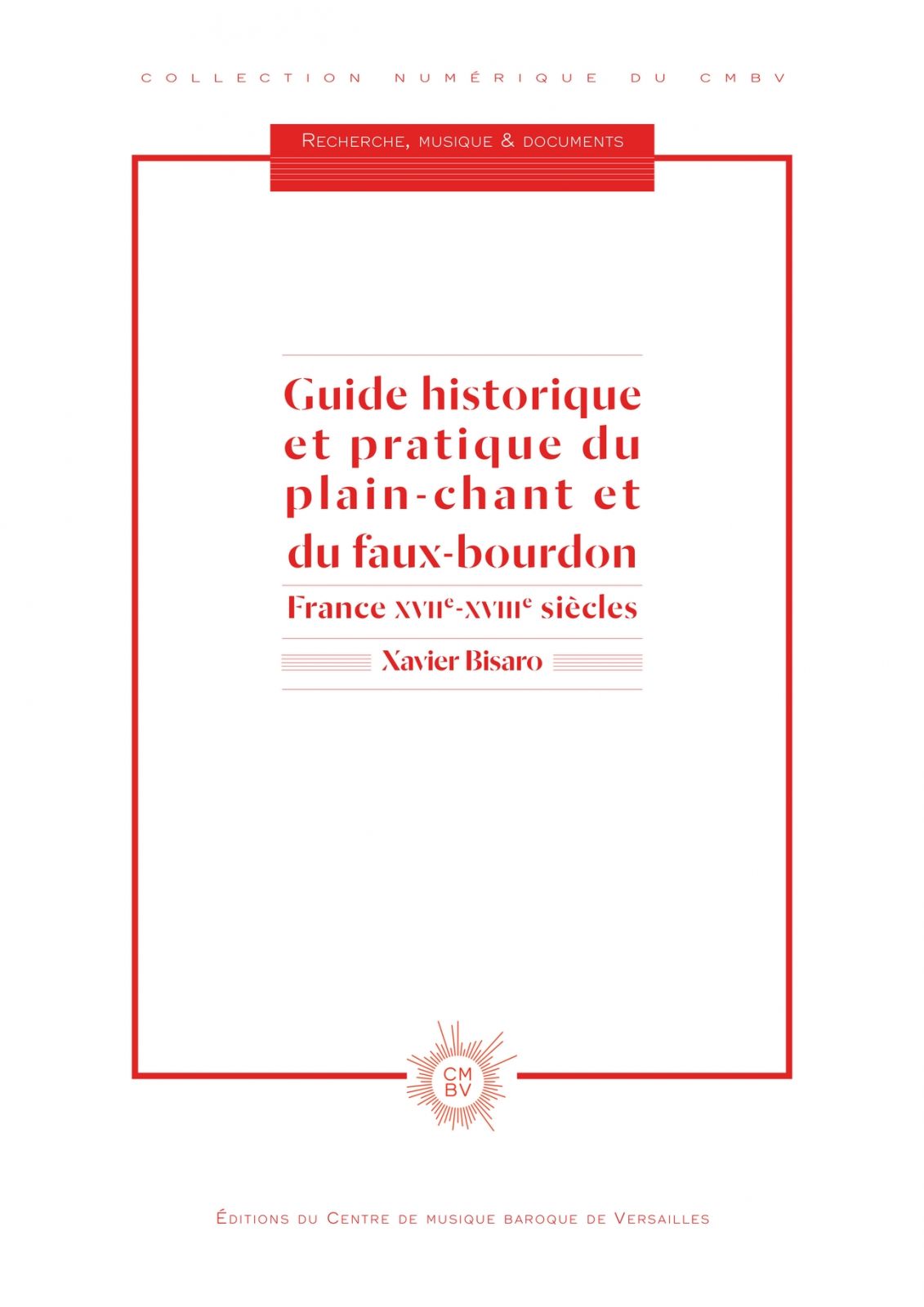
Guide historique et pratique du plain-chant et du faux-bourdon : France, XVIIe-XVIIIe siècles

Maison d'édition :
Editions du Centre de musique baroque de Versailles
Présentation :
Free access to high definition download (with musical excerpts):
%20plain-chant-Bisaro-CMBV-haute%http://philidor.cmbv.fr/content/download/589337/7276793/file/Guide 20d%C3%A9finition.pdf
What musician has not been confronted with the difficulty of choosing and performing a piece of plainchant, summarily indicated in a Baroque sacred music score? Very often, the publisher does not offer a solution because it depends on the context, which can vary. However, in the restitution of a work, this parameter contributes to the quality of the result. And there are specific criteria governing this choice that must be taken into consideration.
These are the questions that this book seeks to answer. It takes stock of the knowledge acquired through our discovery of how ecclesiastical chant was practised under the Ancien Régime. Intended for musicians (choir directors, singers, organists) as well as researchers (musicologists, historians) and students, this multi-media guide also exposes the main keys to reading and interpreting plainchant sources, based on numerous facsimiles of old documents and offering sound examples.
It inaugurates a new collection of works based on the presentation, from a rich and varied documentation, of a scientific theme for didactic purposes.
Xavier Bisaro is a professor of musicology at the François Rabelais University of Tours, a researcher at the Centre d'Études Supérieures de la Renaissance (CESR, UMR 7323) and a junior member of the Institut Universitaire de France (IUF). His work is mainly devoted to the musical history of Christian cults as well as to liturgical scholarship under the Ancien Régime. His research is currently focused on school and music education in modern Europe (Cantus Scholarum project).
%20plain-chant-Bisaro-CMBV-haute%http://philidor.cmbv.fr/content/download/589337/7276793/file/Guide 20d%C3%A9finition.pdf
What musician has not been confronted with the difficulty of choosing and performing a piece of plainchant, summarily indicated in a Baroque sacred music score? Very often, the publisher does not offer a solution because it depends on the context, which can vary. However, in the restitution of a work, this parameter contributes to the quality of the result. And there are specific criteria governing this choice that must be taken into consideration.
These are the questions that this book seeks to answer. It takes stock of the knowledge acquired through our discovery of how ecclesiastical chant was practised under the Ancien Régime. Intended for musicians (choir directors, singers, organists) as well as researchers (musicologists, historians) and students, this multi-media guide also exposes the main keys to reading and interpreting plainchant sources, based on numerous facsimiles of old documents and offering sound examples.
It inaugurates a new collection of works based on the presentation, from a rich and varied documentation, of a scientific theme for didactic purposes.
Xavier Bisaro is a professor of musicology at the François Rabelais University of Tours, a researcher at the Centre d'Études Supérieures de la Renaissance (CESR, UMR 7323) and a junior member of the Institut Universitaire de France (IUF). His work is mainly devoted to the musical history of Christian cults as well as to liturgical scholarship under the Ancien Régime. His research is currently focused on school and music education in modern Europe (Cantus Scholarum project).
Date de parution :
2017-01
Introduction (langue) :
Français
Recommandations


Gratuit
Disponible en version numérique


