

Ballet de la Prospérité des armes de la France
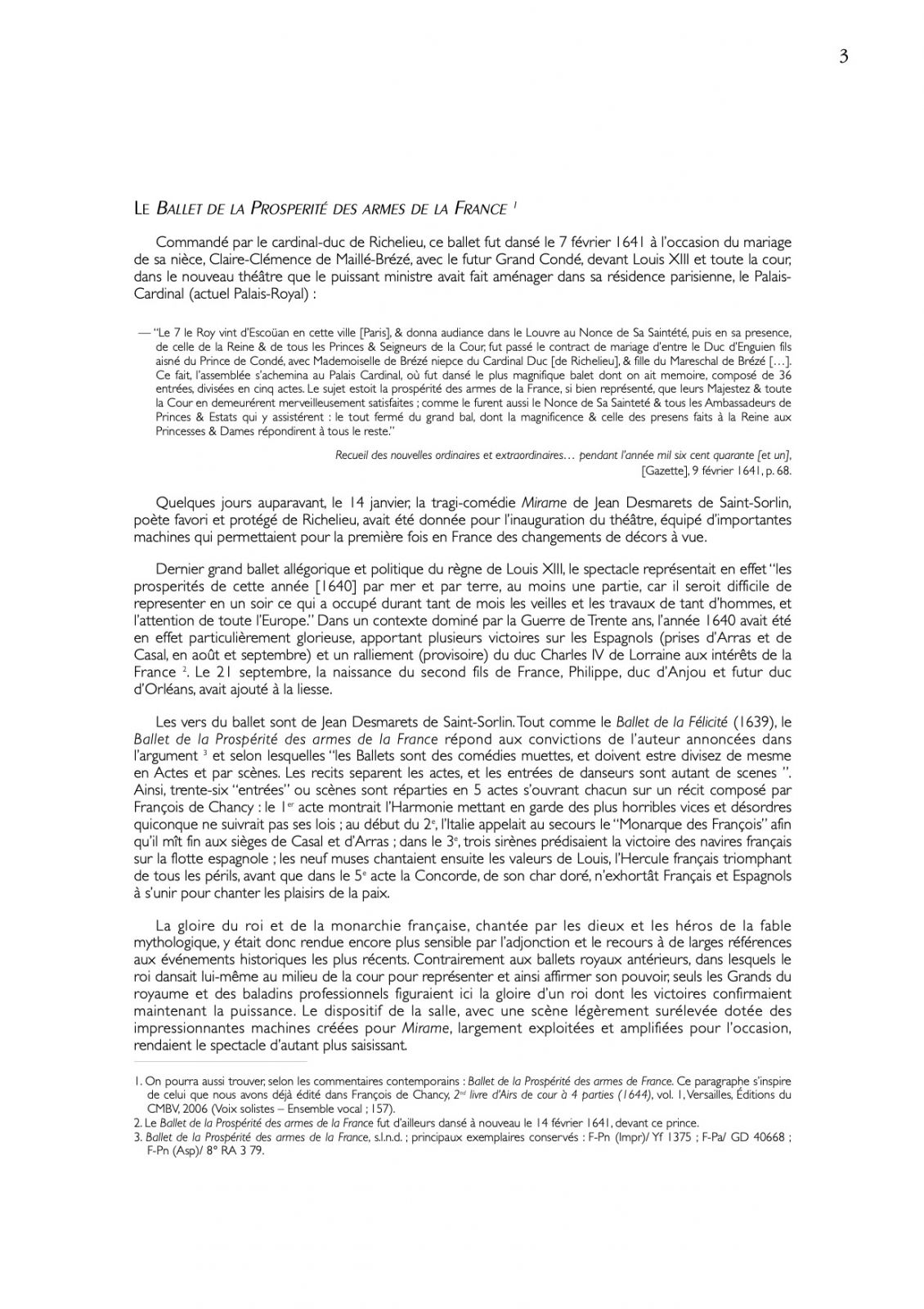
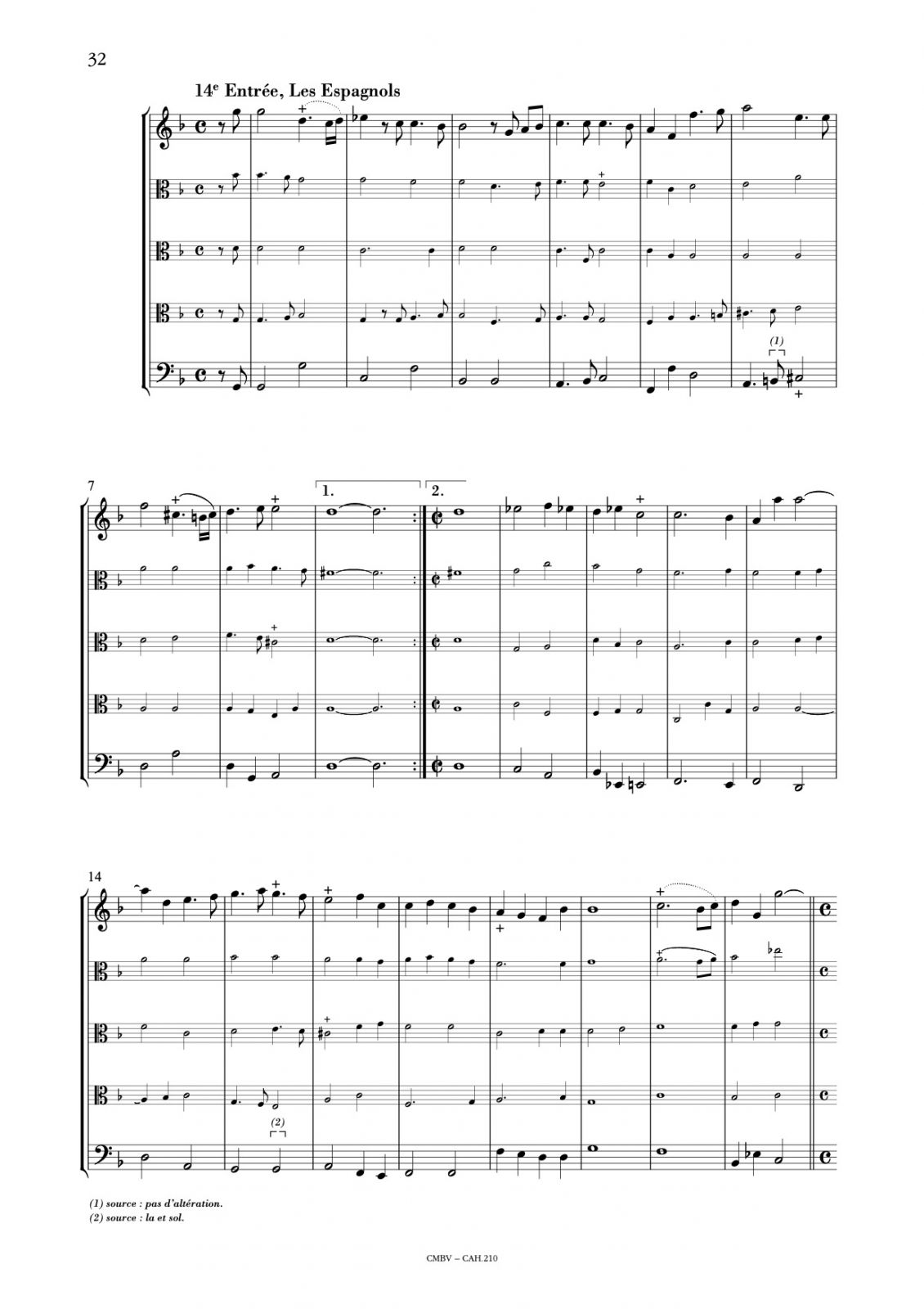
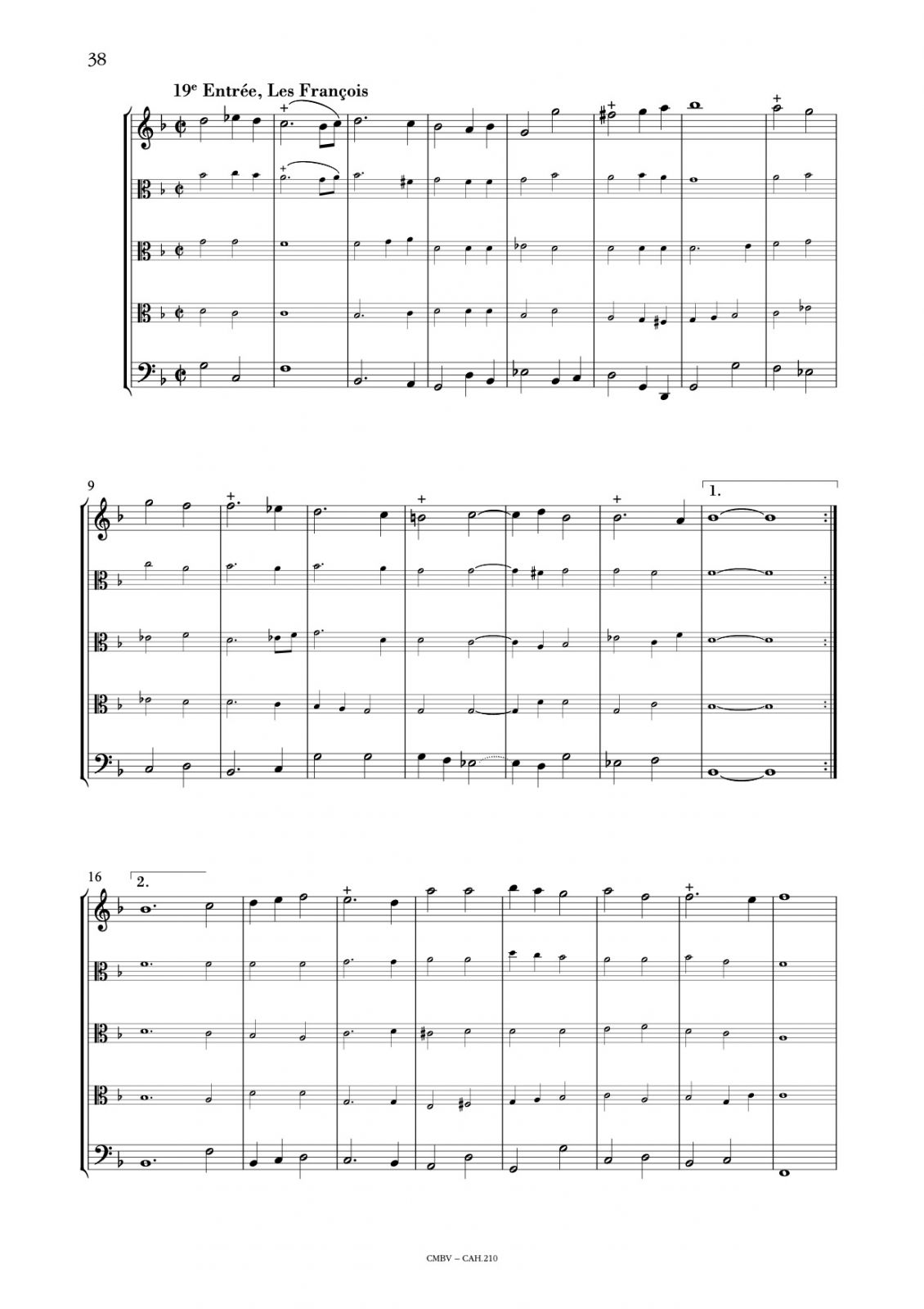


It is thanks to meticulous research that the Éditions du Centre de musique baroque de Versailles can now publish in score the magnificent Ballet de la Prospérité des armes de la France. This work was expressly commissioned by Cardinal Richelieu to inaugurate the spectacular machines of his palace (now the Palais-Royal) which, for the first time in France, allowed for changes of scenery in full view. The last great allegorical and political ballet of the reign of Louis XIII, it is a "silent comedy" inspired by the French victories won the previous year in this dark period dominated by the 30 Years' War. It takes place in 5 acts - separated by stories by François de Chancy (published in the 2nd book of court airs in 4 parts) - and 36 "entrées".
The first act, opening with a warning from Harmony, takes us to hell, the origin and inspiration of all evil. The story of imploring Italy opens Act Two, which retraces the sieges of Casal and Arras. Three mermaids introduce Act Three by predicting the naval victory of the French over the Spanish in the Americas. Act Four, introduced by nine Muses, is dedicated to Hercules-Louis' fight against the eagle and the lions. The Song of Concord sets the tone for the 5th and final act, dedicated to pleasure and rejoicing, presided over by Glory, before ending with the opening of the ball by the King and Queen.
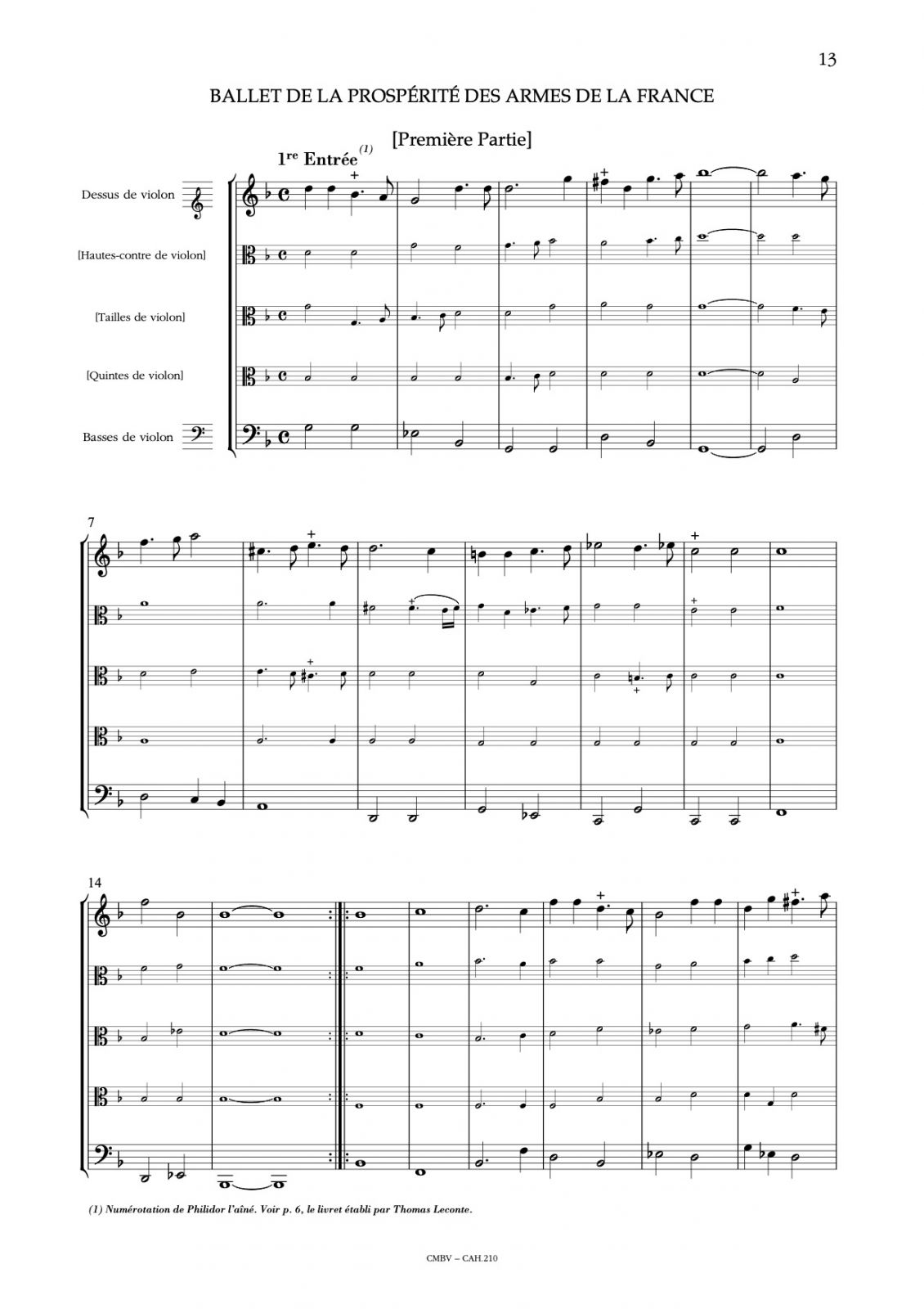
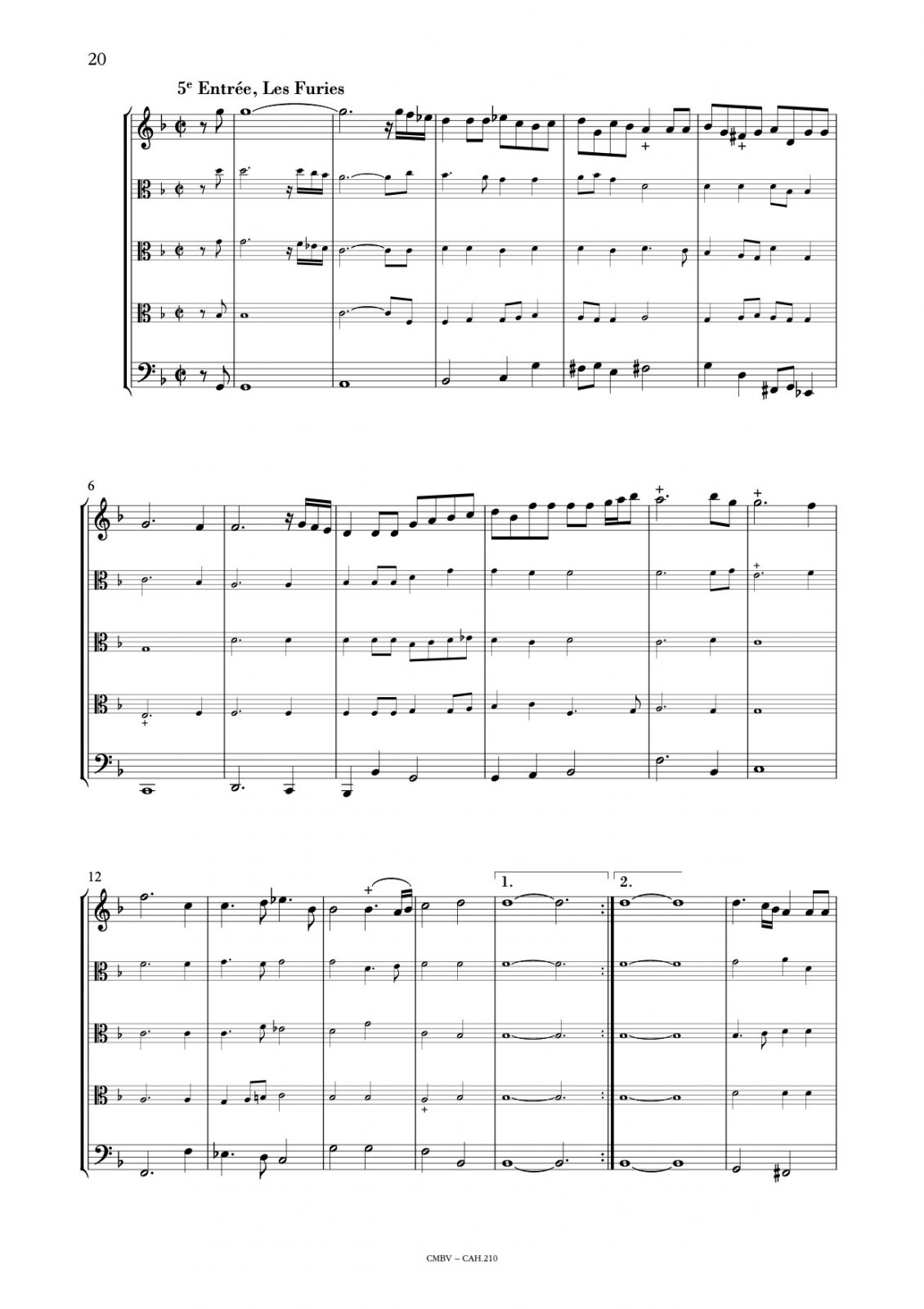
The work is incompletely preserved and has necessitated, in addition to the restoration of the order of the pieces, the restitution of the haute-contre, taille and quintes de violon parts, only the Dessus and bass parts having come down to us. This work was carried out by Gérard Geay, assisted by 3 students from the Conservatoire national supérieur de musique et de danse de Lyon with the help of the ensemble La Simphonie du Marais and its musical director Hugo Reyne, leading to the production of a recording – Musiques au temps de Richelieu.
At the origins of the great French orchestral and lyrical forms, the court ballets of the reign of Louis XIII represent the most accomplished form of French art combining song, music and dance, the latter two constituting the primordial element. Because it is often preserved in an incomplete way, rediscovering this early Baroque repertoire, well before the apogee of the reign of Louis XIV, requires complex research and careful musical restitution. This is what the Centre de musique baroque de Versailles proposes here through the coordinated work of researchers and musicians, inviting performers to look further into the discovery of the origins of baroque music.
The works
Recommendations


