

Exaudiat te Dominus
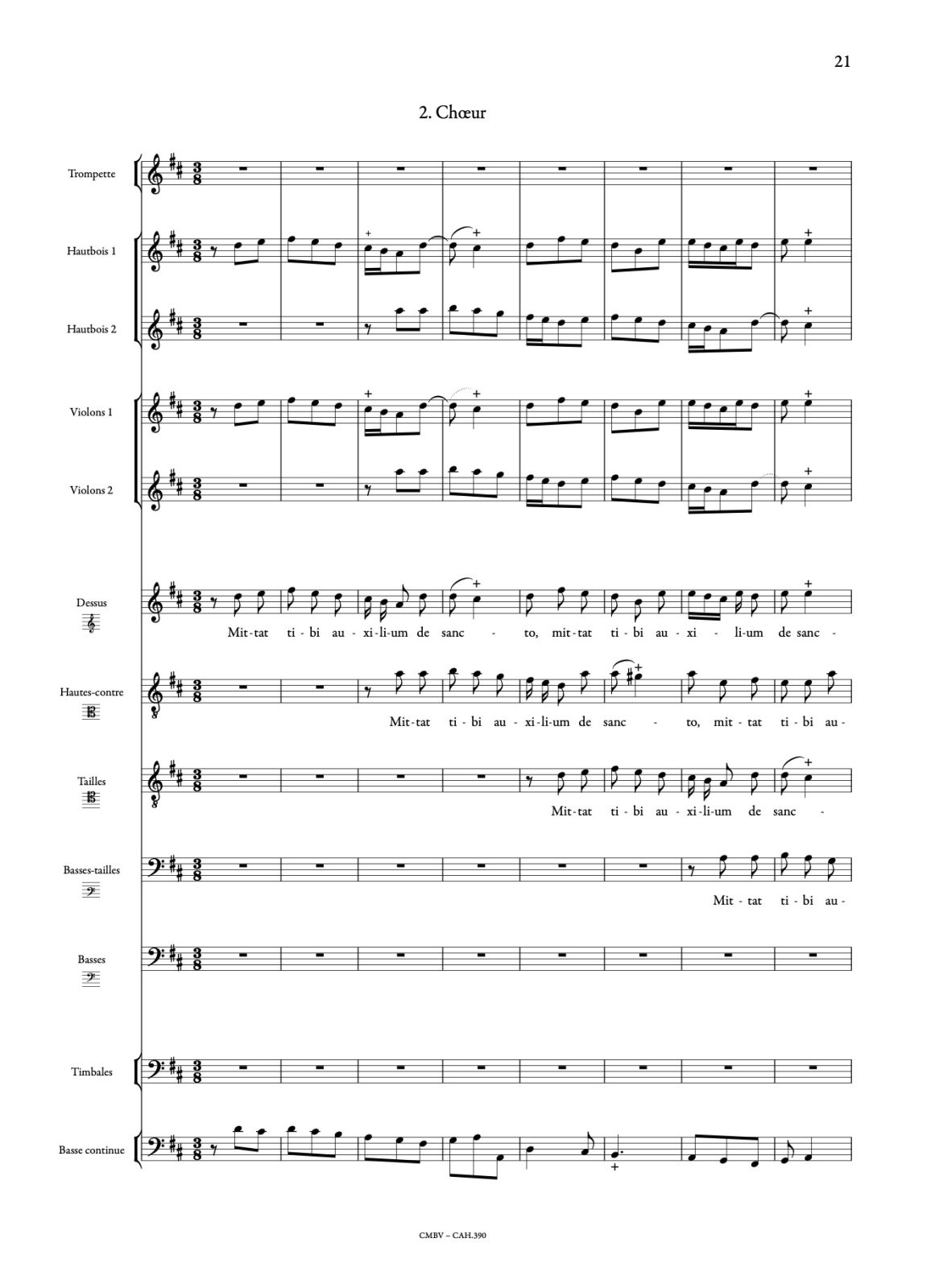
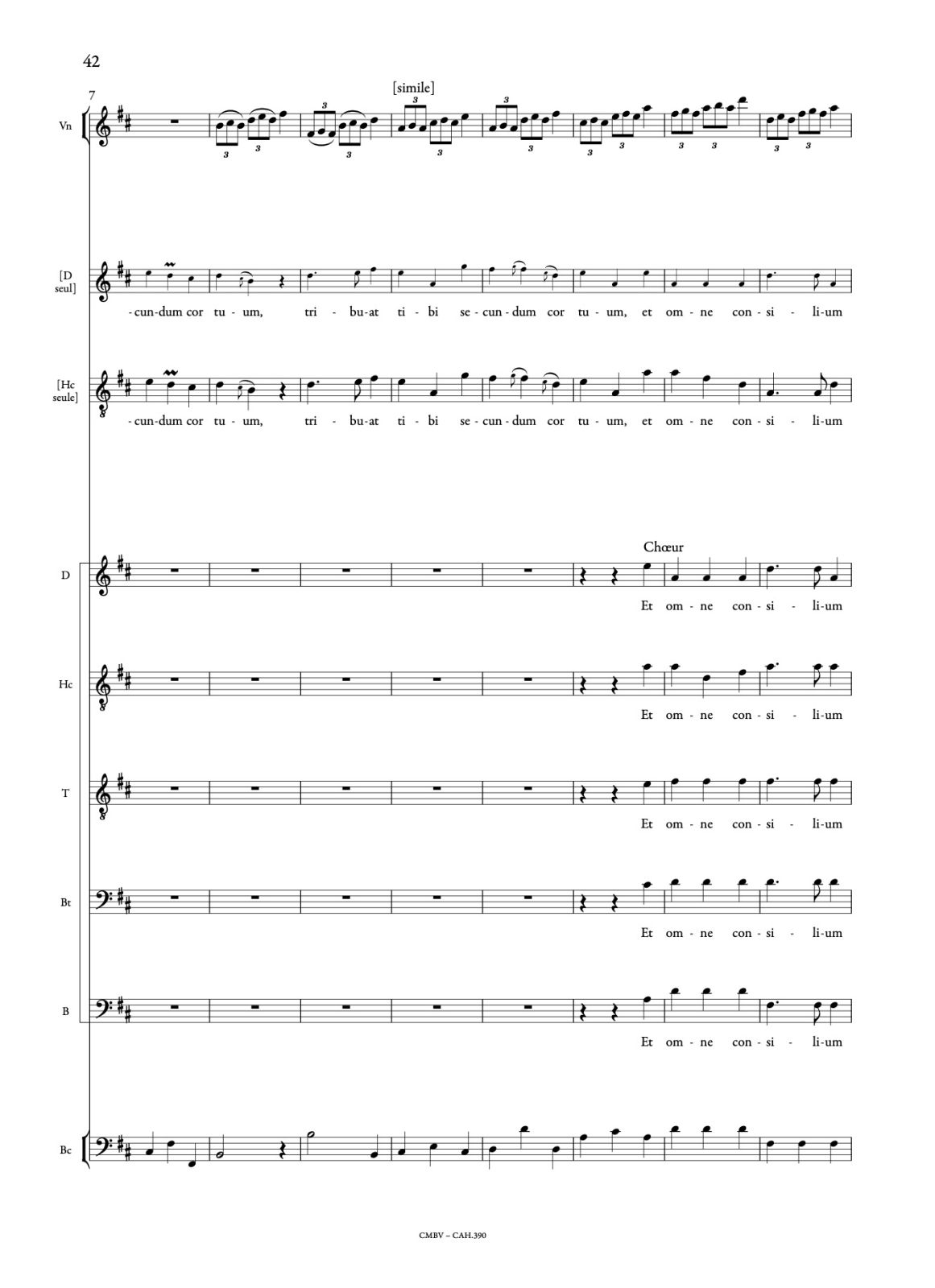
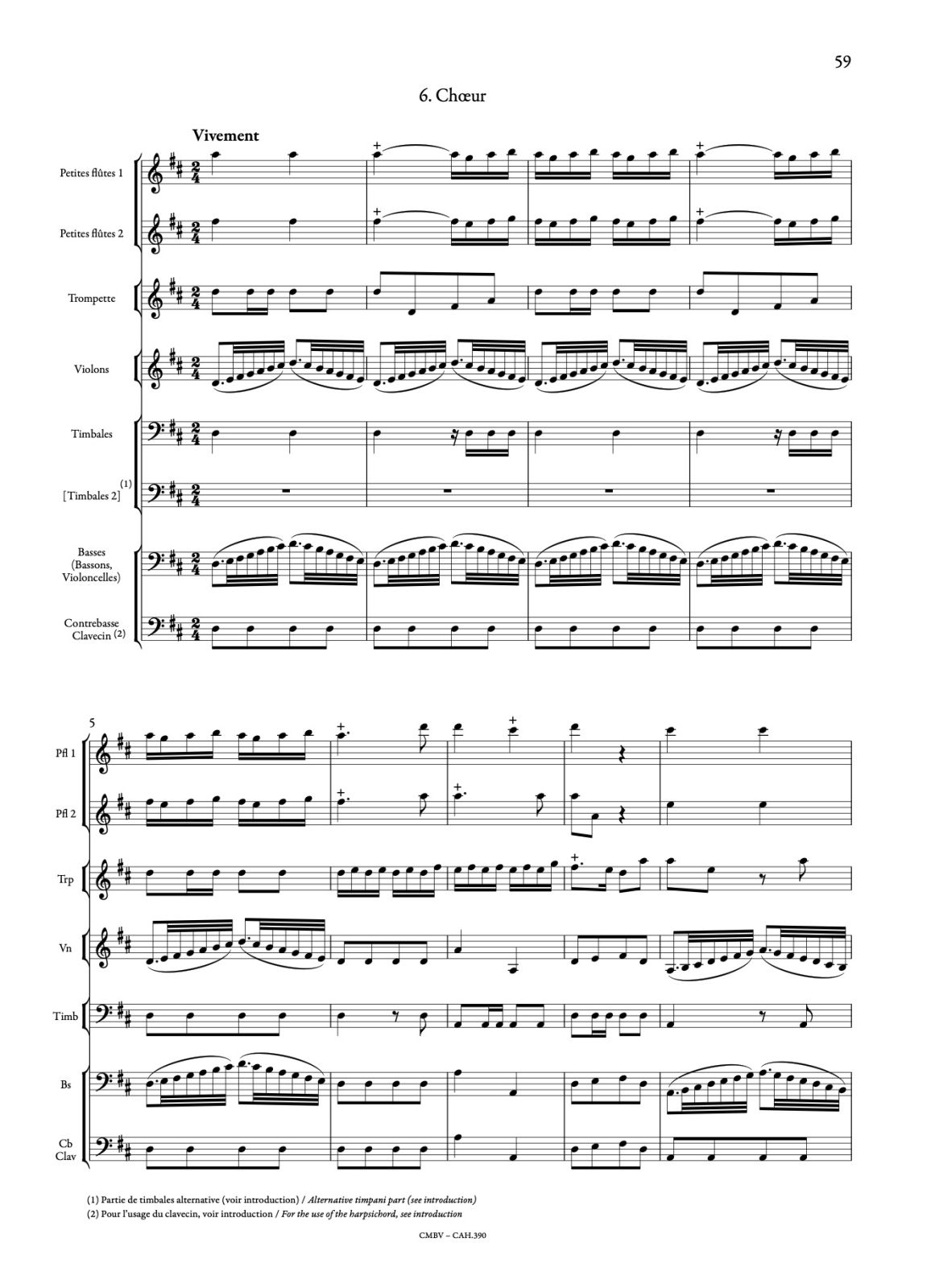


Exaudiat te Dominus, published by the Centre de musique baroque de Versailles, is the only grand motet by Boismortier to have survived to this day. A prolific composer who is still underperformed today, Boismortier nevertheless enjoyed considerable success with his sacred works. Faithfully reconstructed despite the complex history of its manuscript sources, this work brings a little-known aspect of his output back into the spotlight.
The Exaudiat te Dominus is based on Psalm 19, a text particularly favoured under the Ancien Régime for dynastic events or victories, largely known for its final verse, the famous ‘Domine salvum fac regem’, which Boismortier, incidentally, omitted. Composed in 1741, the motet appears to have been performed solely for its own sake, a practice permitted by the Concert Spirituel. It indeed offers magnificent scenes worthy of opera. Revisited in 1750 with a few arrangements, it is perhaps the first grand motet that Boismortier composed for this institution prior to the immense success of his Fugit nox, which is now lost.
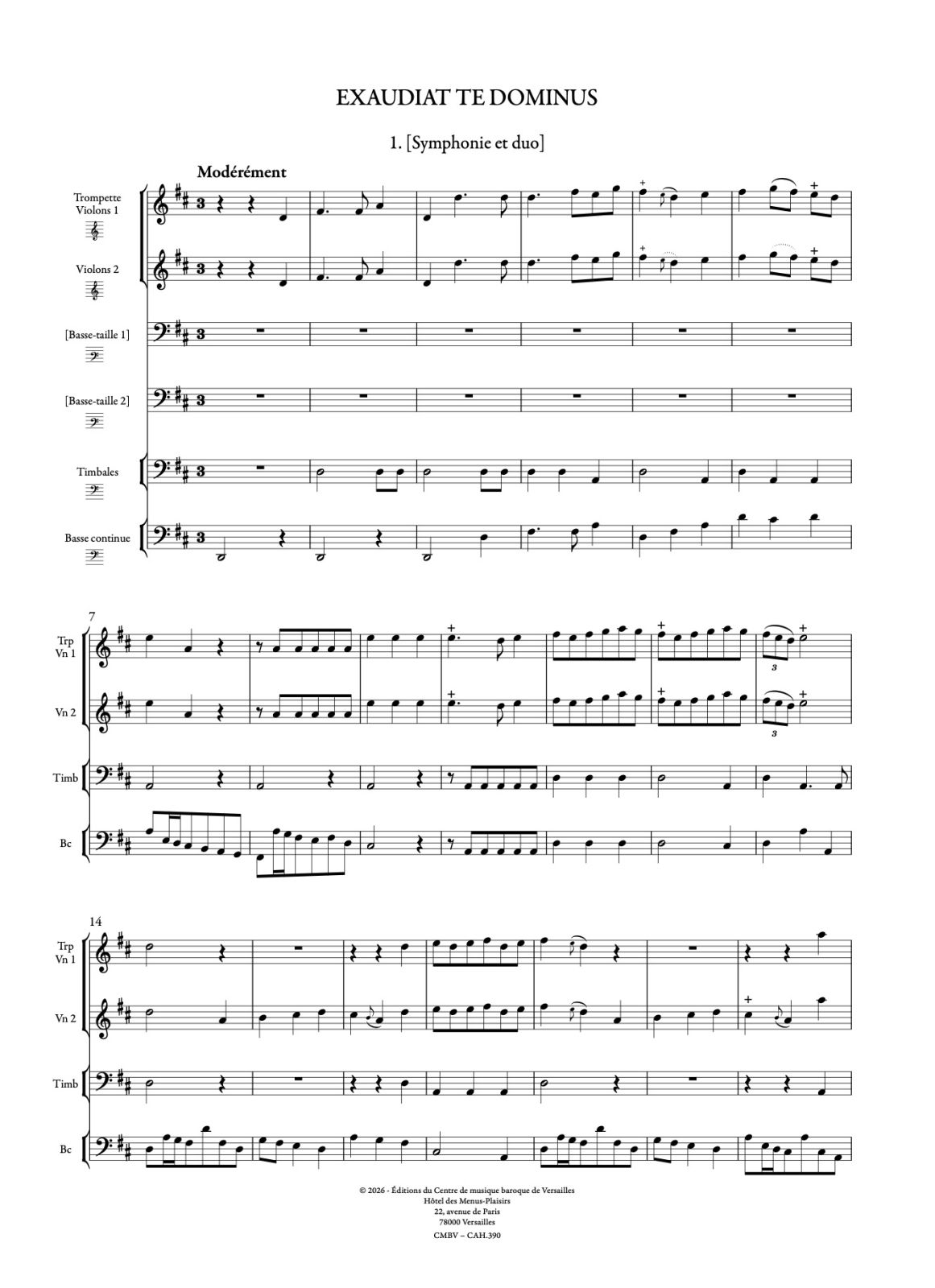
From a stylistic point of view, the Exaudiat te Dominus is a motet in separate movements, somewhere between those of Lalande and Mondonville. The first section is a magnificent duet for basses-tailles. It also contains a demanding section for the sopranos; the choruses – particularly the last two movements – and the instrumental parts likewise require seasoned performers. To perform this work, at least four vocal soloists are required: a dessus, an haute-contre and two basses-tailles, a five-part French-style choir (dessus (divided), hautes-contre, tailles, basse-tailles and basses) and an orchestra comprising woodwinds, brass and strings without violas (two piccolos, two oboes, bassoon, trumpet, timpani, first and second violins, cellos, double bass and harpsichord or organ).
Joseph Bodin de Boismortier, born in Thionville in 1689 and died in Roissy in 1755, is best known today as the composer of a prolific body of instrumental works, particularly beloved by flautists. He was, in fact, one of the first composers to have made a living exclusively from his art. It is only in recent years that renewed interest has been shown in his operatic works, which were capable of rivalling Rameau’s in popularity during his own time. His religious works, which are less well known, have survived only in fragments: a few short motets, his ‘Noëls en concerto’ and this single grand motet amongst those he composed for the Concert spirituel.
The works
Recommendations


