

Histoires sacrées, vol. 1
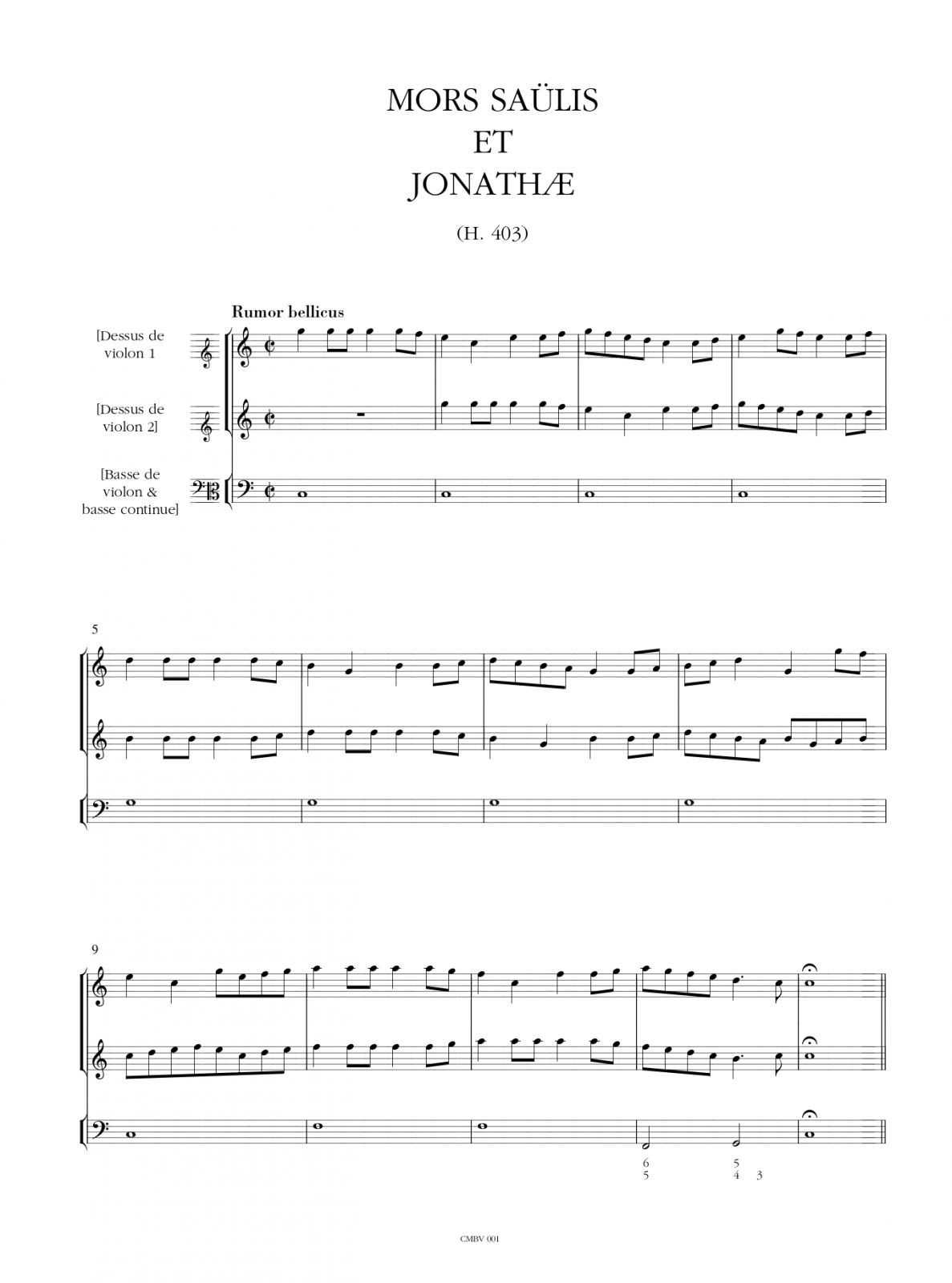
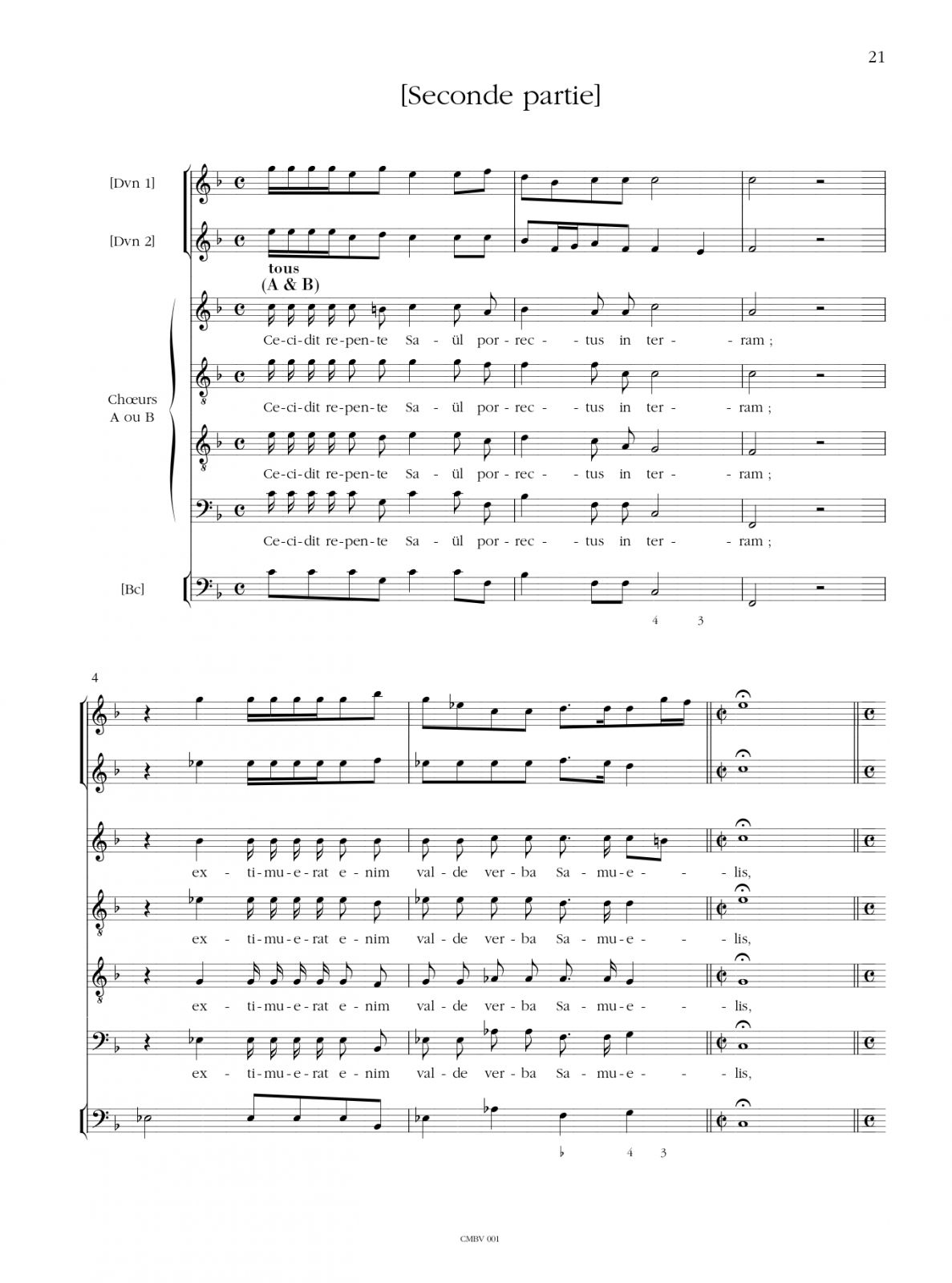


Mors Saülis, composed for the Jesuit theatre, is considered Charpentier’s most theatrical oratorio, containing descriptive instrumental pieces (notably the introductory Rumor bellicus), lively action choruses (the magnificent final chorus cursing Mount Gilboa) and animated dialogue. Here, the chorus plays the role of "Historicus".
Charpentier’s scoring comprises two groups of 4 soloists (dessus, haute-contre, taille and basse) disposed identically between the Philistines and the Israelites, and a small instrumental group of two groups of violins, basse de violon and continuo. The work can be performed in a concert version with 6 soloists (2 dessus, haute-contre, taille and 2 basses), two small choruses and the instruments.
Part 1: The Philistines have gathered their armies to do battle with Israel. Saul, king of the Israelites, takes fright. Because God is no longer speaking to him, he invokes, through the witch Maga, the soul of Samuel, the prophet who put him on the throne. Samuel foretells his doom for disobeying God’s wrath.
Part 2: At the height of the battle, Jonathan falls. Saul, overwhelmed by the loss of his son, tries to kill himself. As his hand trembles, he calls out to a fleeing soldier. The soldier, having yielded to the king’s prayers, goes to tell David, God’s chosen successor to Saul, of the death of the king and his son; he will be cursed.
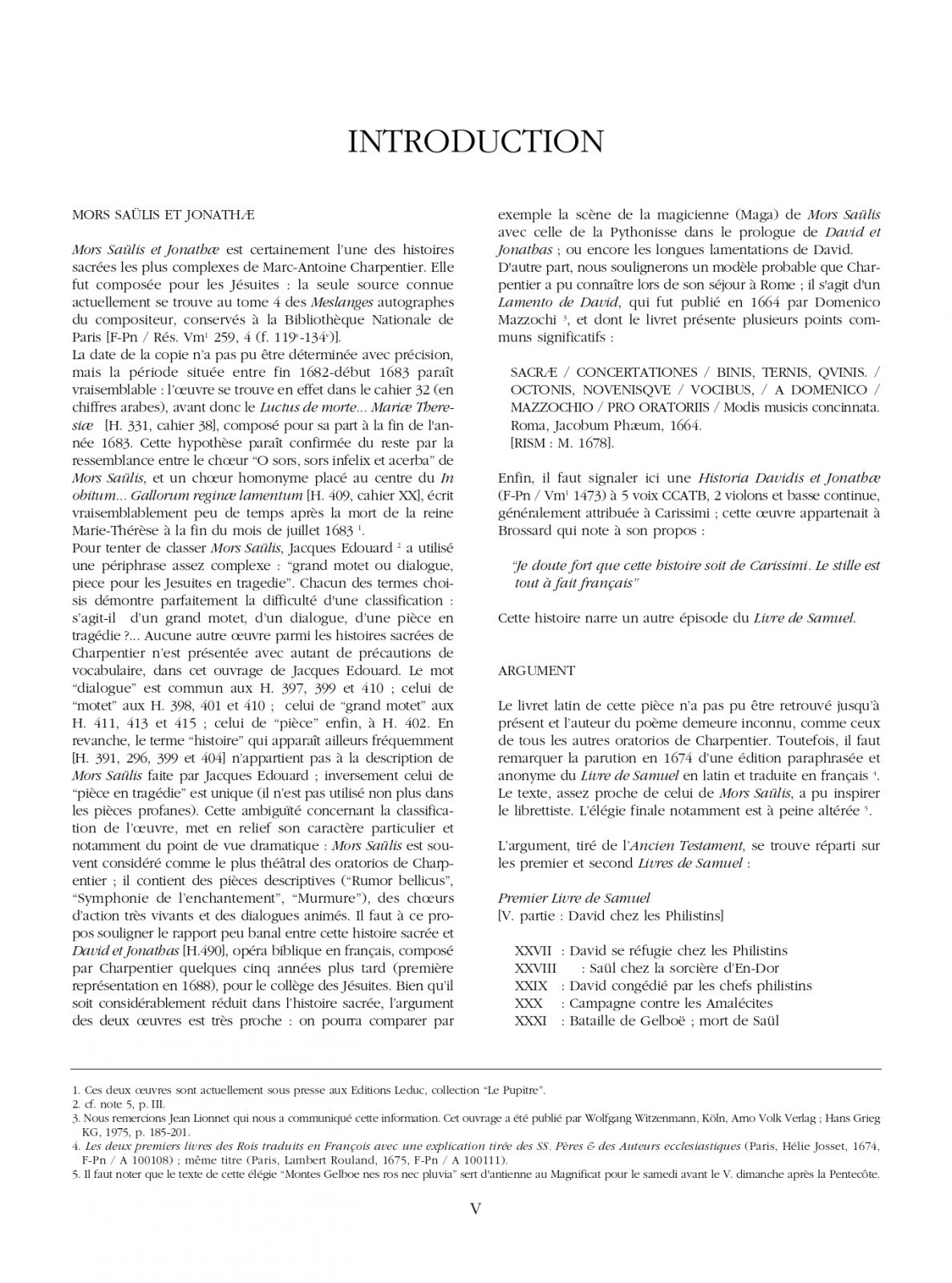
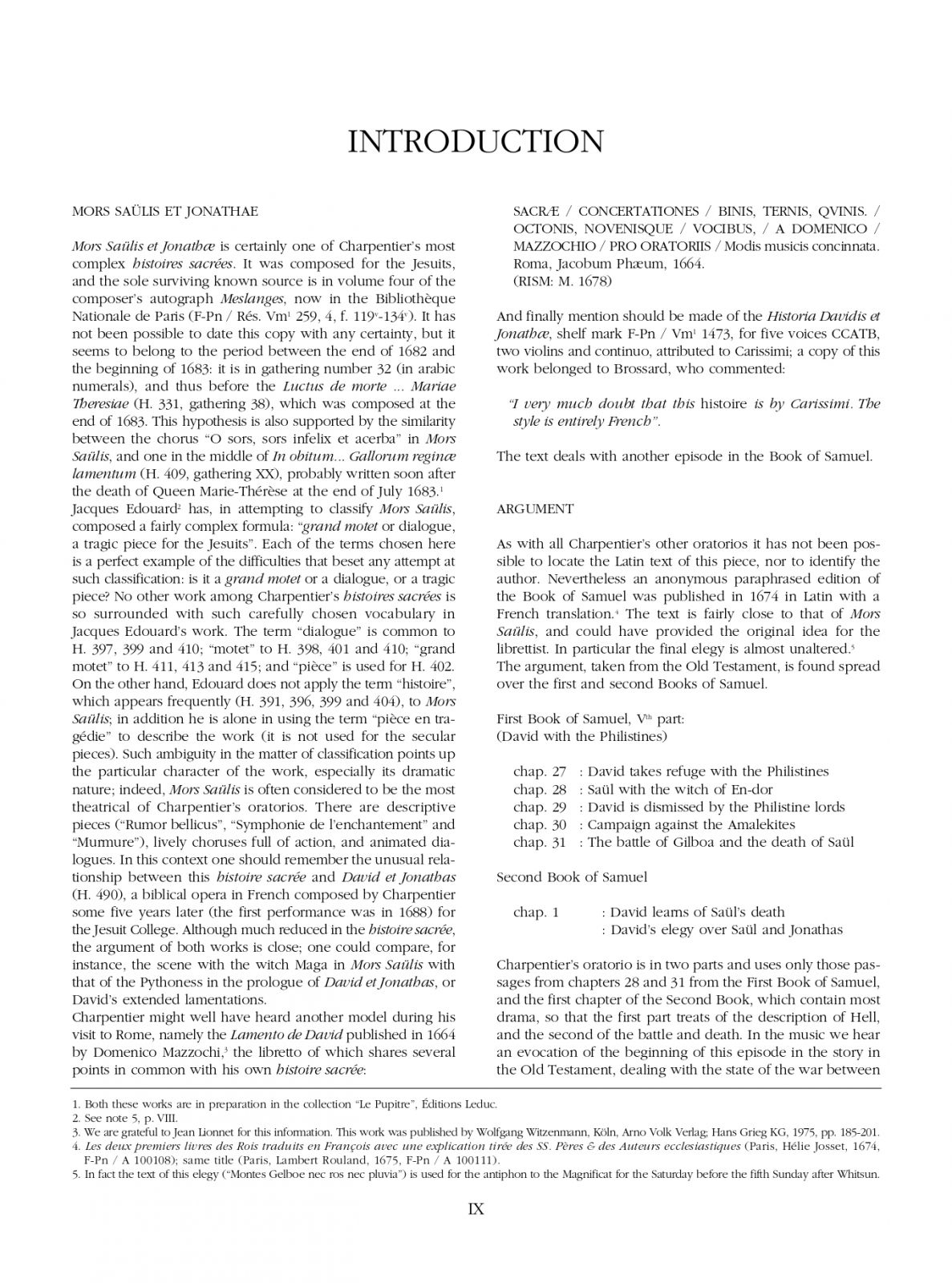
This new edition has been revised, notably in the introduction (bilingual French/English), where a number of hypotheses have been clarified. Jean Duron proposes a fairly narrow range for dating the source, based on the Mélanges manuscript held at the Bibliothèque nationale de France and on parallels with other works by Charpentier. The text of the libretto, whose author could not be identified, is offered in a trilingual version (Latin/French/English).
The works
Recommendations


