

Sheet music
Mass from the Marcorelles collection
Bernard-Aymable DUPUY
(1707-1789)


Reference: CAHIERS-84
Format:
21x29,7 cm
Binding: Paperback
19,30 € TTC
In stock
Bernard-Aymable DUPUY
(1707-1789)
Editor(s):
Françoise TALVARD
Collection:
Choir
Type of publication:
Full score
Publisher:
Editions du Centre de musique baroque de Versailles
Presintation:
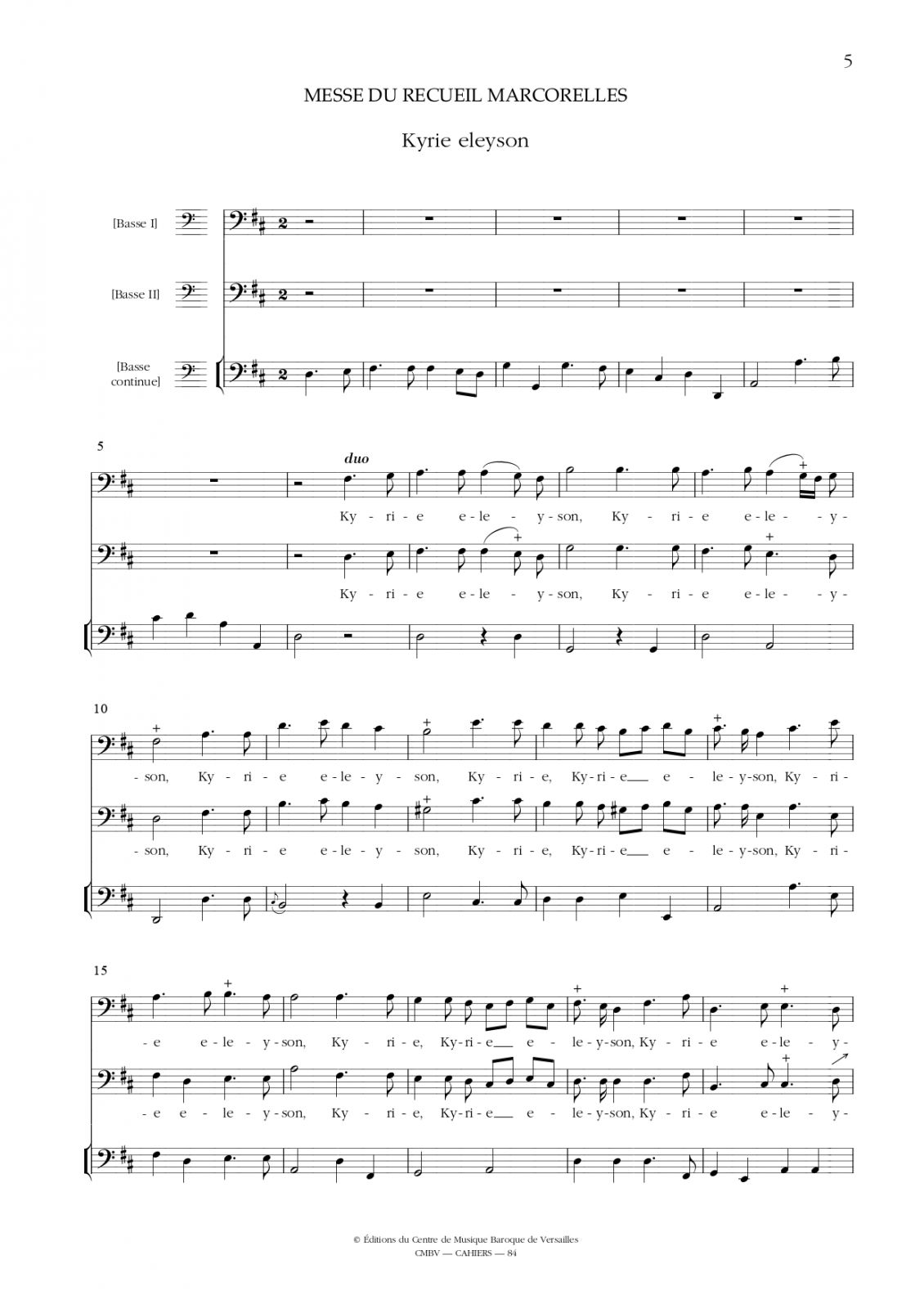
This new score by Toulouse maître de musique Bernard-Aymable Dupuy (1707–1789) reveals a new aspect of the composer’s musical career and of the musical heritage of the Midi-Pyrénées region. Together with the motet Exurge Domine, it complements the already-published motet Nisi quia Dominus erat in nobis.
Dupuy’s first appointment was in 1744 as maître de musique at Saint-Bertrand-de-Comminges Cathedral. This mass, from the Marcorelles manuscript, was composed using only basso continuo to support the voices of the six soloists and the four-part choir. The musical writing, lighter in texture than that of the motets, is highly effective: of particular note are the general joyfulness of the mass and the expressivity created by the weaving of two high voices (dessus) over an ostinato in the Crucifixus.
Dupuy’s first appointment was in 1744 as maître de musique at Saint-Bertrand-de-Comminges Cathedral. This mass, from the Marcorelles manuscript, was composed using only basso continuo to support the voices of the six soloists and the four-part choir. The musical writing, lighter in texture than that of the motets, is highly effective: of particular note are the general joyfulness of the mass and the expressivity created by the weaving of two high voices (dessus) over an ostinato in the Crucifixus.
Pages:
51
Publication date:
2004-12
Introduction (language):
French
ISMN 979-0-56016-084-9
The works
Text language:
Latin
Genre:
messe
Liturgical season:
Messe
Key:
Ré Majeur
Duration:
entre 30' et 39'
Organisation:
Moyen
General level:
Moyen
Commentary:
L'œuvre est facile et agréable. Quelques fugues demanderont un travail approfondi. Les duos de basses peuvent être chantés par une basse et une taille. On préferera un diapason à 392 du fait de la tessiture tendue aux dessus.
Counterpoint:
Facile
Rhythm:
Moyen
Ranges:
Moyen
Recommendations


26€
Available in a digital version
