

Médée (keyboard/voice)
cantata for solo voice and symphony


Clérambault displays a great mastery of dramaturgy in this cantata Médée, praised by his contemporaries as one of the best ever written. The Centre de musique baroque de Versailles offers this new edition in its series of French cantatas for solo voice.
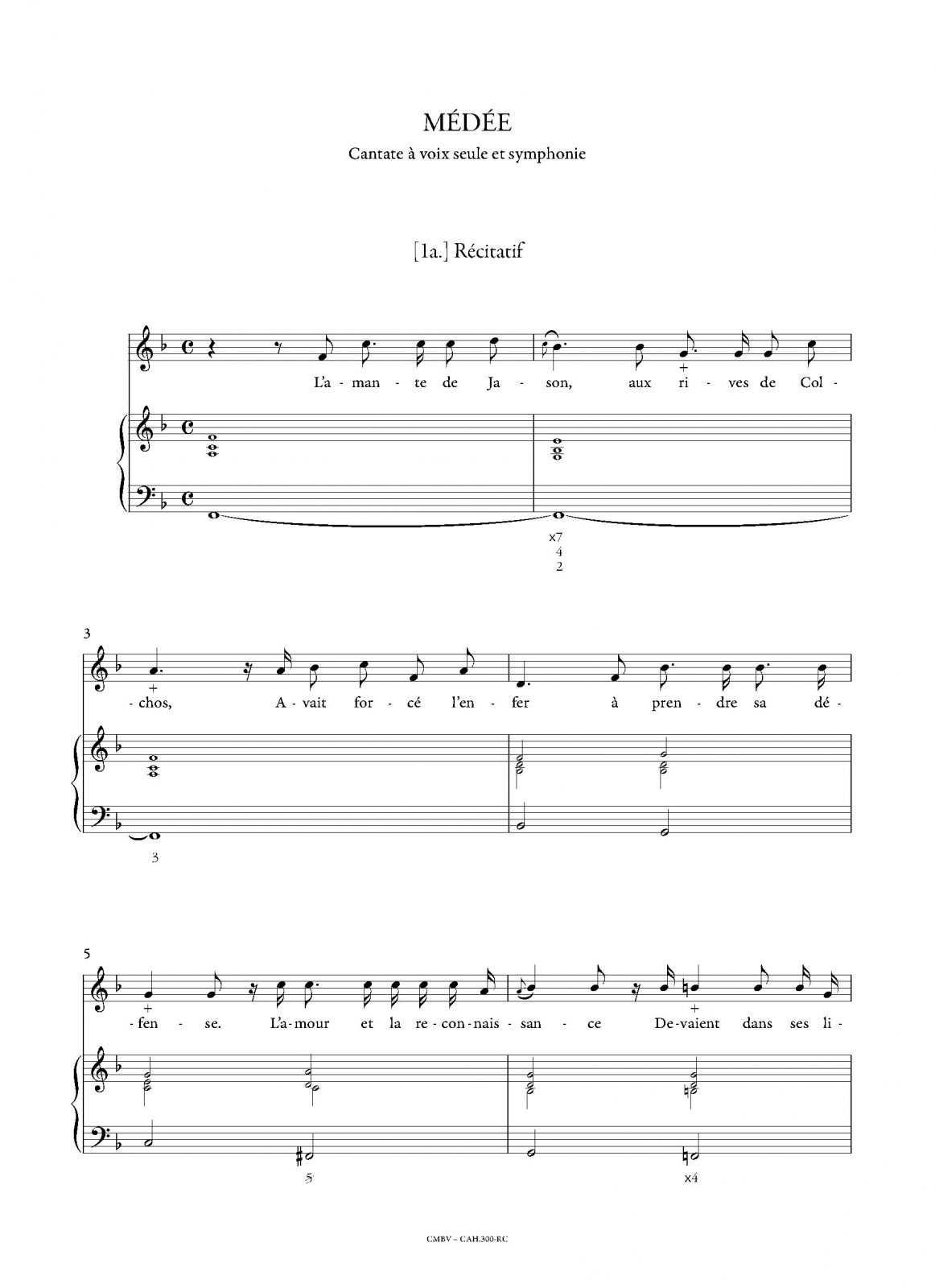
The poem of Médée invites the performer to fully impersonate the heroine, far from the remote stance usually taken by such works, and this cantata thus takes a truly dramatic turn. The alternation of numbers and the variety of scenes make this libretto a kind of opera in shorthand. Although Clérambault does not specify the voice, the range – C4-A5, with a median note of C5 – and the long melismas of certain numbers unequivocally require an upper voice at ease in the high notes and vocalises. The scoring includes violin, traverso (optional), viole and harpsichord.
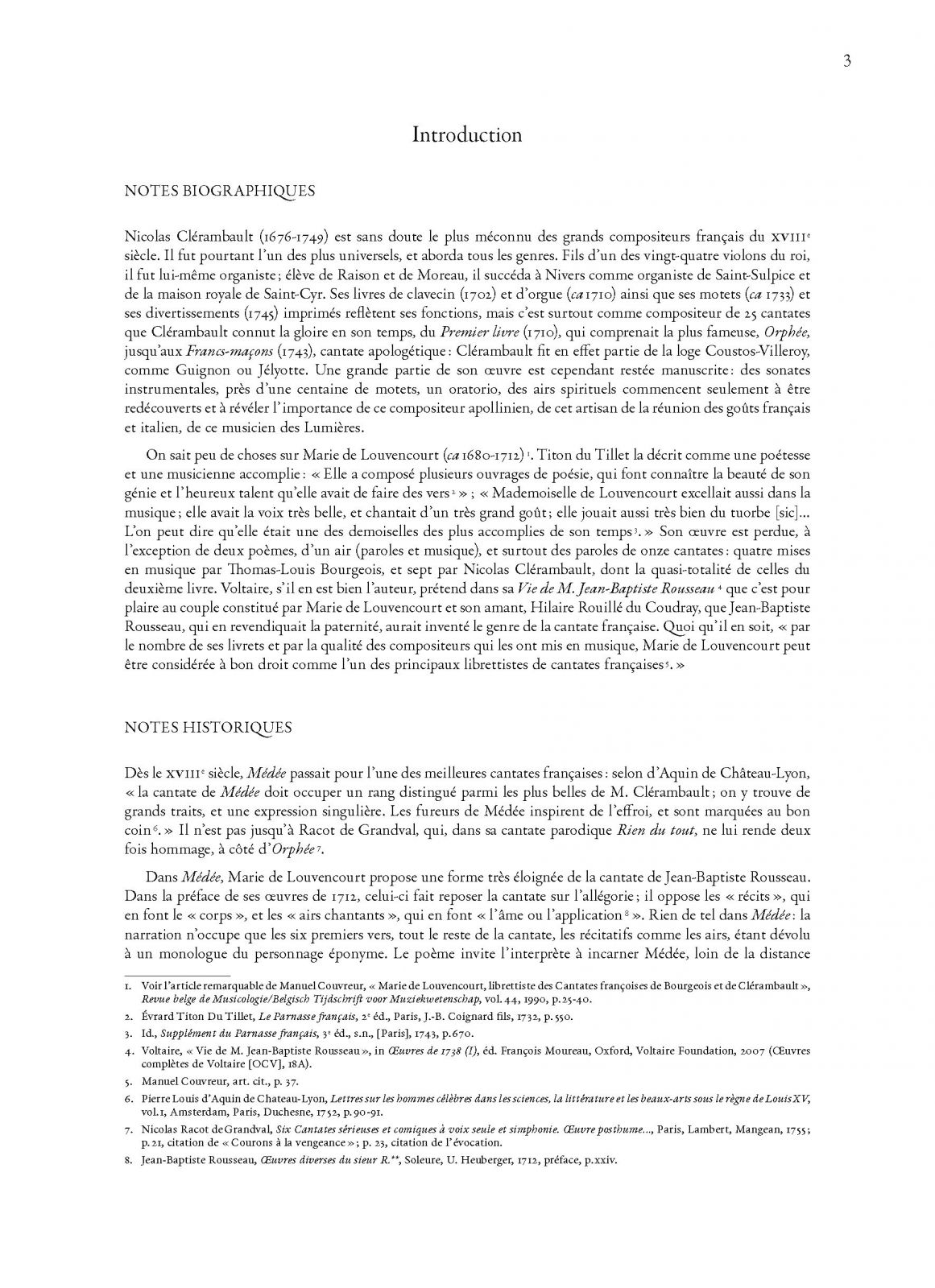
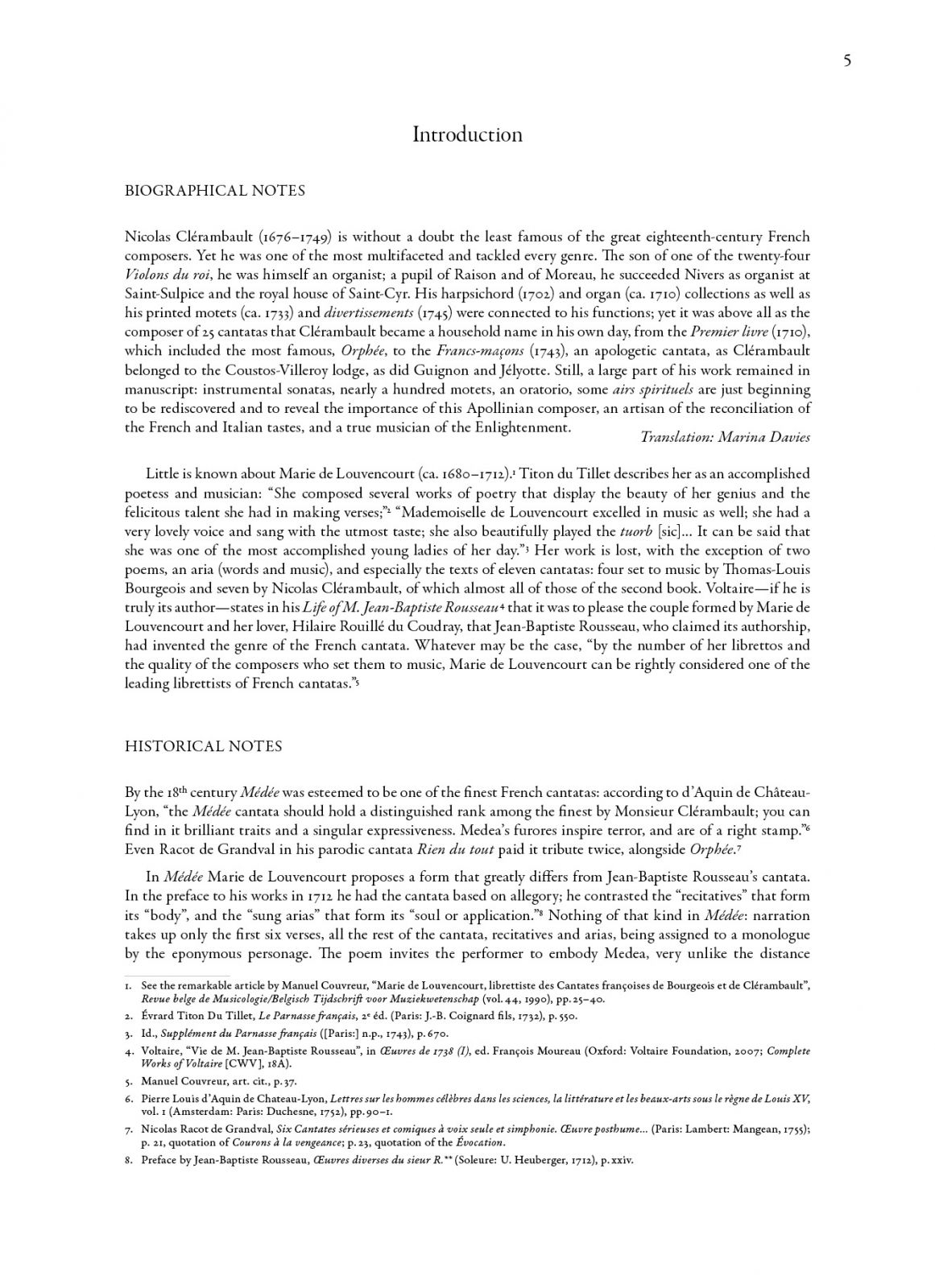
Nicolas Clérambault is undoubtedly the least known of the great French composers of the eighteenth century. He was, however, one of the most versatile, and addressed all genres. The son of a musician of the Vingt-Quatre Violons du Roi, a pupil of Raison and Moreau, he succeeded Nivers as organist of Saint Sulpice and of the royal house of Saint Cyr. His cantatas, published between 1710 and 1743, were widely known. His output also includes a harpsichord book and an organ book, motets and divertissements, but a large part, which has remained in manuscript, is beginning to be rediscovered and reveals the importance of this Apollonian composer, craftsman of the fusion of French and Italian tastes, musician of the Enlightenment.
The works
Recommendations


