

Miserere à voix seule
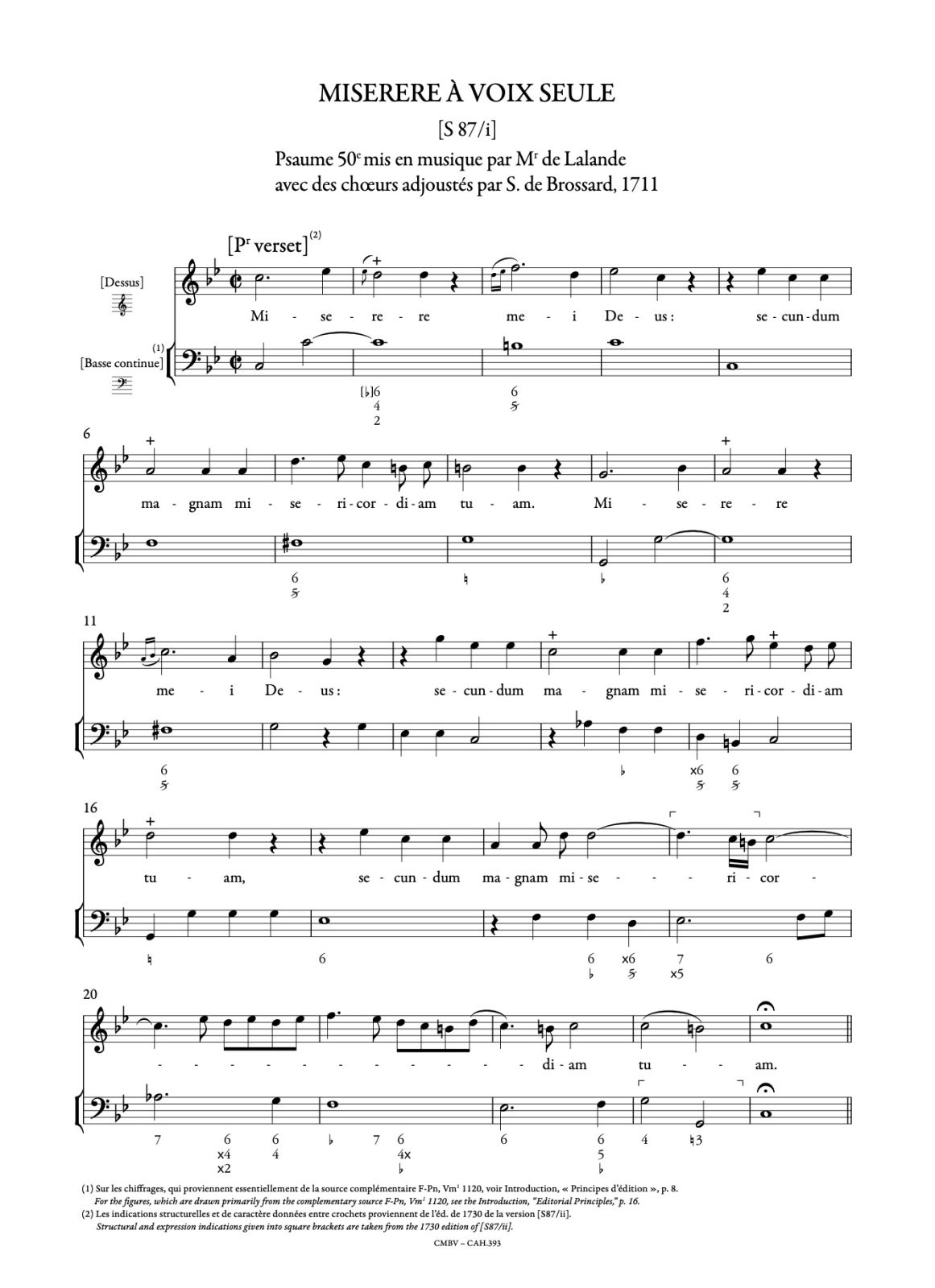
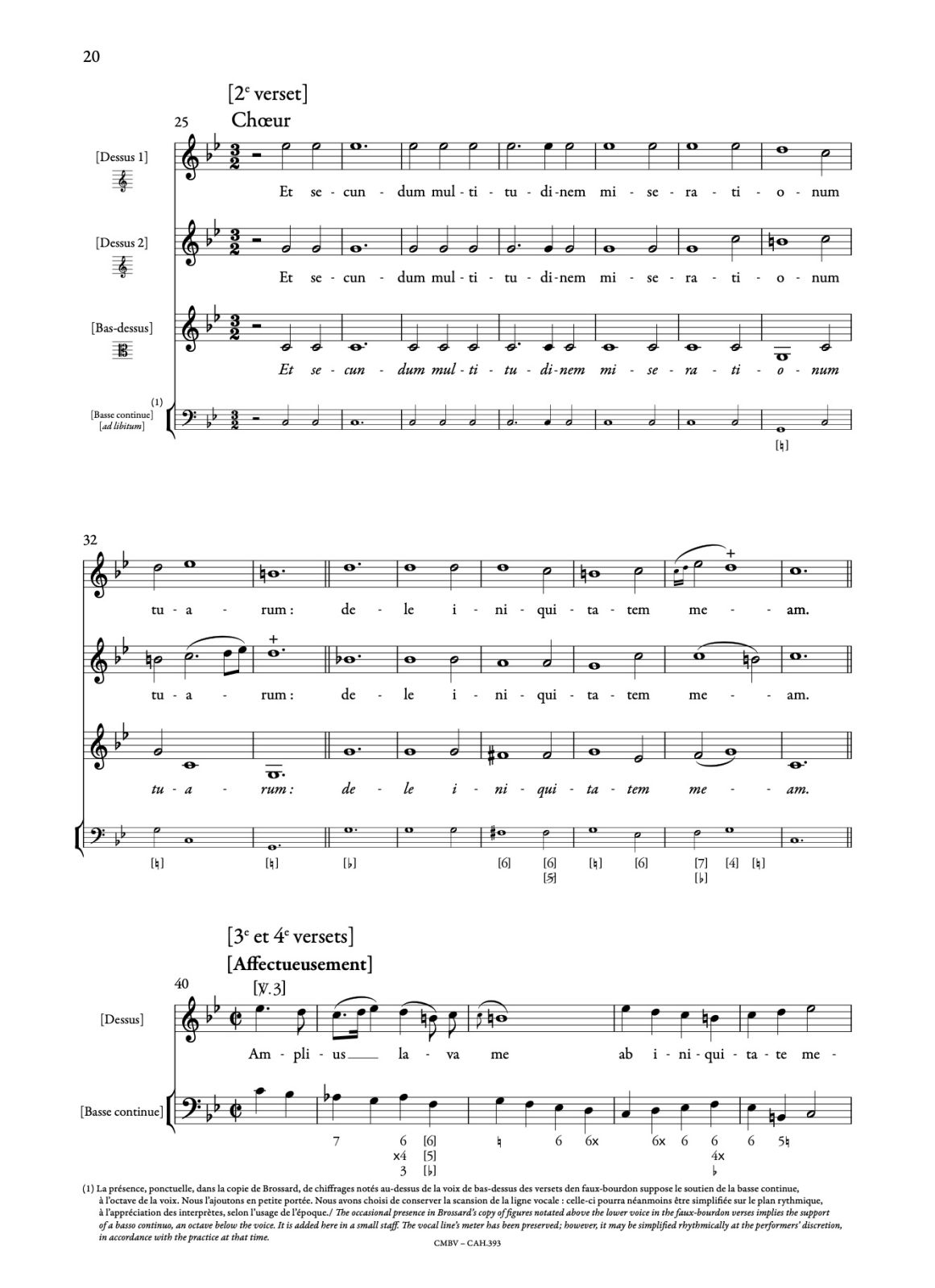
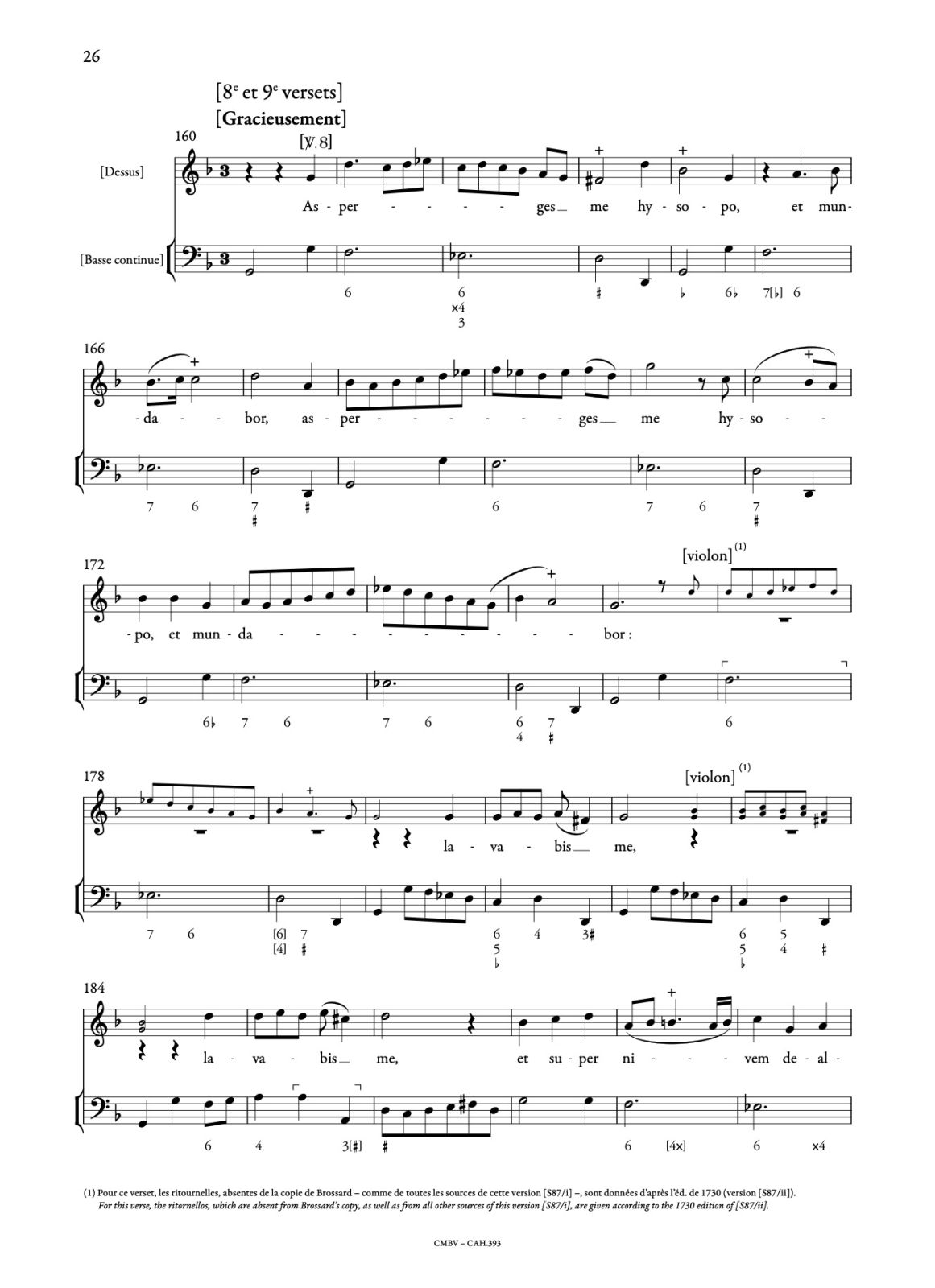
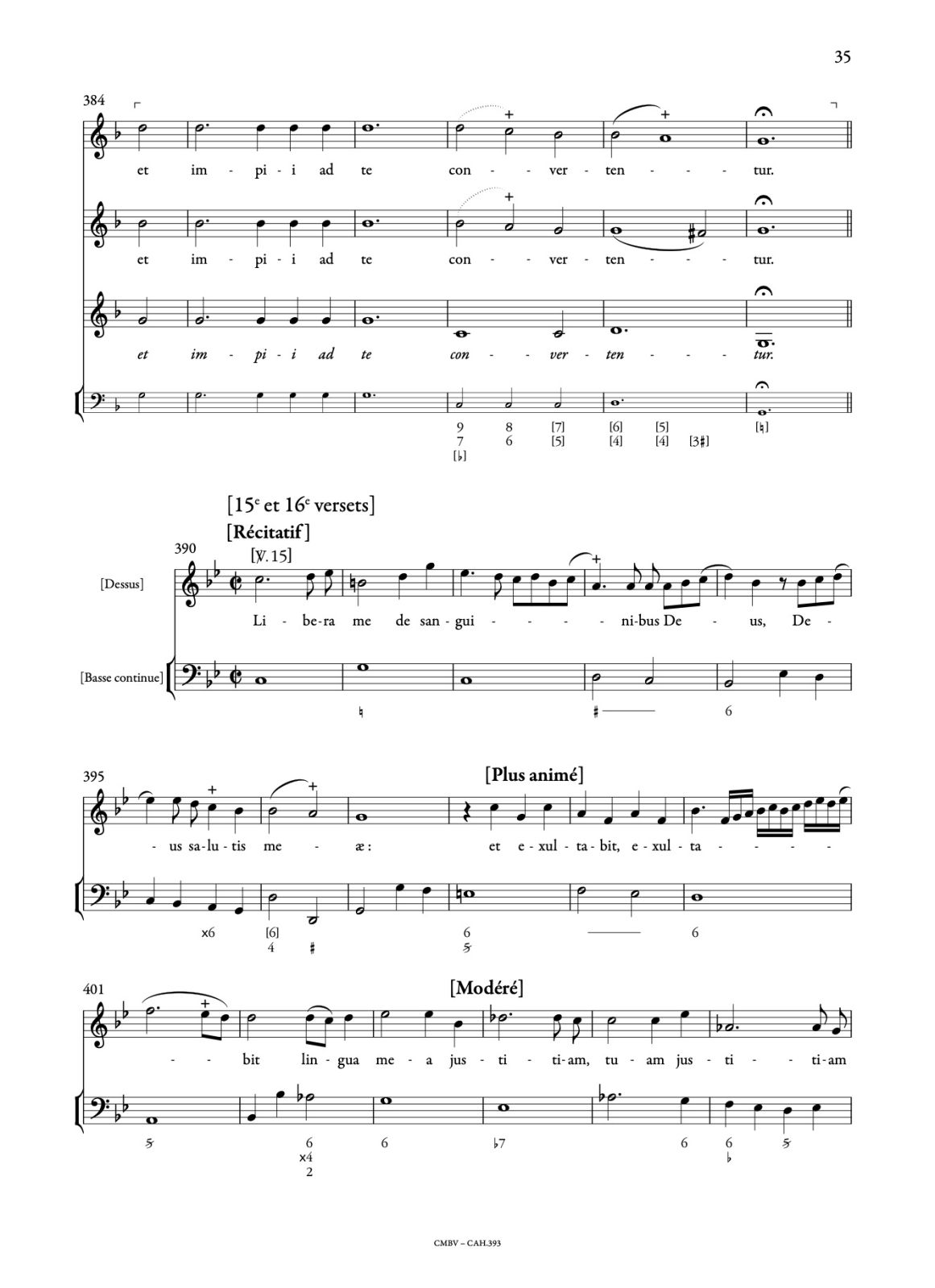


The Centre de musique baroque de Versailles presents a lesser-known version of Lalande’s Miserere for solo voice, alternating with a three-part faux-bourdon as found in S. de Brossard’s copy (1711). The score nevertheless allows for the possibility of diversifying the alternations (with plainchant or faux-bourdon) or varying the solo voices to highlight the internal contrasts within the text.
This Miserere for solo voice by Lalande is, like the Leçons, associated with the Tenebrae service: it was performed at Lauds, following the readings and responsories of the three nocturnes of Matins. The simplicity and restraint characteristic of this liturgical season are reflected in the small ensemble: a single voice accompanied by basso continuo on the organ.
The availability of a version of the score featuring a realisation of the continuo line will enable singers to include this masterpiece of French sacred Baroque music in their repertoire right from the start of their training.
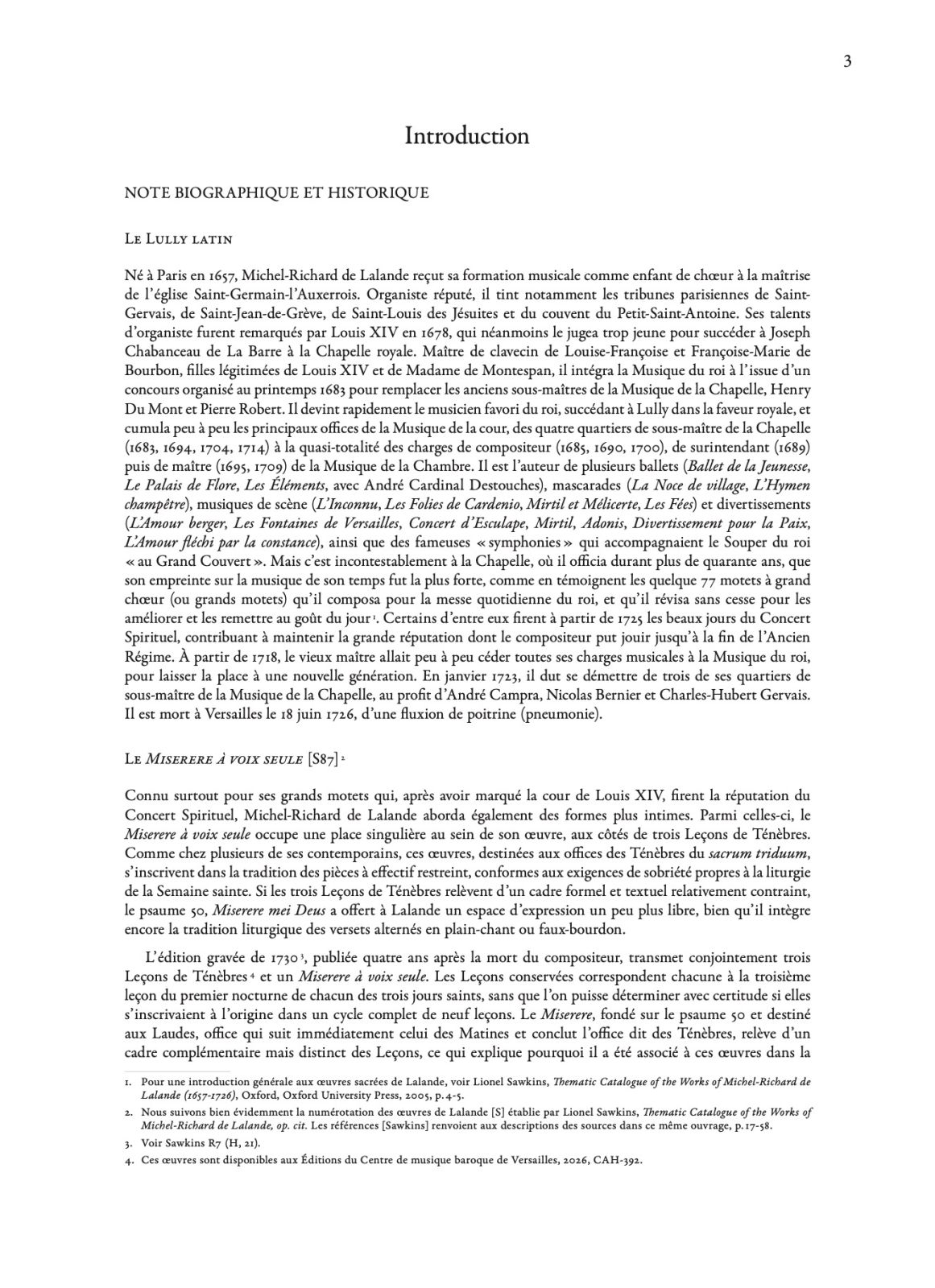
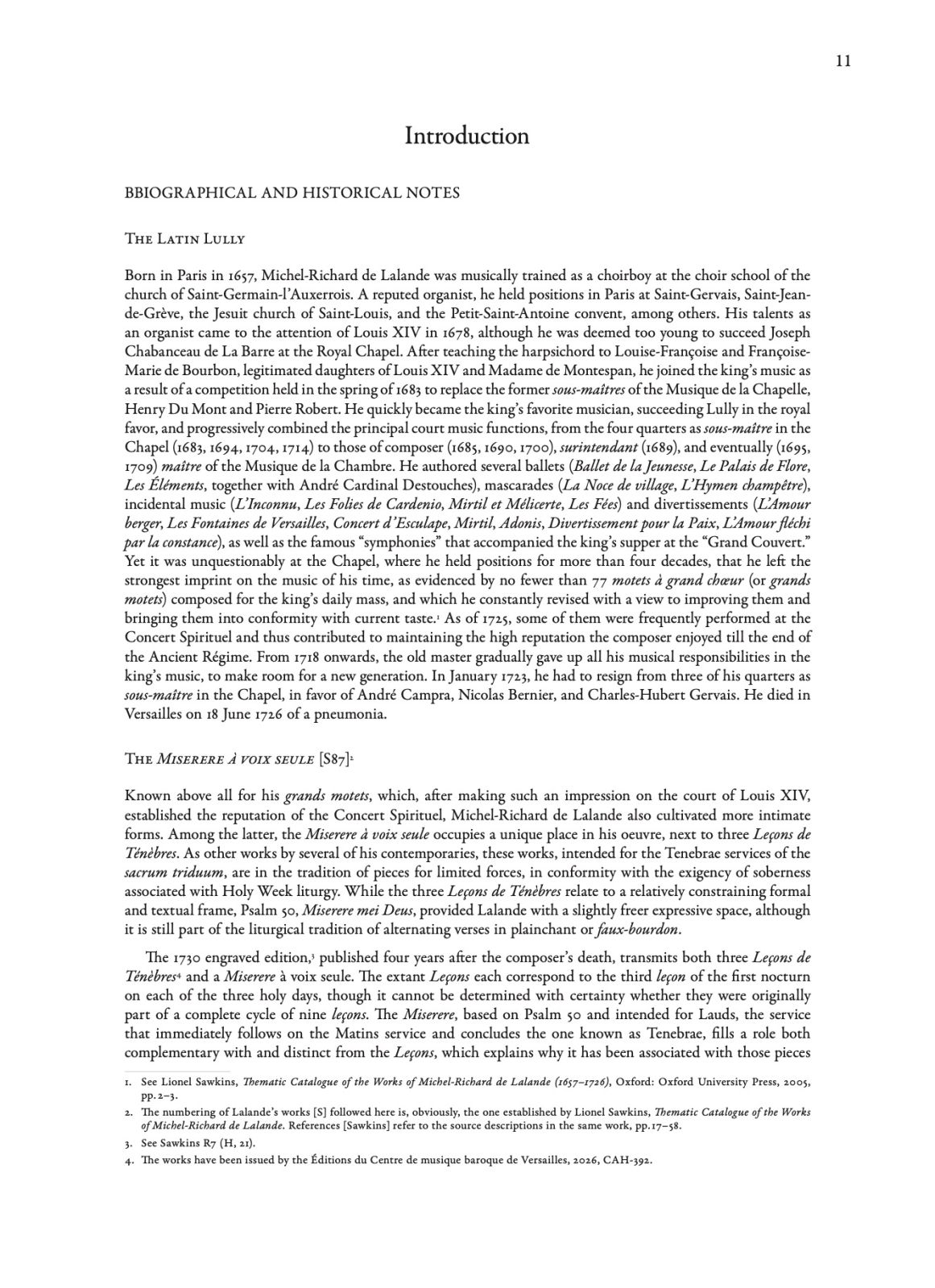
Born in Paris in 1657, Michel-Richard de Lalande (1657–1726) received his musical training at the choir school of Saint-Germain-l’Auxerrois. A renowned organist, he held several posts in Paris. As harpsichord master to Louis XIV’s legitimised daughters, he joined the Musique du roi in 1683. He gradually took on various posts within the court’s musical establishment, progressing from the four positions of sous-maître of the Chapelle to the three principal offices (superintendent, master and composer) of the Musique de la Chambre. He composed ballets, masquerades, stage music and court entertainments, as well as the famous Symphonies for the King’s suppers. It was at the Chapelle that his influence was felt most strongly. Of the 77 grand motets he composed, some of them were the highlight of the Concert Spirituel’s repertoire right up until the end of the Ancien Régime.
The works
Recommendations


