

Alcyone
cantata for solo voice and symphony
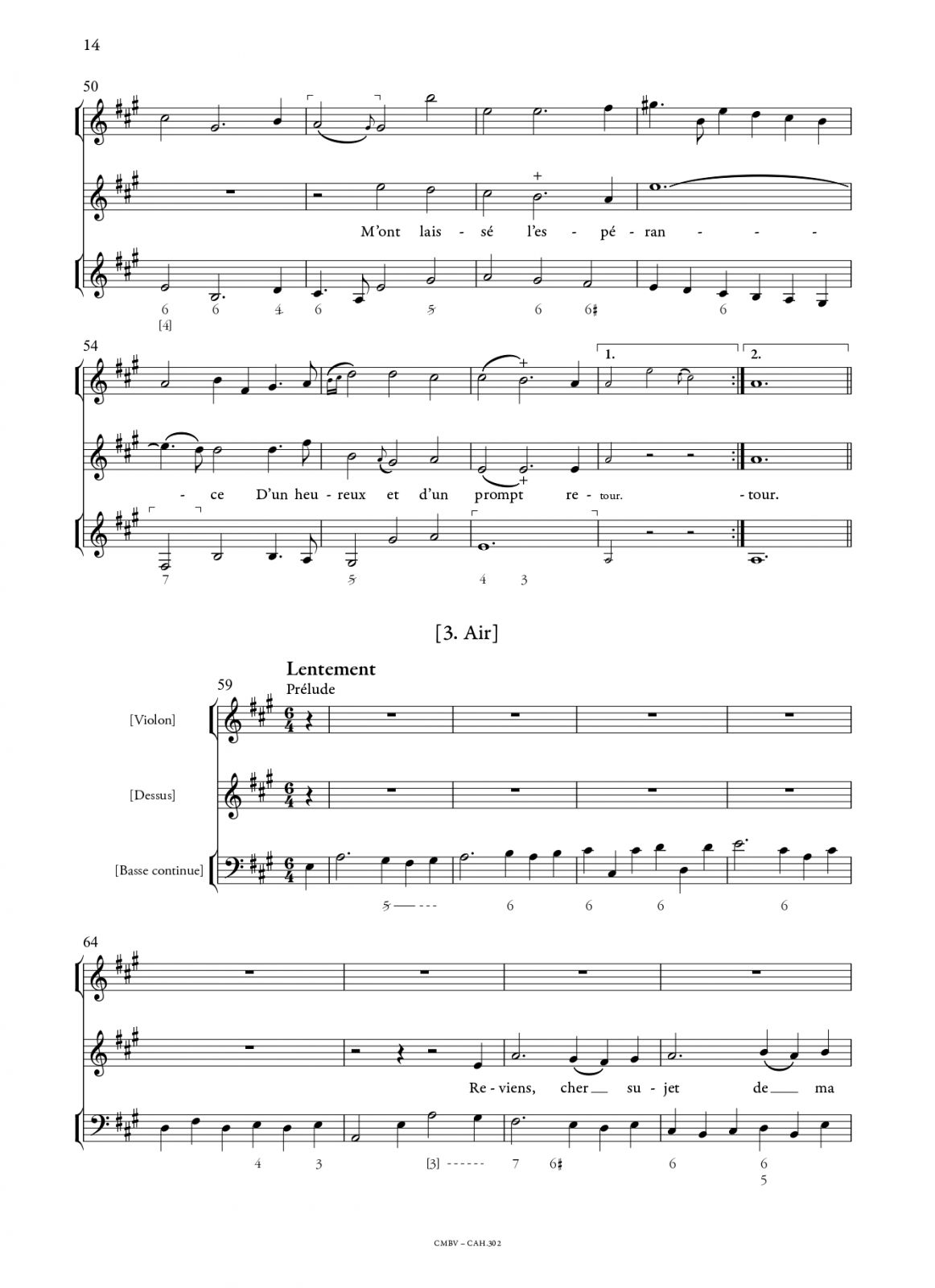


This new cantata published by the Centre de musique baroque de Versailles illustrates the expressive plurality of this genre. A "Monsieur Marchand, organist" composed this piece, probably in the years 1710-1720. The reference to the work of Marin Marais, which contains one of the first emblematic storms of French baroque opera, is obvious. ----
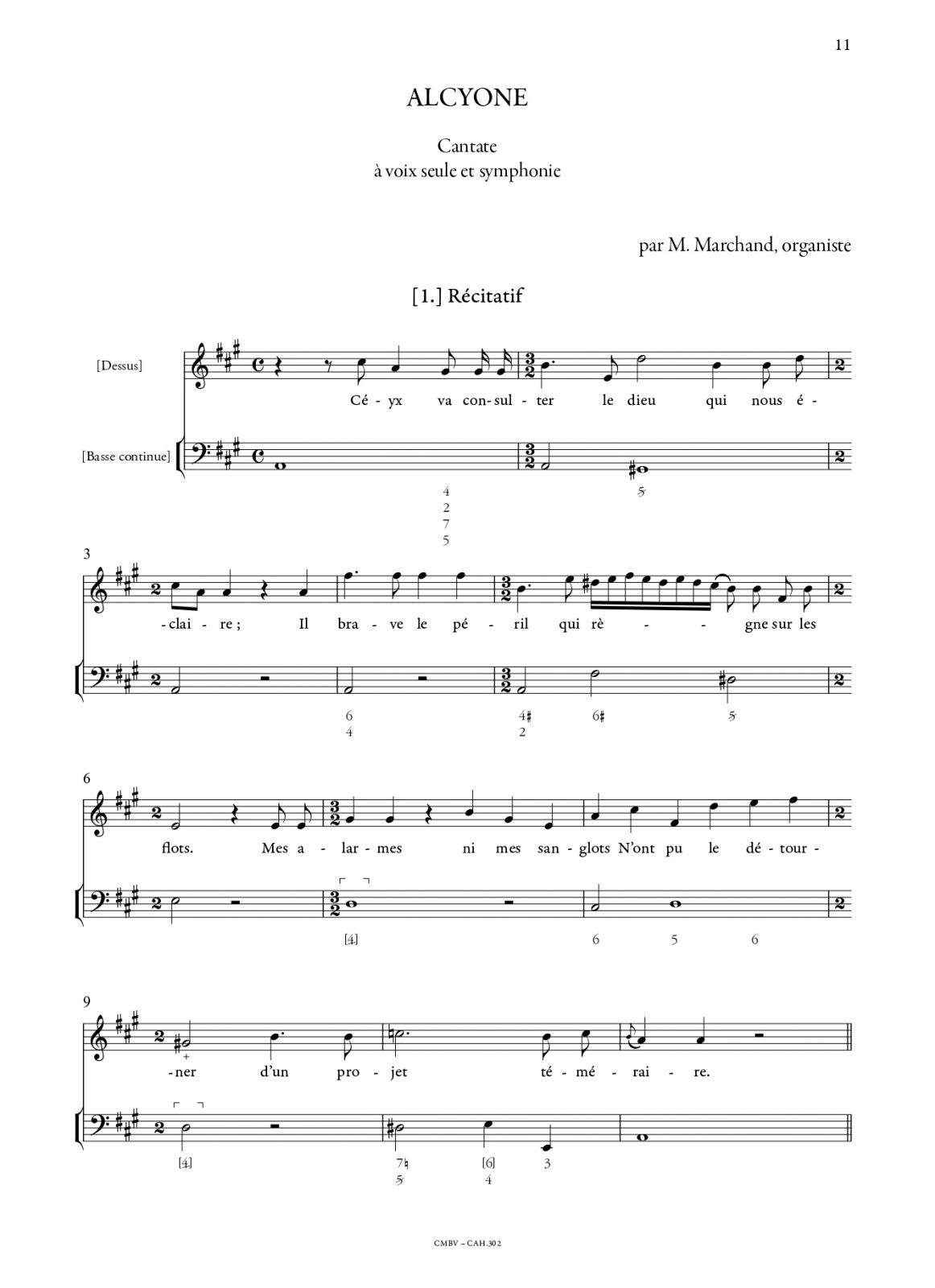
The anonymous libretto shows a beautiful sense of drama, conveyed solely by the heroine Alcyone. It requires a virtuoso and expressive singer. This theatrical dimension and this convergence with the "tragédie en musique" illustrates the paradox of the genre: created in reaction to Lully-style tragedy and distinct from the Italian model, the French cantata during the 1720s and 1730s nevertheless became ever closer to these two models.
Alcyone is a cantata "with symphony", that is to say with an obbligato instrument. The violin seems the most appropriate with its great jumps and arpeggios illustrating the storm. Nothing prevents one from sometimes substituting a flute. The basso continuo part requires a harpsichord, the only thing capable of accompanying the aria Mes pleurs ont coulé vainement with its very high tessitura, and a basse de viole for the "preludes" and solos.
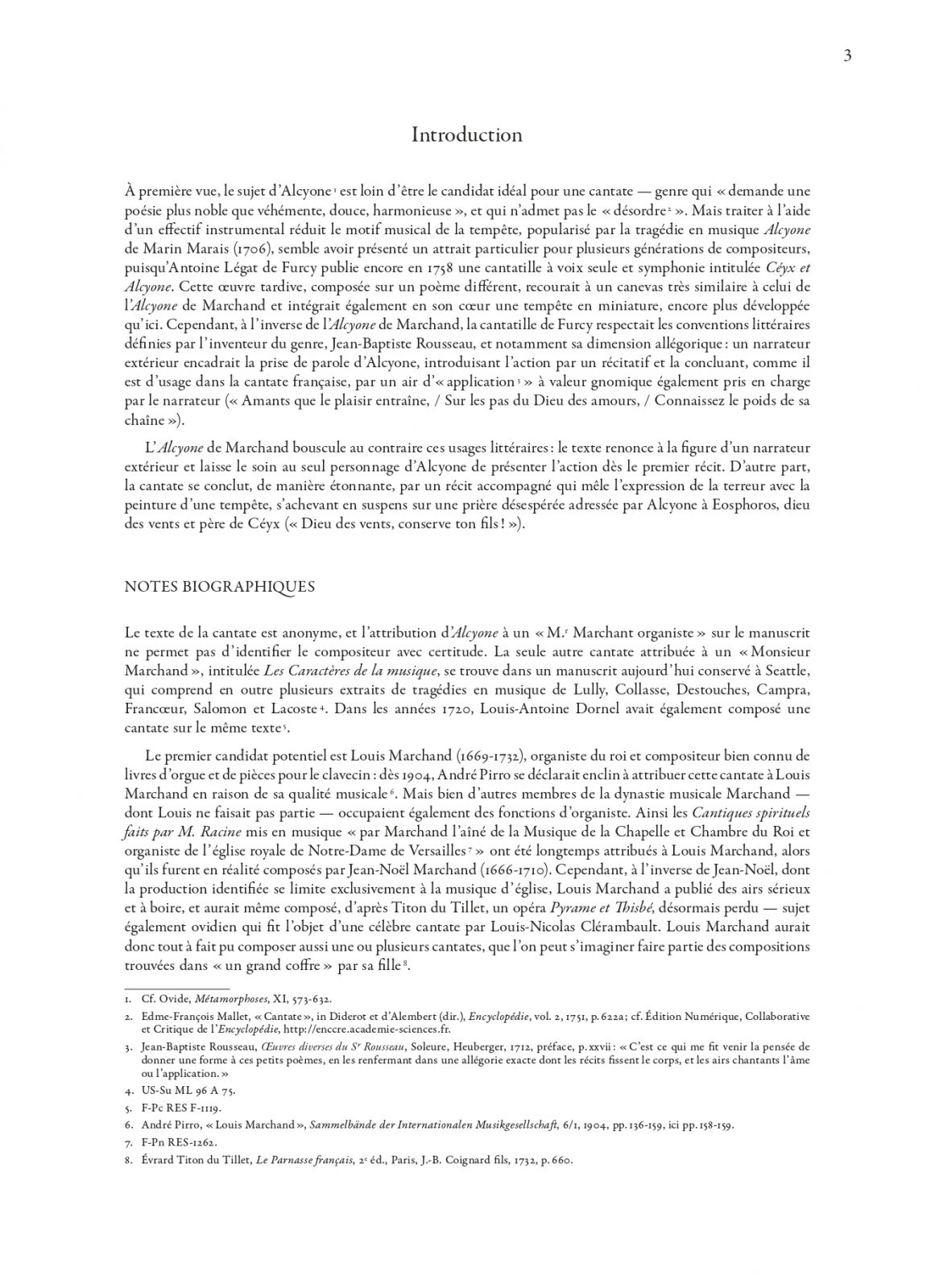
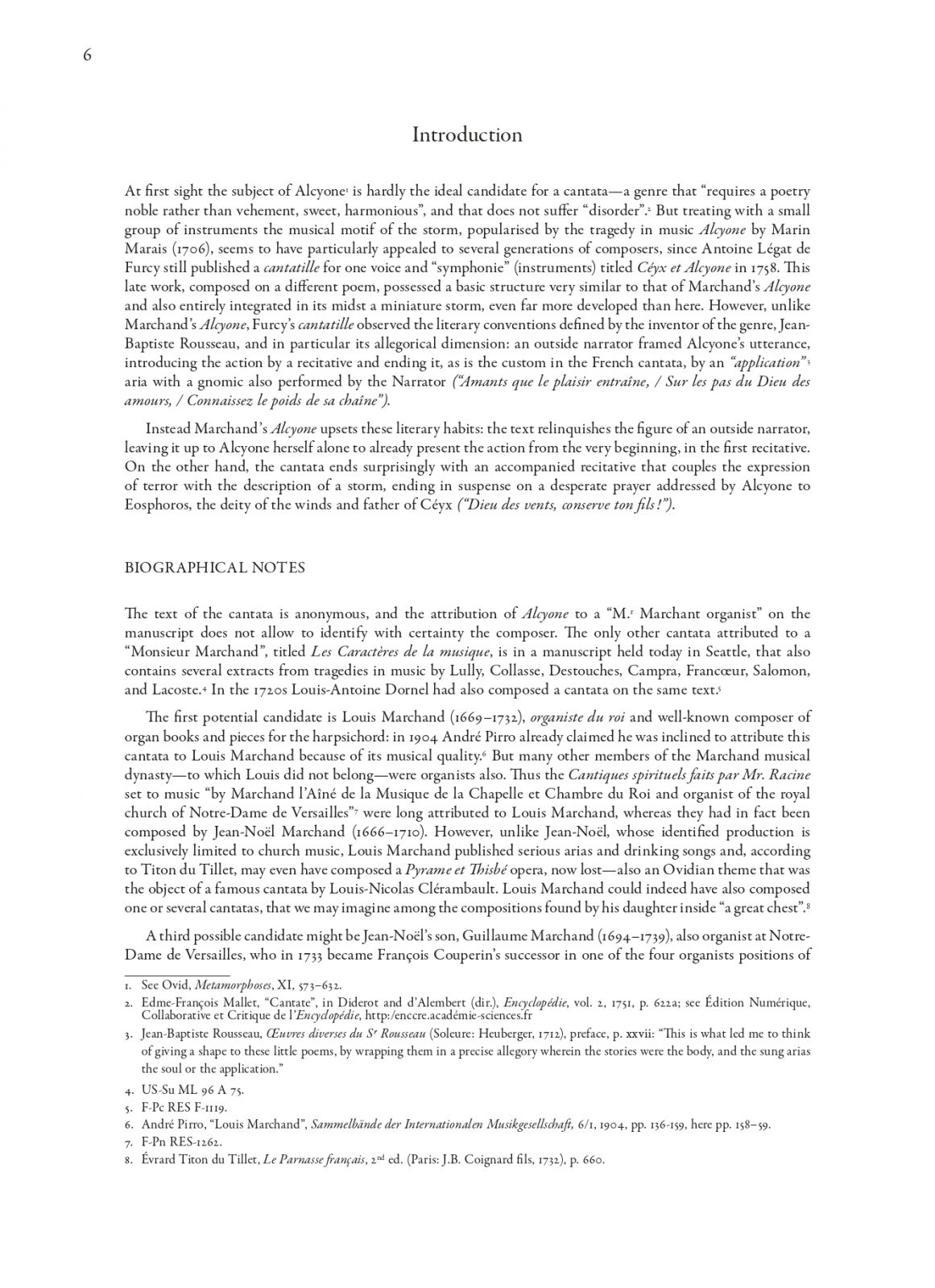
The attribution of this cantata to Louis Marchand is, in the current state of knowledge, the most likely. Organist to the King and renowned composer of organ books and harpsichord pieces, Louis Marchand also published serious airs and drinking songs. Titon du Tillet attributed to him an opera, now lost, Pyrame et Thisbé. Louis Marchand could therefore easily have composed one or more cantatas, which we can imagine as part of the works found by his daughter.
The works
Recommendations


