

Le Carnaval et la Folie
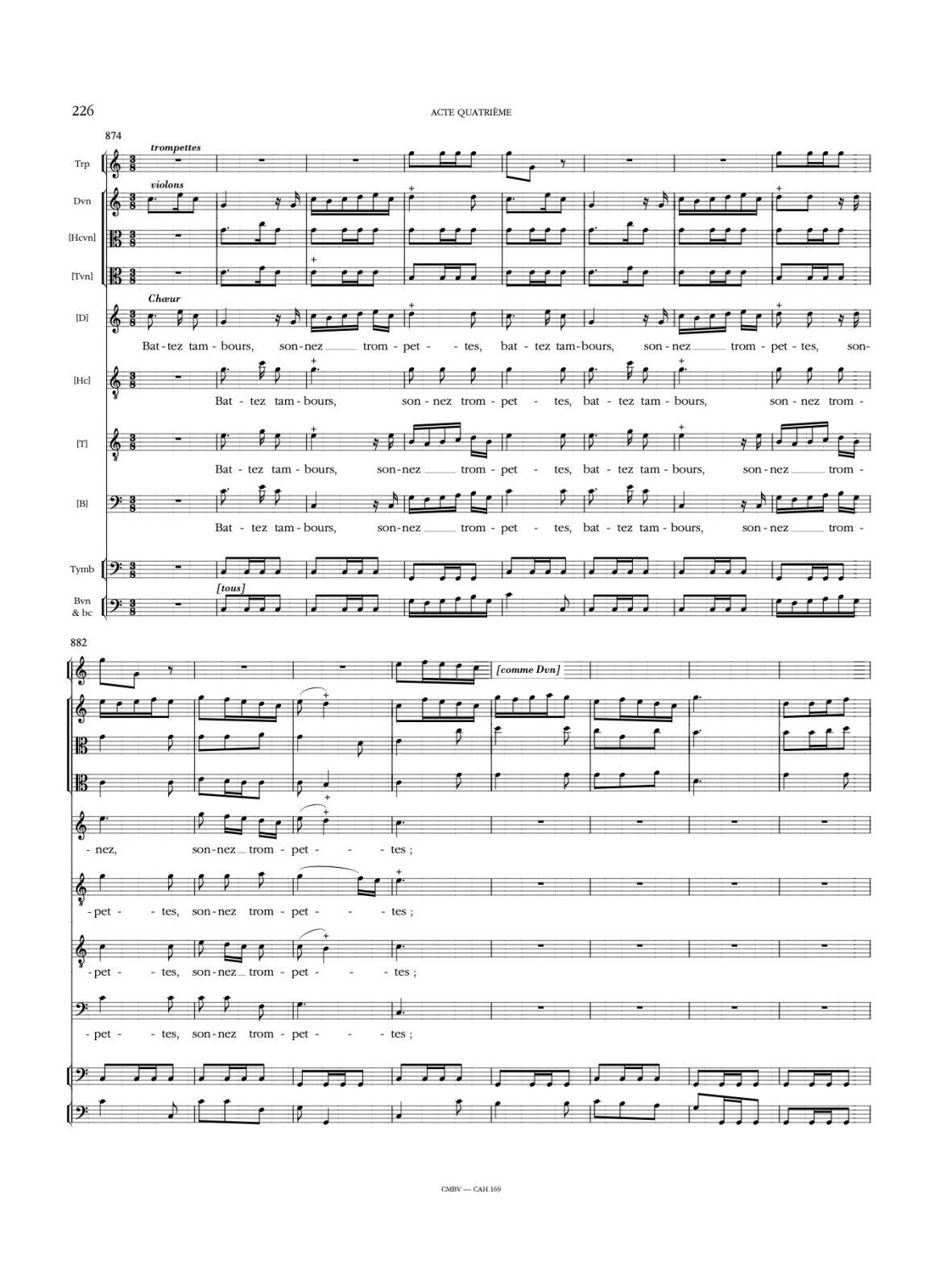


Le Carnaval et la Folie by André Cardinal Destouches, with libretto by Antoine Houdar de la Motte, was prepared for the 2007 session of the Académie musicale d’Ambronay, directed that year by Hervé Niquet.
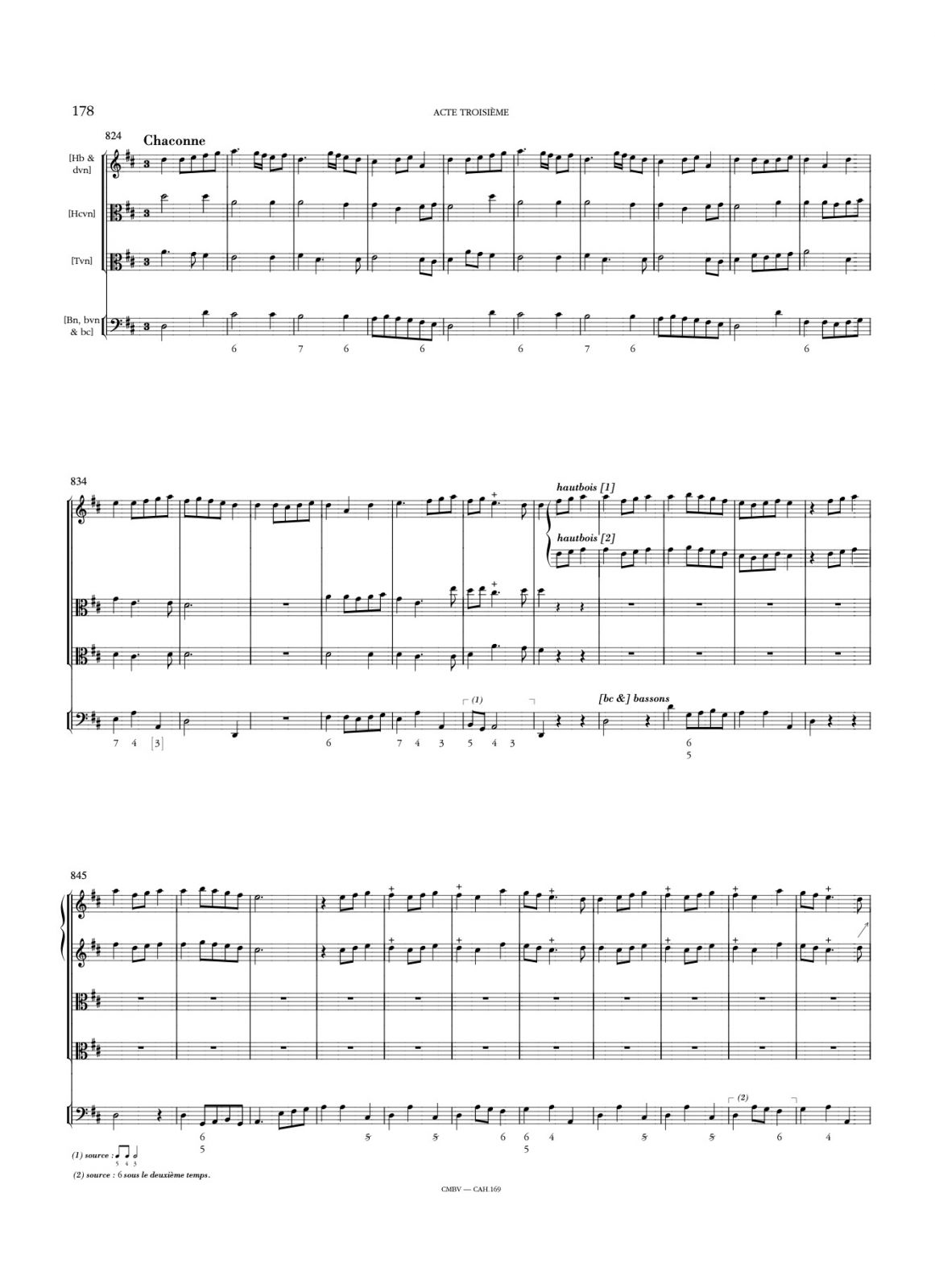
The libretto, inspired by Erasmus’s In Praise of Folly, features a prologue and five acts about the love between Carnival and Folly, the cunning of Momus and the divine pleasures of Love. The work’s comic vein is set against a sumptuous dramaturgy that seamlessly blends arias, preludes, choruses, chaconne, passepied, gigue, minuet, gavotte, symphony... The work’s Italian setting, featuring a professor of folly and his pupils, is particularly funny. The work contrasts with the austere atmosphere of the late reign of Louis XIV (it premiered in 1703 at Fontainebleau); André Cardinal Destouches and Antoine Houdar de la Motte were intent on renewing theatrical conventions in a fresh, playful and brilliant spirit.
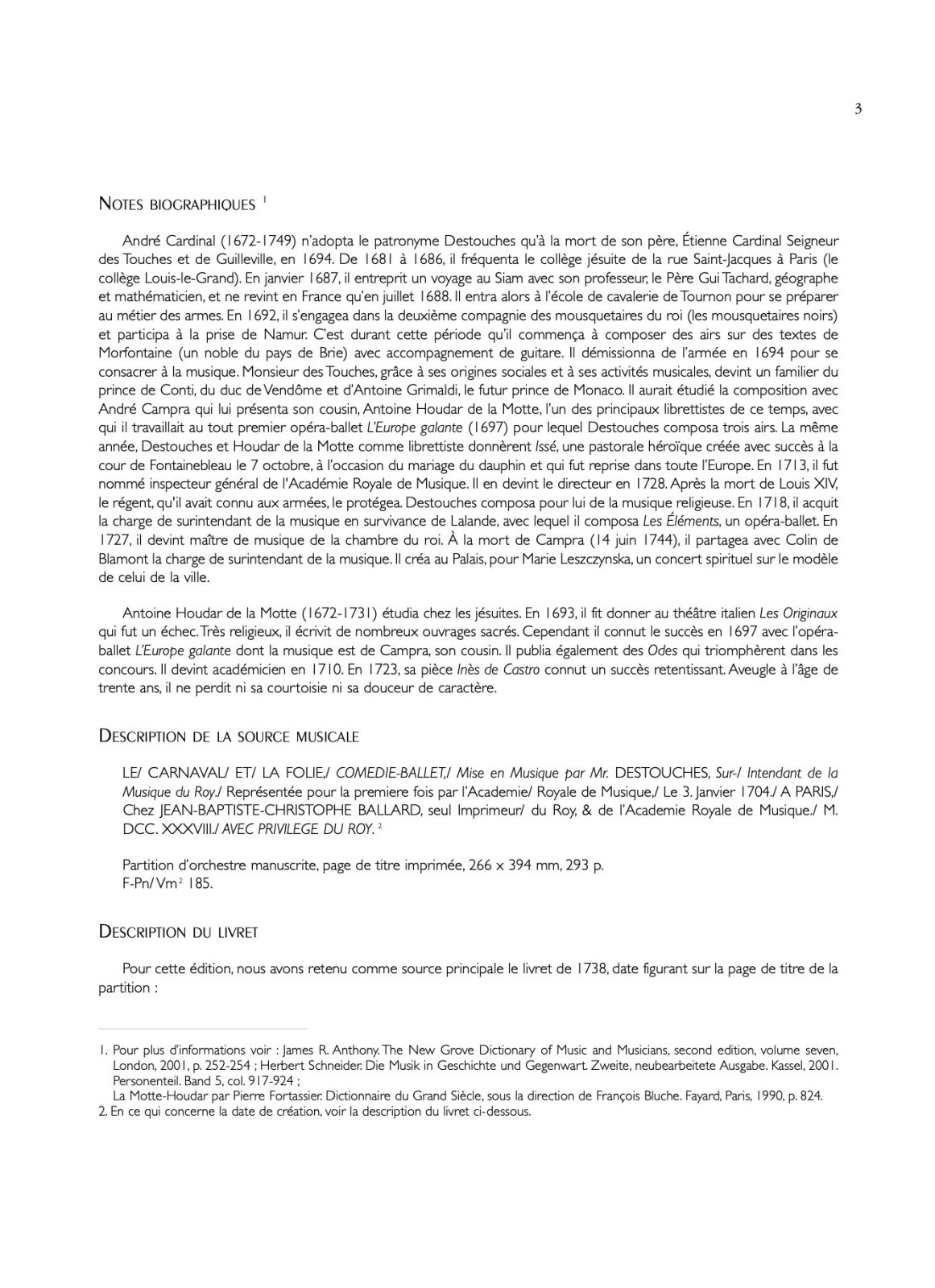
André Cardinal Destouches, born in Paris in 1672, did not start composing until the age of 20. Educated by the Jesuits, at the age of 15 he went to Siam with a teacher for 1½ years. On his return, he entered the Tournon cavalry school, then joined the king’s musketeers. He resigned from the army in 1694 to devote himself to music. His only teacher seems to have been André Campra. Although his position and knowledge probably facilitated his career, his talent was nonetheless recognised. In 1697, André Campra included three Destouches arias in his ballet l’Europe Galante, but the composer’s career really began in Fontainebleau with the success of his first opera Issé, a pastoral héroïque. A protégé of Louis XIV, the regent Philippe d’Orléans and then Louis XV, he rose to the most prestigious positions: Inspector then Director of the Académie royale de Musique, Superintendent of Music and Maître de musique de la chambre du roi. For Queen Marie Leszczynska, he created a Concert Spirituel modelled on the one in Paris, which he directed until an advanced age. He died at his home, now 4 rue Saint-Roch in Paris, in February 1749.
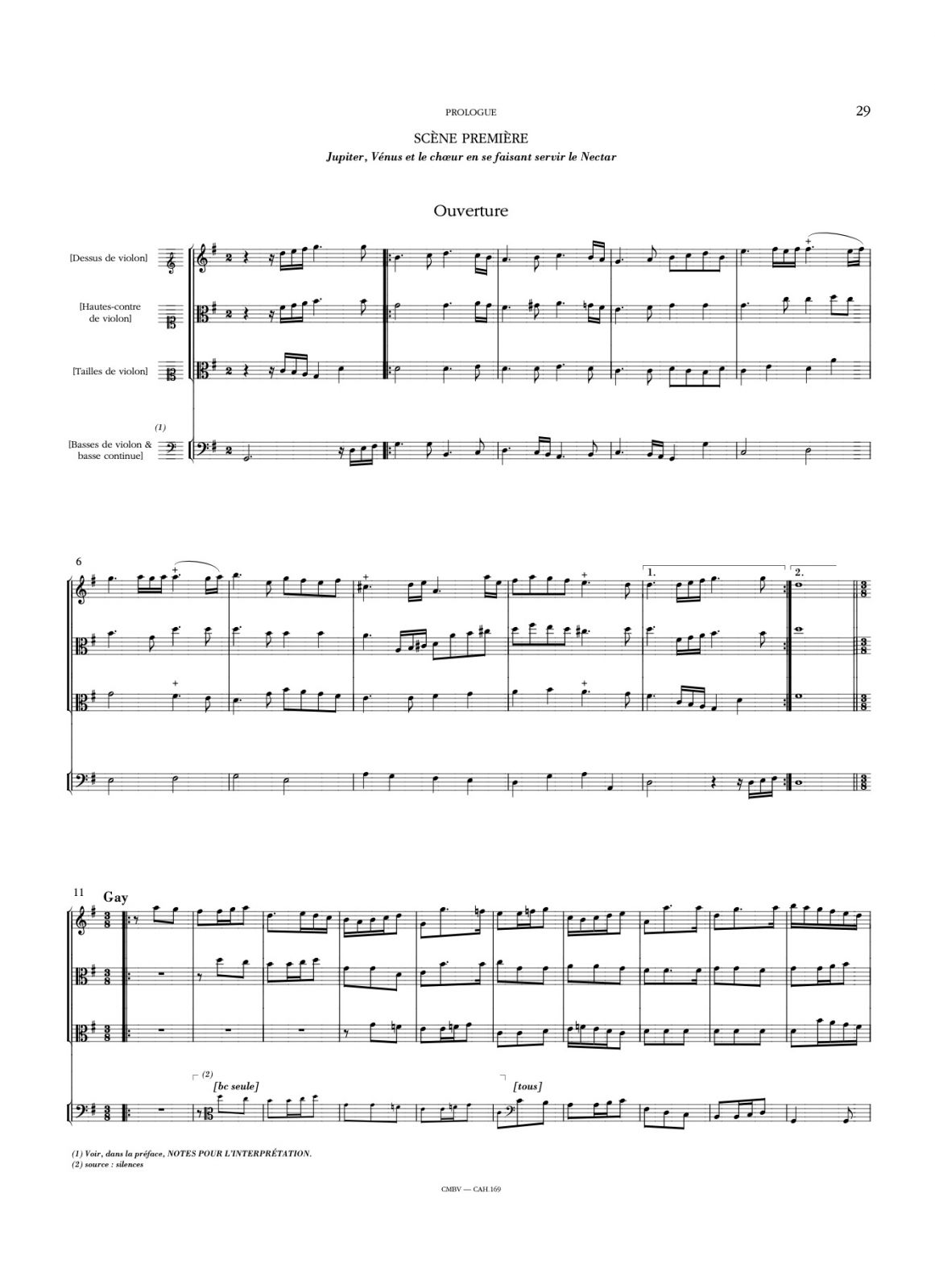
The opera features 13 characters, which can be reduced to 9 singers, some of whom may come from the chorus (4-voice French style). The orchestra is large, with flutes and piccolos, oboes, bassoon, trumpets and timpani, as well as 4 string parts (Dessus de violons, divided, hautes-contre, tailles and basses de violon) and basso continuo. The work lasts between 2h30 and 3h00.
The works
Recommendations


