

Rivales
Airs and duos from French operas and opéras-comiques
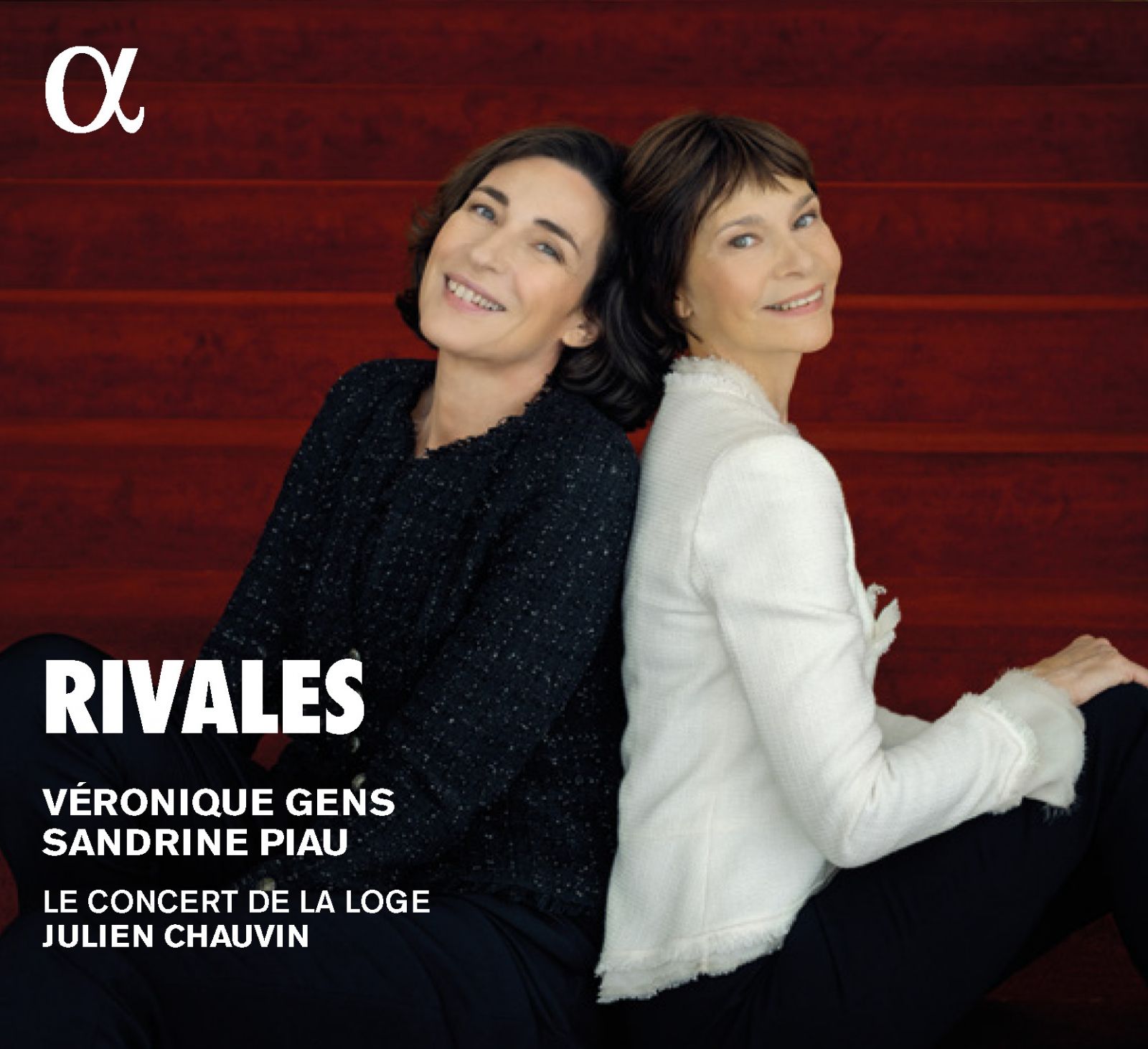

This programme, bringing together Sandrine Piau and Véronique Gens under the direction of Julien Chauvin, is a homage to two great figures of the art of French opera, born one year apart: Mme Dugazon (1755-1821), of the Comédie-Italienne, and Mme Saint-Huberty (1756-1812), of the Académie royale de musique. Both triumphed in Paris, at Court and in the provinces during the reign of Louis XVI. Queens in their respective theatres – the Opéra-Comique for one, the Opéra for the other – they performed the principal roles in most of the works premiered at this time. Librettists and composers, keen to make them shine, conceived works “made to measure” for their vocal and acting abilities. They marked their era and considerably influenced the repertoire.
Madame Saint-Huberty
Anne-Antoinette-Cécile Clavel, born in Strasbourg in 1756 and died in Barnes (near London) in 1812, was the daughter of an impoverished former soldier, become theatre répétiteur. She showed vocal talent very early. In 1770, she undertook a voyage to Prussia and then to Poland, where she set foot on the stage for the first time. Back in France, she married the Sieur Croisilles de Saint-Huberty. She performed in the theatres of her hometown before moving to Paris, having received an “ordre de début” at the Académie royale de musique in 1777. Accepted for a trial period, she joined the troupe the following year. Gluck recognised her potential and nicknamed her Madame-la-Ressource, assuring her that one day she would be the Opera’s main resource. In just a few years, she became the principal singer of the troupe: 1782 saw her triumph in Ariane dans l’île de Naxos by Edelmann (“ Mais, Thésée est absent…”) and she then snatched the leading role in Renaud by Sacchini (“ Barbare Amour, tyran des cœurs…”) from her rival Rosalie Levasseur, forcing latter to retire from the stage. The same year, she revealed herself in a lighter register by creating the role of Rosette in L’Embarras des richesses by Grétry (“ Dès notre enfance, unis tous deux…”). She then went on to triumph in premieres: Dido by Piccinni (1783), Chimène by Sacchini (1783), Les Danaïdes by Salieri (1784), Phèdre by Lemoyne (1786). She also took up the works of Gluck, particularly distinguishing herself in Iphigénie en Tauride and Alceste (“ Divinités du Styx, ministres de la mort…”). During the 1788-1789 season, she again created the role of Dircée in Démophon by Cherubini (“ Un moment à l’autel…”), before retiring. Madame Saint-Huberty had a dramatic voice, bordering on mezzo-soprano, which she mistreated by sometimes singing roles too high for her; by 1786, accounts agree that she was struggling, particularly in the works of Gluck. Her natural charisma, her fiery temperament, and the intelligence of her acting made her a flaming torch: she was at least as much an actress as a singer. In concert, she tackled both sacred repertoire and Italian music, which was increasingly in vogue in the capital: Anfossi, Paisiello, and Johann Christian Bach (“Me infelice che intendo…”) were among her favorite composers.
Madame Dugazon
Mme Dugazon, née Louis-Rosalie Lefebvre, was born in Berlin in 1755 and died in Paris in 1821. The daughter of a dancer and ballet master, she grew up on stage. Settling in Paris, she married Jean-Henri Gourgeaud, known as Dugazon, an actor at the Comédie-Française. She was quickly hired at the Comédie-Italienne, where her talent was a hit. From 1769 until the Revolution, she sang leading ladies and soubrettes there, guided by the famous Mme Favart, who took her under her wing. She distinguished herself as much in her premieres as in her revivals: it was to Grétry and Monsigny that she owed her first successes, notably Aucassin et Nicolette (“Cher objet de ma pensée…”) and Pierre le Grand by the former, or La Belle Arsène (“Où suis-je ?...”) and Le Déserteur by the latter. In the mid-1780s, Dalayrac became her favorite composer. In 1786, Nina ou La Folle par amour was her triumph: it owed everything to her theatrical, touching and subtle acting, because the score contains no notable music for the voice. After a few months of interruption at the beginning of the Revolution, she reappeared on stage. Between 1795 and 1804, she mainly played roles of grieving mothers that composers conceived especially for her, such as Camille in Camille ou le souterrain by Dalayrac (“Ciel protecteur des malheureux…”) and Pauline in Fanny Morna by Persuis (“Ô divinité tutélaire…”), one of her last premieres. She gave her farewells in Le Calife de Bagdad by Boieldieu, in the presence of Napoleon. Mme Dugazon had a fine, light voice, which was applauded more for its expressiveness than for its virtuosity. It is not known exactly what she sang in the private concerts she gave, but the most expressive Italian arias, such as Gluck’s La Clemenza di Tito ("Se mai senti..."), with its fine-spun line, would have suited her perfectly. Unable, moreover, to force her voice, she had learned to showcase herself above all through her stage performance. After thirty years’ career, when her vocal range had considerably shortened, she still knew how to move her audience.
Rivalry?
On stage, the two singers were complete opposites: while Dugazon’s art was imbued with tenderness, delicacy and naivety, Saint-Huberty’s revelled in the pathetic and majestic. Dugazon is impressionistic, all subtlety; Saint-Huberty was expressionistic, all grandiloquence. One was a housemaid, a maid, or a shepherdess; the other a queen, a magician, or a heroic figure of antiquity. Dugazon was thus forever associated with Grétry and Dalayrac, while Saint-Huberty was associated with Gluck and Piccinni. Their voices, above all, differed and evolved in diametrically opposed ways: Dugazon’s light and brilliant soprano became a lower soprano, which led her to change roles in her later years. Conversely, Saint-Huberty forced her full-bodied mezzo voice to interpret the great roles of the repertoire, giving them a dramatic depth previously unknown in France, heralding the art of Caroline Branchu and, even more so, Cornélie Falcon.
In real life, however, they proved very similar: independent and rebellious, both chose their husband’s name as a stage name and claimed the title of "Madame" at a time when the excommunication of artists traditionally imposed that of "Mademoiselle" on singers in theatre troupes. Neither of them was happy in marriage and they separated from their husbands, Saint-Huberty even obtaining a divorce, a rare thing at the time. Their love lives were chaotic, scattered with libertinism and brief affairs: while Dugazon ostentatiously collected one-night lovers, Saint-Huberty – openly bisexual – was for a time one of the most famous tribades (lesbians) of the capital, exhausting (according to the administration) the young conquests she brought home under the pretext of working on their voices. Both singers were royalists, and left Paris during the Revolution. Finally married to the Count of Entraigues whom she loved madly, Saint-Huberty, a convinced royalist, left France abruptly and wandered throughout Europe to flee the Napoleonic troops. Taking refuge near London, she was murdered along with her husband, both victims of a political manoeuver aimed at recovering Louis XVI’s handwritten will, which was in the couple’s possession. As for Dugazon, also harassed for her royalist beliefs, she returned to the capital once the Terror was over and began the second half of her career at the Théâtre Feydeau, where she triumphed until the early 19th century.
The nature of the relationship between these two artists is unknown: but there is no doubt that the game of exclusivity and the incessant operatic quarrels particular to Enlightenment France drove them to become rivals, although they probably never found themselves face to face on stage. Dugazon’s long career gave her the time to generate an abundant repertoire and to give her name - a unique case - to two completely different lyrical roles: the "first Dugazon", the role of a tender and naive lover, and the "second Dugazon", the role of a mischievous and comic mother or maid. If Saint-Huberty, whose career was relatively short, did not premiere as many works, she nevertheless remains famous for having revolutionised the art of stage costume, seeking greater realism (she appeared in a tunic and sandals in the characters of Ariadne and then Dido), but above all for having given her roles an immense theatrical scope, comparable in this respect to the greatest actresses of the Comédie-Française, from La Clairon to Sarah Bernard. Each, in their own way, sought to shine at the expense of the other.
For the reunion of Sandrine Piau and Véronique Gens, long-time musical partners, in an operatic recital devoted to the French repertoire they love so much, the idea of entrusting them, respectively, with some of the roles of these two celebrities immediately seemed obvious, given how much they both have in common with their predecessors. Equally, the music of Grétry, Monsigny, Gluck, J. C. Bach, Piccinni, Edelmann and Cherubini, straddling the line between Classicism and pre-Romanticism, is at the heart of the repertoire of the Concert de la Loge and Julien Chauvin: the matter was sealed. Sandrine Piau plays the tender, naive and sensitive lovers; Véronique Gens plays the tragediennes and mythological heroines. Slipping into the shoes of these rivals of yesteryear to perform famous or unpublished works, they confirm that they are both, and have been for a long time, the queens of French song today.
Véronique GENS, soprano
Sandrine PIAU, soprano
LE CONCERT DE LA LOGE
Julien CHAUVIN, violin and conductor
Total leght: 01:03:12
Include:
1. Pierre-Alexandre Monsigny, La belle Arsène : Air où suis-je ?
2. Jean-Frédéric Edelmann, Ariane dans l'île de Naxos : Scène Mais, Thésée est absent
3. Johann Christian Bach, La clemenza di Scipione : Duo Me infelice! Che intendo?
4. Christoph Willibald Gluck, La clemenza di Tito : Air Se mai senti
5. Christoph Willibald Gluck, Alceste : Air Divinités du Styx
6. Louis-Luc Loiseau de Persuis, Fanny Morna : Air Ô divinité tutélaire
7. André-Ernest-Modeste Grétry, L'embarras des richesses : Air Dès notre enfance unis tous deux
8. Luigi Cherubini, Démophon : Scène Un moment. A l'autel
9. Antonio Sacchini, Renaud : Air Barbare amour, tyran des coeurs
10. André-Ernest-Modeste Grétry, Aucassin et Nicolette : Air Cher objet de ma pensée
11. Nicolas Dalayrac, Camille ou le souterrain : Duo Ciel protecteur des malheureux


