

L'orchestre à cordes sous Louis XIV (Expodcast#1)
Instruments, repertoires, singularities
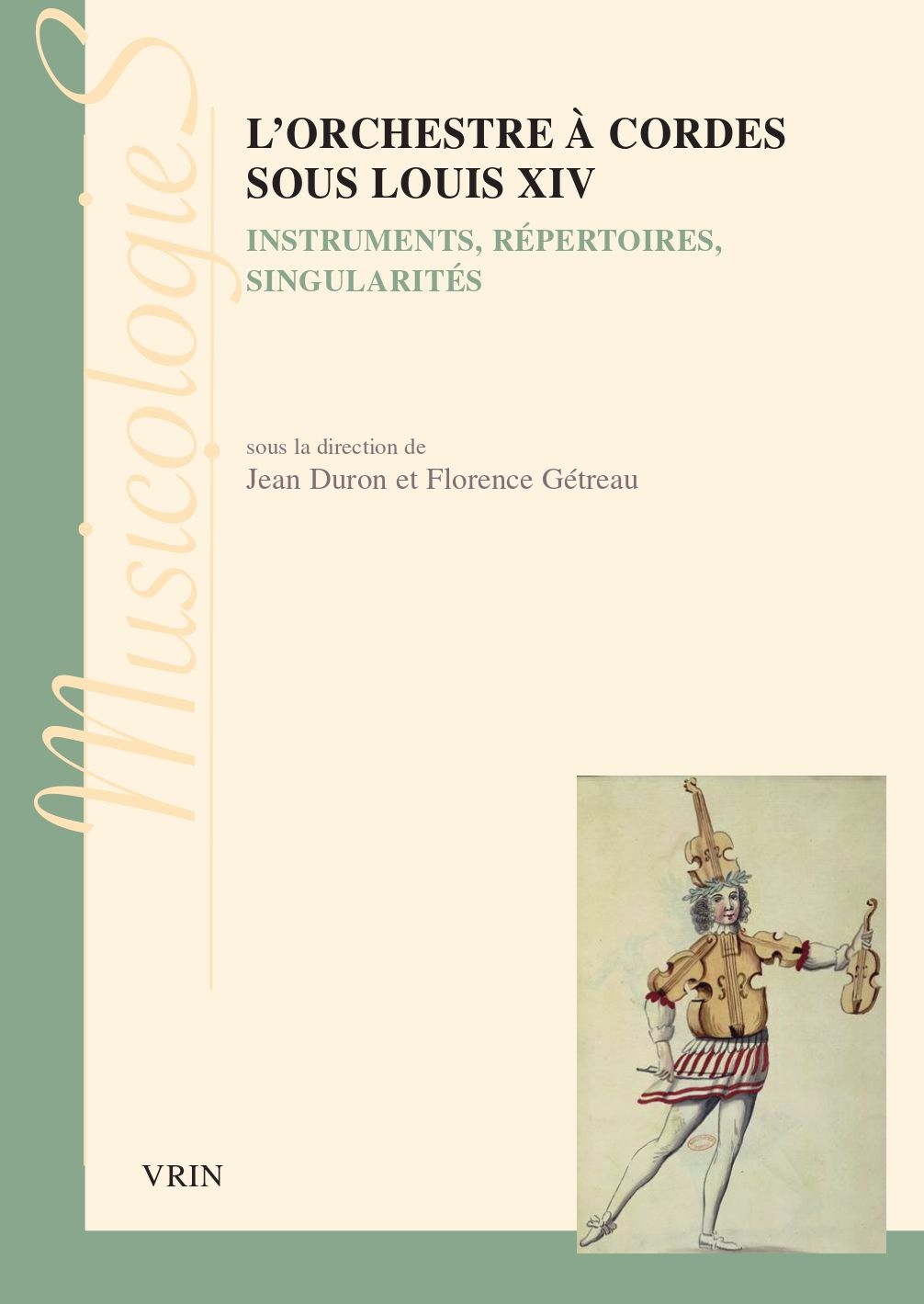

Louis XIV’s passion for music fostered the emergence and development of a very distinctive national style of music. To do this, the sovereign incurred a considerable expense to bring together various vocal and instrumental ensembles, including the famous Vingt-quatre Violons du roi and the Petits Violons de la Chambre which were admired by all the courts of Europe. This book brings together some twenty contributions that take stock of the particularities of these five-part string ensembles, the first known permanent orchestras. It presents their institutional setting, the musicians who served them and the different sections that made them up. An abundant iconography shows what these ensembles were like, their composition, the context of their use, how the instruments were held, and the bow. It is completed by a meticulous examination of the few instruments preserved and by the study of the compositional processes of the great masters of this period: Henry Du Mont, Pierre Robert, Jean-Baptiste Lully, Marc-Antoine Charpentier, Pascal Collasse and Michel-Richard de Lalande. Finally, this study shows how the texture of this orchestra subsequently evolved and how it was imitated in the provinces of the kingdom and beyond its borders.
Edited by Jean Duron and Florence Gétreau, this book brings together articles by Catherine Massip, Jérôme de La Gorce, Érik Kocevar, Michael Greenberg, Nelly Poidevin, Karel Moens, Anne Houssay, Laurence Decobert, Thomas Leconte, Graham Sadler, Shirley Thompson, Lionel Sawkins, Marie Demeilliez, Fabian Balthazart, Françoise Escande, Jean-Paul C. Montagnier, Beverly M. Wilcox, Benoît Dratwicki, Bénédicte Hertz, Lars Berglund, Maria Schildt, Marc Vanscheeuwijck.
Recommandations


