

Partition
Le Pouvoir de l'Amour
Joseph-Nicolas-Pancrace ROYER
(1703-1755)
Livret de Claude-Henri de Fusée de VOISENON


Référence : CMBV_047
Format :
25x34 cm
Reliure : Relié
106,00 € TTC
En stock
Joseph-Nicolas-Pancrace ROYER
(1703-1755)
Editeur(s) :
Lisa Goode CRAWFORD
Collection :
Anthologies
Musique de scène
Type d’édition :
Édition critique
Maison d'édition :
Editions du Centre de musique baroque de Versailles
Présentation :
Pancrace Royer
Joseph-Nicolas-Pancrace Royer, known simply as Pancrace Royer, was born in Turin, Italy, around 1705. Master of music to the children of Louis XV in 1734, he became co-director of the famous Concert Spirituel in 1748. He then joined the Académie royale de Musique as Master of Music and later Inspector General. At the same time, he became Composer for the Musique de la Chambre du roi in 1753. He made the most of his various functions to revive public enthusiasm for the concerts of the musical institutions entrusted to his care. He is best known today for his fine book of harpsichord pieces.
Works
Rameau’s brilliant career on the operatic stage has eclipsed even the finest works of his contemporaries. Yet Le Pouvoir de l'Amour is one of these. Royer demonstrates a perfect mastery of rich harmony, varied orchestration and complex textures. Demanding of his singers, he is precise in his ornamentation. Clearly influenced by Rameau’s innovative style, his is a personality no less important.
A ballet-héroïque in a prologue and three entrances, Le Pouvoir de l'Amour brings together four plots inspired by the title of the work. This is a far cry from the pastorale, and the scenes offer a fine dramaturgy typical of Baroque opera: magic, enchantments, pagan rites, scenes of savages, all in very effective verse. The libretto, long attributed to Charles-Hugues Le Febvre de Saint-Marc, seems more likely to have been written by Abbé Voisenon, another emblematic figure of 18th-century literature and a friend of Voltaire and Royer.
Synopsis
Prologue:
Prometheus descends from Heaven to animate mankind, thanks to a spark stolen from the gods. In retaliation, Jupiter sends the chorus of passions to torment the new men. Imagination comes to their rescue, giving birth to love and pleasures to save men from the torments of hell.
1st entrée
In her garden, before leaving, the Fairy gives her confidante Céphise her recommendations for protecting her daughter Zélide. The Fairy, having gained her power through virtue, fears that the son of her former suitor will carry out his revenge. Céphise asks Doris to entertain Zélide, who is suffering from extreme languor. But despite the entertainment, she is unable to do so, and the much-feared Émire captures Zélide’s willing heart, demonstrating the superiority of Love.
2nd entrée
In the temple of Bacchus, prepared for a feast, King Midas’s daughter tells the High Priest of her father’s decision to marry her off. Swearing vengeance, the High Priest challenges the proud king. He curses him with the power of Bacchus. Midas, scorning him, turns trees, gates and temples into gold to show his power. But from then on, everything he touches turns to precious metal, spreading death and terror. To obtain forgiveness, he consents to the marriage of his daughter and the priest.
3rd entrée
The savages intend to sacrifice Marphise to satisfy the god Apollo. Apollo, infatuated with the victim, takes on the features of the sacrificial priest. The great rite begins. Apollo isolates himself with Marphise for the sacrifice, but he teaches her to recognise love and declares his love for her. When the savages and their king return, he asks them to unite him with the victim. When they refuse, he commands night to fall. Faced with this marvel, the king relents. Apollo then reveals himself and invites everyone to recognise his tender charms.
Edition
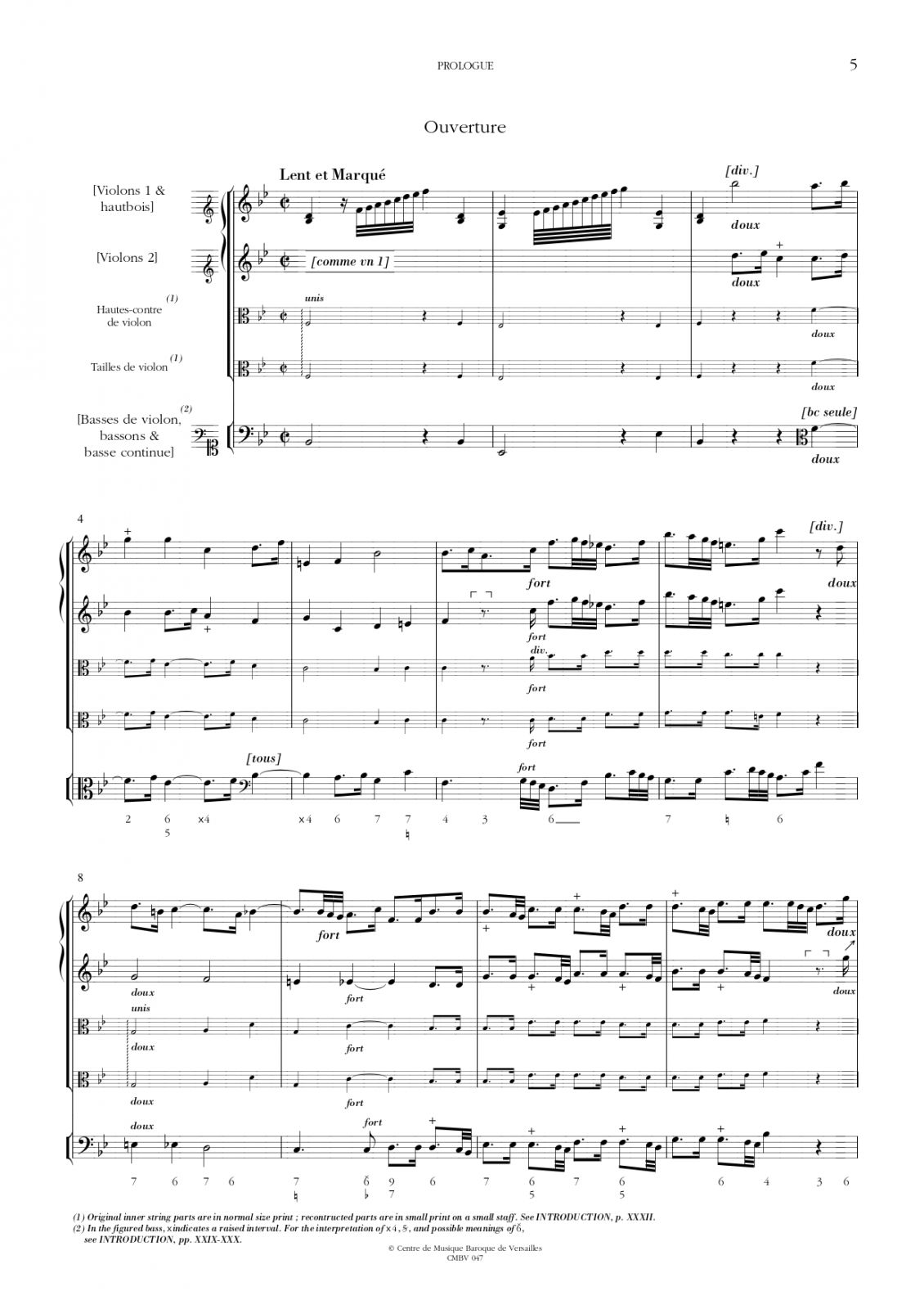
Lisa Goode Crawford, the volume’s scholarly editor, relies primarily on sources kept at the Bibliothèque musée de l'Opéra (France). In detailing the numerous variants in all the sources of the work and the degree to which they have been corrected, she analyses the performance documents and pays particular attention to interpretive issues (instrumentation, figured bass, ornamentation). The middle parts of the orchestra, most of which have been lost, have been restored by Gérard Geay.
Editor
Lisa Goode Crawford is Professor Emerita of Harpsichord at the Oberlin Conservatory of Music (USA), where she has made a major contribution to the development of the internationally renowned Early Music Department. She has previously published Royer’s Pièces de clavecin in the Le Pupitre collection (Heugel), and has also recorded them for the Gasparo label. In 2002, she produced and directed Le Pouvoir de l'Amour at Oberlin in collaboration with the Centre de Musique Baroque de Versailles and the New York Baroque Dance Company. She pursues her career as a harpsichordist – as a soloist and with ensembles in the United States and Europe – as a teacher and as a member of international juries.
Joseph-Nicolas-Pancrace Royer, known simply as Pancrace Royer, was born in Turin, Italy, around 1705. Master of music to the children of Louis XV in 1734, he became co-director of the famous Concert Spirituel in 1748. He then joined the Académie royale de Musique as Master of Music and later Inspector General. At the same time, he became Composer for the Musique de la Chambre du roi in 1753. He made the most of his various functions to revive public enthusiasm for the concerts of the musical institutions entrusted to his care. He is best known today for his fine book of harpsichord pieces.
Works
Rameau’s brilliant career on the operatic stage has eclipsed even the finest works of his contemporaries. Yet Le Pouvoir de l'Amour is one of these. Royer demonstrates a perfect mastery of rich harmony, varied orchestration and complex textures. Demanding of his singers, he is precise in his ornamentation. Clearly influenced by Rameau’s innovative style, his is a personality no less important.
A ballet-héroïque in a prologue and three entrances, Le Pouvoir de l'Amour brings together four plots inspired by the title of the work. This is a far cry from the pastorale, and the scenes offer a fine dramaturgy typical of Baroque opera: magic, enchantments, pagan rites, scenes of savages, all in very effective verse. The libretto, long attributed to Charles-Hugues Le Febvre de Saint-Marc, seems more likely to have been written by Abbé Voisenon, another emblematic figure of 18th-century literature and a friend of Voltaire and Royer.
Synopsis
Prologue:
Prometheus descends from Heaven to animate mankind, thanks to a spark stolen from the gods. In retaliation, Jupiter sends the chorus of passions to torment the new men. Imagination comes to their rescue, giving birth to love and pleasures to save men from the torments of hell.
1st entrée
In her garden, before leaving, the Fairy gives her confidante Céphise her recommendations for protecting her daughter Zélide. The Fairy, having gained her power through virtue, fears that the son of her former suitor will carry out his revenge. Céphise asks Doris to entertain Zélide, who is suffering from extreme languor. But despite the entertainment, she is unable to do so, and the much-feared Émire captures Zélide’s willing heart, demonstrating the superiority of Love.
2nd entrée
In the temple of Bacchus, prepared for a feast, King Midas’s daughter tells the High Priest of her father’s decision to marry her off. Swearing vengeance, the High Priest challenges the proud king. He curses him with the power of Bacchus. Midas, scorning him, turns trees, gates and temples into gold to show his power. But from then on, everything he touches turns to precious metal, spreading death and terror. To obtain forgiveness, he consents to the marriage of his daughter and the priest.
3rd entrée
The savages intend to sacrifice Marphise to satisfy the god Apollo. Apollo, infatuated with the victim, takes on the features of the sacrificial priest. The great rite begins. Apollo isolates himself with Marphise for the sacrifice, but he teaches her to recognise love and declares his love for her. When the savages and their king return, he asks them to unite him with the victim. When they refuse, he commands night to fall. Faced with this marvel, the king relents. Apollo then reveals himself and invites everyone to recognise his tender charms.
Edition
Lisa Goode Crawford, the volume’s scholarly editor, relies primarily on sources kept at the Bibliothèque musée de l'Opéra (France). In detailing the numerous variants in all the sources of the work and the degree to which they have been corrected, she analyses the performance documents and pays particular attention to interpretive issues (instrumentation, figured bass, ornamentation). The middle parts of the orchestra, most of which have been lost, have been restored by Gérard Geay.
Editor
Lisa Goode Crawford is Professor Emerita of Harpsichord at the Oberlin Conservatory of Music (USA), where she has made a major contribution to the development of the internationally renowned Early Music Department. She has previously published Royer’s Pièces de clavecin in the Le Pupitre collection (Heugel), and has also recorded them for the Gasparo label. In 2002, she produced and directed Le Pouvoir de l'Amour at Oberlin in collaboration with the Centre de Musique Baroque de Versailles and the New York Baroque Dance Company. She pursues her career as a harpsichordist – as a soloist and with ensembles in the United States and Europe – as a teacher and as a member of international juries.
Pagination :
CIV-266
Date de parution :
2007-04
Illustrations, fac similés (nbre) :
11
Introduction (langue) :
Français/Anglais
ISMN 979-0-707034-47-7
Collaborateur(s) de l'édition :
Gérard GEAY
Annexes :
Manuscript pieces added at the end of the first entrée from Versailles sources.
Variant of the chaconne of the second entrée from the mid-18th-century manuscript source belonging to the music library of the Ducs d'Aiguillon.
Indications of instrumentation, dynamics and articulation for the second entrée from the source in the music library of the Ducs d'Aiguillon.
Variant of the chaconne of the second entrée from the mid-18th-century manuscript source belonging to the music library of the Ducs d'Aiguillon.
Indications of instrumentation, dynamics and articulation for the second entrée from the source in the music library of the Ducs d'Aiguillon.
Les œuvres
Langue du texte :
Français
Genre :
opéra-ballet
Ton :
Si bémol Majeur
Durée :
plus de 50'
Recommandations


26€
Disponible en version numérique


34€
Disponible en version numérique


26€
Disponible en version numérique


