

Histoires sacrées, vol. 4
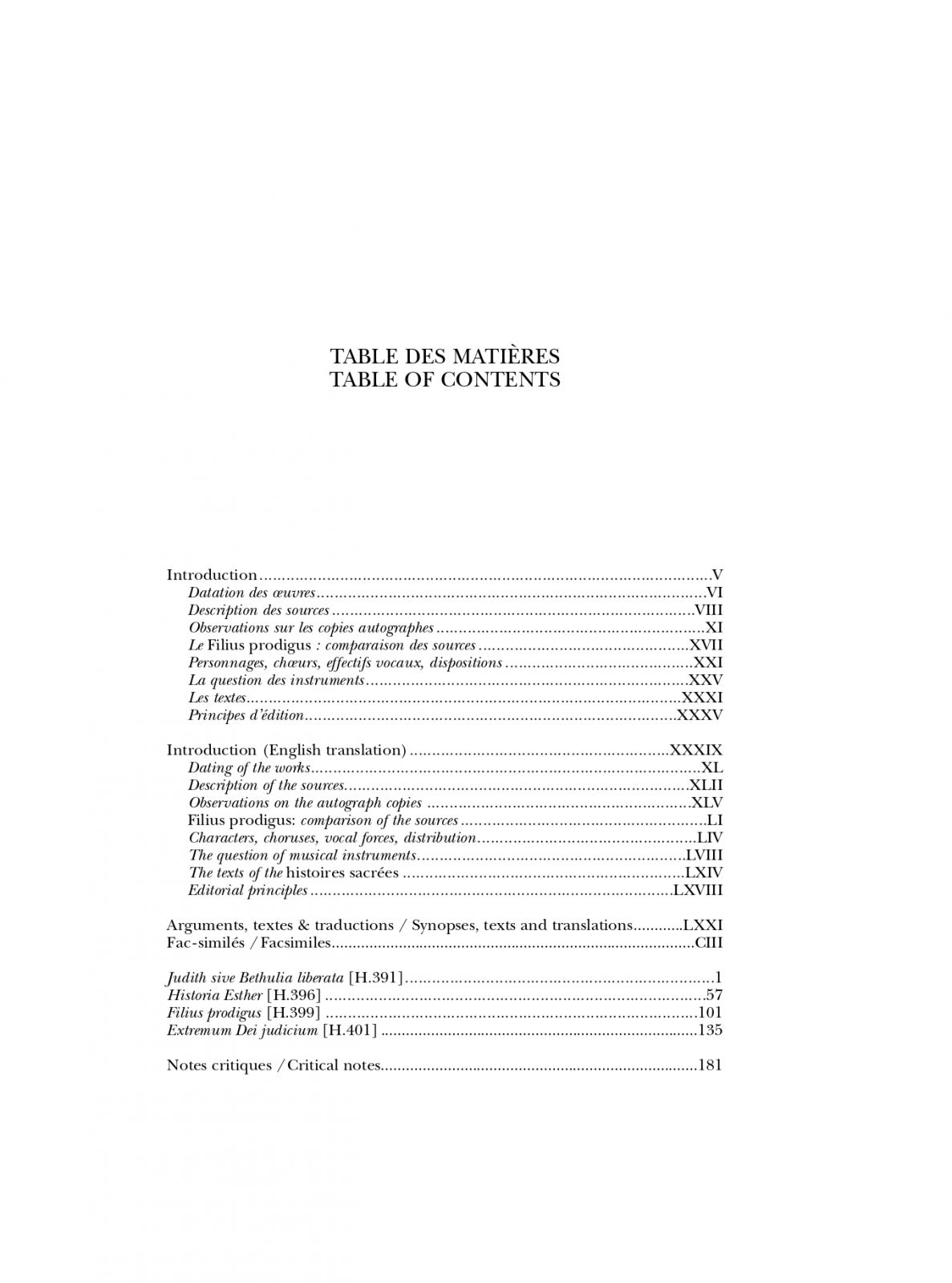
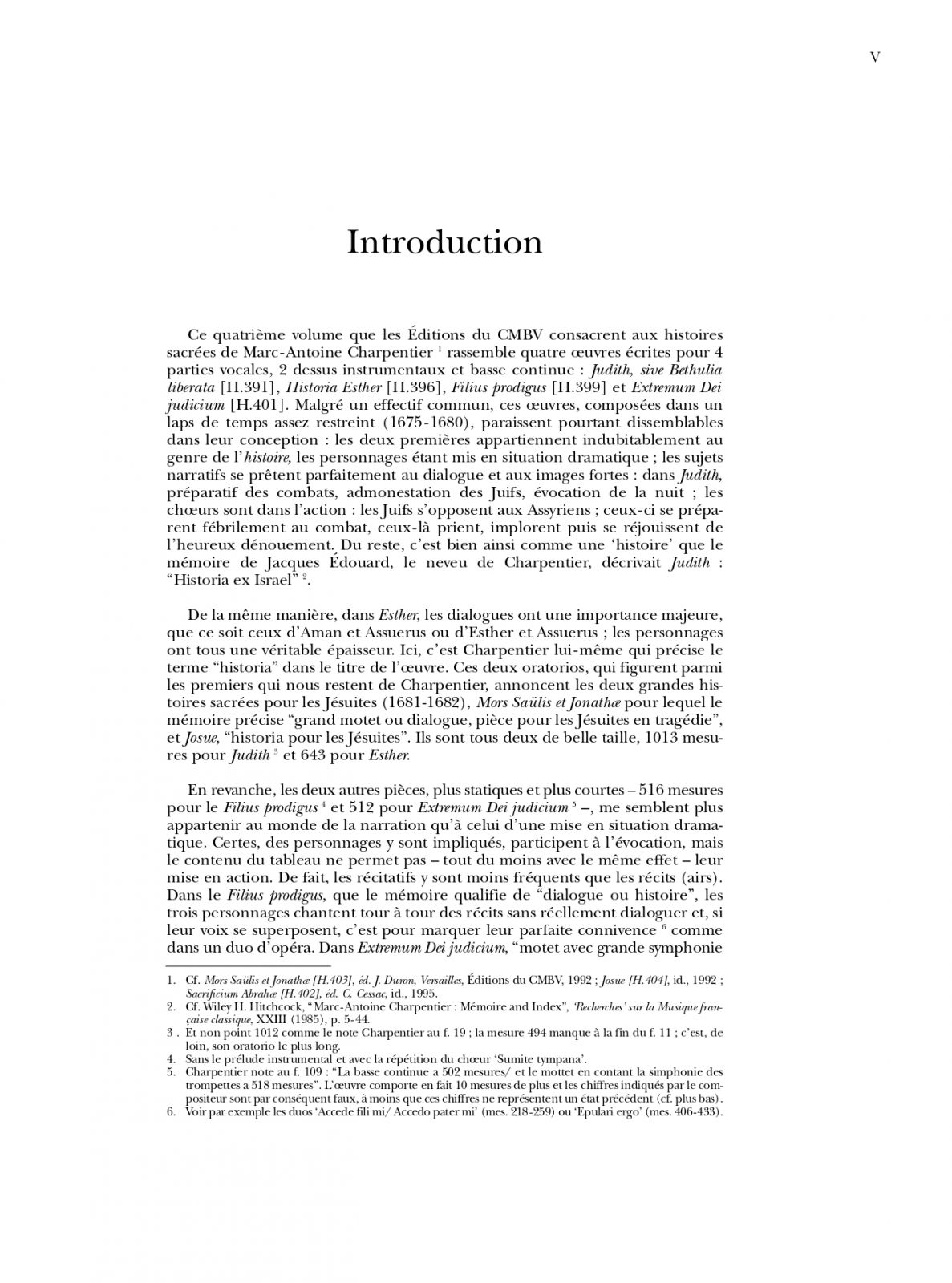
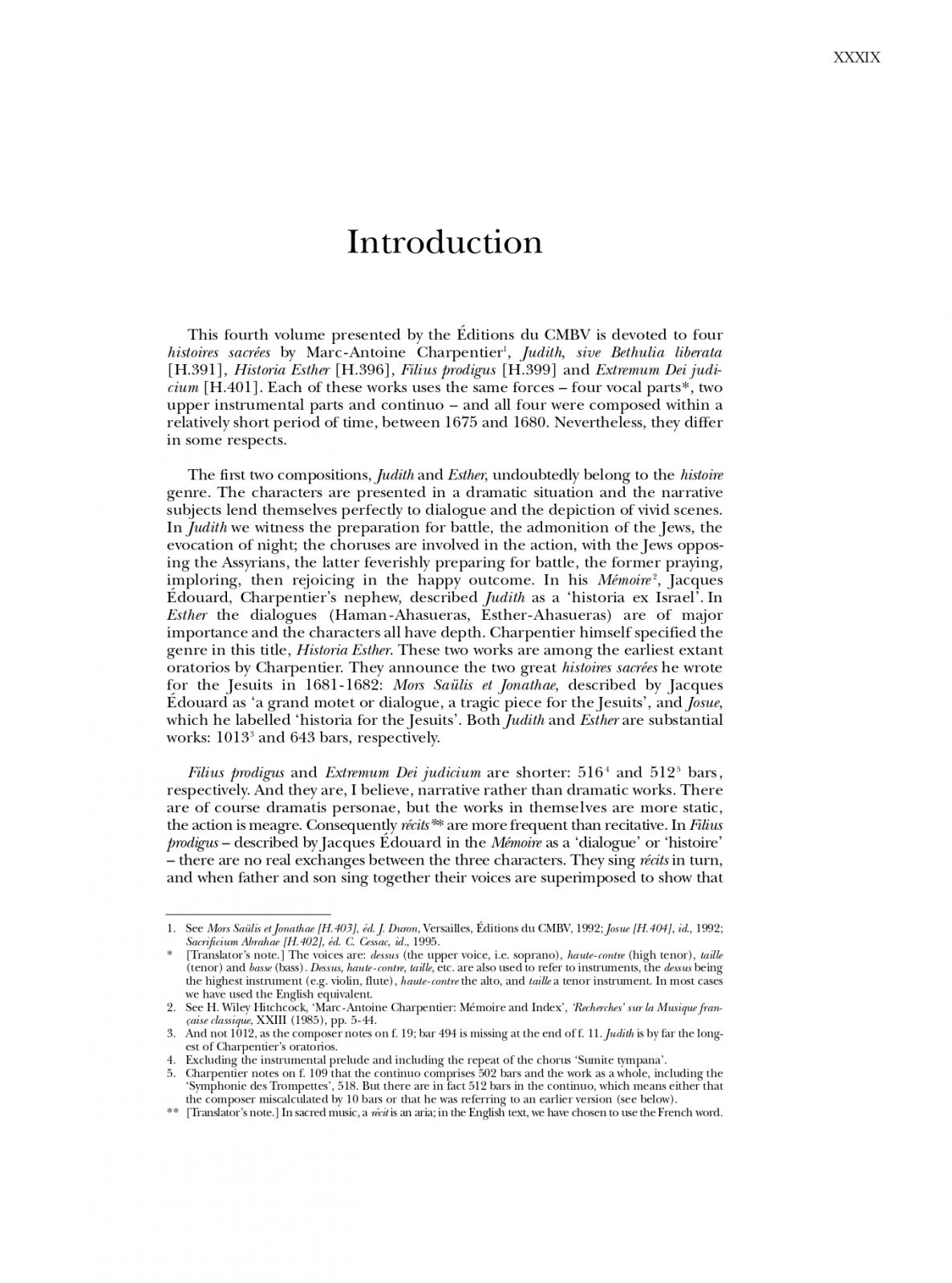
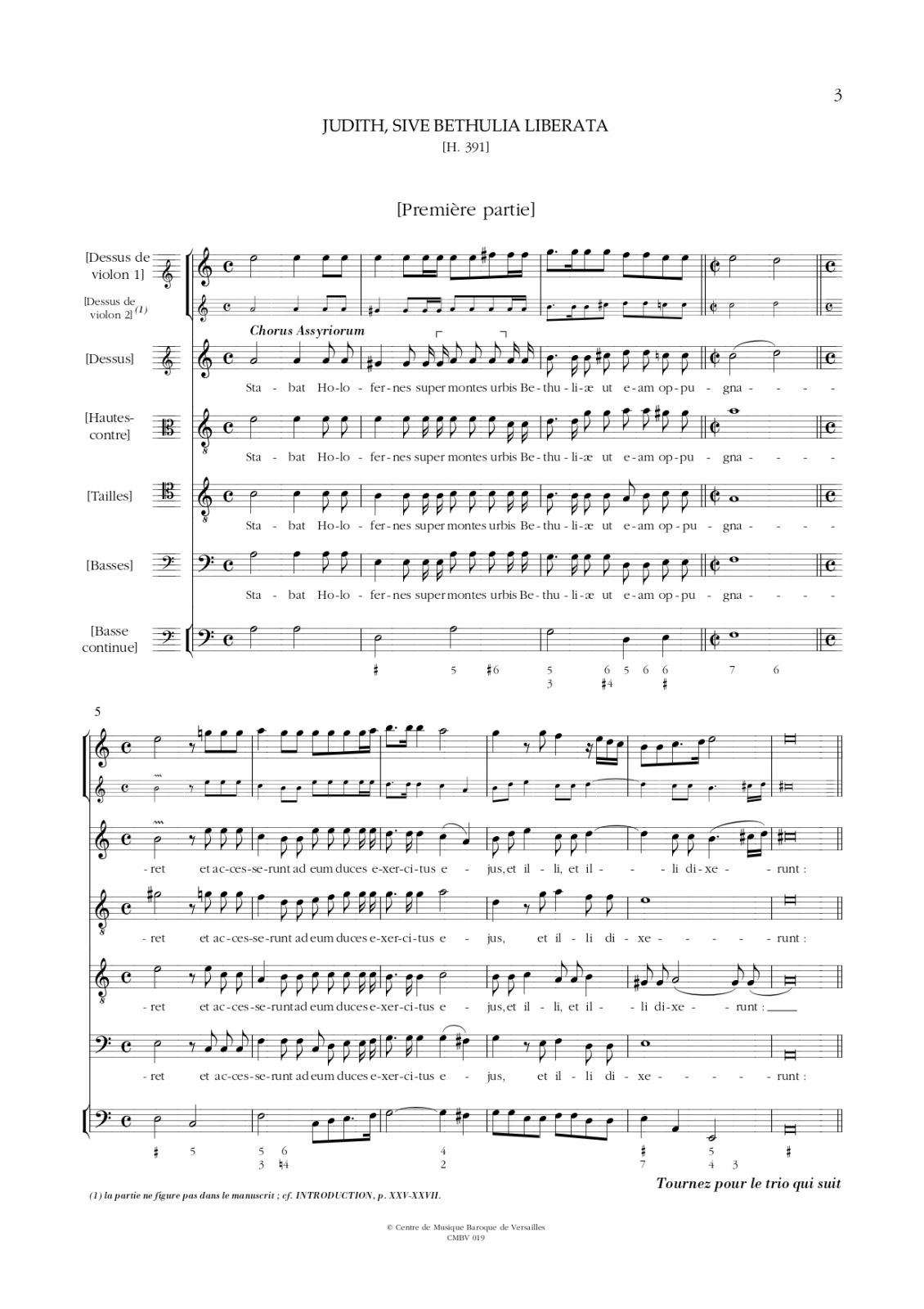
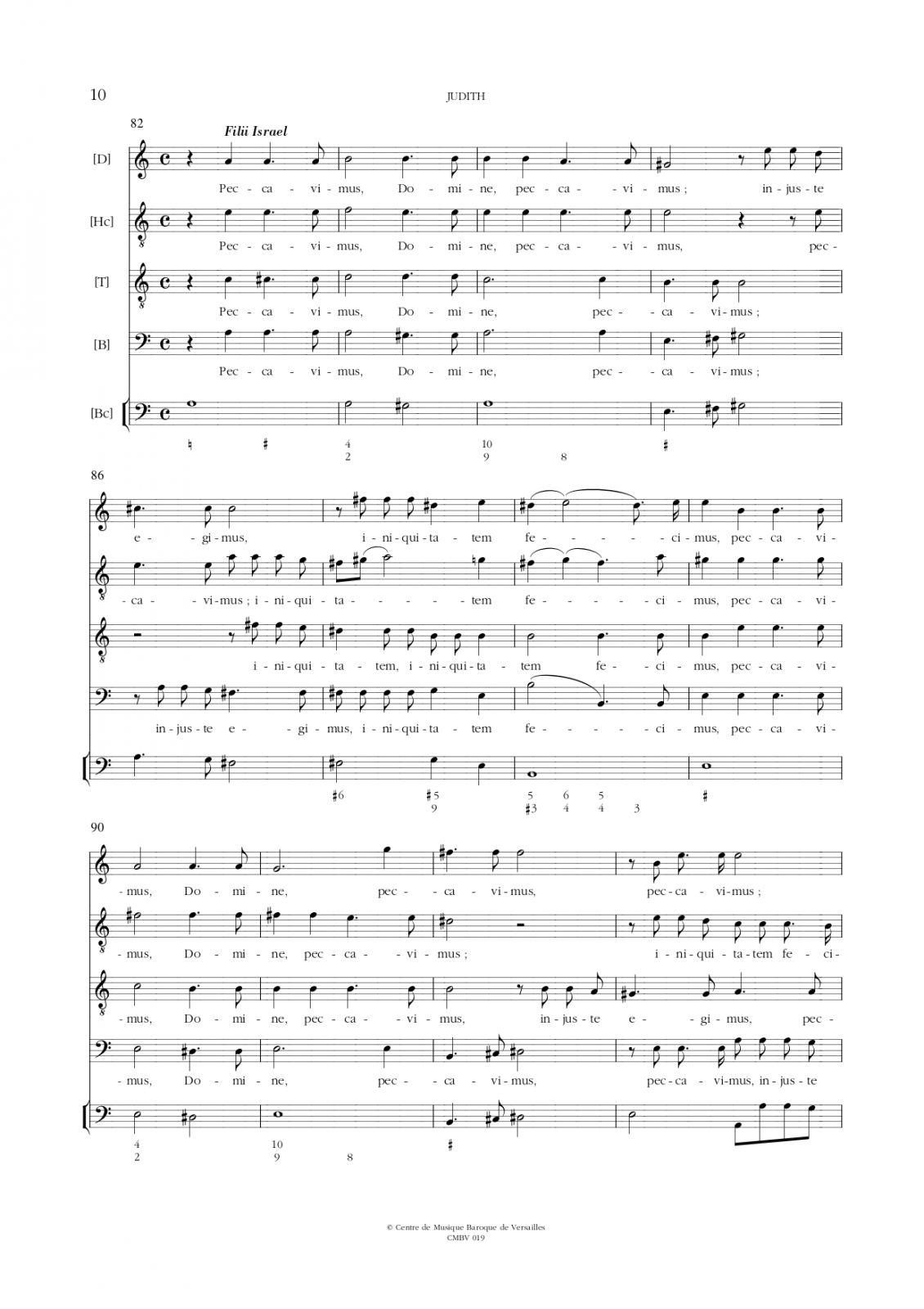
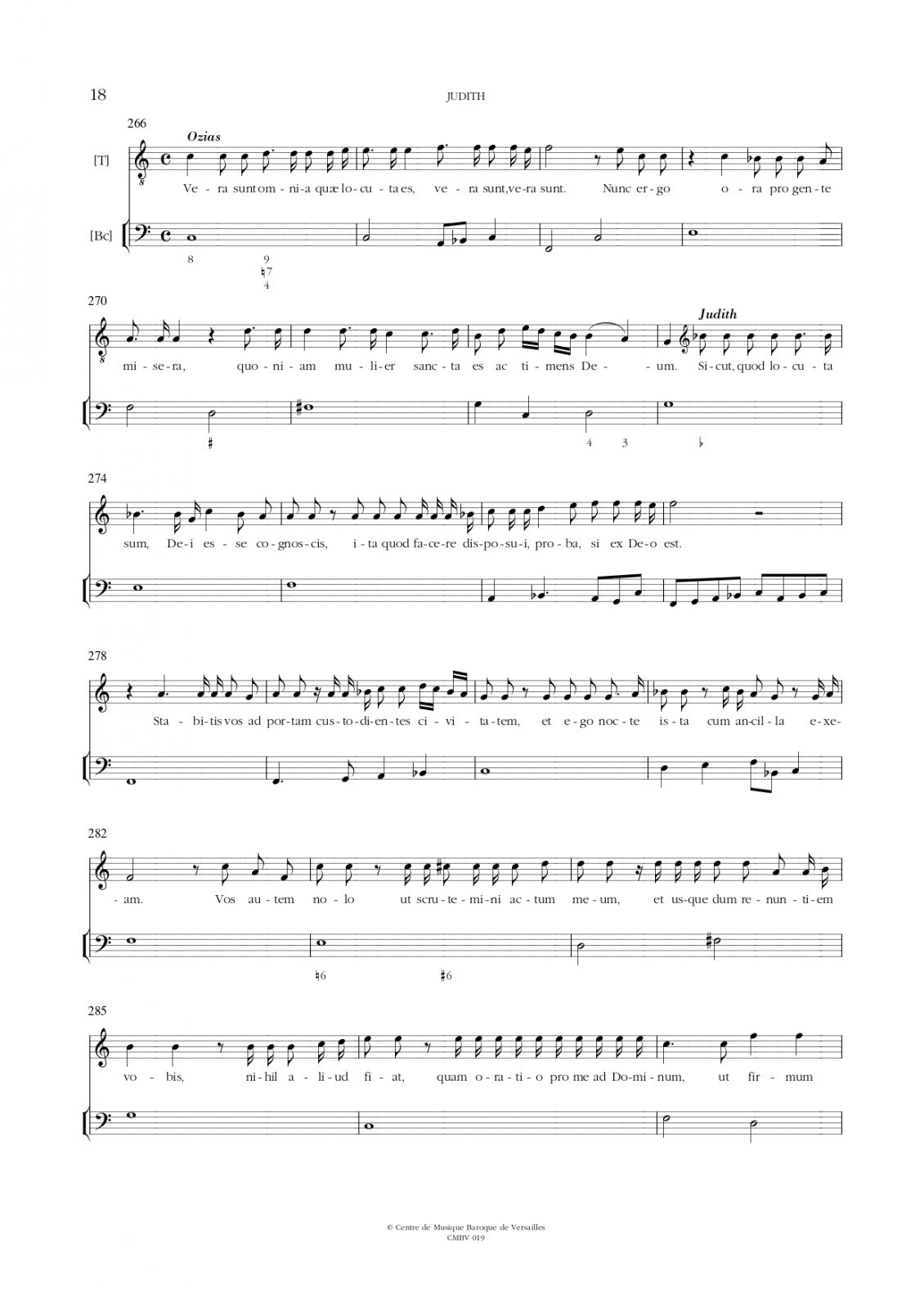
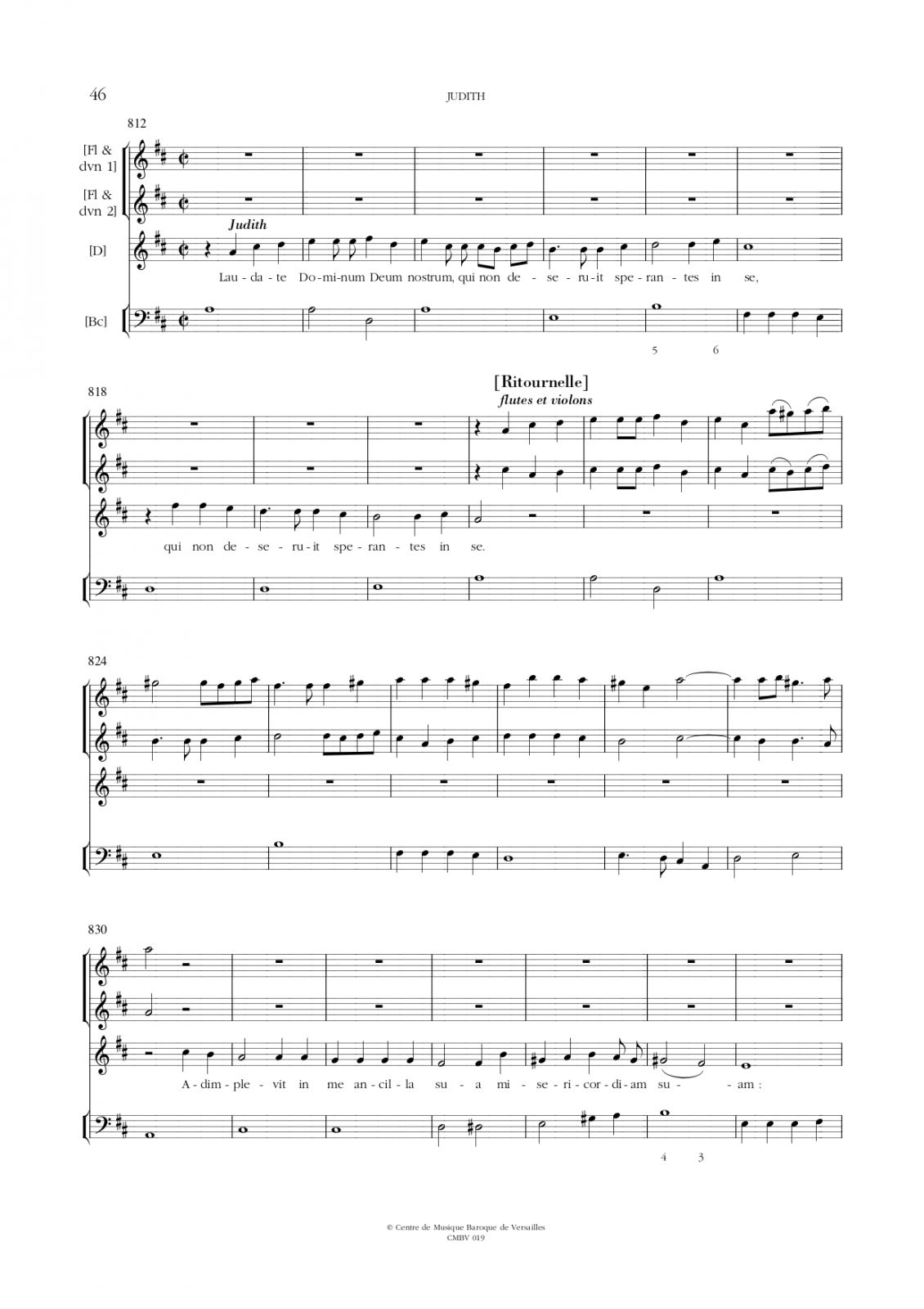
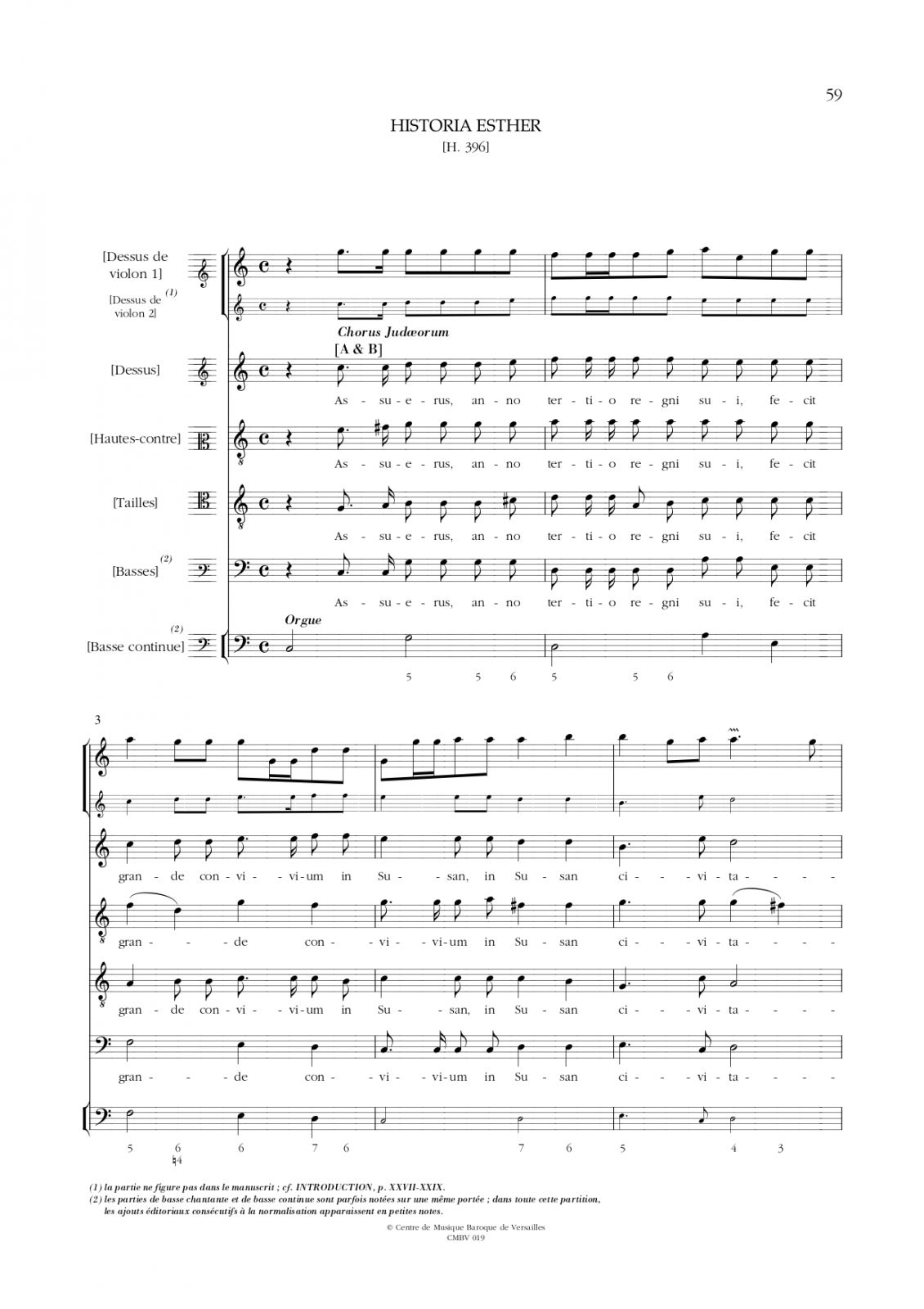
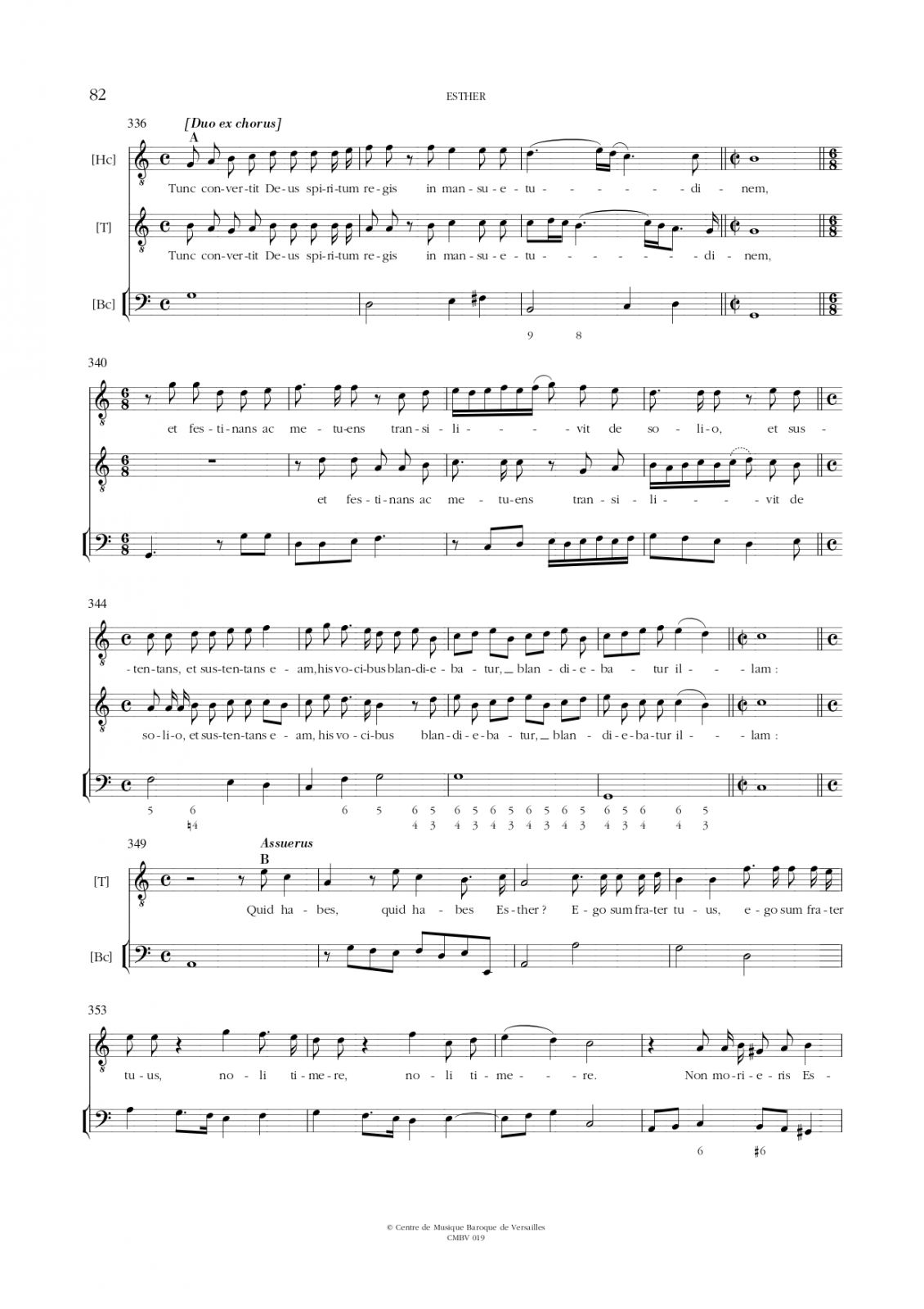
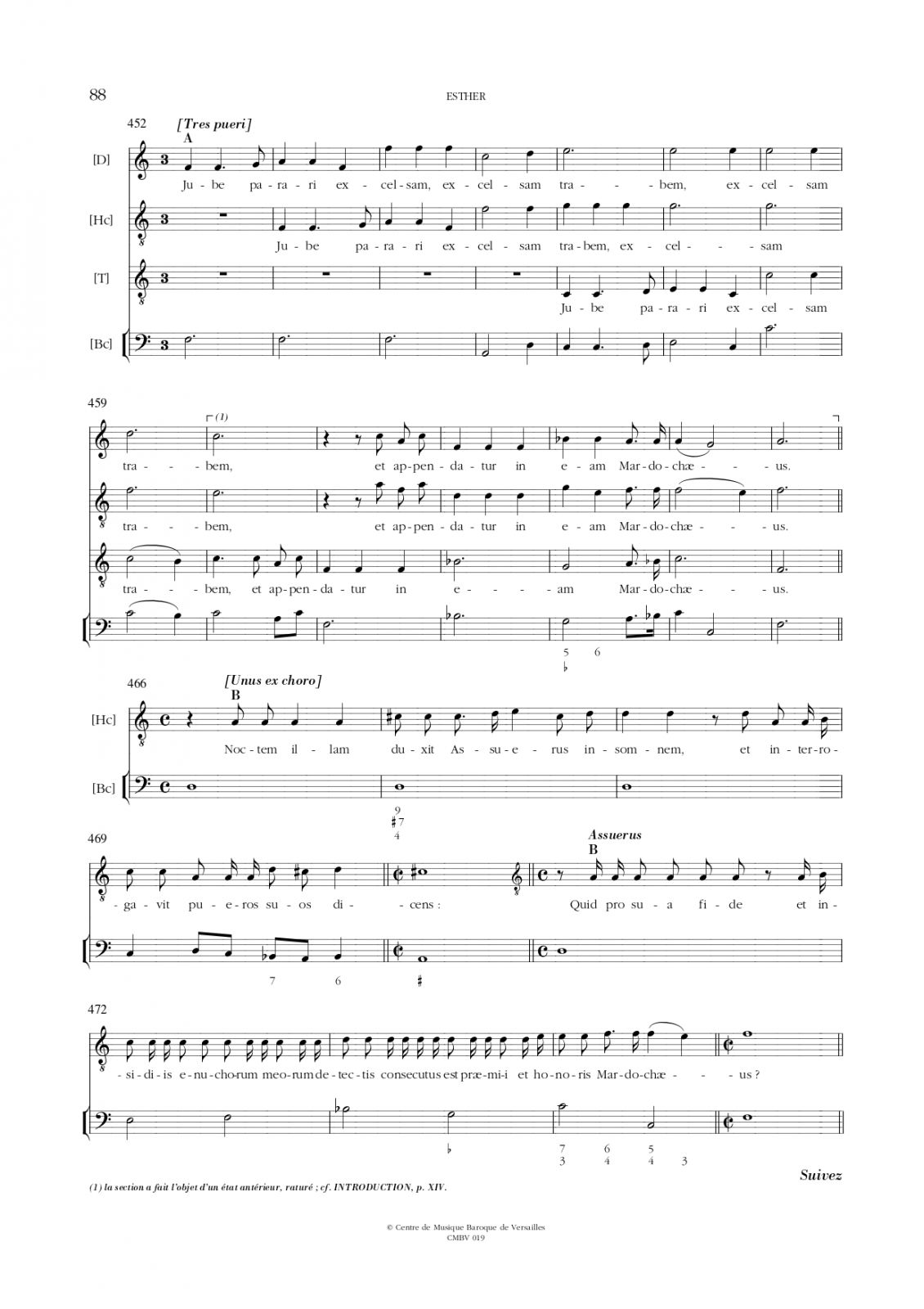
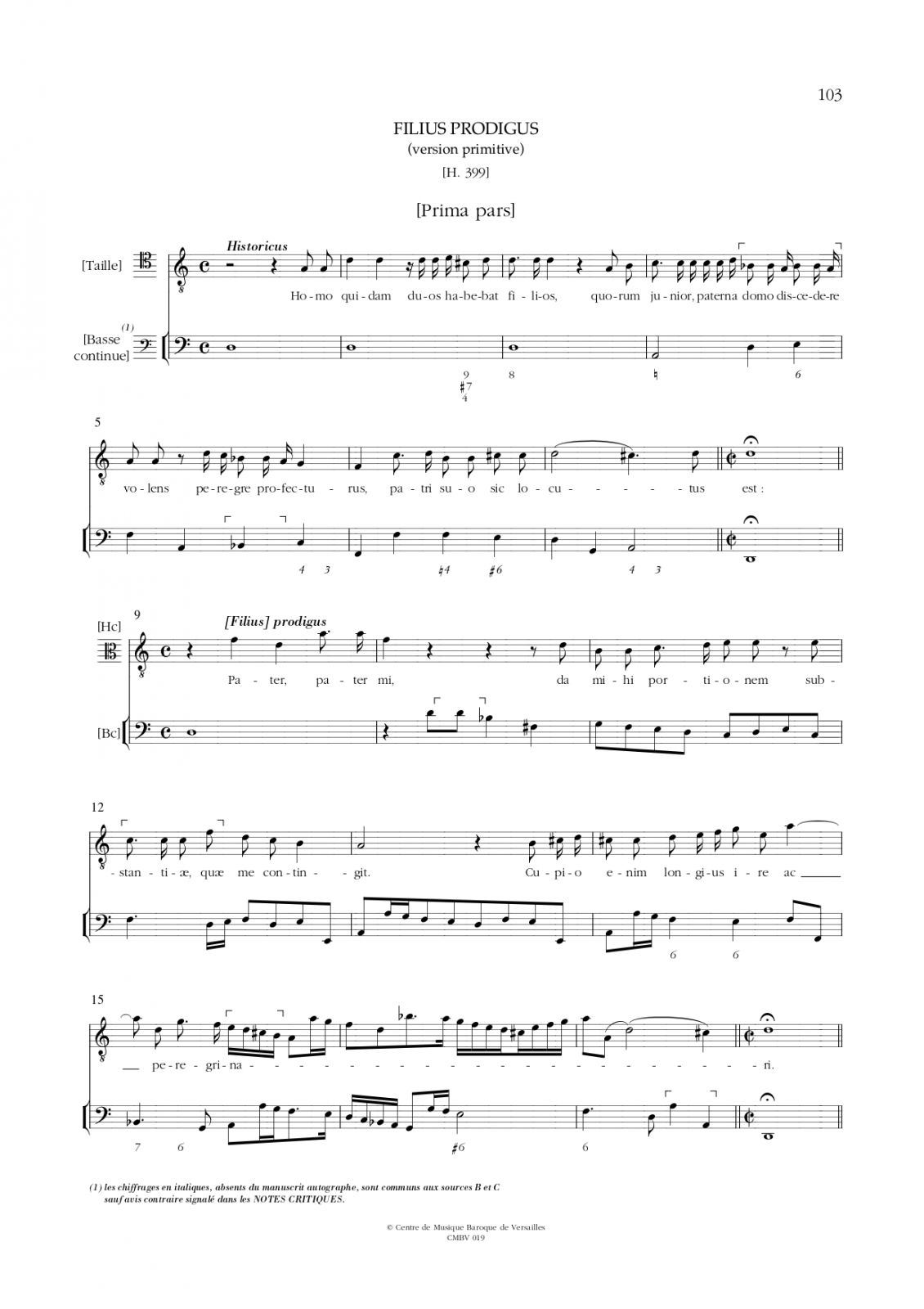
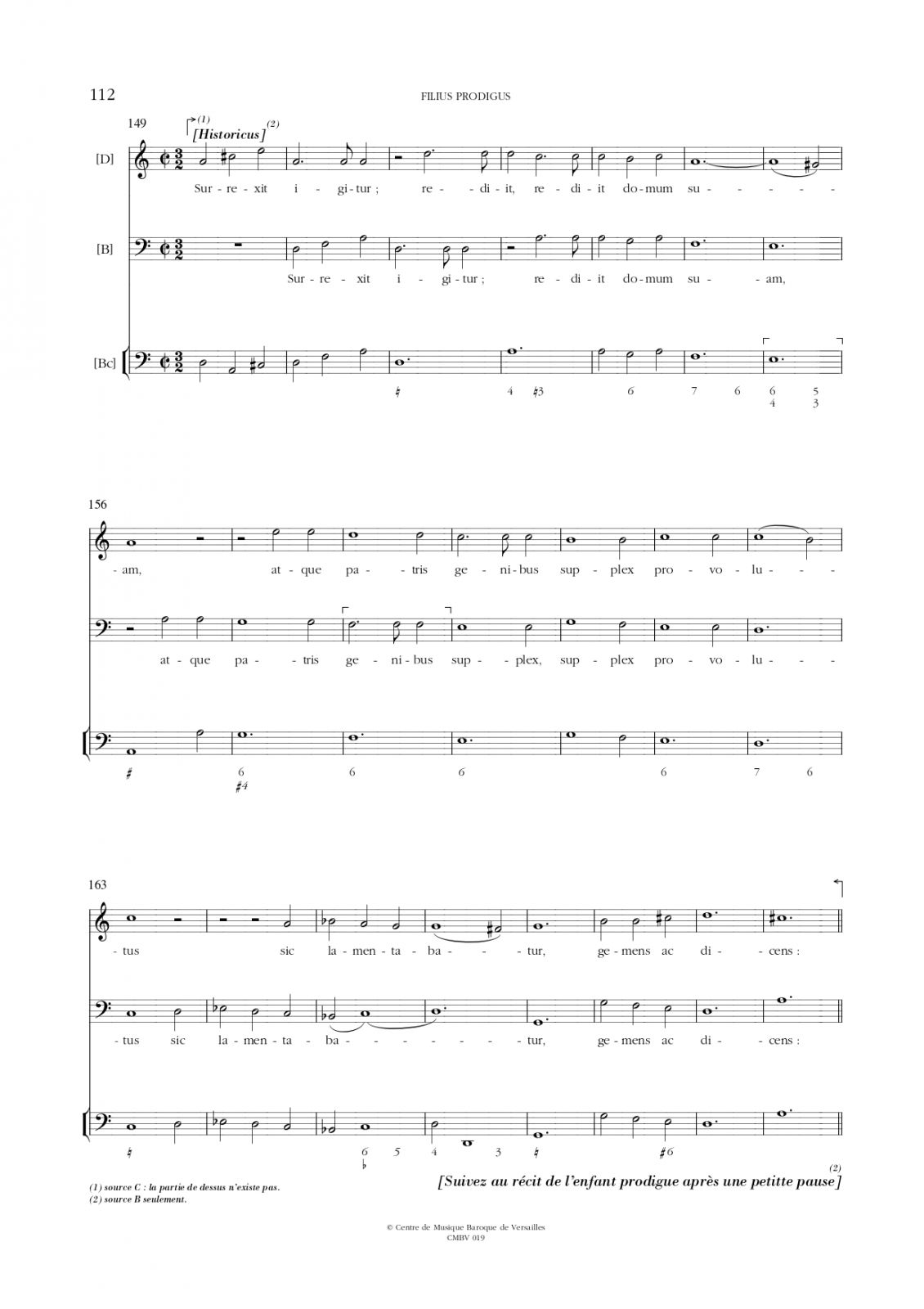
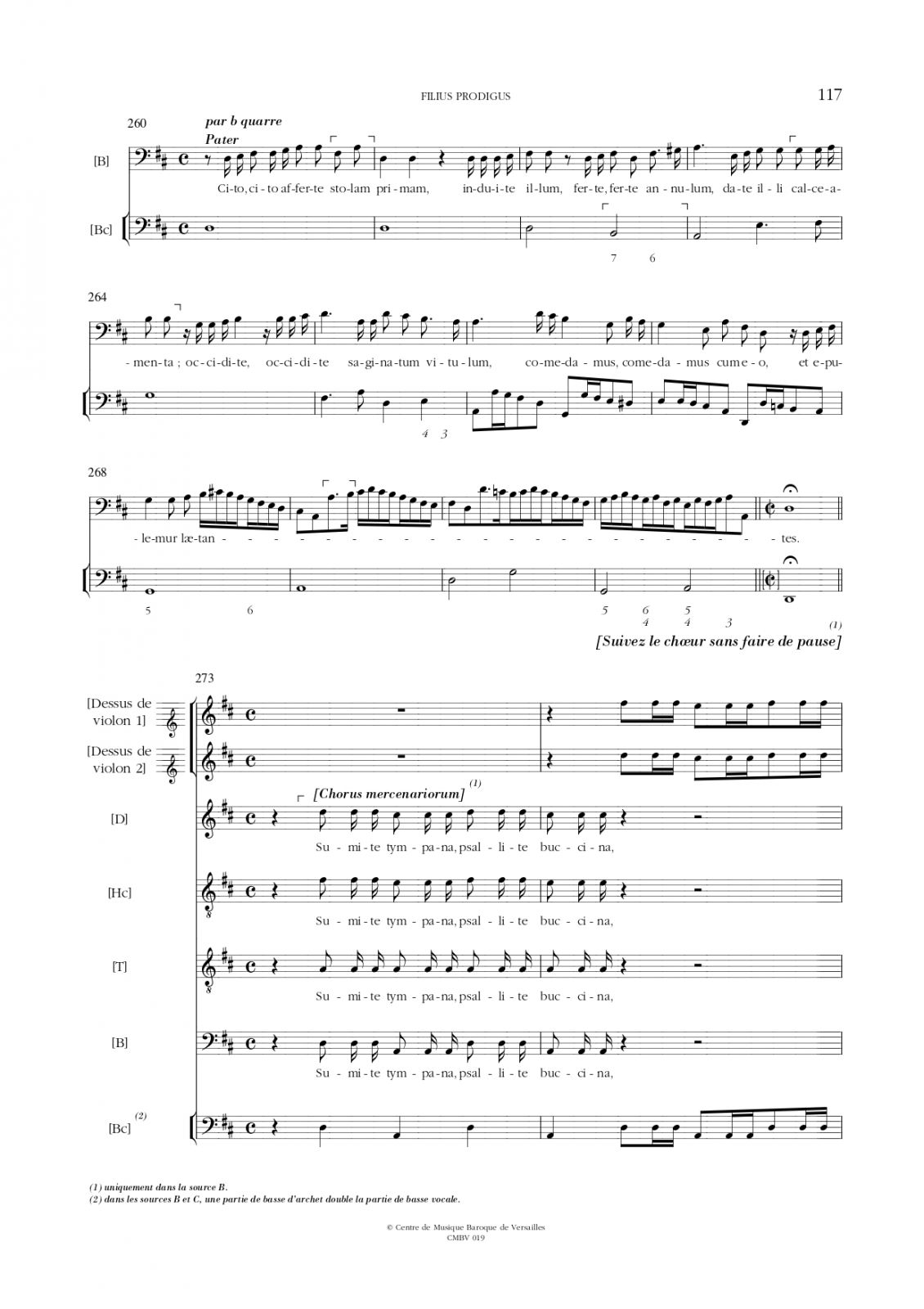
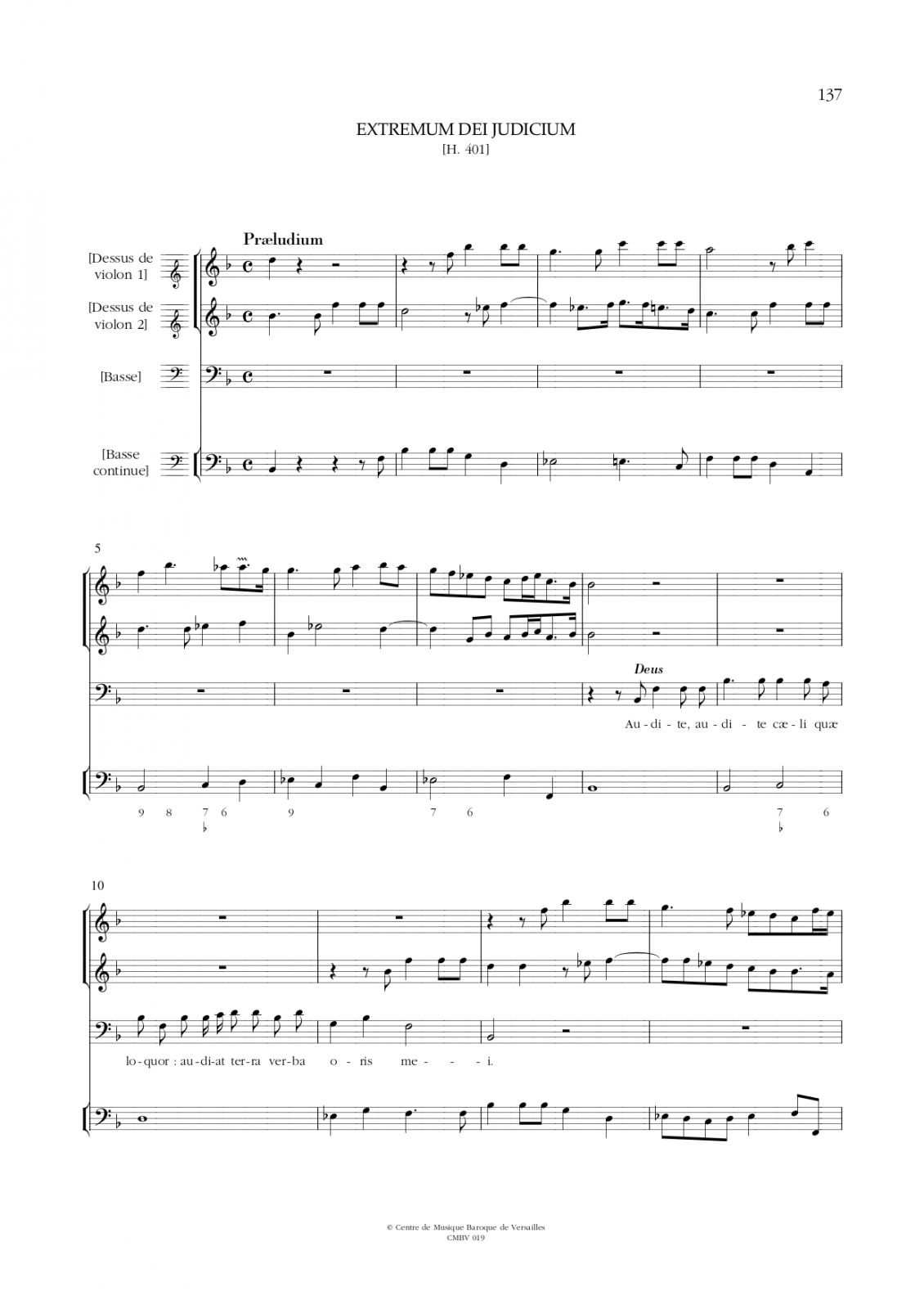
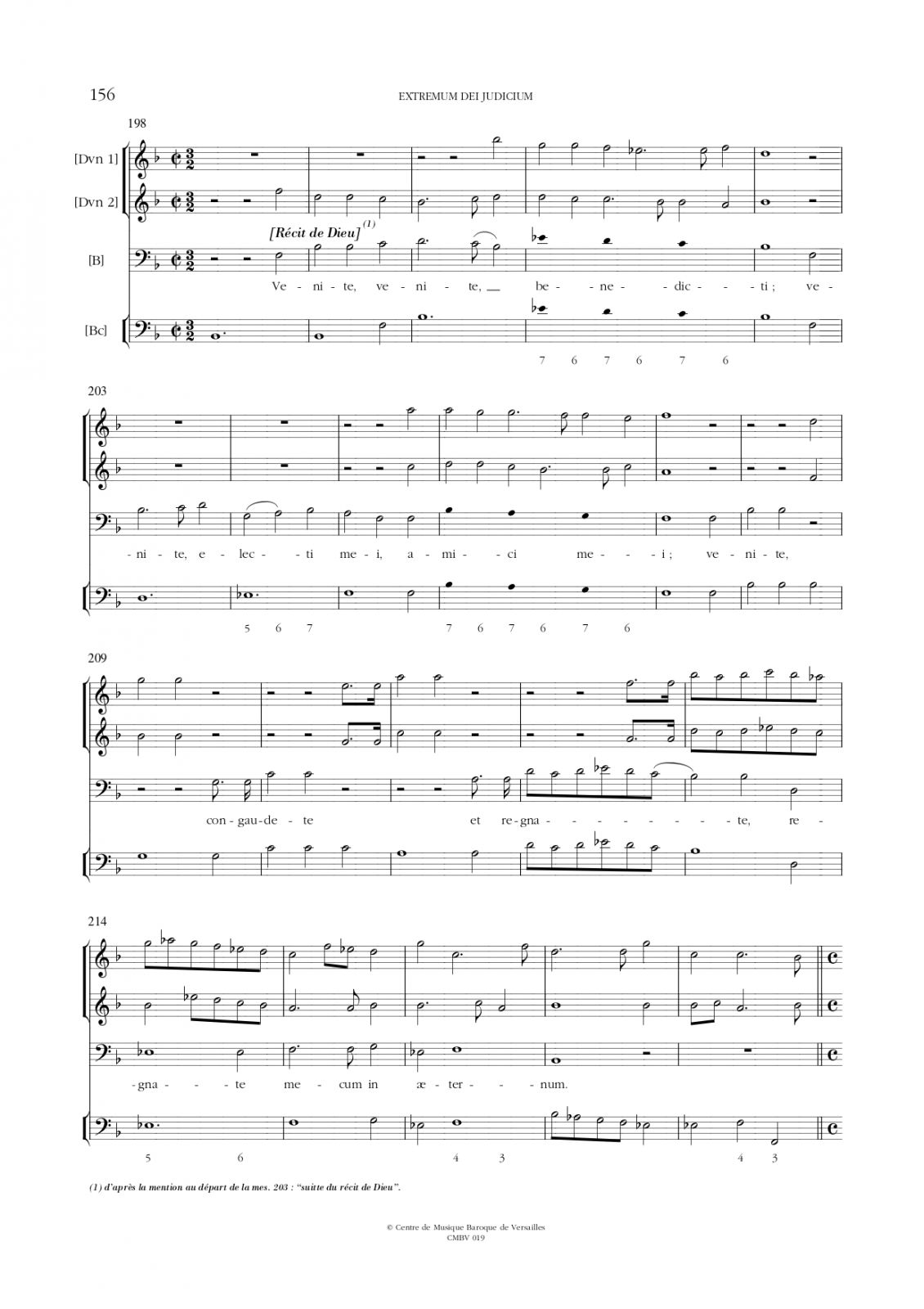


This fourth volume of Charpentier’s Histoires sacrées is devoted to works written for 4 vocal parts, two instrumental dessus and basso continuo: Judith [H.391], Esther [H.396], the Prodigal Son [H.399] and the Last Judgment [H.401]. The scholarly editor of this volume, Jean Duron, highlights two quite different conceptions in the use of instruments, the distribution of voices, literary choices and the sense of drama, even though all these pieces were composed between 1675 and 1680. The first two are resolutely placed in the representation of the sacred: the religious text, its adaptation, the identification of the singers, all contribute to favouring the action. The other two are closer to the "dialogue" genre, with sequences of arias, a few duets and choruses, closer to Henry Du Mont’s Dialogus de anima (published by the CMBV).
The contribution of this publication on the facsimile is essential: the scholarly editor sheds light on the inconsistencies of the source and the problematic use to which Charpentier destined his copy. Hypotheses formulated in the book include the dating of different states of the same work, the vocal and instrumental texture of the works, which obliges the restitution of certain parts, not missing but rather planned and unwritten for lack of space, the roles attributed to singers and the spatialisation of interventions; finally, the librettos are also studied from different angles: social, as Charpentier’s career oscillated between his three main patrons; historical; literary, through a study of the language used by the librettists who remained anonymous; and finally dramatic in the musical cutting of the text.
The size of these pieces means that they are best suited to experienced vocal ensembles, with a good supply of men and the ability to sing in pairs. Female roles are sufficiently rare in this type of repertoire to warrant a special mention for the magnificent Judith.
Judith Synopsis - This holy story, taken from the Old Testament Book of Judith, recounts the victory of the Jews over the army of King Nebuchadnezzar. Having defeated Arphaxad, king of the Mendes, Nebuchadnezzar put General Holoferne at the head of his army to conquer the country. Only the Jews resisted, and he laid siege to them in the city of Bethulia. Driven to their last extremity, the Jews are thinking of surrendering when Judith, a young widow, leaves the city to offer herself to Holofernes. Dazzled by the young woman’s beauty, Holofernes allows her every freedom. Four days after her arrival, he invites her to dinner and orders that they be left alone. He gets drunk and falls into a deep sleep. Judith cuts off his head and returns to Bethulia. In the morning, the besiegers discover their General’s head on display at the top of the wall, and the Jews rush out upon them. After this miraculous victory, Judith consecrates to God the riches taken from the enemy and retires to lead a holy life.
Synopsis of Esther - Taken from the Old Testament Book of Esther, this sacred story recounts the life of Queen Esther. Born of Jewish captives in Babylon, she was raised by her uncle Mordecai. She was introduced to Assureus after his wife, Queen Vashti, was deposed. Immediately in love, the king crowned the beautiful Jewess. At the same time, Aman, the king’s favorite and tyrant in charge of the country’s affairs, took umbrage with Mordecai, who bowed only to his God, refusing to pay him tribute. He obtains from the sovereign an edict condemning the Jews of all Babylonia in revenge. While Esther, the new queen, dares not intervene to save her people, Mordecai foils a plot. On the evening of the feast ordered by Esther for the king and Aman, Assureus takes his favorite to task for rewarding a man who has rendered a service, when the latter has come to ask for Mordecai to be hanged. Believing himself to be the recipient of the reward, he describes it as sumptuous and triumphant. He is forced to organize this proud dream for Mordecai. At Esther’s feast, the queen asks for mercy for her people, her uncle and herself. Assureus, won over by his wife’s charm, punishes Aman’s pride by ordering him to be hanged on the gallows prepared for Mordecai.
Synopsis of The Prodigal Son - This parable of Christ according to the Gospel of St Luke tells the story of a man with two sons. The younger son asks for his share of the inheritance to go to a foreign country. His fortune squandered and crying famine, he returns to his father, begging forgiveness. The father has the fatted calf killed to celebrate his return. The eldest son, back from the fields, complains that he’s never been treated so well. And his father commands him to rejoice, for his brother, having lost everything, has returned, while the eldest possesses everything his father has.
Synopsis of The Last Judgment - Excerpts from Deuteronomy and St Matthew’s Gospel, the oratorio recounts the Last Judgment. The Lord summons the living and the dead and separates the righteous from the wicked. He thanks the righteous for having welcomed, cared for and comforted him out of charity, and ushers them into eternal life. To the wicked, he reproaches ingratitude, contempt and indifference, and condemns them to hell.
Les œuvres
Recommandations


