

Partition
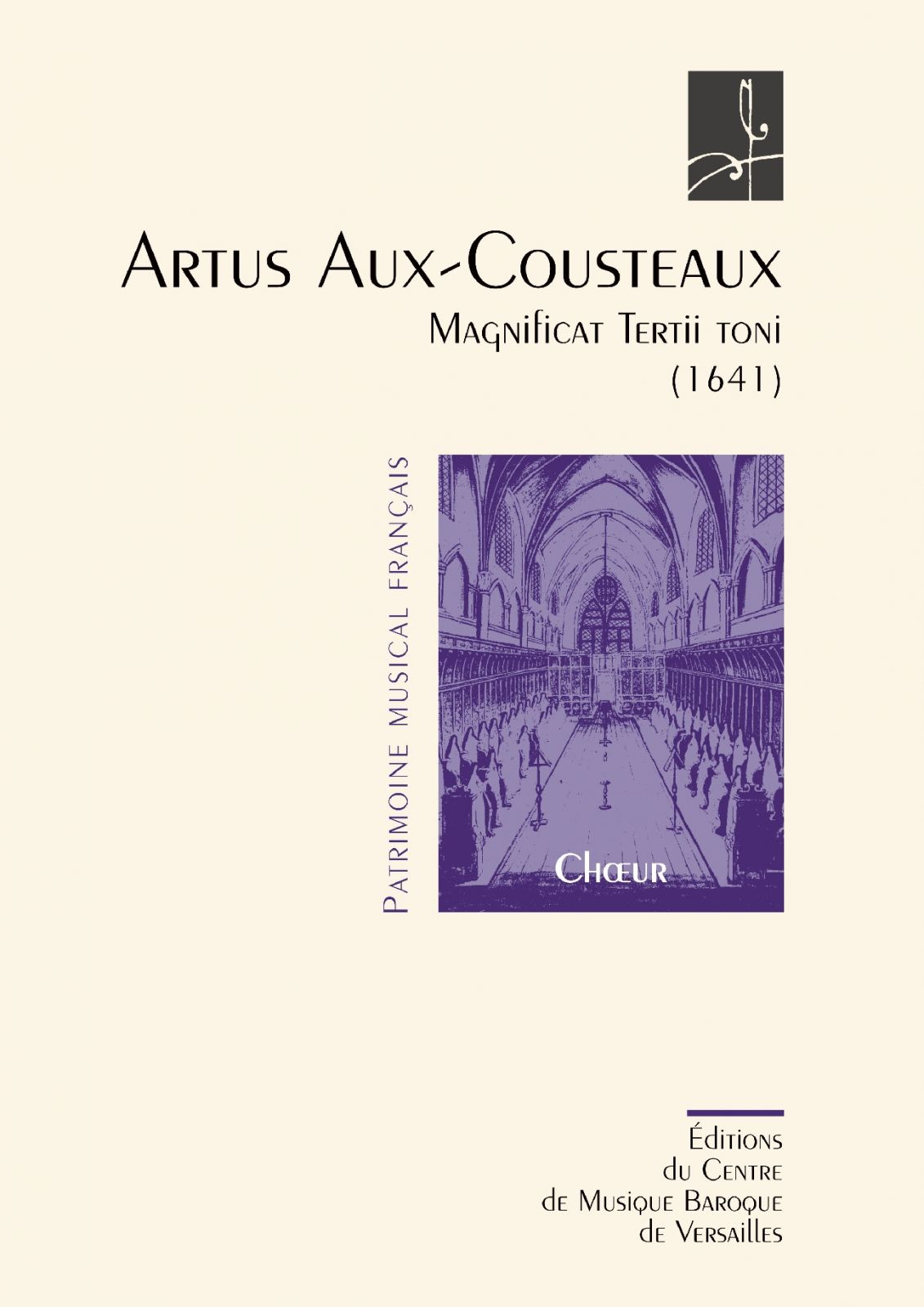
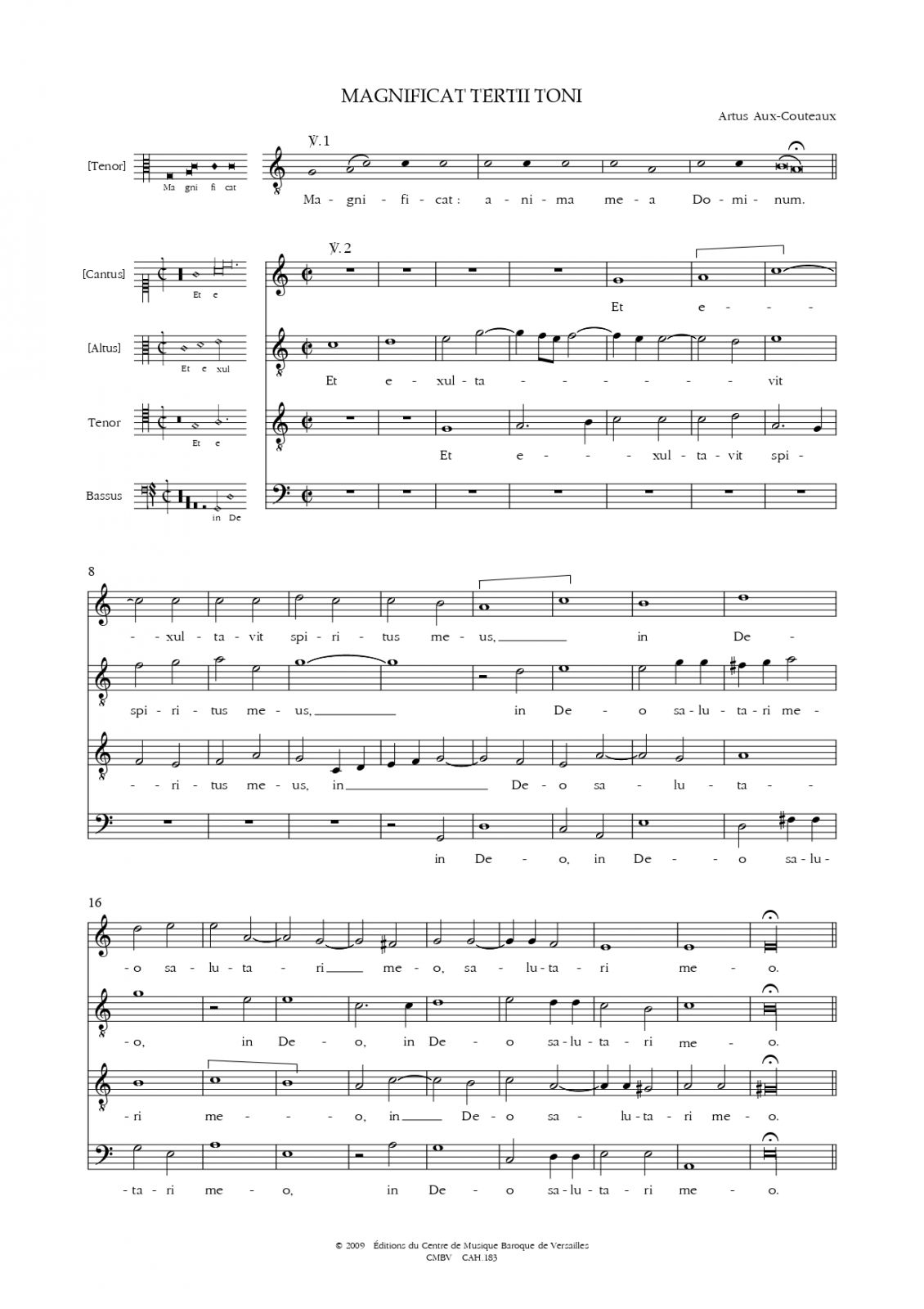
Magnificat Tertii toni (1641)
Artus AUX-COUSTEAUX
(vers 1590-vers 1654)


Référence : CAHIERS-183
Format :
21x29,7 cm
Reliure : Broché
10,70 € TTC
En stock
Artus AUX-COUSTEAUX
(vers 1590-vers 1654)
Collection :
Chœur
Type d’édition :
Conducteur
Maison d'édition :
Editions du Centre de musique baroque de Versailles
Présentation :
Probably a native of Amiens, Arthus Aux-Cousteaux (or sometimes Hautcousteaux, Arthur or Arturo) was born around 1590, and received his musical education at the Basilica of Saint-Quentin under Jean de Bournonville. In 1613, he became haute-contre singer in the chapel of Louis XIII, a position he left 14 years later to join the choir of Noyon Cathedral. He succeeded his first master shortly before his death at Saint-Quentin, before being appointed, in June 1634, clerc haute-contre at the Sainte-Chapelle du Palais in Paris. Promoted to Maître de musique in 1642, he retired in 1651 as a canon at Saint-Jacques-de-l'Hôpital, where he remained until his death.
In addition to the Magnificat published by the CMBV, and a number of masses, Artus Aux-Cousteaux published several collections of polyphonic airs, often in a comic vein.
In a style close to that of Eustache Du Caurroy, Aux-Cousteaux follows in the footsteps of 16th-century polyphonists. The Octo Cantica Divæ Mariæ Virginis Secundum octo modos published by Ballard are intended for all choirmasters, in chant books adapted to the practices of the time, where the voices are considered in their contrapuntal rather than harmonic function, offering a wide range of interpretative possibilities.
As only the even-numbered verses have been set to music, the publisher suggests alternating with the plainchant taken from the tenor part of the 1655 Canticum Virginis Deiparæ, the prosody of which has been transcribed by Jean-Yves Hameline. Alternate with the odd-numbered verses of Jehan Titelouze's Magnificat primi toni, for example.
In addition to the Magnificat published by the CMBV, and a number of masses, Artus Aux-Cousteaux published several collections of polyphonic airs, often in a comic vein.
In a style close to that of Eustache Du Caurroy, Aux-Cousteaux follows in the footsteps of 16th-century polyphonists. The Octo Cantica Divæ Mariæ Virginis Secundum octo modos published by Ballard are intended for all choirmasters, in chant books adapted to the practices of the time, where the voices are considered in their contrapuntal rather than harmonic function, offering a wide range of interpretative possibilities.
As only the even-numbered verses have been set to music, the publisher suggests alternating with the plainchant taken from the tenor part of the 1655 Canticum Virginis Deiparæ, the prosody of which has been transcribed by Jean-Yves Hameline. Alternate with the odd-numbered verses of Jehan Titelouze's Magnificat primi toni, for example.
Pagination :
12
Date de parution :
2009-07
Introduction (langue) :
Français
ISMN 979-0-56016-183-9
Les œuvres
Langue du texte :
Latin
Genre :
motet
Temps liturgique
Ton :
mi mineur (modal)
Durée :
moins de 10'
Recommandations


26€
Disponible en version numérique

26€
Disponible en version numérique

27€
Disponible en version numérique


35€
Disponible en version numérique


28€
Disponible en version numérique