

Les Motets
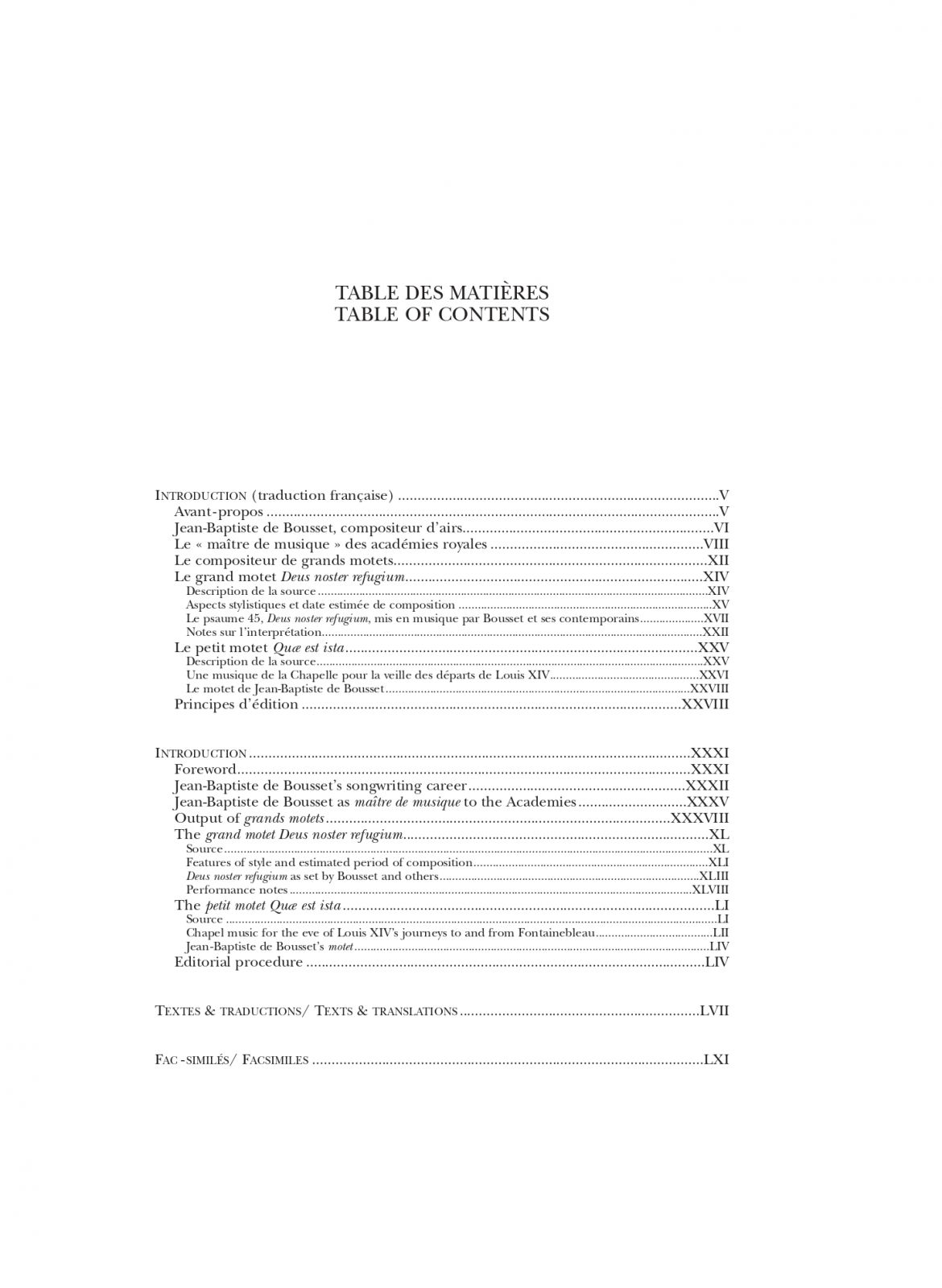
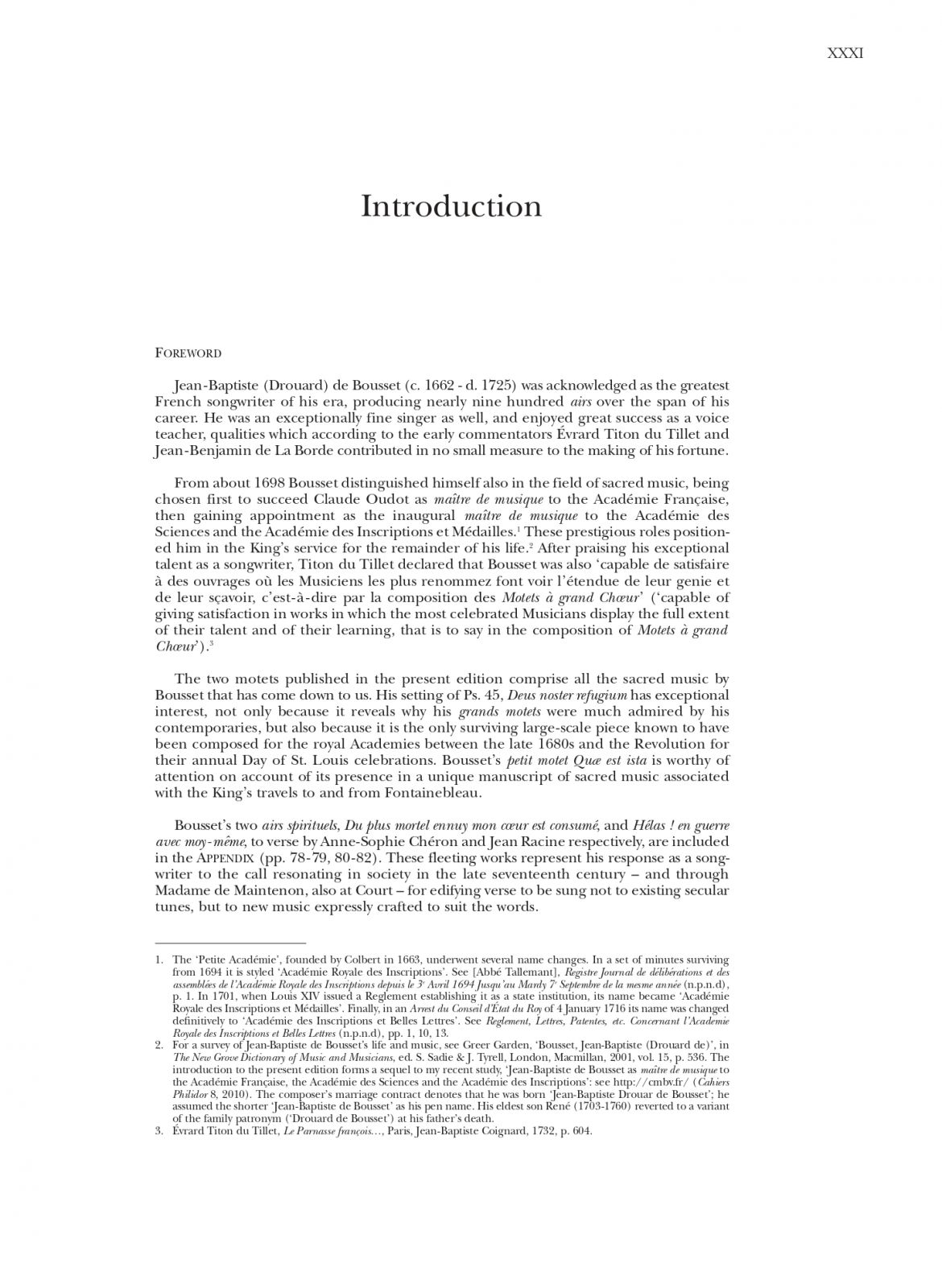


In this new volume, the critical editions of the Centre de musique baroque de Versailles present the complete motets of J.-B. de Bousset. This sixth publication in the "Anthologies: Motets" series continues to showcase this musical genre, so highly prized in France in the 17th and 18th centuries.
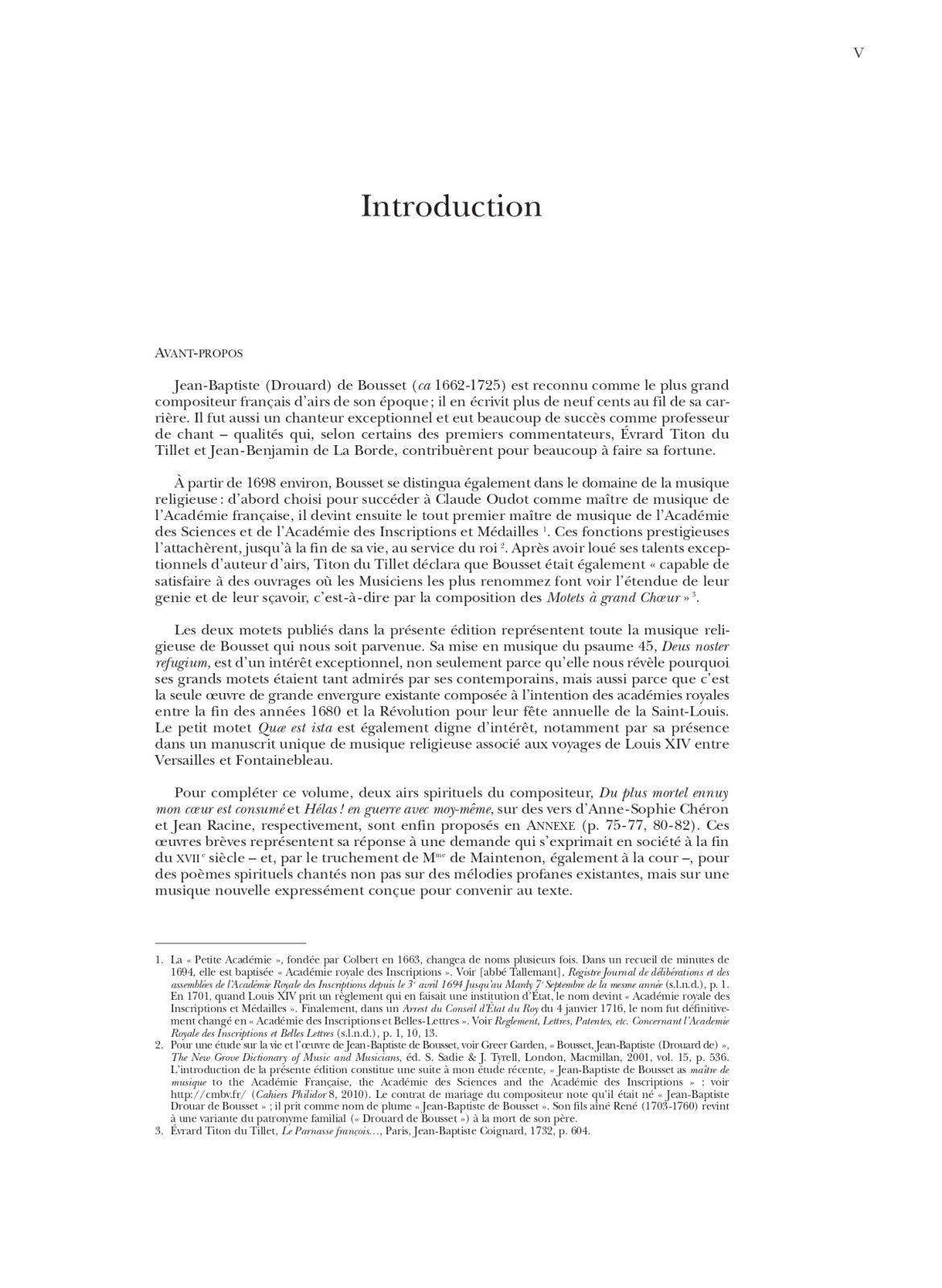
Born in 1662, Jean-Baptiste (Drouard) de Bousset studied composition with Jean Fargeonnel, Master of Music at Dijon’s Sainte-Chapelle. In 1702, he officially became Master of Music of the Académie française, then of the Académie des Sciences and the Académie des Inscriptions et Médailles, positions which attached him to the King’s service until his death in 1725. An exceptional singer and singing teacher, he was recognised as the greatest French composer of airs of his time, and was one of the pioneers of the French cantata. He also distinguished himself among his contemporaries in the field of sacred music.
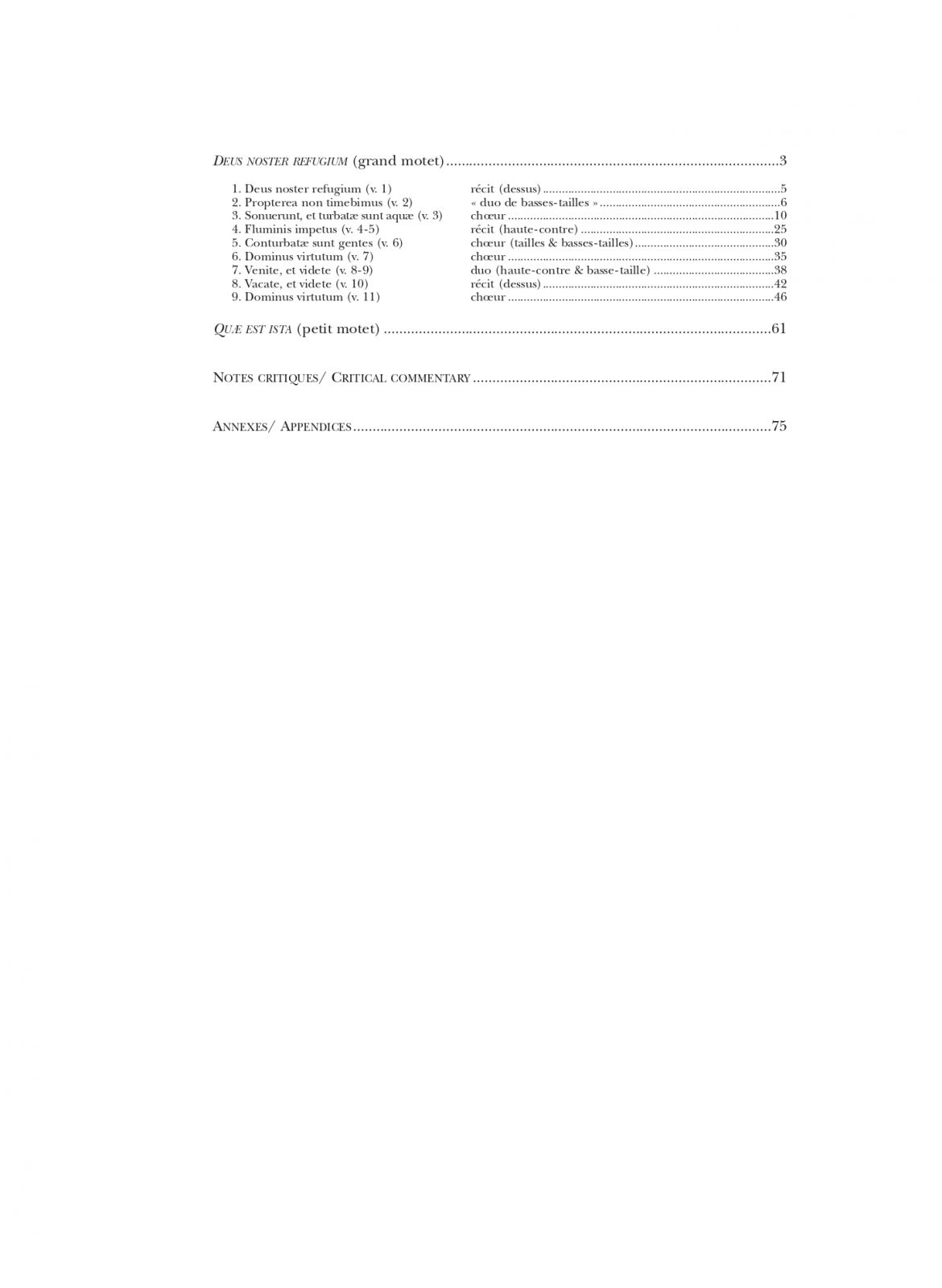
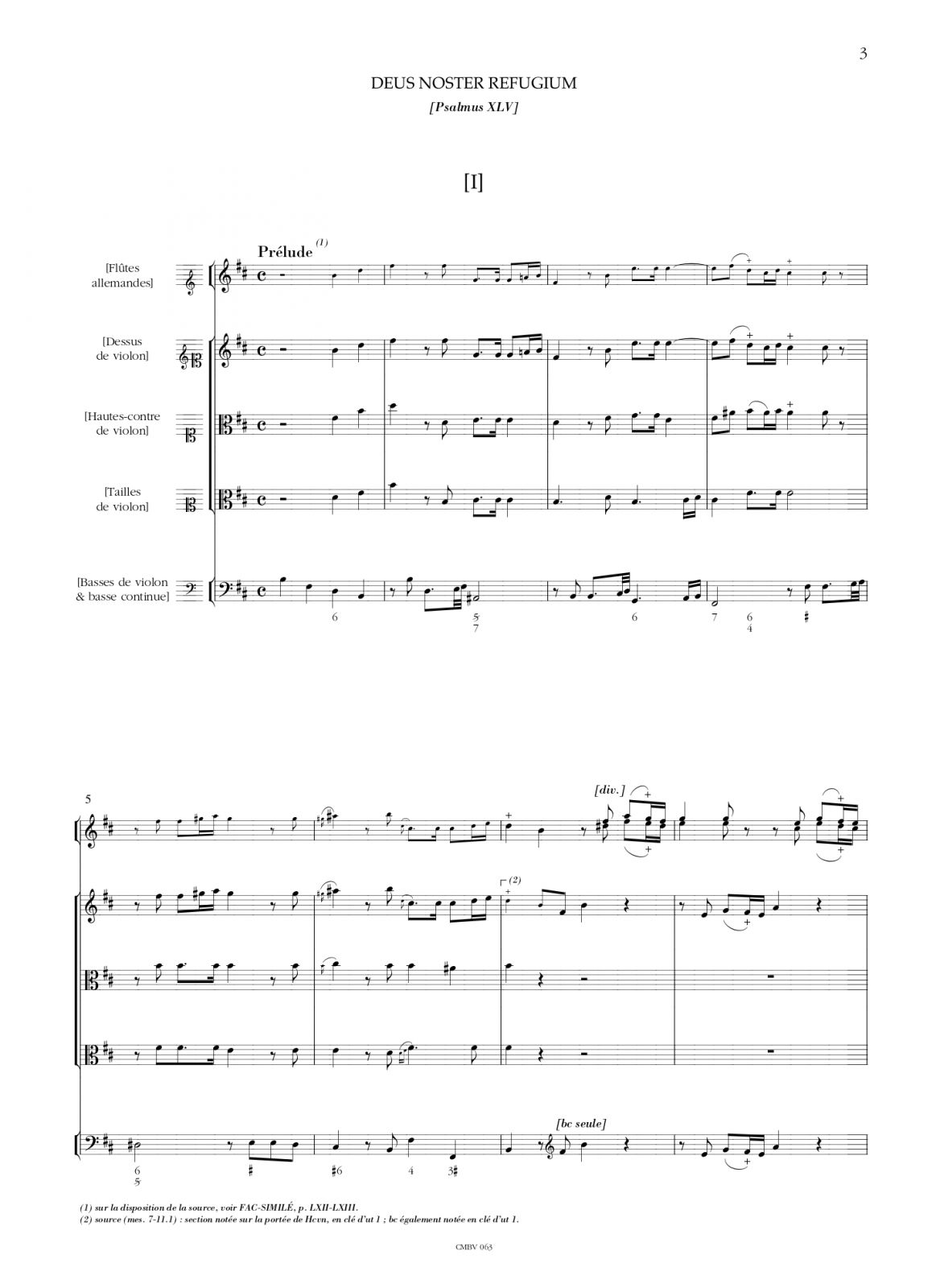
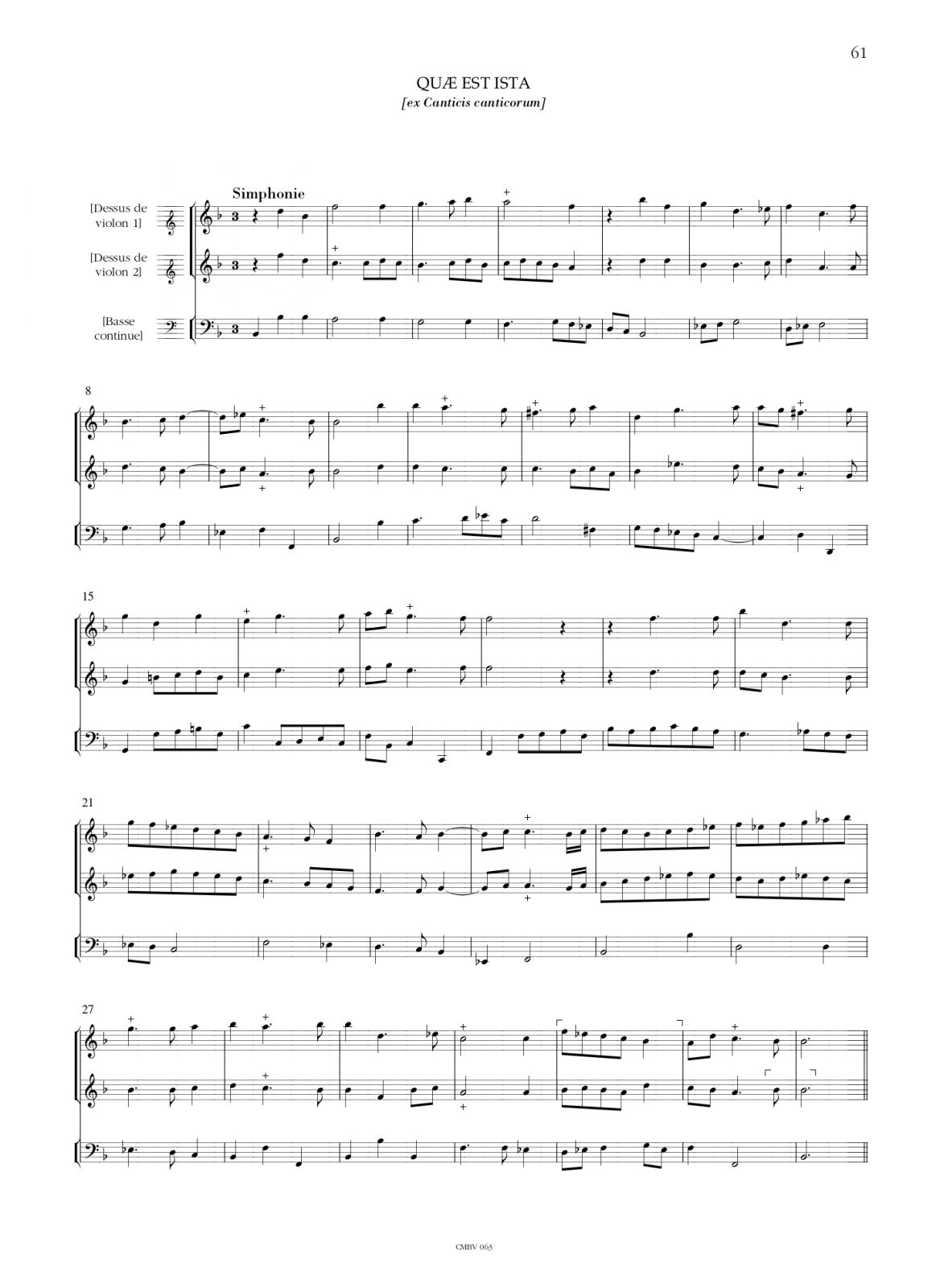
The two magnificent works in this volume represent the entirety of Bousset’s surviving religious music. The grand motet Deus noster refugium, for soloists, 5-voice choir, orchestra and continuo, composed for the royal academies, is one of the high points of the composer’s career. The work is a testament to the composer’s sophisticated harmony, perfectly mastered counterpoint, and the virtuosity of the solo voices. The petit motet Quæ est ista, on the other hand, was intended for a small group of the Musique de la Chapelle, who remained in Versailles or Fontainebleau to sing at the king’s mass on the day of his departure, the rest of the musicians having left the day before to prepare for his arrival. For solo voice (dessus), two violins and basso continuo, it reveals an accomplished imitative style with a strong Italian accent. These two works undeniably place Bousset in the tradition of composers who perfectly assimilated the musical language of Versailles, such as Desmarest, Lalande and, later, Campra.
These scores are preceded by a bilingual (French-English) introduction that includes important biographical information based on recent research by the volume’s scholarly editor, Greer Garden; contextualisation of the works and sources; and an interesting comparison of the first motet with other contemporary settings of the same psalm. Readers will also find translations of the texts, two facsimiles and critical notes. Each motet is available in a separate booklet for performance. Finally, the only two preserved airs spirituels by Bousset, for solo voice (dessus) and basso continuo, are appended.
Greer Garden is Professor and Deputy Director at the New Zealand School of Music. She is notably the author of the entry on Bousset in the New Grove Dictionary and of a study on his cantatas (Liber Amicorum John Steele: A Musicological Tribute, ed. W. Drake, Pendragon Press, 1997). At the CMBV, she has published an article devoted to his activity as maître de musique des académies royales (cahier Philidor 8, CMBV, 2010) and is currently completing the composer’s catalogue for the PHILIDOR digital resources portal.
Du plus mortel ennuy mon cœur est consumé, Hélas ! en guerre avec moy -même
The works
Recommendations


