

Sheet music
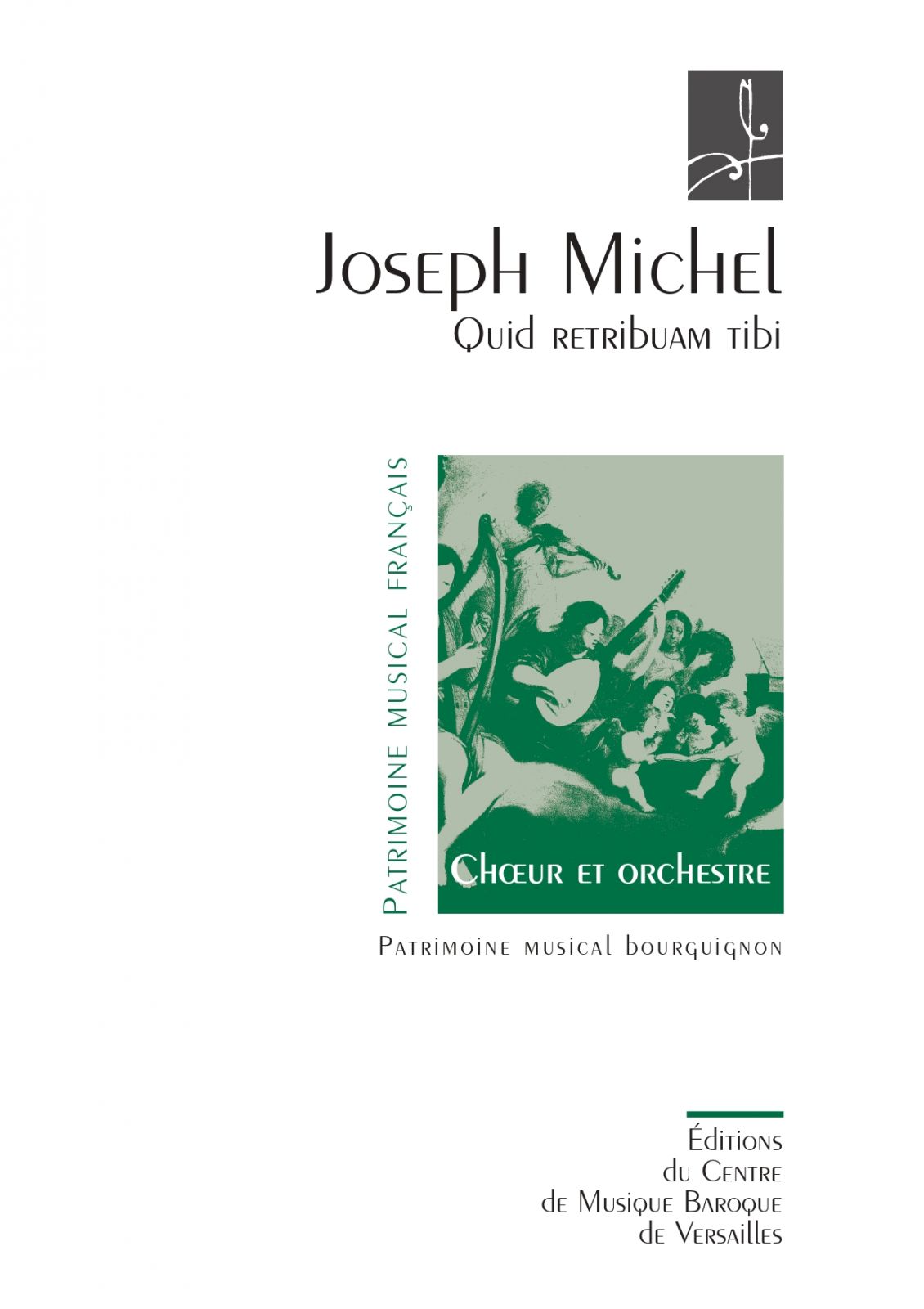
Quid retribuam tibi
Joseph MICHEL
(1679-1736)


Reference: CAHIERS-90
Format:
21x29,7 cm
Binding: Paperback
22,20 € TTC
In stock
Joseph MICHEL
(1679-1736)
Editor(s):
Michel CUVELIER
Collection:
Choir and orchestra
Type of publication:
Full score
Publisher:
Editions du Centre de musique baroque de Versailles
Presintation:
Joseph Michel (1679–1736) studied music under Pierre Menault at Saint-Étienne cathedral in Dijon, where he rubbed shoulders with the young Jean-Philippe Rameau. He was appointed to Dijon’s Sainte-Chapelle in 1709.
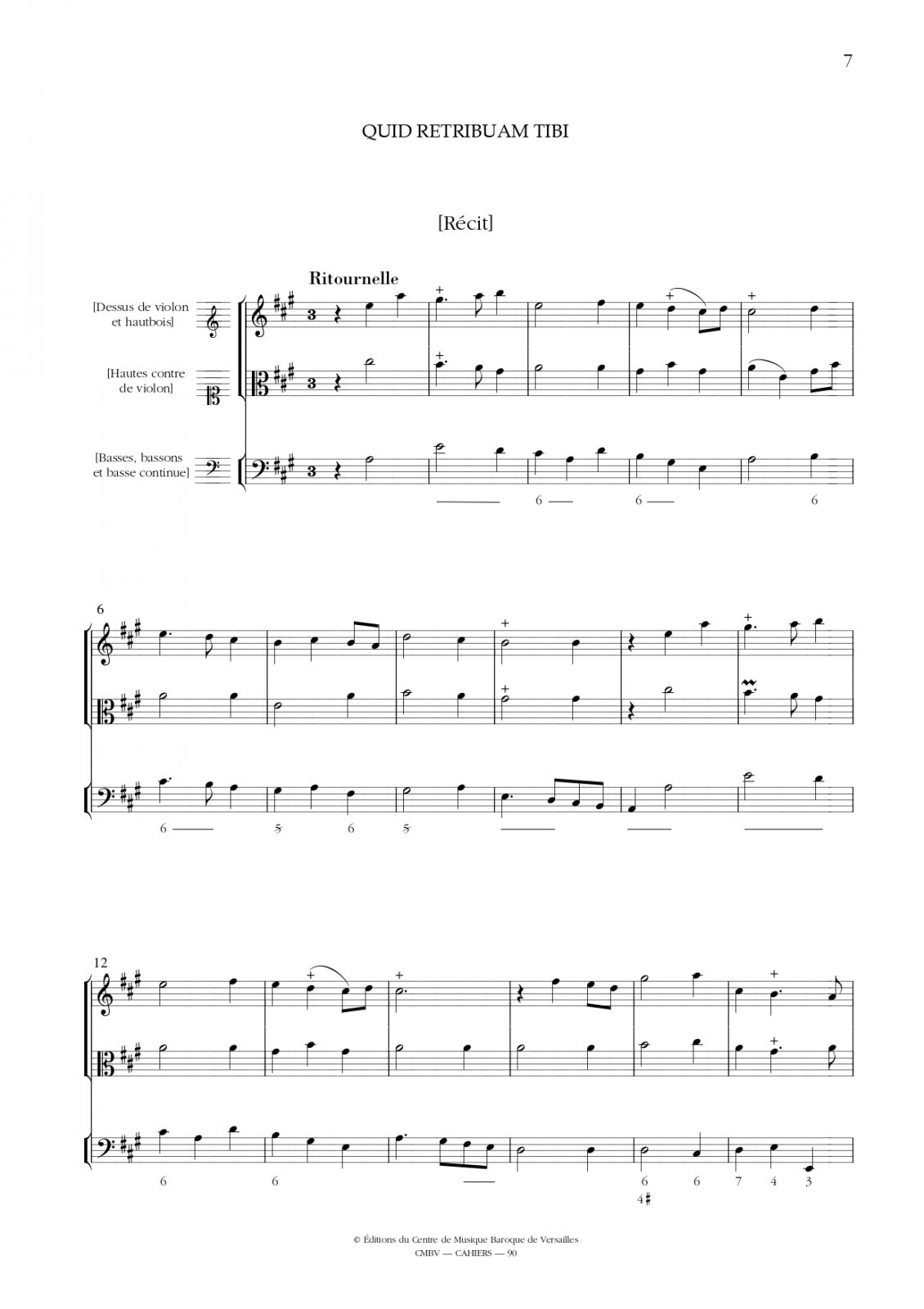
Quid retribuam tibi, in the style of the Versaille grand motet, was certainly intended to celebrate a happy event affecting the state or the royal family. It is based on a text of thanksgiving incorporating quotations from the psalms and two Latin poems by Pierre Portes. The piece requires a small 5-voice choir (two dessus, haute-contre, taille and basse), a large 5-voice choir (dessus, hautes-contre, tailles, basses-taille and basses) and a French-style orchestra with only one viola part (2 flutes, 2 oboes, bassoon, violins I-II, hautes-contre de violon and basse-continue). Divided into five movements, the work strives to follow the expression of the text as closely as possible. The recitative for haute-contre in the form of a rondeau, with its simple melody, is followed by a fugal chorus. The duet for two dessus offers a moment of calm and contemplation, which develops into a trio for male voices with obbligato bassoon. The final chorus, full of power and energy, is regularly interrupted by entries for the small choir.
The various facets of Joseph Michel’s talent, which are evident here, were to lead him to occupy one of the most prestigious positions in the kingdom. A text dated 1736 tells us that he was to be appointed to the royal chapel at Versailles. His premature death cut short the rise of this "Delalande dijonnais", as his contemporaries called him.
Quid retribuam tibi, in the style of the Versaille grand motet, was certainly intended to celebrate a happy event affecting the state or the royal family. It is based on a text of thanksgiving incorporating quotations from the psalms and two Latin poems by Pierre Portes. The piece requires a small 5-voice choir (two dessus, haute-contre, taille and basse), a large 5-voice choir (dessus, hautes-contre, tailles, basses-taille and basses) and a French-style orchestra with only one viola part (2 flutes, 2 oboes, bassoon, violins I-II, hautes-contre de violon and basse-continue). Divided into five movements, the work strives to follow the expression of the text as closely as possible. The recitative for haute-contre in the form of a rondeau, with its simple melody, is followed by a fugal chorus. The duet for two dessus offers a moment of calm and contemplation, which develops into a trio for male voices with obbligato bassoon. The final chorus, full of power and energy, is regularly interrupted by entries for the small choir.
The various facets of Joseph Michel’s talent, which are evident here, were to lead him to occupy one of the most prestigious positions in the kingdom. A text dated 1736 tells us that he was to be appointed to the royal chapel at Versailles. His premature death cut short the rise of this "Delalande dijonnais", as his contemporaries called him.
Pages:
59
Publication date:
2003-12
Introduction (language):
French
ISMN 979-0-56016-090-0
The works
Text language:
Latin
Genre:
motet
Liturgical season:
Psaume 115
Key:
La Majeur
Duration:
entre 20' et 29'
Recommendations


22€
Available in a digital version


35€
Available in a digital version

28€
Available in a digital version

26€
Available in a digital version


