

Sheet music
Toinon et Toinette
François-Joseph GOSSEC
(1734-1829)
Libretto by Jean-Auguste JULLIEN dit DESBOULMIERS


Reference: CAHIERS-124
Format:
21,5x30,5 cm
Binding: hardcover
68,60 € TTC
In stock
François-Joseph GOSSEC
(1734-1829)
Collection:
Lyric work
Type of publication:
Full score
Publisher:
Editions du Centre de musique baroque de Versailles
Presintation:
Sabord, captain of a privateer, disembarks at Old La Roche’s cabaret. He is very sad: he has put his daughter Toinette’s dowry on a ship that has not been heard of for 3 years. He was forced to borrow from a usurer, Antoine Bertrand, with his daughter as surety. The latter is in love with Toinon, the usurer’s nephew. Antoine Bertrand enters the cabaret to claim his dues; Old La Roche begs for a delay, still hoping for the arrival of the ship "La Belle Marguerite". Sabord, having sighted the ship filled with riches, announces its imminent arrival. The usurer, in a hurry to get married, visits Toinette and tells her that his nephew is going to marry someone else. On the arrival of the latter he creates a misunderstanding between the name of the boat and Toinon’s beloved. La Roche clears up the confusion. During the interval, a storm rumbles. Antoine Bertrand tells the lovers that the boat has sunk and that he has had Old La Roche thrown into prison. An officer sent by Captain Sabord arrives, mistaking the usurer for his nephew, and tries to take him aboard: Toinon has pledged to repay Toinette’s dowry. Old La Roche, now free, learns that the captain of the "Belle Marguerite" has just arrived: he had exchanged his ship for another on the way. The usurer, realising that it is his own property that has sunk, tries to hang himself. La Roche comes to his rescue.
This comedy, filled with ariettes, is one of the composer’s last. It premiered at the Comédie Italienne in Paris in 1767. At the time, the repertoire oscillated between drama and light comedy, even fairground comedy, making it unlikely that individual works would enjoy lasting success. Nevertheless, Gossec’s piece was warmly received by the public and enjoyed numerous revivals, notably in Paris, Liège, Copenhagen, the Hague, Brussels, Kassel, Amsterdam, Stockholm etc. It was translated into German, Dutch, Danish and other languages. The following year, Grétry inaugurated his brilliant career, which would influence the evolution of the genre, with Le Huron.
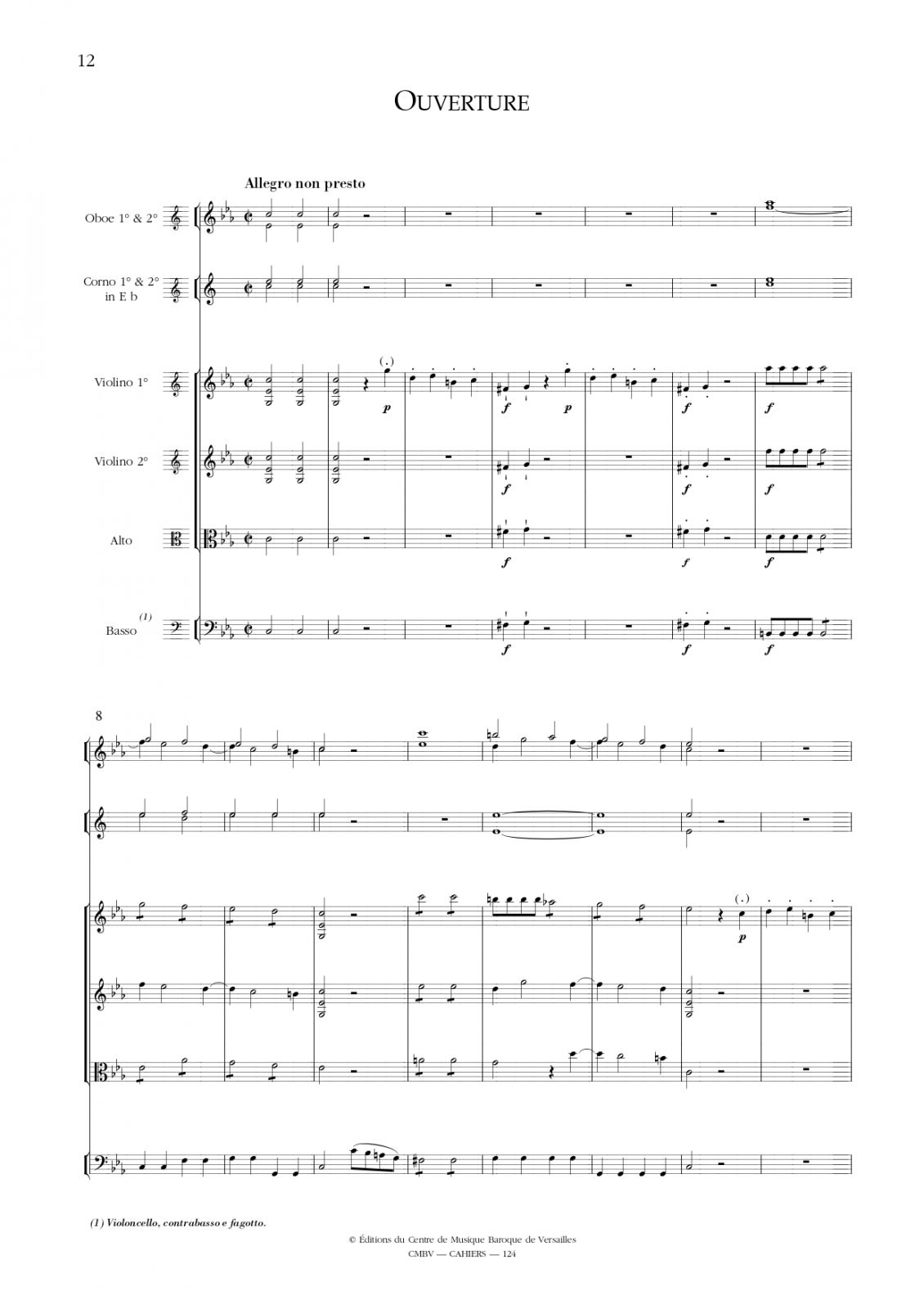
Gossec’s chosen light scoring (2 flutes, 2 oboes - which can be played by the flutes - 2 bassoons, 2 horns, violins I and II, divided violas, cellos and double basses) matches that of the Comédie Italienne at the time (24 musicians), recognised as one of the best in the French capital. The skill of the orchestration, the precision of the writing and the flexibility of such an ensemble offer many effects and a wide variety of colours, all of which contribute to the delineation of situations and characters. The plot is light-hearted and comic, with plenty of surprises and twists.
This comedy, filled with ariettes, is one of the composer’s last. It premiered at the Comédie Italienne in Paris in 1767. At the time, the repertoire oscillated between drama and light comedy, even fairground comedy, making it unlikely that individual works would enjoy lasting success. Nevertheless, Gossec’s piece was warmly received by the public and enjoyed numerous revivals, notably in Paris, Liège, Copenhagen, the Hague, Brussels, Kassel, Amsterdam, Stockholm etc. It was translated into German, Dutch, Danish and other languages. The following year, Grétry inaugurated his brilliant career, which would influence the evolution of the genre, with Le Huron.
Gossec’s chosen light scoring (2 flutes, 2 oboes - which can be played by the flutes - 2 bassoons, 2 horns, violins I and II, divided violas, cellos and double basses) matches that of the Comédie Italienne at the time (24 musicians), recognised as one of the best in the French capital. The skill of the orchestration, the precision of the writing and the flexibility of such an ensemble offer many effects and a wide variety of colours, all of which contribute to the delineation of situations and characters. The plot is light-hearted and comic, with plenty of surprises and twists.
Pages:
201
Publication date:
2003-10
Introduction (language):
French
ISMN 979-0-56016-124-2
The works
Text language:
Français
Genre:
opéra-comique
Key:
do mineur
Duration:
plus de 50'
Recommendations


27€
Available in a digital version


