

French Operatic Arias - Baritone


The Centre de musique baroque de Versailles has released a new volume in its series of collections of opera arias by Gluck, a great figure in French opera singing at the end of the eighteenth century.
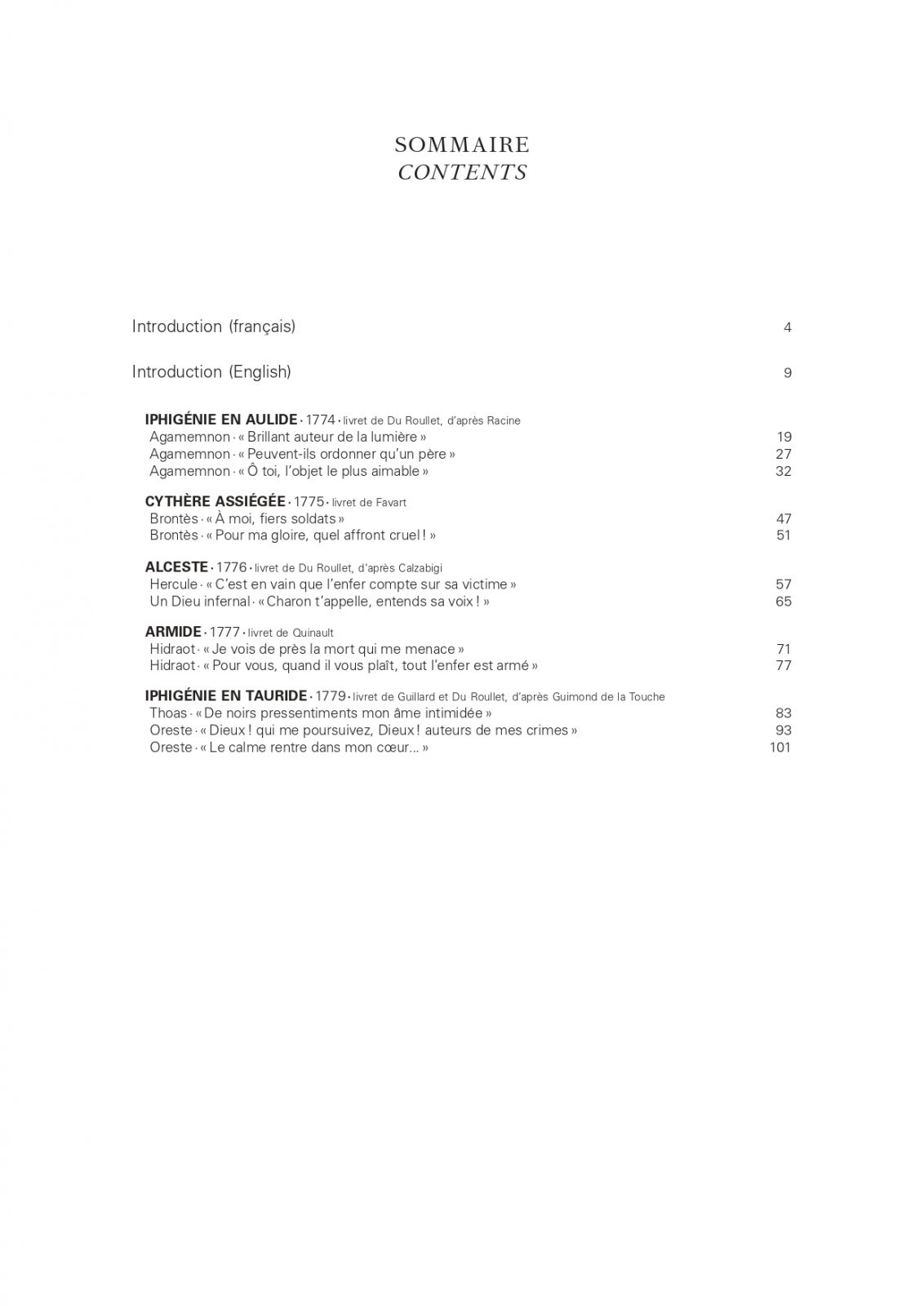
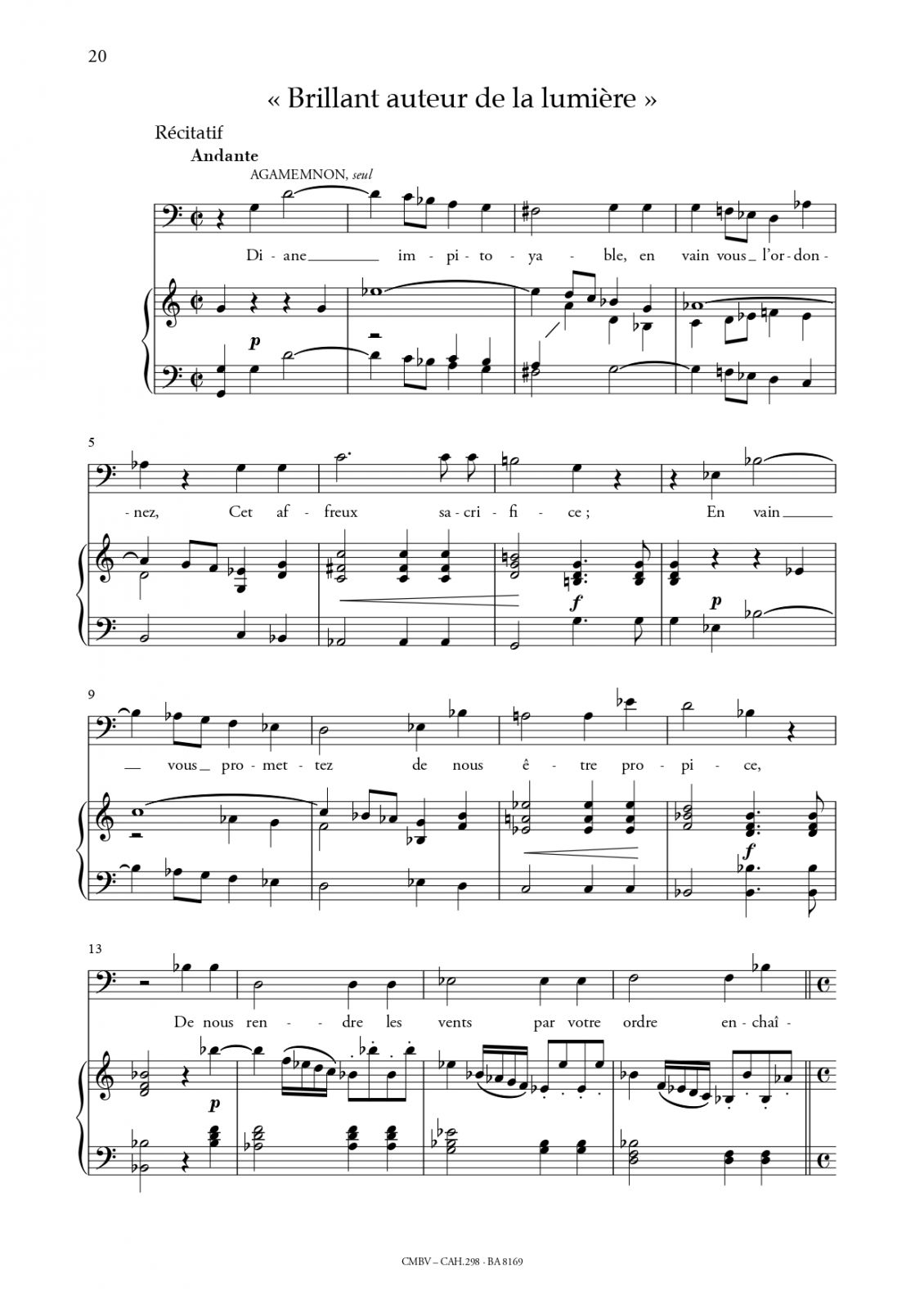
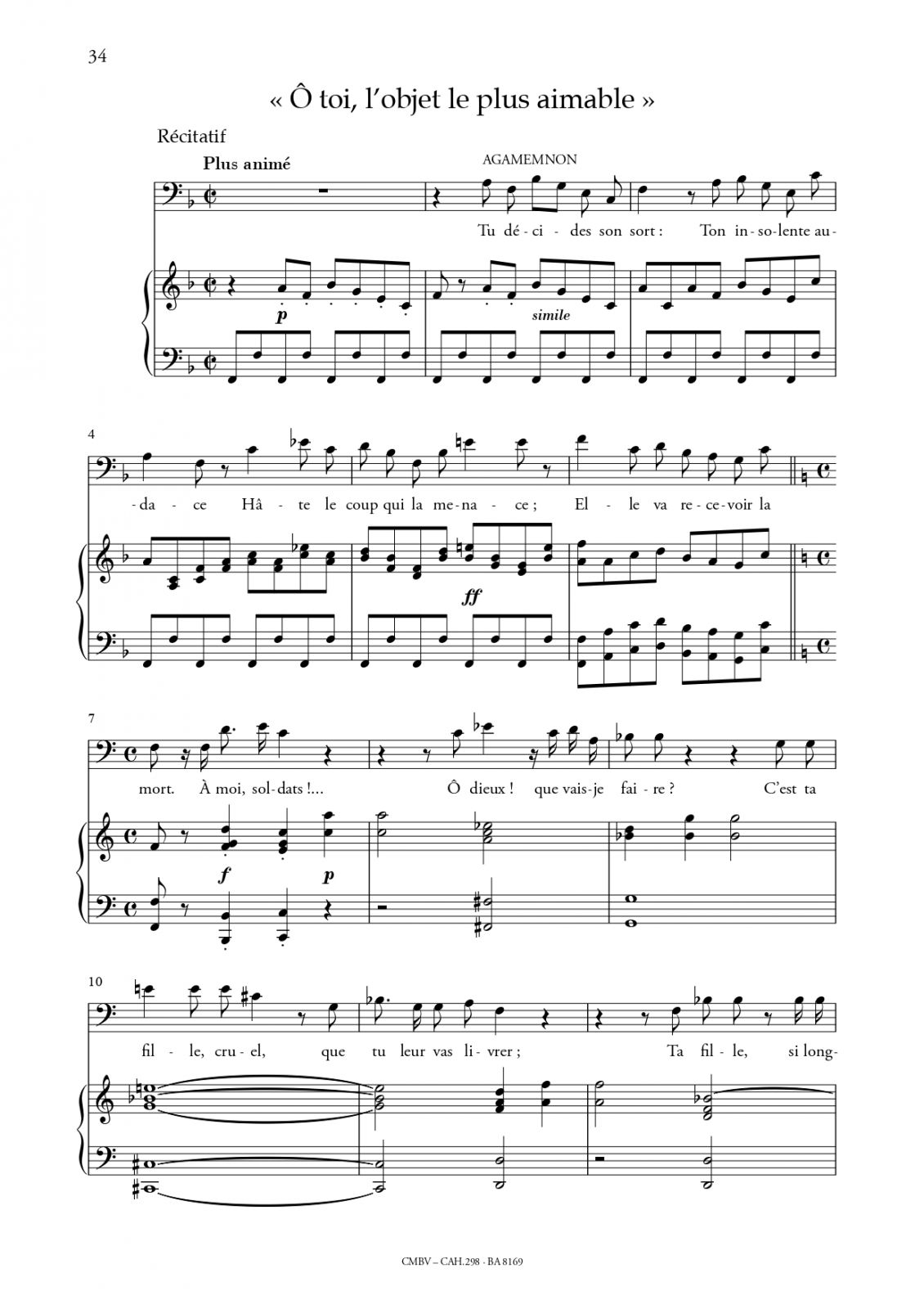
This anthology, the result of a collaboration between the Centre de musique baroque de Versailles and Bärenreiter, aims to make most of the scenes and arias of Gluck’s French operas accessible to a wide audience, in the form of vocal scores, with the addition of an introduction on the context and the performers, the dramatic setting of the excerpts and the text of each aria, in French and English. This second volume is intended for "basse-taille" (baritone) voices.
Christoph Willibald Gluck, born in 1714 in Bavaria, was a native of Bohemia. His first French comic operas date from his move to Vienna in 1750 and were written for the troupe of French actors at the imperial court. The Académie royale de musique in Paris, in crisis since the Querelle des Bouffons, called on him in 1774. The prodigious success of Iphigénie en Aulide, followed by new versions of Orphée et Eurydice (1774) and Alceste (1776), then the revision of Armide based on Quinault’s libretto (1777) definitively supplanted the operas of Lully and Rameau at the Académie.
At the Académie royale de musique, the basse-taille was not only a tessitura: it was also a job. The Encyclopédie indicates that "magicians, tyrants, hated lovers are usually basses-tailles." They are also credited with nobility and majesty, and are appreciated for their rage or anger. Performers such as Thévenard, Chassé or Larrivée, through their own strengths, extended the range of roles to include valiant and amorous princes.
Les œuvres
Recommandations


