

Livre
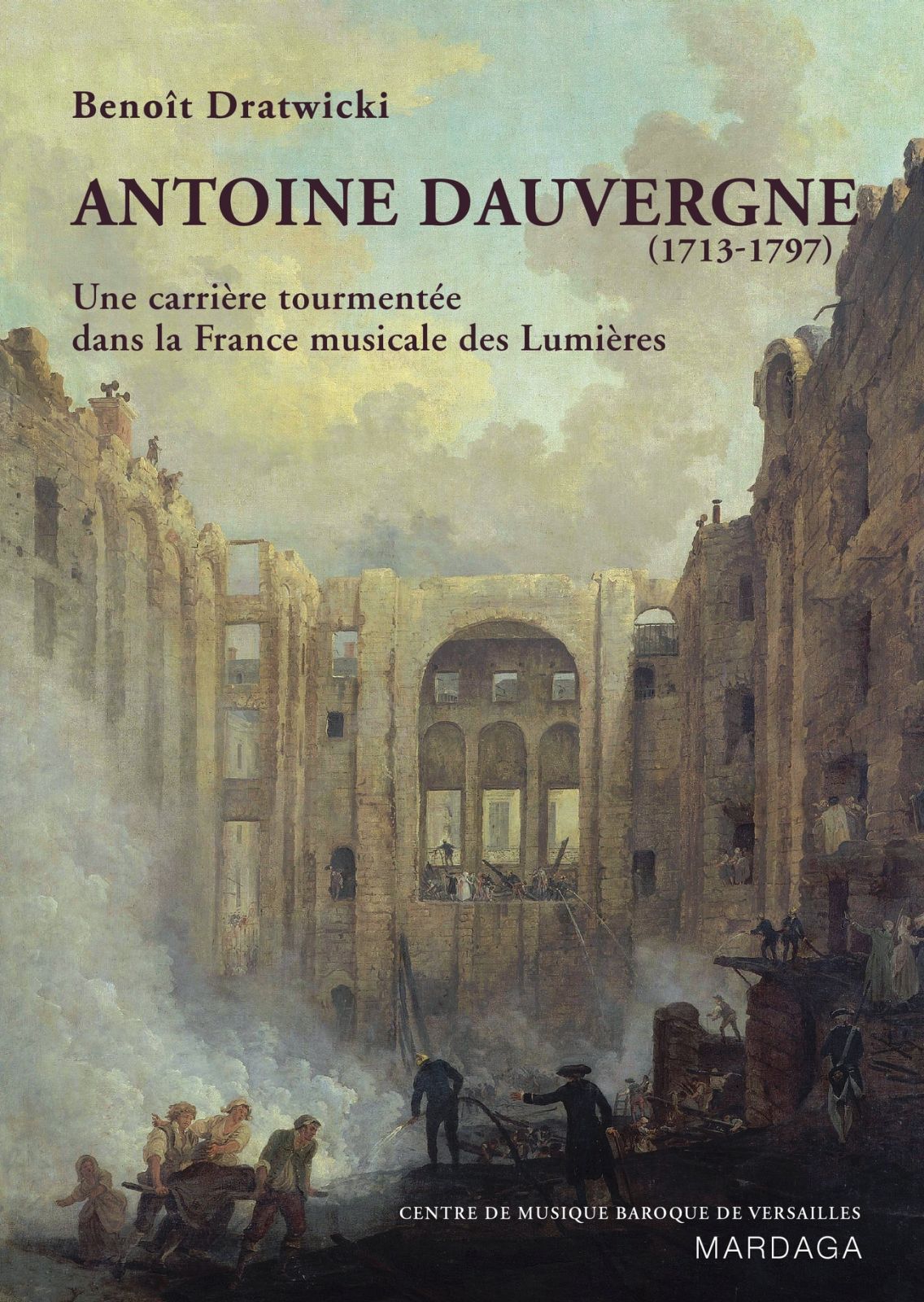
Antoine Dauvergne (1713-1797)
A tormented musical career in the France of the Enlightenment


Référence : CMBV-B011
Reliure : Souple
39,00 € TTC
En stock
Collection :
Approfondir
Maison d'édition :
Editions Mardaga
Présentation :
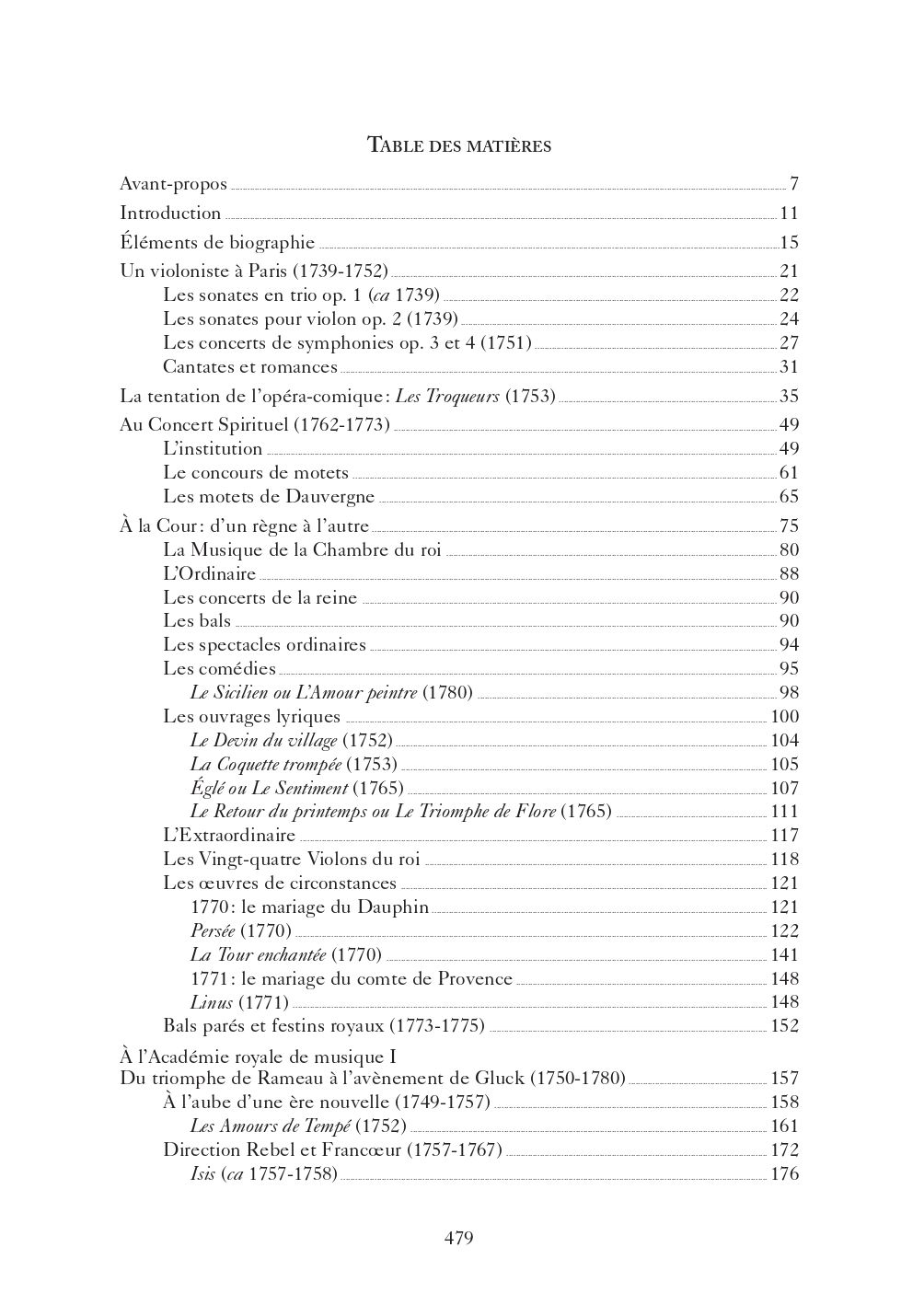
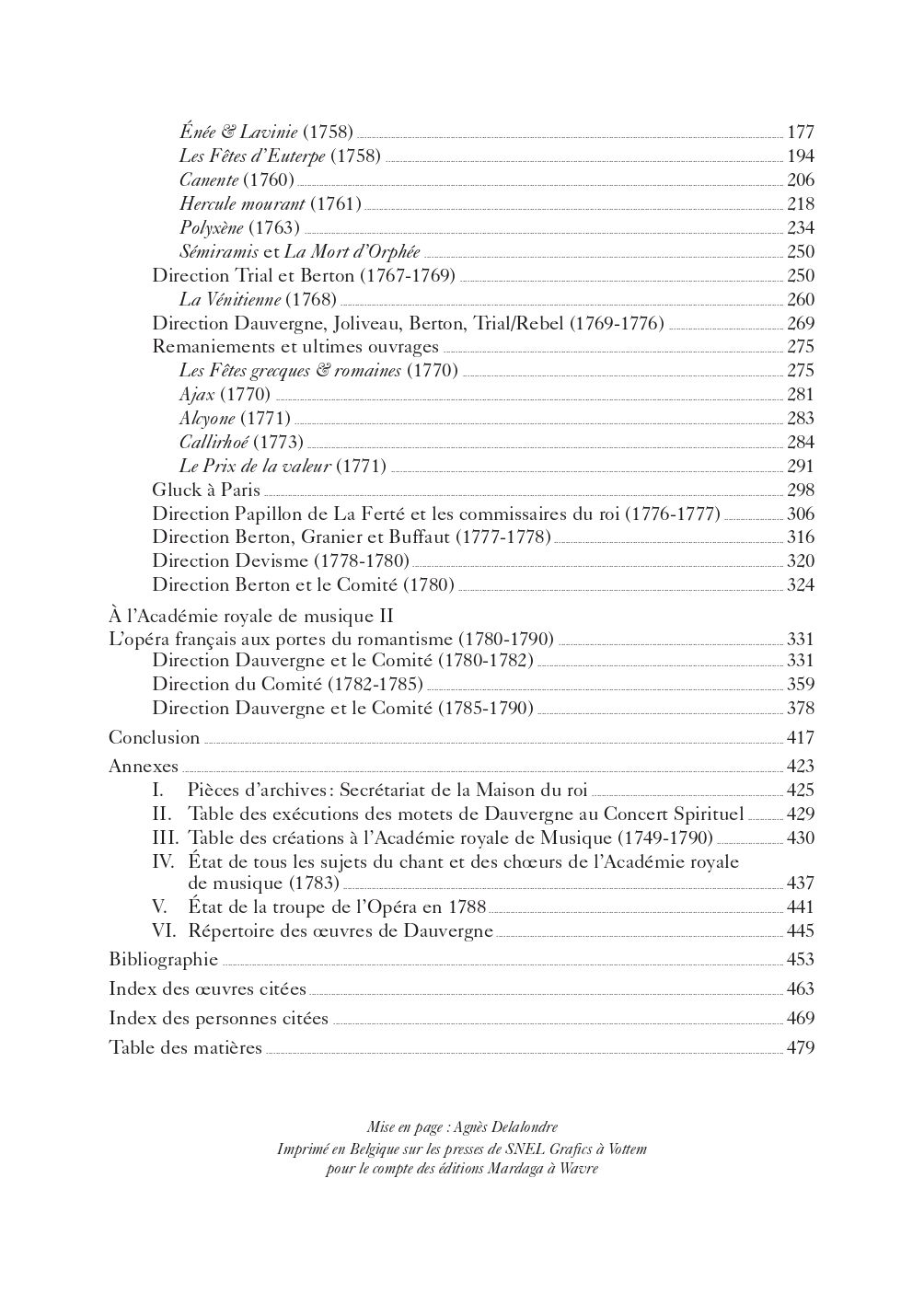
Until now, no research work has offered a general synthesis of the life and work of Antoine Dauvergne. Highlighting the richness of his production and, above all, his active role at the head of musical institutions on the eve of the French Revolution, this book proposes to redress this injustice: a whole little-known part of the Age of Enlightenment comes back to life around a figure who now appears essential.
Violinist, composer, director of the royal music and the Opéra, Antoine Dauvergne had to build his career in the midst of a complex period, marked by aesthetic quarrels, institutional restructuring and social upheavals unprecedented in the history of the kingdom. A provincial musician of modest origins, it was in Paris that he made his debut, before Versailles opened its doors to him. The end of the 1760s marked the peak of his rise, with Dauvergne accumulating prestigious positions at the Court and in the capital. Director of the Concert Spirituel and the Académie royale de musique, he renewed the programming of Parisian venues with great foresight; a composer of operas and grands motets, he appears to be the worthy successor of Rameau and Mondonville. Who else at that time could claim such recognition and power? It could be said that Dauvergne renewed, a century after the event, the model of Lully.
His work perfectly reflects the essential issues of the time. Participating in the movement to revitalise the old operatic repertoire, Dauvergne was very active in adapting scores to the taste of the day. Ten years ahead of his time, he rehabilitated old librettos by setting them to music afresh. Finally, he invented new stage genres that were to see their heyday in the nineteenth century: opéra-comique, light comedy and the ballet-pantomime.
After graduating in cello, chamber music and musical education, Benoît Dratwicki turned to musical history, analysis and aesthetics, obtaining various distinctions at the conservatoires of Metz and Paris, before joining the classes in Aesthetics and Musical Culture at the CNSMDP. In 2001 he was delegated to, and is now artistic director of, the Centre de musique baroque de Versailles. From 2006 to 2009, he participated in the creation of the Palazzetto Bru Zane - Centre de musique romantique française (in Venice) of which he is now artistic advisor.
Violinist, composer, director of the royal music and the Opéra, Antoine Dauvergne had to build his career in the midst of a complex period, marked by aesthetic quarrels, institutional restructuring and social upheavals unprecedented in the history of the kingdom. A provincial musician of modest origins, it was in Paris that he made his debut, before Versailles opened its doors to him. The end of the 1760s marked the peak of his rise, with Dauvergne accumulating prestigious positions at the Court and in the capital. Director of the Concert Spirituel and the Académie royale de musique, he renewed the programming of Parisian venues with great foresight; a composer of operas and grands motets, he appears to be the worthy successor of Rameau and Mondonville. Who else at that time could claim such recognition and power? It could be said that Dauvergne renewed, a century after the event, the model of Lully.
His work perfectly reflects the essential issues of the time. Participating in the movement to revitalise the old operatic repertoire, Dauvergne was very active in adapting scores to the taste of the day. Ten years ahead of his time, he rehabilitated old librettos by setting them to music afresh. Finally, he invented new stage genres that were to see their heyday in the nineteenth century: opéra-comique, light comedy and the ballet-pantomime.
After graduating in cello, chamber music and musical education, Benoît Dratwicki turned to musical history, analysis and aesthetics, obtaining various distinctions at the conservatoires of Metz and Paris, before joining the classes in Aesthetics and Musical Culture at the CNSMDP. In 2001 he was delegated to, and is now artistic director of, the Centre de musique baroque de Versailles. From 2006 to 2009, he participated in the creation of the Palazzetto Bru Zane - Centre de musique romantique française (in Venice) of which he is now artistic advisor.
Pagination :
479
Date de parution :
2011-01
Introduction (langue) :
Français
ISBN 978-2-8047-0082-9
Recommandations


Gratuit
Disponible en version numérique


