

In convertendo (1726)
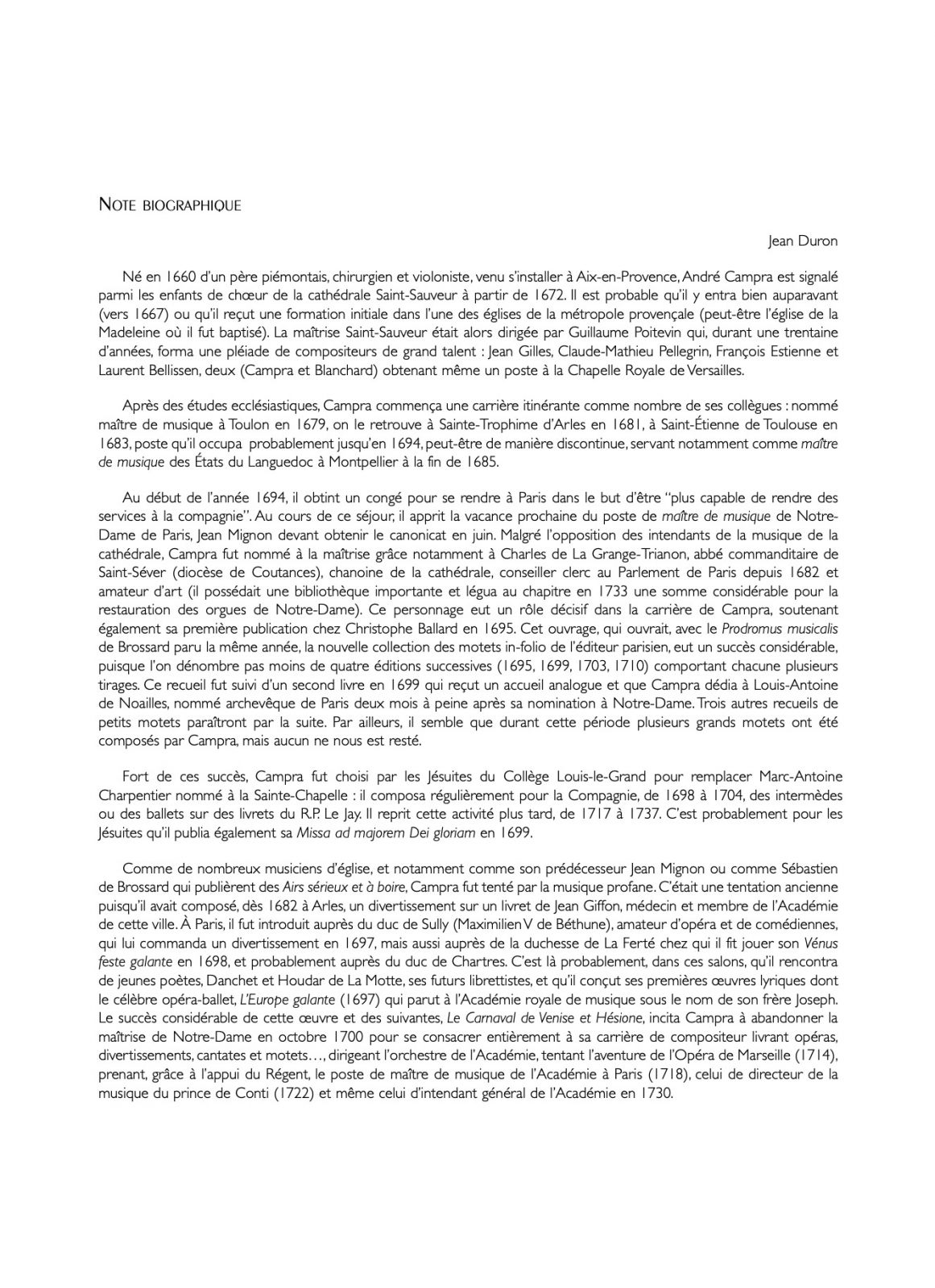


Born in 1660, André Campra studied music with Guillaume Poitevin, maître de chapelle at the Saint-Sauveur choir school of the cathedral of Aix-en-Provence, where he trained several renowned musicians (including Jean Gilles). After leaving Aix-en-Provence, Campra, whose life seems to have been eventful, obtained several appointments in the south of France. In 1694, he moved to Paris and was appointed to the maîtrise of Notre-Dame Cathedral. He resigned in 1700 to devote himself freely to an equally exceptional operatic career, which led him to become director of the Académie royale de musique in 1730. In 1723, Philippe d’Orléans entrusted him with one of the quarters of the Chapelle royale, replacing Lalande. Campra composed or reworked most of the great motets that have come down to us. He died in 1744.
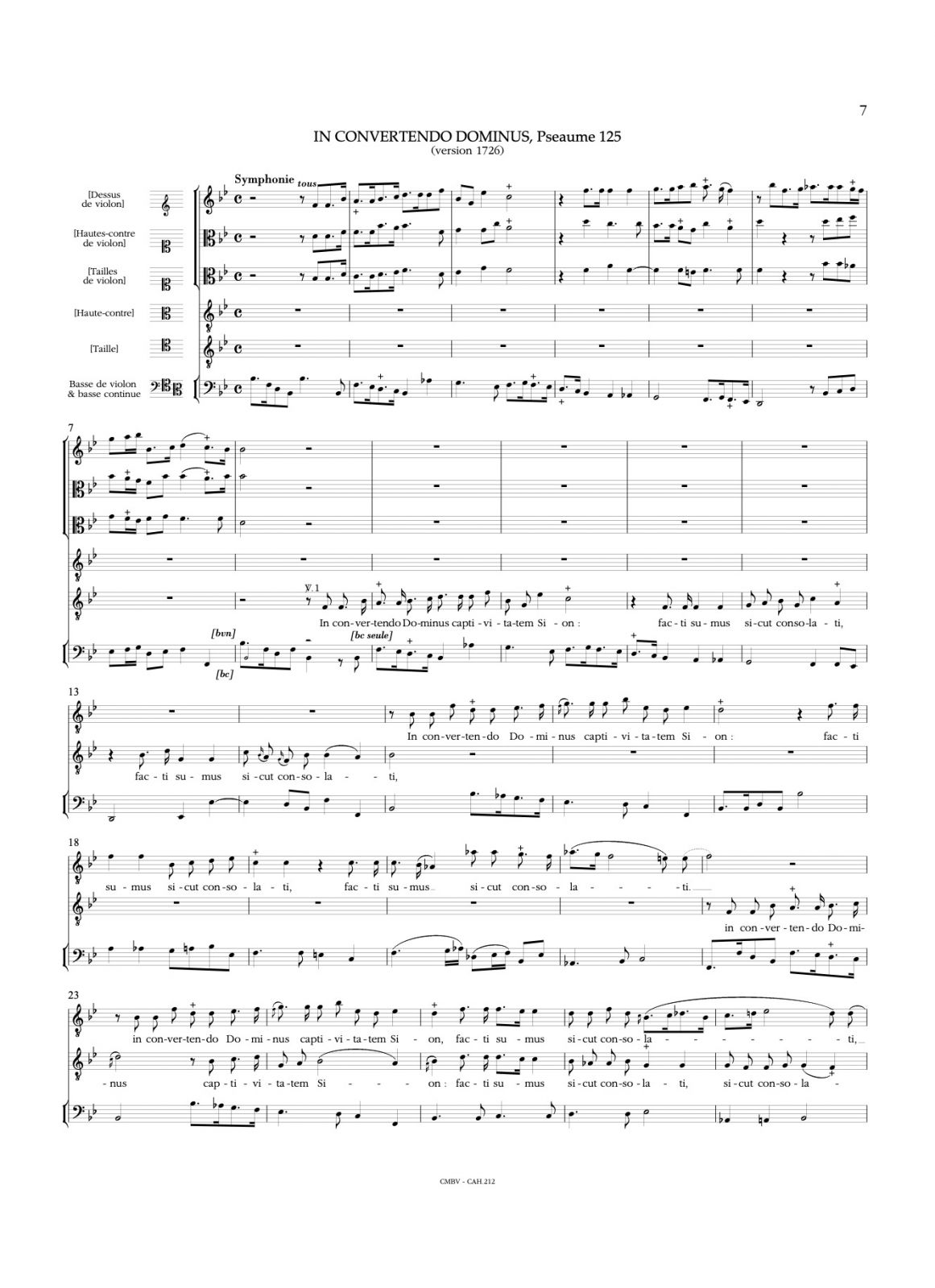
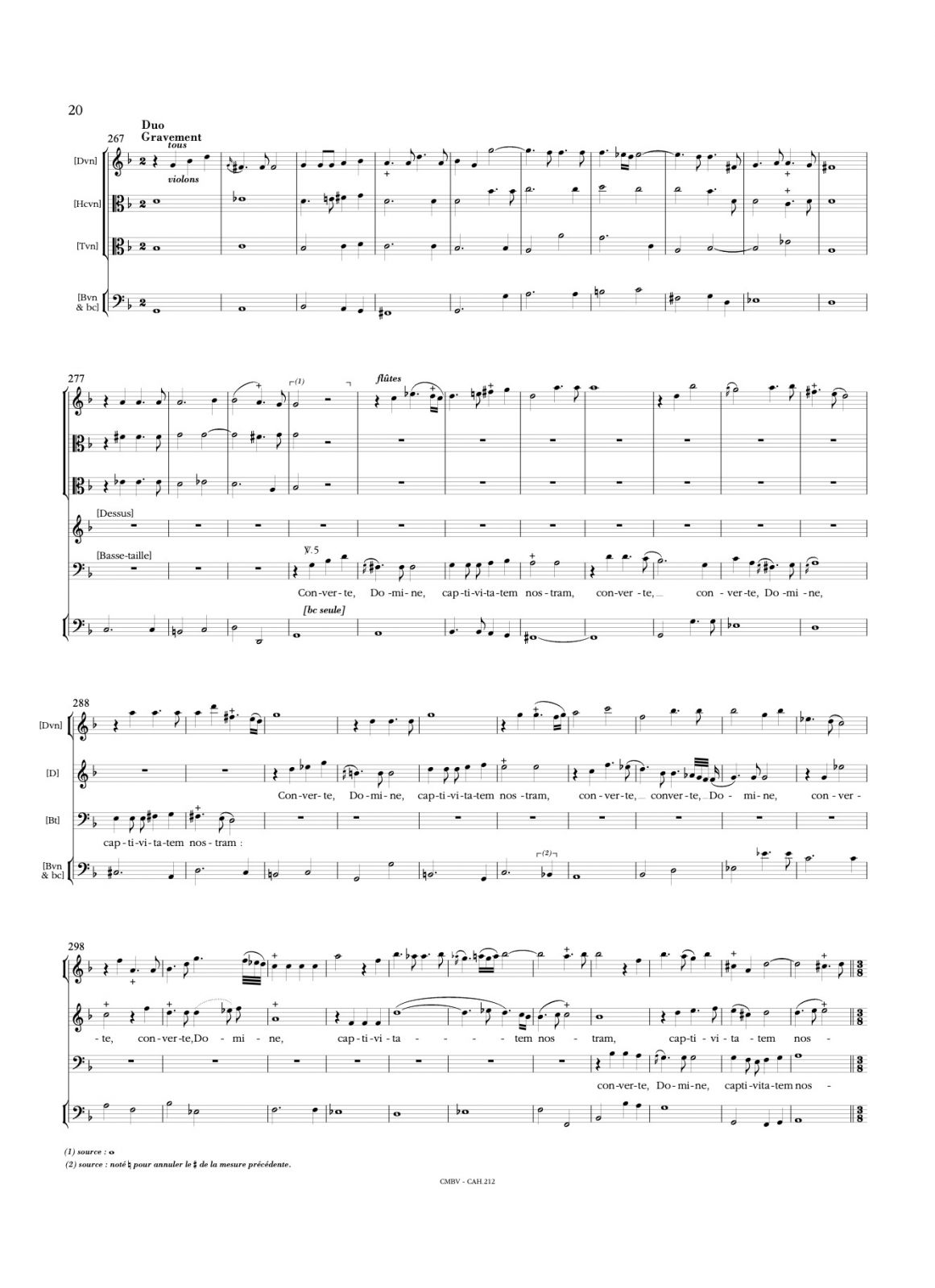
In Convertendo Dominus is a grand motet whose autograph manuscript is preserved in the collection of the Bibliothèque nationale de France. The laudatory Psalm 125 expresses the gratitude of God’s people for his deliverance. The Versailles style, influenced by Lalande, prevailed, with its verse divisions contrasted in character, instrumentation and tempi. The duration, for liturgical reasons, is set at approximately twenty minutes.
The orchestra, in this version used in the Chapelle royale of Versailles, comprises a large four-part string ensemble (dessus, hautes-contre, tailles and basses de violons), woodwinds and basso continuo. It is a significant revision of the 1703 version, using the same themes, but with a tighter musical discourse and an orchestra reorganised to reflect the changes that had occurred over the previous twenty years. The work also requires 4 solo singers (Dessus, Haute-contre, Taille and Basse-taille) and a 5-part choir "in the French style" (dessus (divided), hautes-contre, tailles, basses-tailles and basses).
Les œuvres
Recommandations


