
Sheet music
Concerto pour le clavecin in C major, op. XII
Jean-Frédéric EDELMANN
(1749-1794)
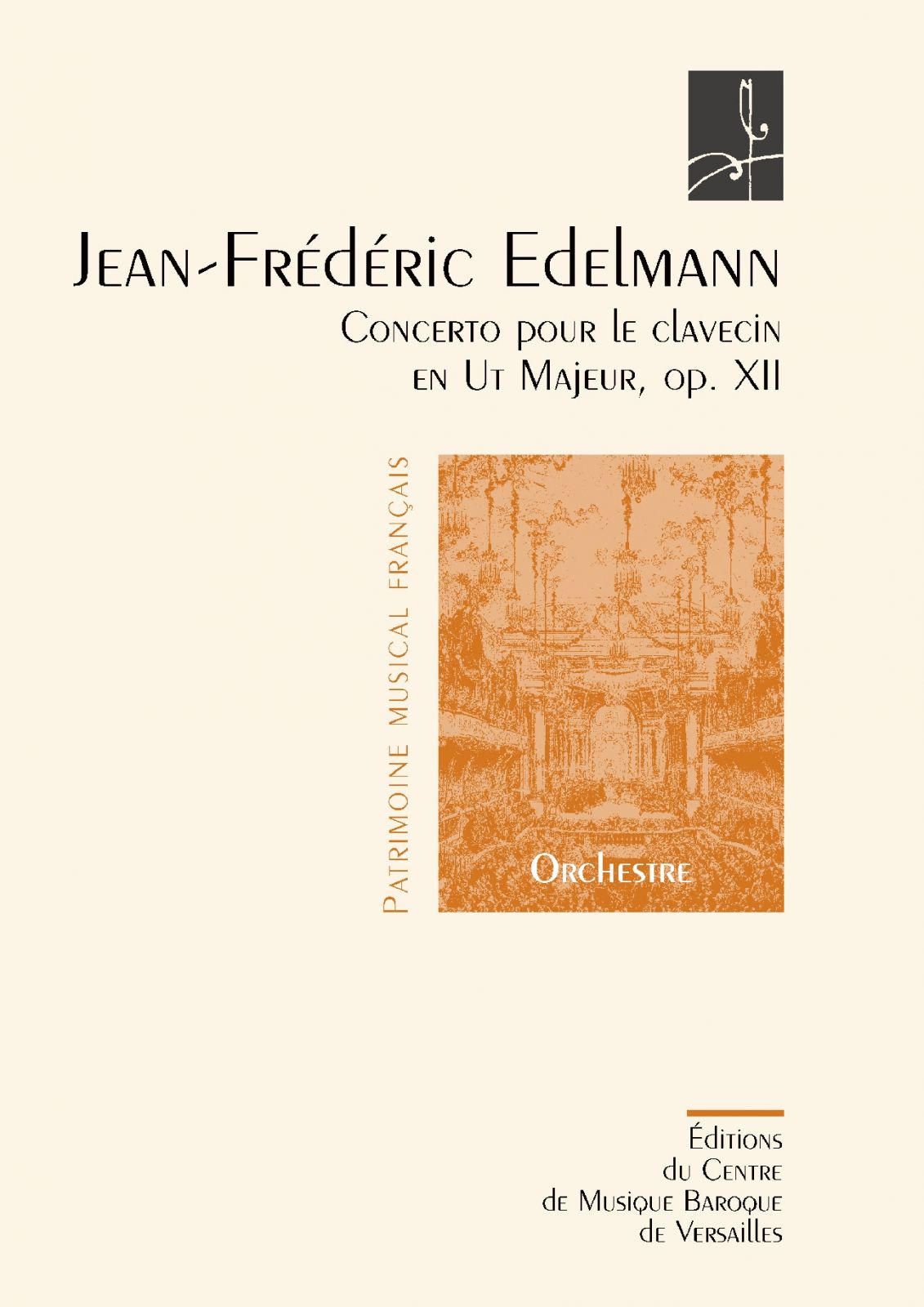


Reference: CAHIERS-180
Format:
21x29,7 cm
Binding: Paperback
14,60 € TTC
In stock
Jean-Frédéric EDELMANN
(1749-1794)
Collection:
Orchestra
Type of publication:
Full score
Publisher:
Editions du Centre de musique baroque de Versailles
Presintation:
Born in Strasbourg in 1749, Jean-Frédéric Edelmann enjoyed success as soon as he arrived in Paris in 1774. He was an accomplished virtuoso; his compositions, influenced by the music of Gluck and Grétry, were authoritative; and as a sought-after teacher, his pupils included Nicolas Méhul. Sensitive to the ideas of the French Revolution, he became involved with a Jacobin club in Strasbourg, where he met up with his Protestant university classmate Frédéric de Dietrich, now mayor of the city. He became club president at a difficult time, following the King’s arrest at Varennes and the declaration of war on Austria. Criticised within the club, and probably overwhelmed, he was tried and guillotined in Paris in 1794.
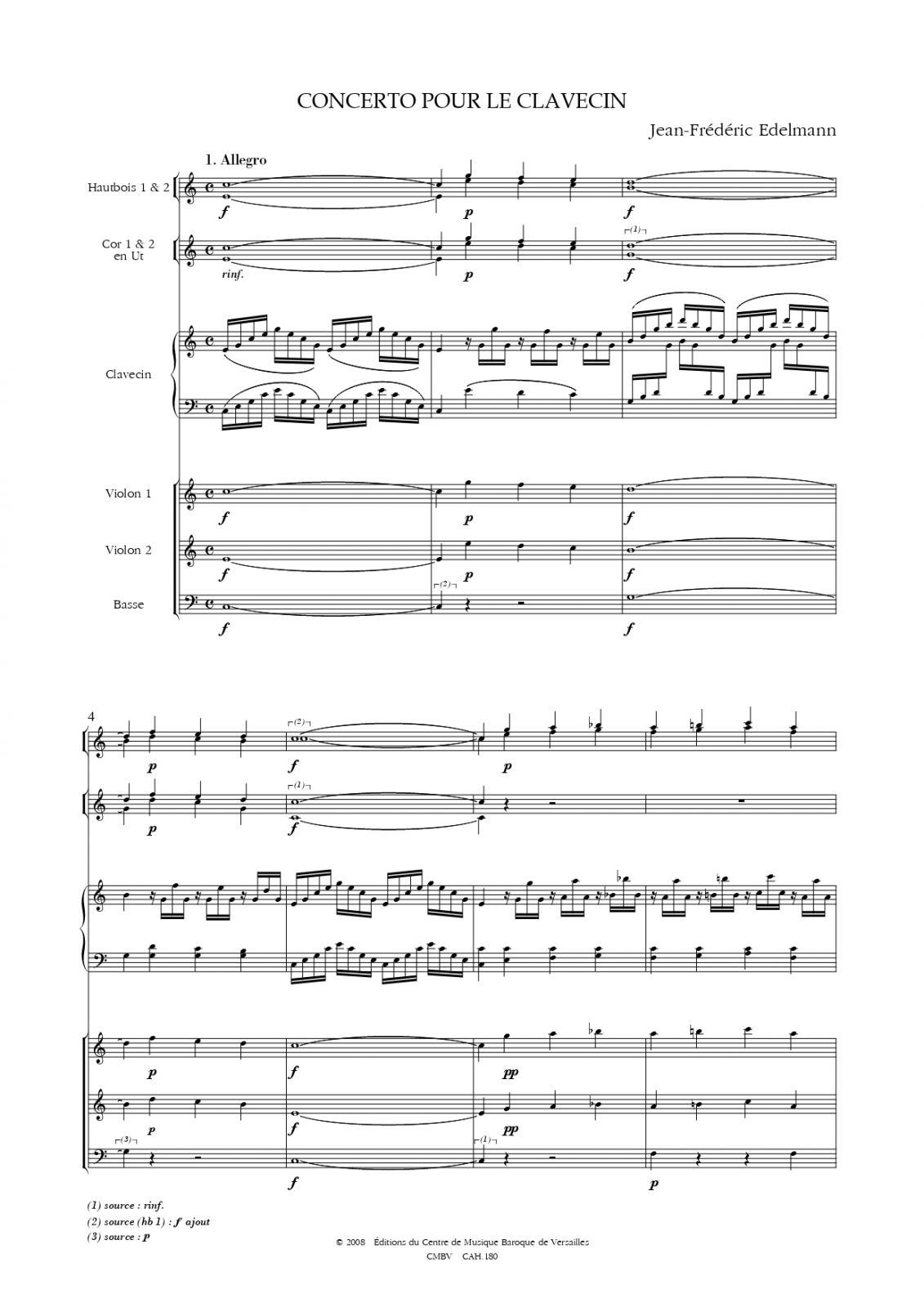
The Concerto for harpsichord, in C major, consists of three movements: Allegro, Adagio and Rondo. At times brilliant, at others more expressive, this concerto lies midway between the galant style and pre-Romanticism. Without great difficulty, it is a good introduction to the concerto style for students in their 3rd conservatoire cycle (7th, 8th and 9th years of study). Parisian publishers at the end of the 18th century favoured works that could be widely performed, leaving performers considerable freedom. Thus, while the first edition of this concerto, published in Paris in 1782, clearly mentions the harpsichord, English editions, published a few years later, also mention the fortepiano. Similarly, the uninterrupted keyboard part suggests the possibility of a sonata-like performance without orchestra. The orchestra consists of two violin and bass parts, without violas, plus 2 oboes and 2 horns in C.
The Concerto for harpsichord, in C major, consists of three movements: Allegro, Adagio and Rondo. At times brilliant, at others more expressive, this concerto lies midway between the galant style and pre-Romanticism. Without great difficulty, it is a good introduction to the concerto style for students in their 3rd conservatoire cycle (7th, 8th and 9th years of study). Parisian publishers at the end of the 18th century favoured works that could be widely performed, leaving performers considerable freedom. Thus, while the first edition of this concerto, published in Paris in 1782, clearly mentions the harpsichord, English editions, published a few years later, also mention the fortepiano. Similarly, the uninterrupted keyboard part suggests the possibility of a sonata-like performance without orchestra. The orchestra consists of two violin and bass parts, without violas, plus 2 oboes and 2 horns in C.
Pages:
36
Publication date:
2008-12
Introduction (language):
French
ISMN 979-0-56016-180-8
The works
Genre:
concerto
Key:
Do Majeur
Duration:
entre 20' et 29'
Recommendations


27€
Available in a digital version


26€
Available in a digital version
