

Samson, oratoire


Find out more
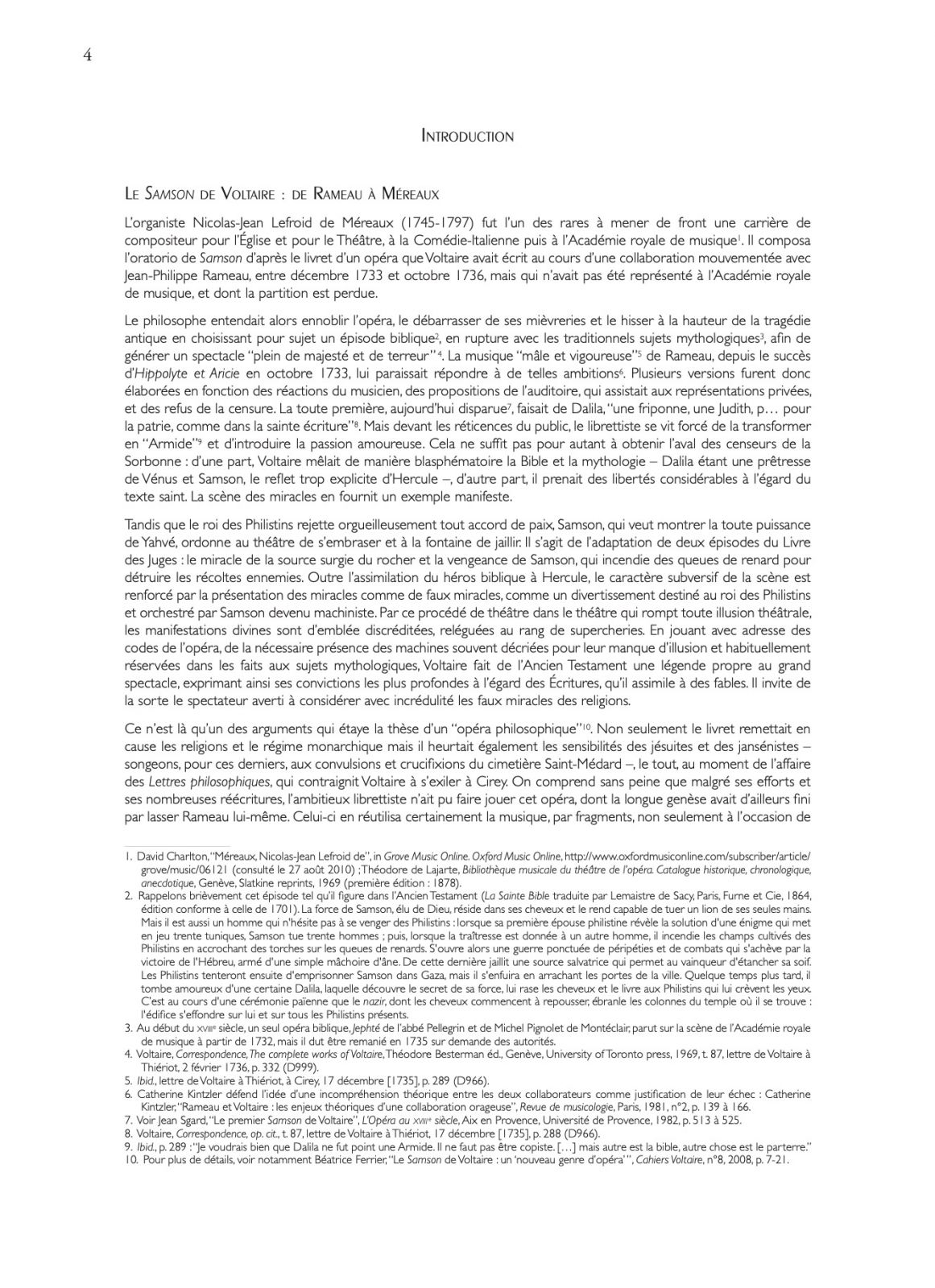
Between 1733 and 1736, Voltaire devoted himself to the libretto of Samson for Rameau, with the ambition of renewing the genre of tragédie lyrique. To elevate the work to the nobility of ancient tragedy, he turned to the epic: he applied to the Old Testament a dimension of the "merveilleux" (supernatural), usually reserved for mythology, assimilating biblical truths and philosophical fables. The codes of traditional opera were thus transgressed in favour of the ideas contained in his Lettres philosophiques. Censored, the opera was never performed, and the music is now lost. Forty years later, Nicolas-Jean Lefroid de Méreaux (1745–1797), one of the few organists to successfully combine a career as a composer for the church and the theatre, used part of the libretto (the first two acts, before Dalila’s entrance) for an oratorio in French, performed on 25 March 1774 at the Concert-Spirituel.
The piece opens with a depiction of the slavery of the Hebrews under the religious oppression of the Philistines. The appearance of Samson heralds the rebellion; he orders a storm that sets the Philistine camp ablaze. The Philistines announce their defeat through the voice of their king, eliciting an air of victory from the Hebrews. The piece then ends with the people’s hymn to the glory of the hero and the well-deserved rest of the warrior.----
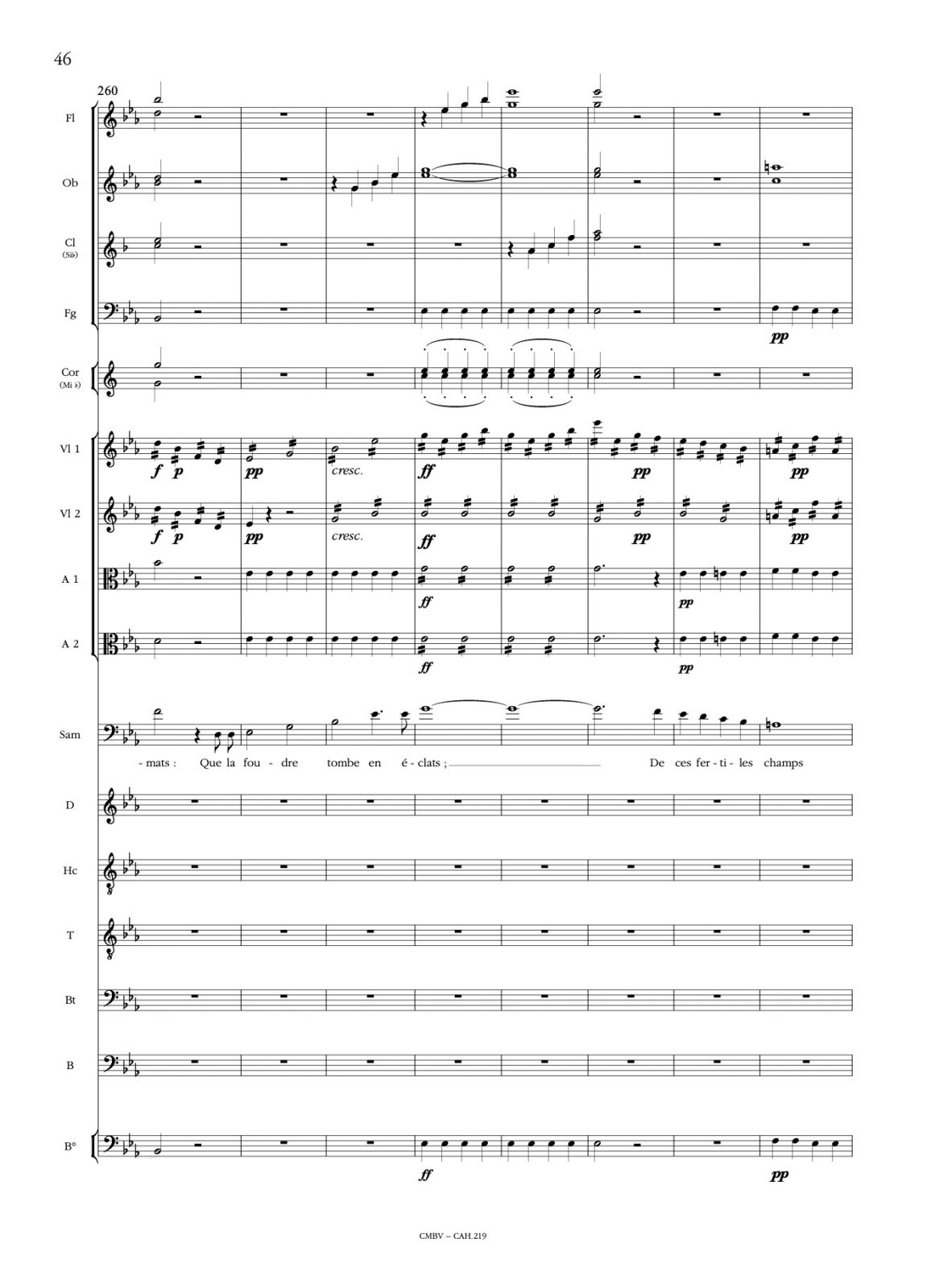
The composer supports Voltaire’s project for a return to epic grandeur, although he waters down its polemical dimension (he does not include the aria "Peuple, éveille-toi, romps tes fers" (People, wake up, break your fetters), which would be taken up as a revolutionary anthem by Gossec in 1791). The conflict between the two enemy peoples is perfectly perceptible in the contrasts of the central chorus, "De Dieu connaissez la vengeance" ("Know the vengeance of God"): this is the dramatic crux of the work, where the low voices represent the Hebrews responding to Samson’s invectives, and the high voices mark the blows. The breadth and sonorous power of the final chorus, "Sonnez, trompette, organe de la gloire" (Sound, trumpet, organ of glory), celebrates the liberator of a people victimised by tyranny, while at the same time taking part in the grandiosity implied by the biblical subject.
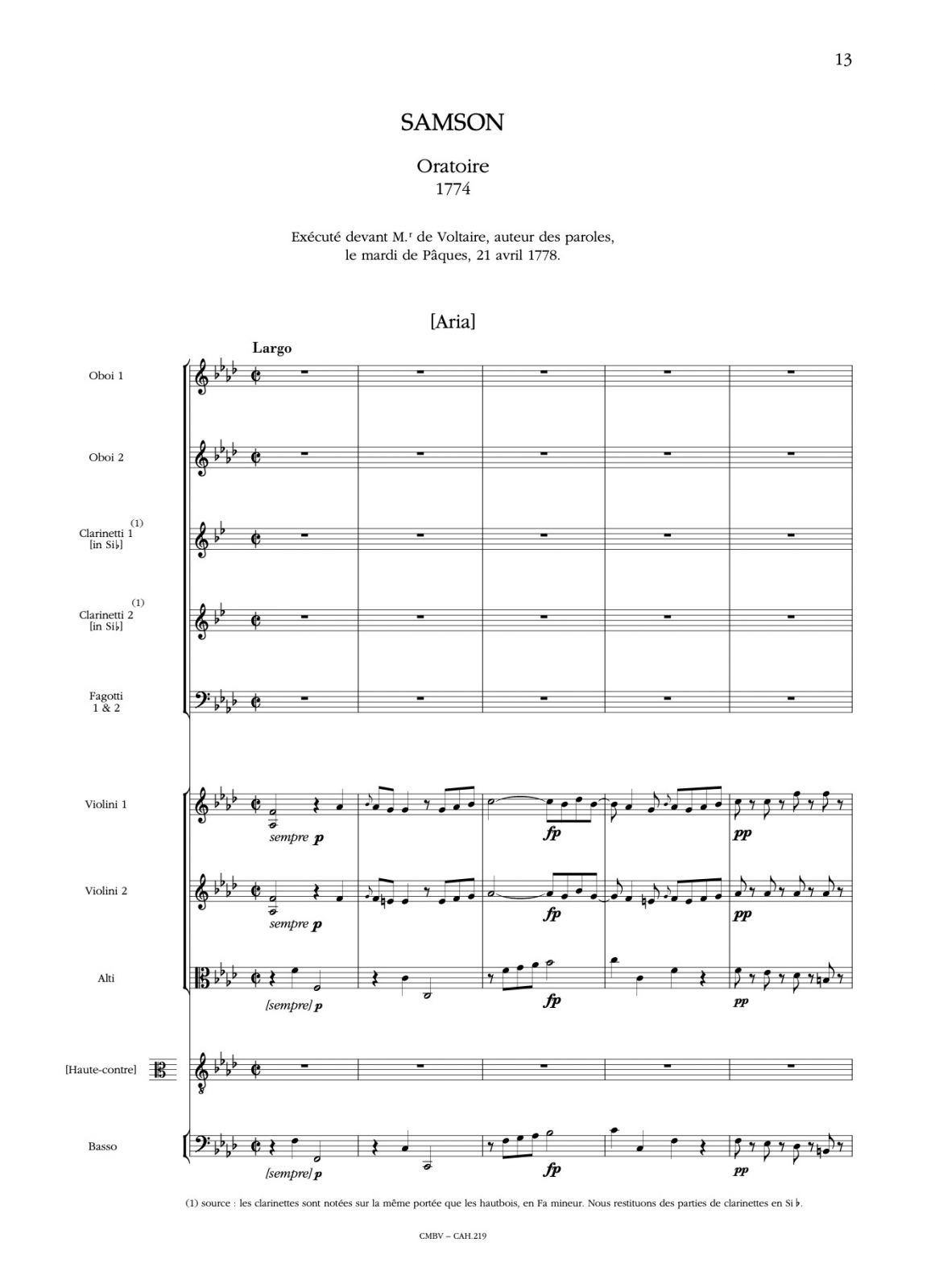
The work met with some success. It was performed in Voltaire’s presence in 1778. Two verses are reproduced in the painting by Goujet unveiled at his Masonic apotheosis on 28 November 1778, in tribute to the great man who had recently passed away.
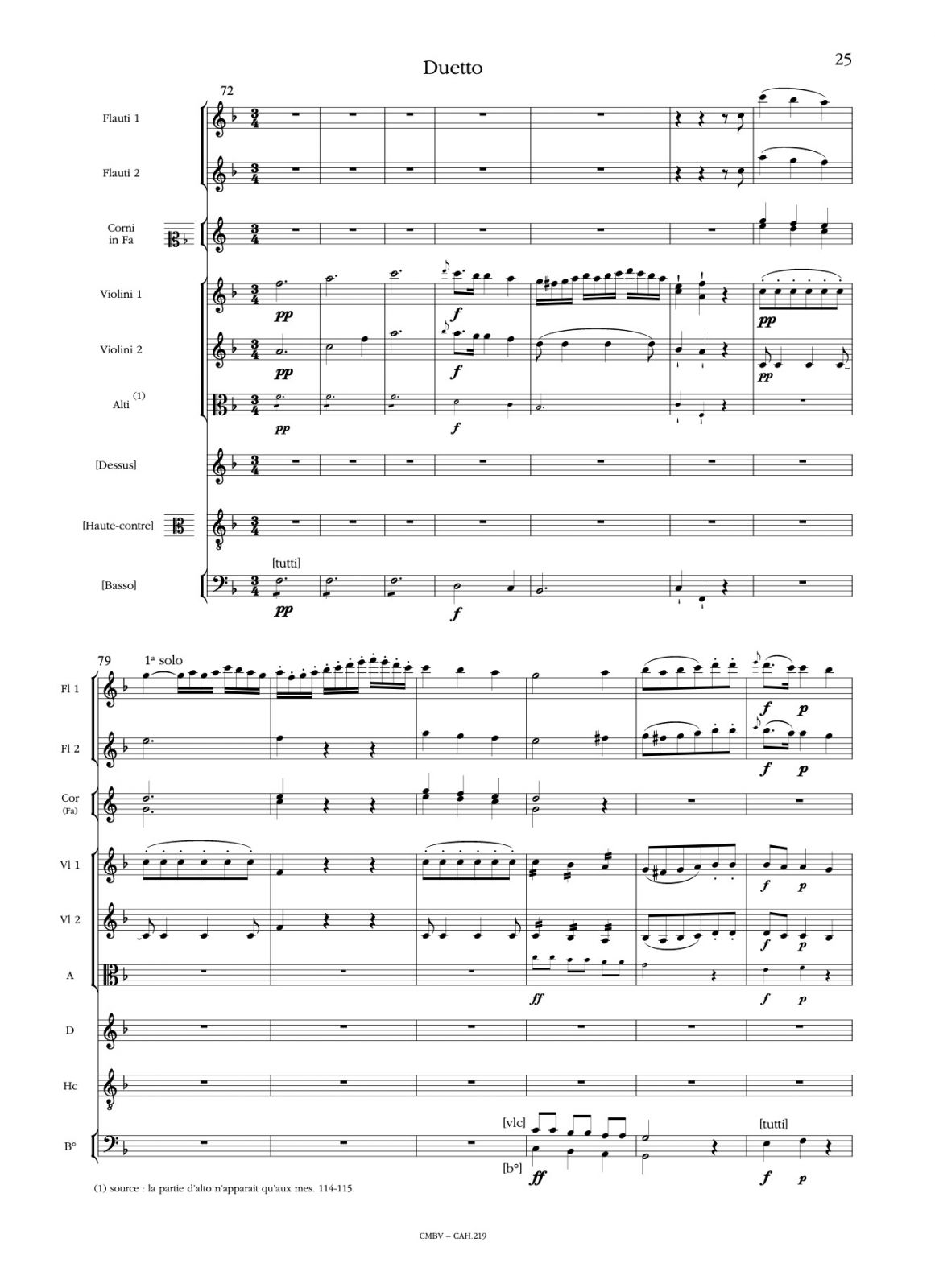
The oratorio lasts half an hour. It requires 5 solo singers (dessus, haute-contre, two basses-tailles and basse), a 5-part choir (dessus (divided), hautes-contre, tailles, basses-tailles and basses) and a large orchestra including all the woodwinds (fl, ob, cl, bn, hn), trumpet, timpani and strings (violins 1 & 2, violas 1 & 2 and basses).
Basse : "Il fait trembler sur leur trône… "
The works
Recommendations


