

La Vénitienne
Ballet in a prologue and three acts premiered 26 May 1705 at the Académie royale de musique, Paris
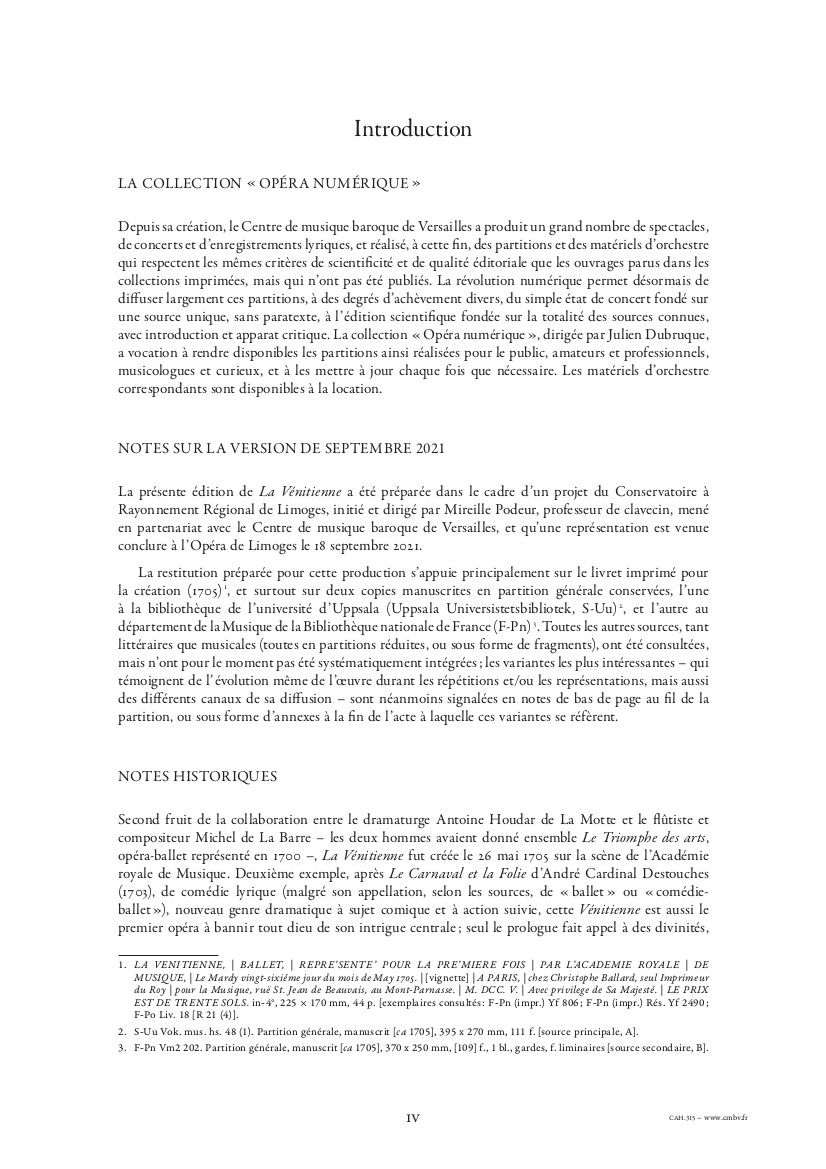
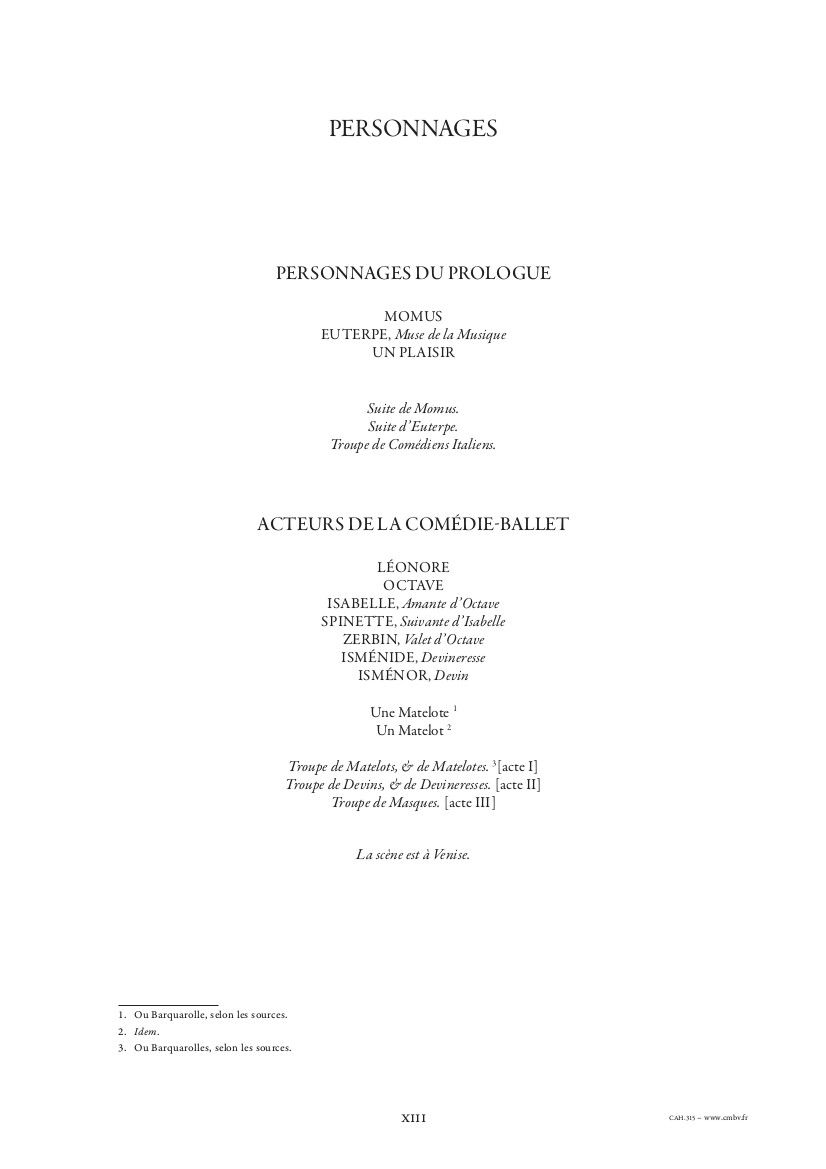
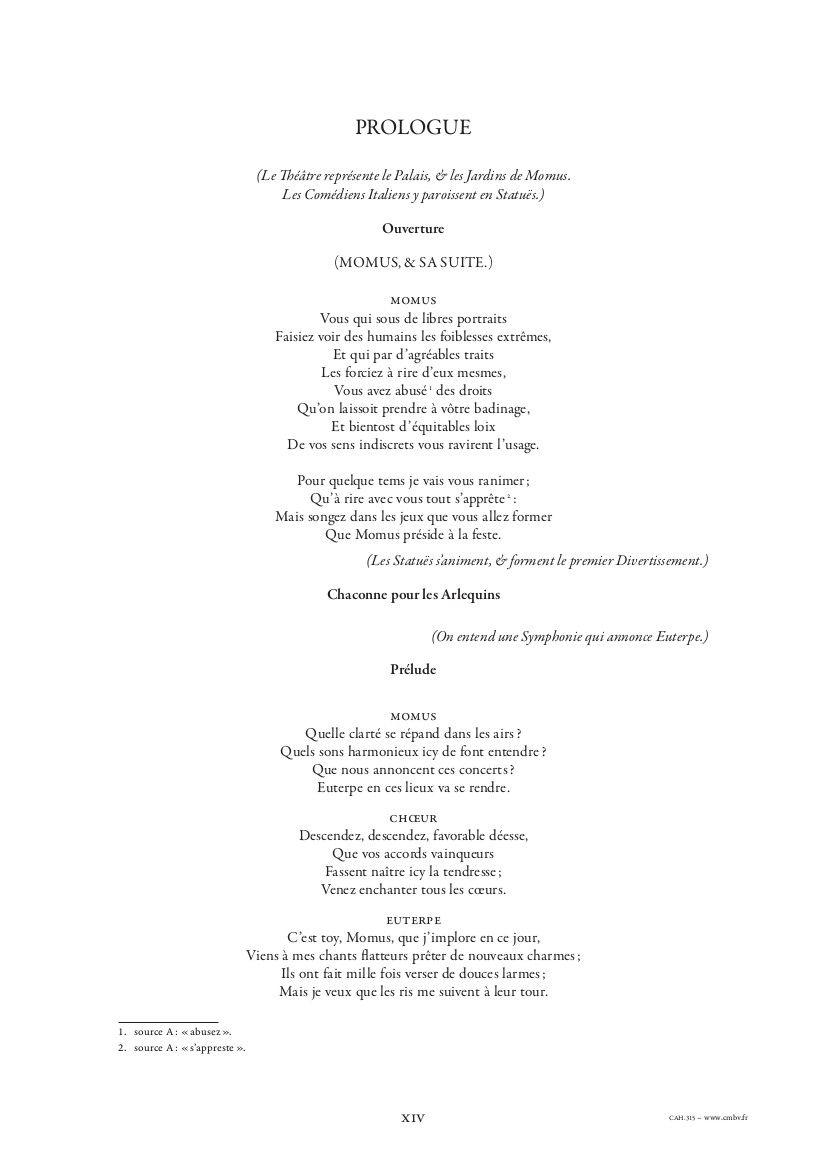
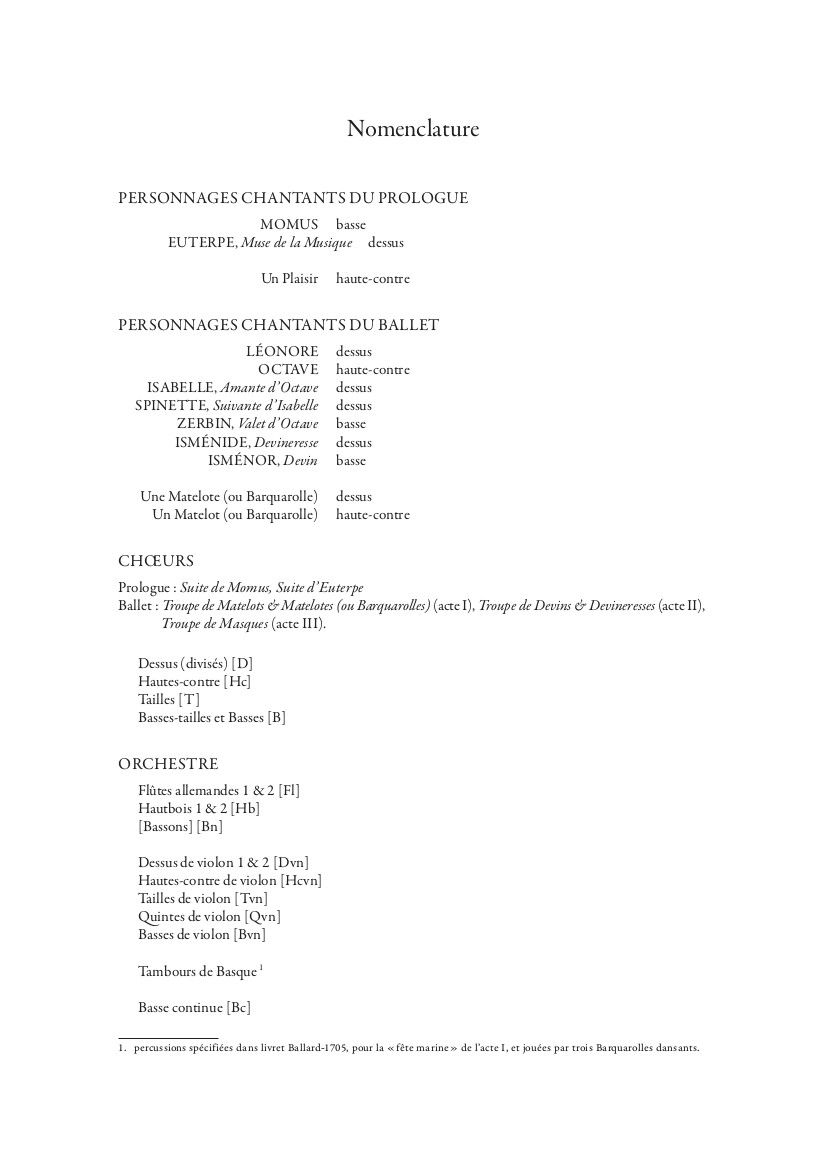
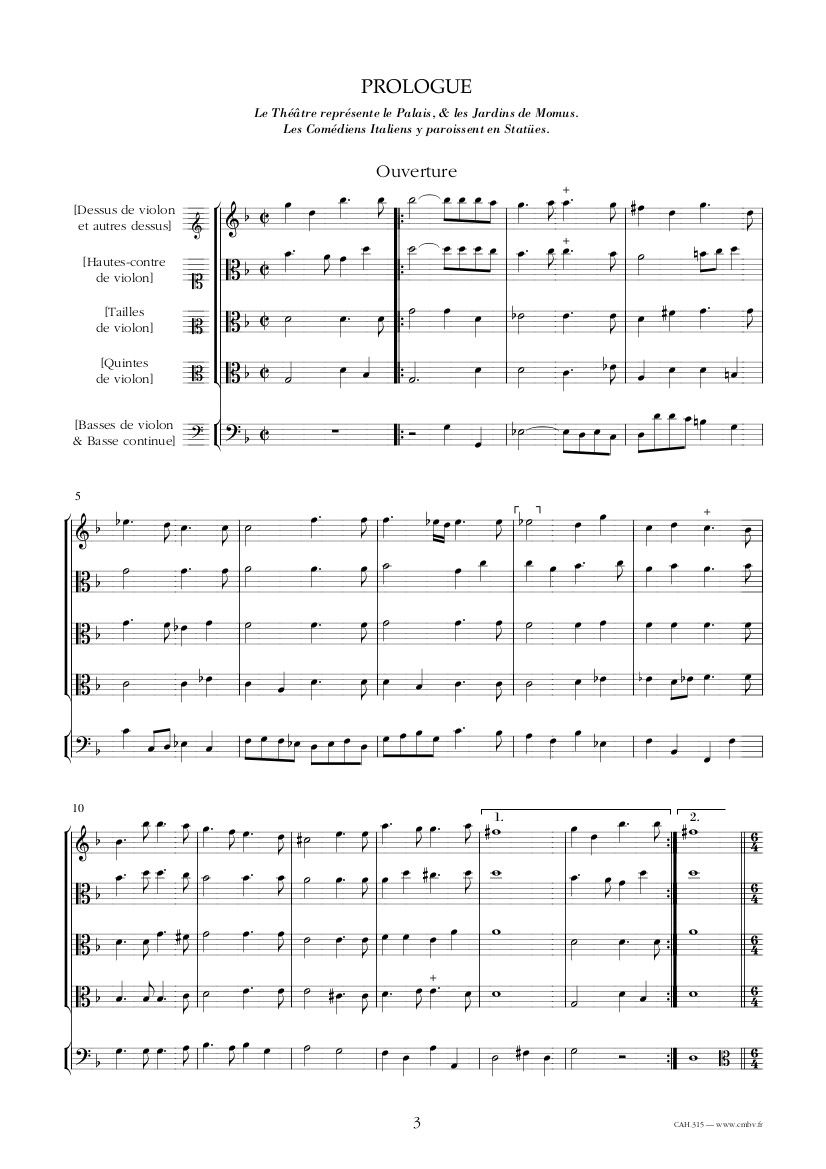
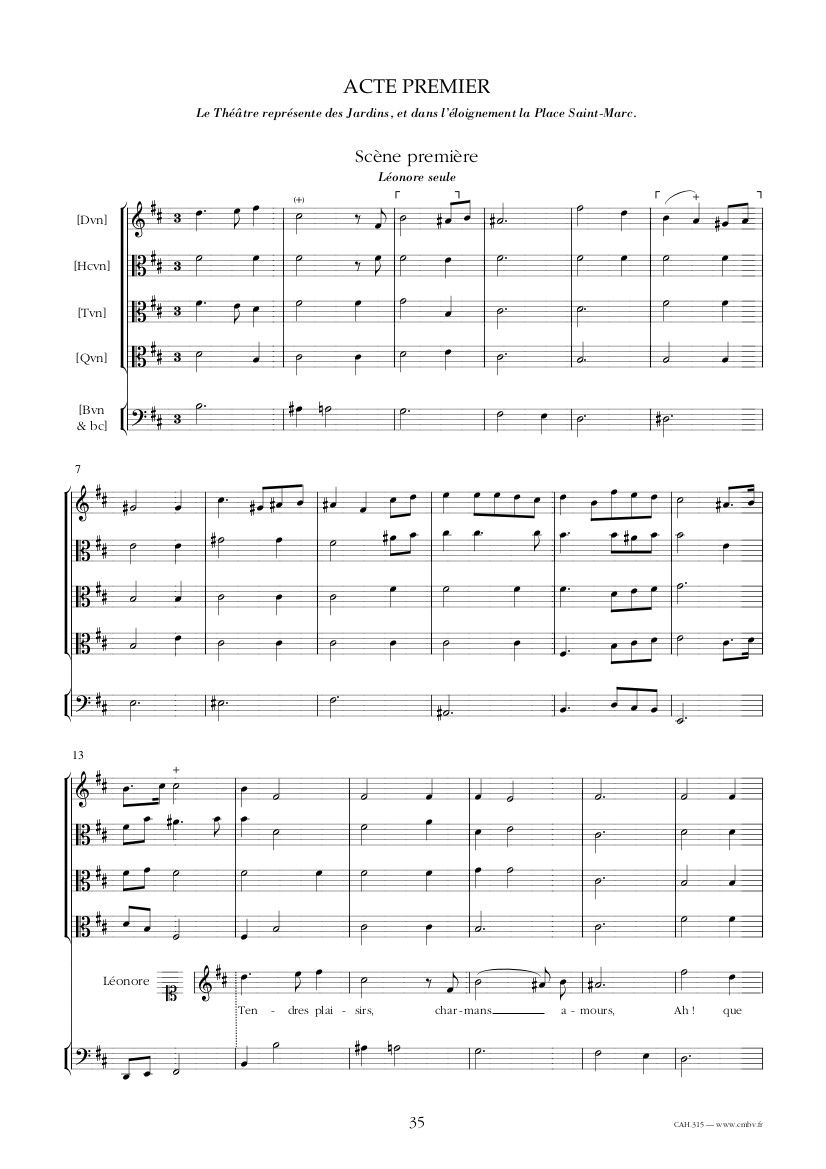
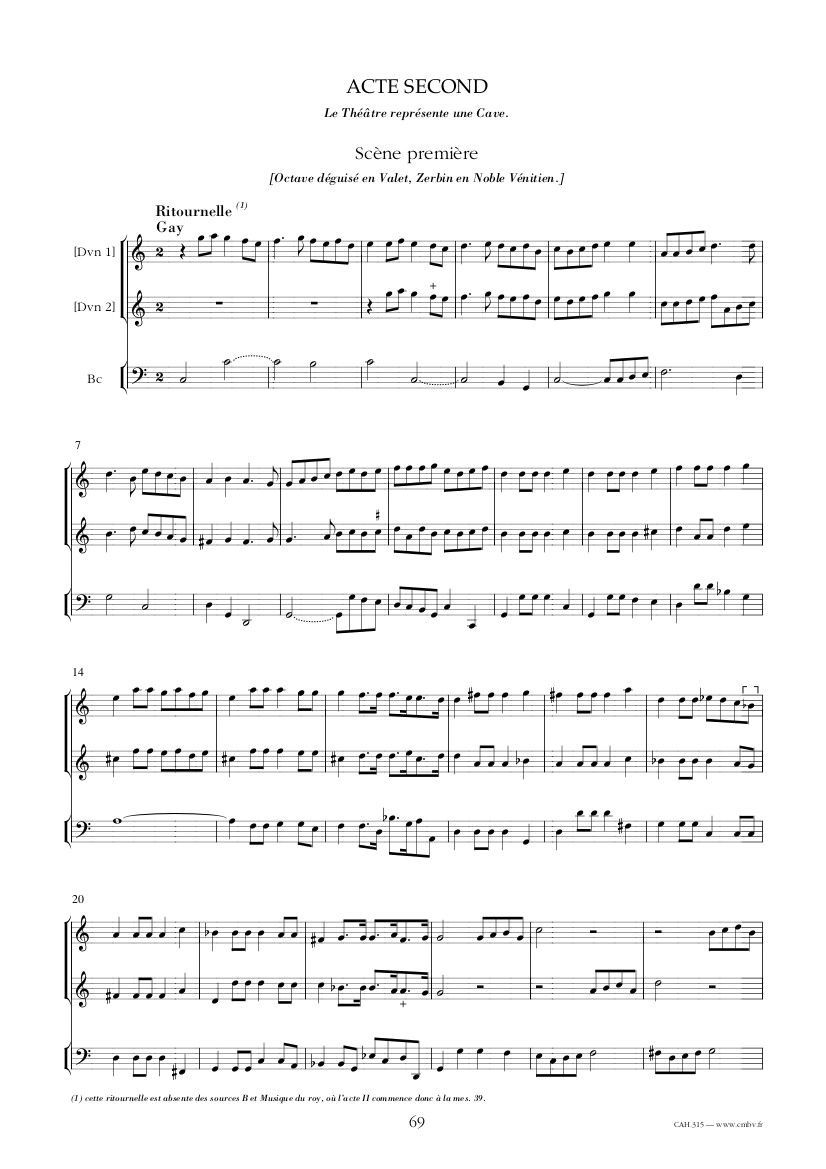
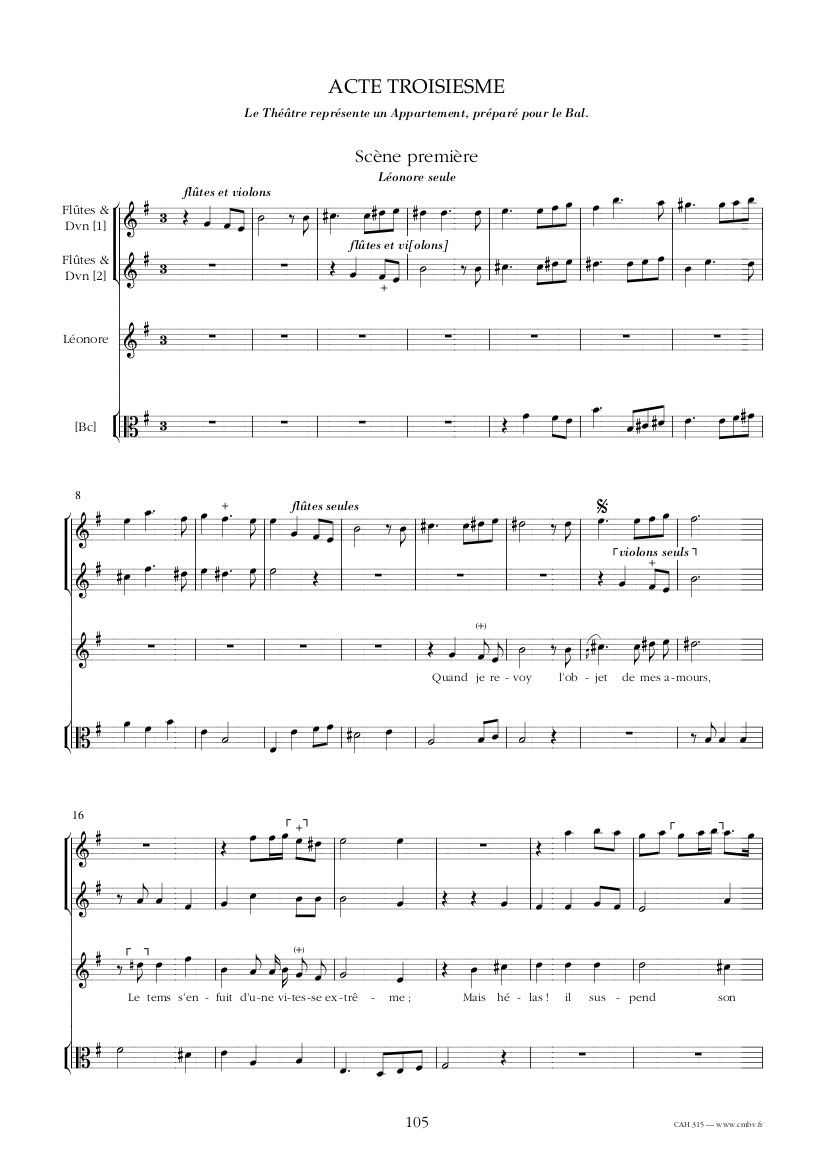


Second fruit of the collaboration between the playwright Antoine Houdar de La Motte and the flautist and composer Michel de La Barre, La Vénitienne was premiered on 26 May 1705 on the stage of the Académie royale de Musique. The second example of an operatic comedy (despite being called, depending on the source, a "ballet" or "comédie-ballet"), a new dramatic genre with a humorous subject and continuous action, this Vénitienne is also the first opera to banish any gods from its central plot; only the prologue calls on deities, and then only minor ones. Numerous elements, both in the inspiration of the libretto and in the construction of and models for the score, reveal the modernity of this work, which deliberately has more modest proportions than the classic and noble tragedies in music.
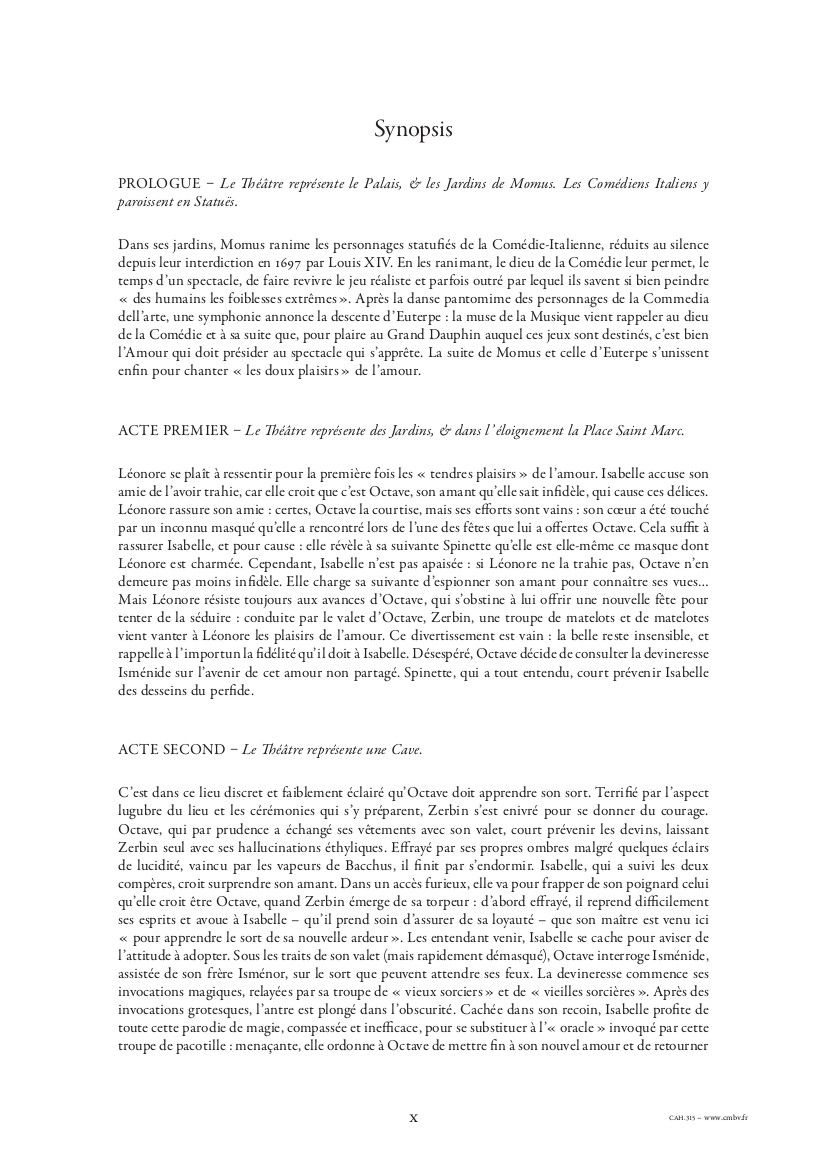
The characters of La Vénitienne and the situations depicted in it down to the smallest detail (there is an abundance of stage directions and acting instructions) come directly from the tradition of the Théâtre-Italien. We see the still relatively prudent emergence of rivalry between the nobles (Octavian, Isabelle) and their servants (Zerbin, Spinette); the latter, who are particularly important, are of course smarter than the former. We see spontaneous and audacious amorous misunderstandings. The diversions and cross-dressing are pretexts for situations that are by turns comic and pathetic, embellished by the most joyful fantasy. The context is particularly conducive to satire and parody. The Théâtre-Italien offered both traditional comedy (Commedia dell'arte) and a newer type of farce, which was further developed by Carlo Goldoni then transposed to the French stage by Marivaux and Beaumarchais. La Vénitienne thus appears both as a critique of the stereotypes of opera but also, to a certain extent, of French theatre, all of which results in a veritable "marivaudage" before its time.
All these comic references and parodic devices are underlined, often in a very subtle way, in Michel de La Barre’s score. Beyond satire, La Barre’s music, sober, well-judged, effective and always refined, captures the atmosphere of Venetian festivities with a hint of popular inspiration, in a manner dear to the most innovative composers of this period, such as André Campra or André Cardinal Destouches.
If you wish to perform this work, a print option is available: contact us.
Les œuvres
Recommandations


