

Poésie, musique et société (Expodcast#2)
The air de cour in seventeenth-century France
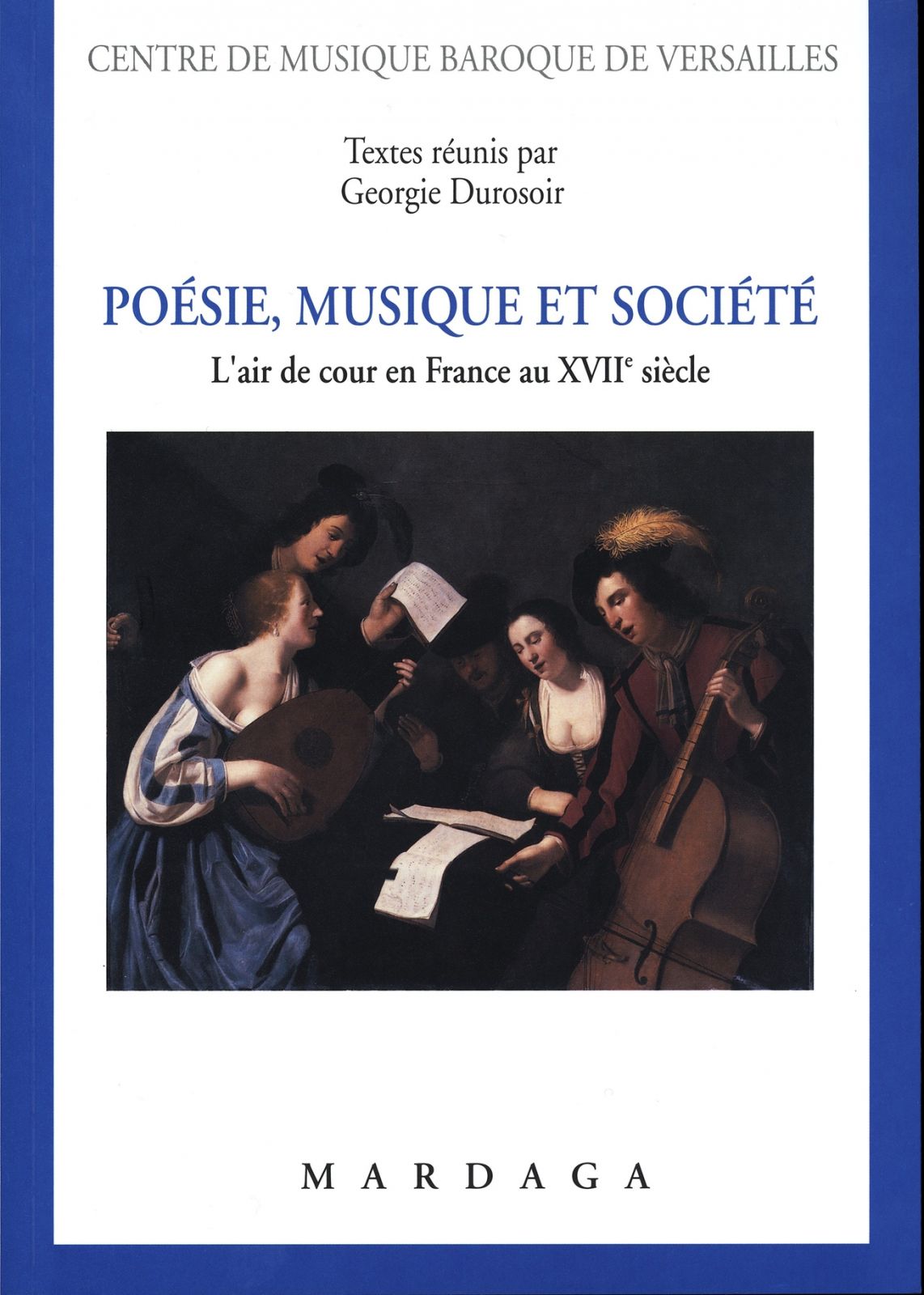
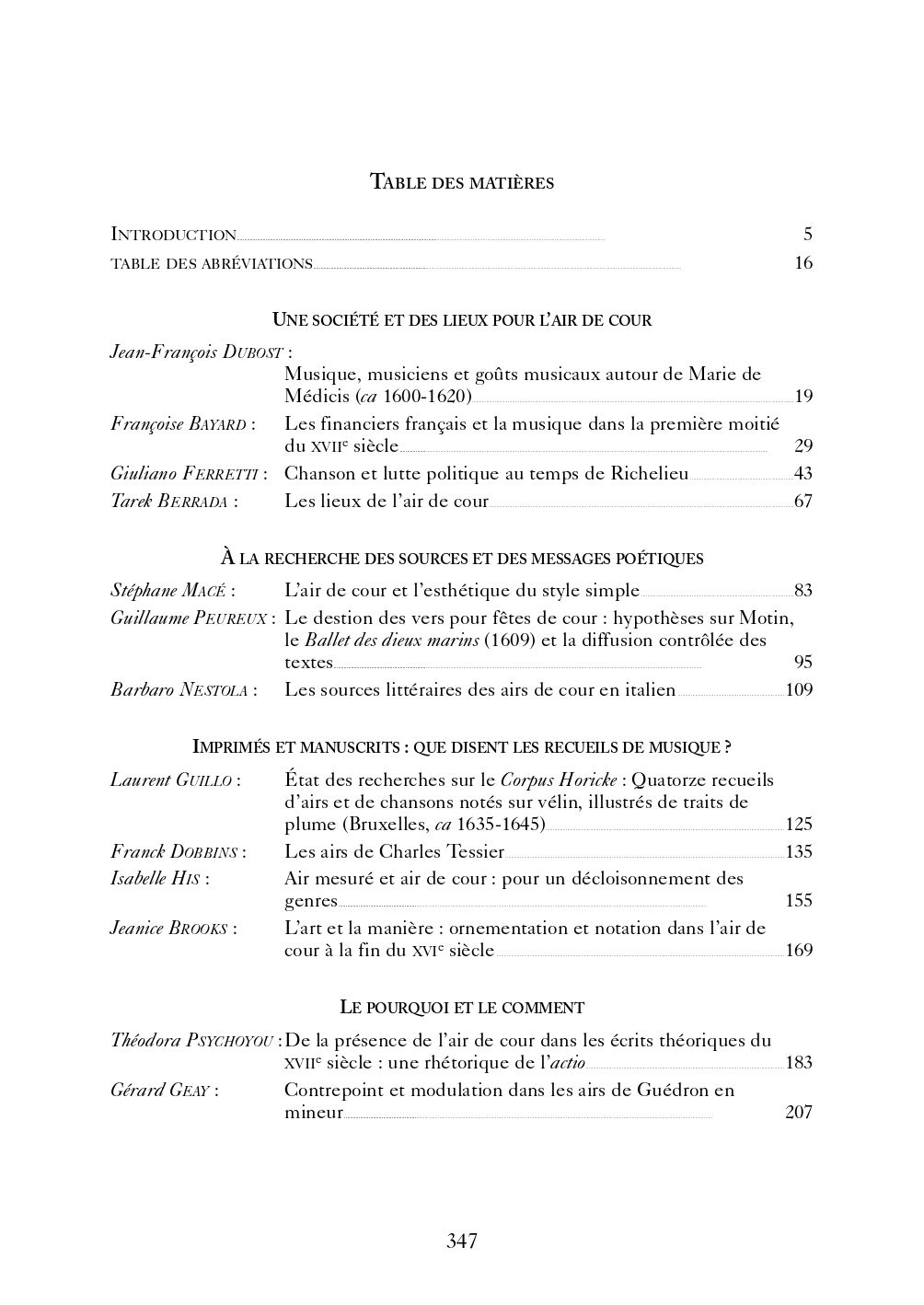
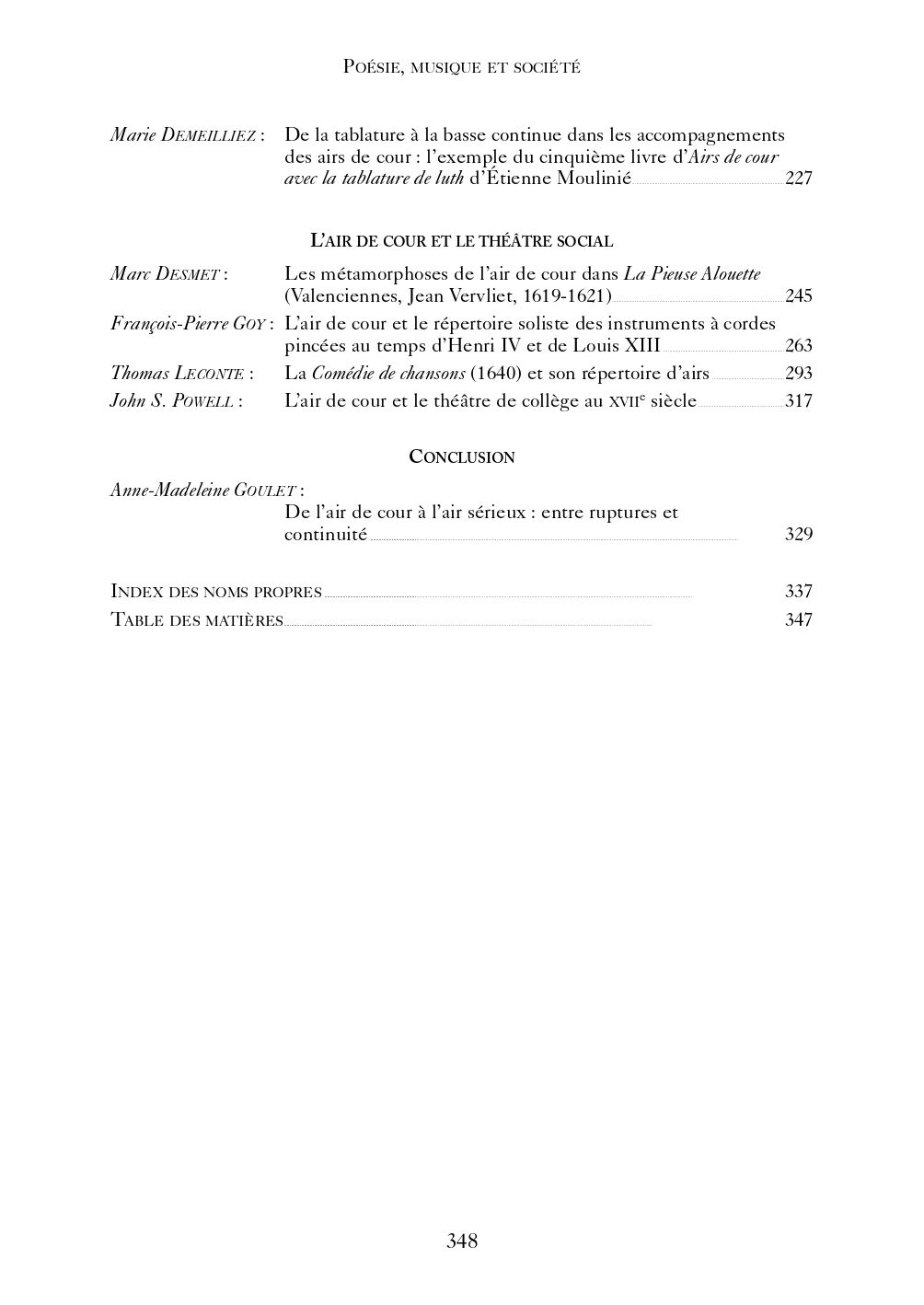


The air de cour is arousing increasing interest among performers. This typically French genre brought together aristocrats and intellectuals of the 16th and 17th centuries to sing solo or in parts, often accompanied by a lute. In any case, it is the most visible form of a courtly art form that in fact brings together the quintessence of artistic expression, as poetry, gesture and music work together to express the affects of the Baroque. Georgie Durosoir, one of the most eminent specialists in this repertoire, has brought together in this book a team of researchers in history, literature, set design and music to study, in turn, the air de cour in its social milieu and the places where it was performed, the musical sources and their origins, as well as the usage, theory and proliferation of derived genres. The symposium that gave rise to the book marked an important research stage: the completion of computer processing of the musical and poetic sources of the air de cour, enabling a broader vision of the corpus. Part of this database is available on the Centre de Musique Baroque de Versailles website, presented by Thomas Leconte (http://philidor.cmbv.fr).
Georgie Durosoir is Professor and Director of Research at the University of Paris IV-Sorbonne and Associate Researcher at the Centre de Musique Baroque de Versailles. Her work focuses on the 16th and 17th centuries in France and Italy (polyphonic song, madrigal, air de cour). She is particularly interested in French musique de cour and its poetic implications.
Recommandations


