

Lamentations
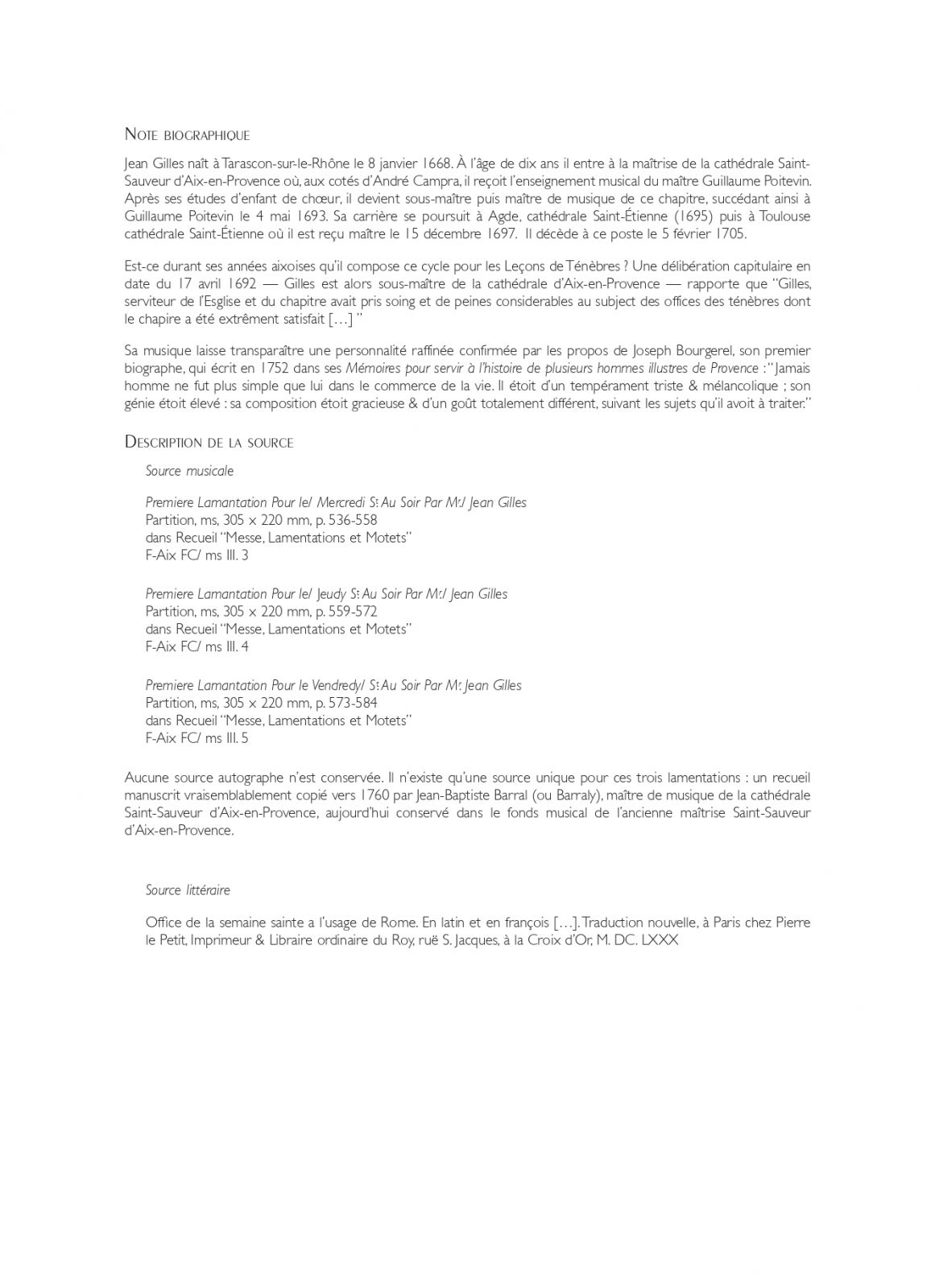
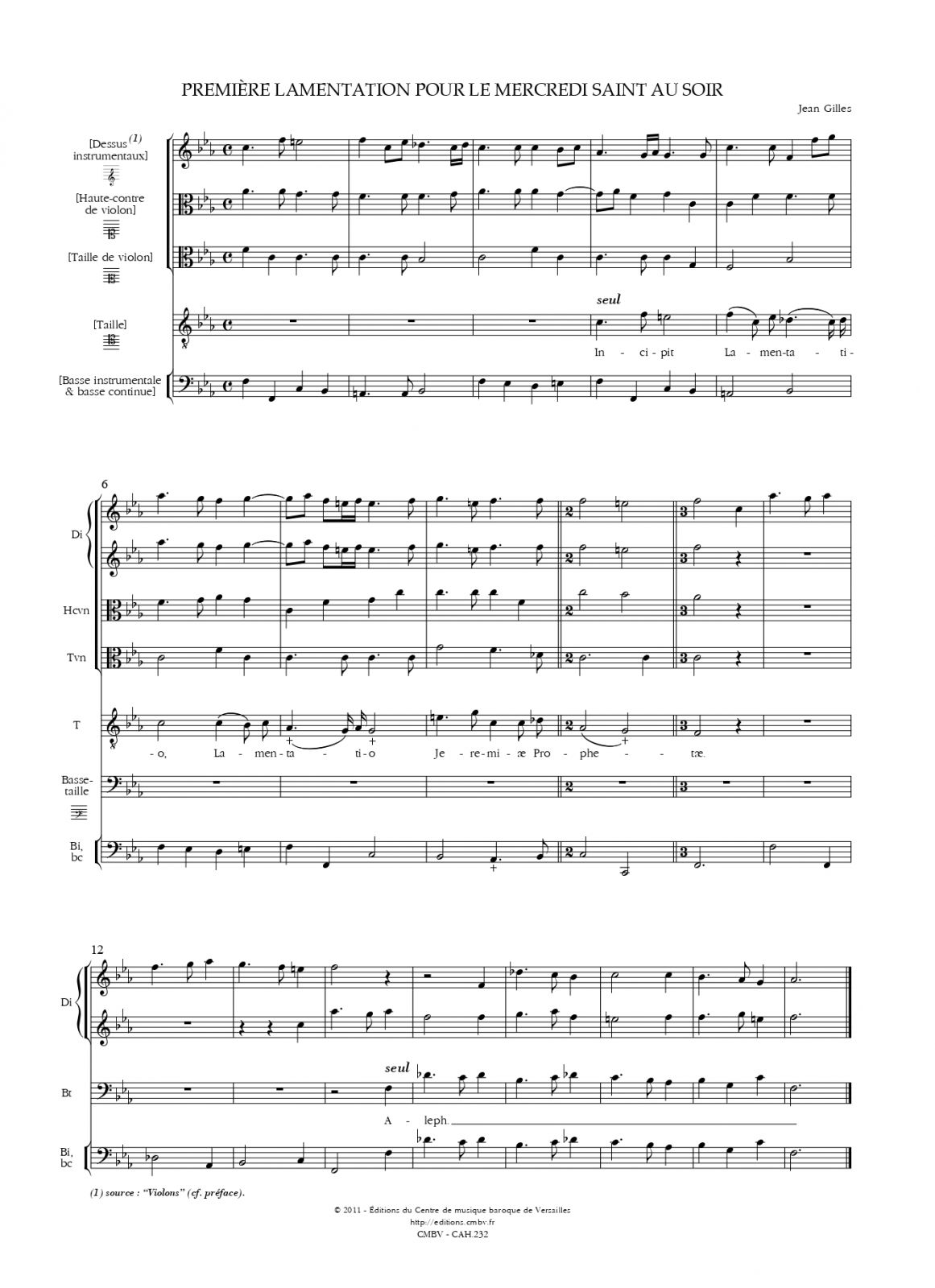


Jean Gilles had a peculiar destiny: this composer was never a member of the French Court, and spent all his time in the provinces of southern France, notably Aix-en-Provence and Toulouse, and yet, after his death, his Requiem became one of the most renowned works of religious music in France. The three Lamentations (or leçons de ténèbres) were probably composed around 1692, when Gilles was maître de chapelle at Saint-Sauveur Cathedral in Aix-en-Provence. Whereas most leçons de ténèbres in France are composed for small ensembles (solo voices and continuo), these take the original form of three large motets for soloists, choir and orchestra. These scores subtly blend dramatic passages with purely musical moments, notably in the initial Hebrew letters. The score, which lasts around 40 minutes, is scored for 4 soloists (dessus, haute-contre, taille, basse), 4-voice choir and string orchestra, at least, with the possibility of doubling winds.
Les œuvres
Recommandations


