

Dominus regnavit [S.65/i]
première version, 1704
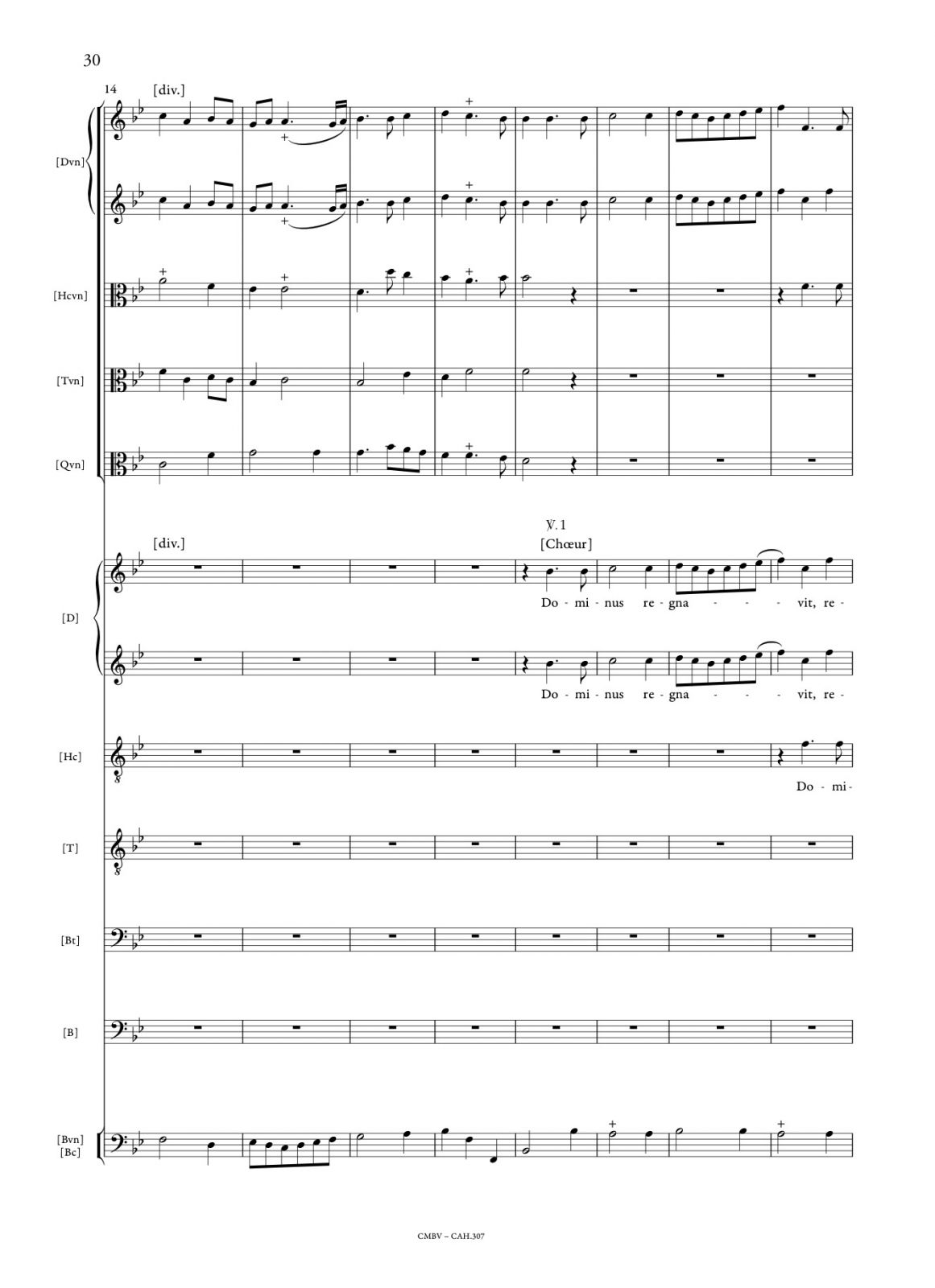
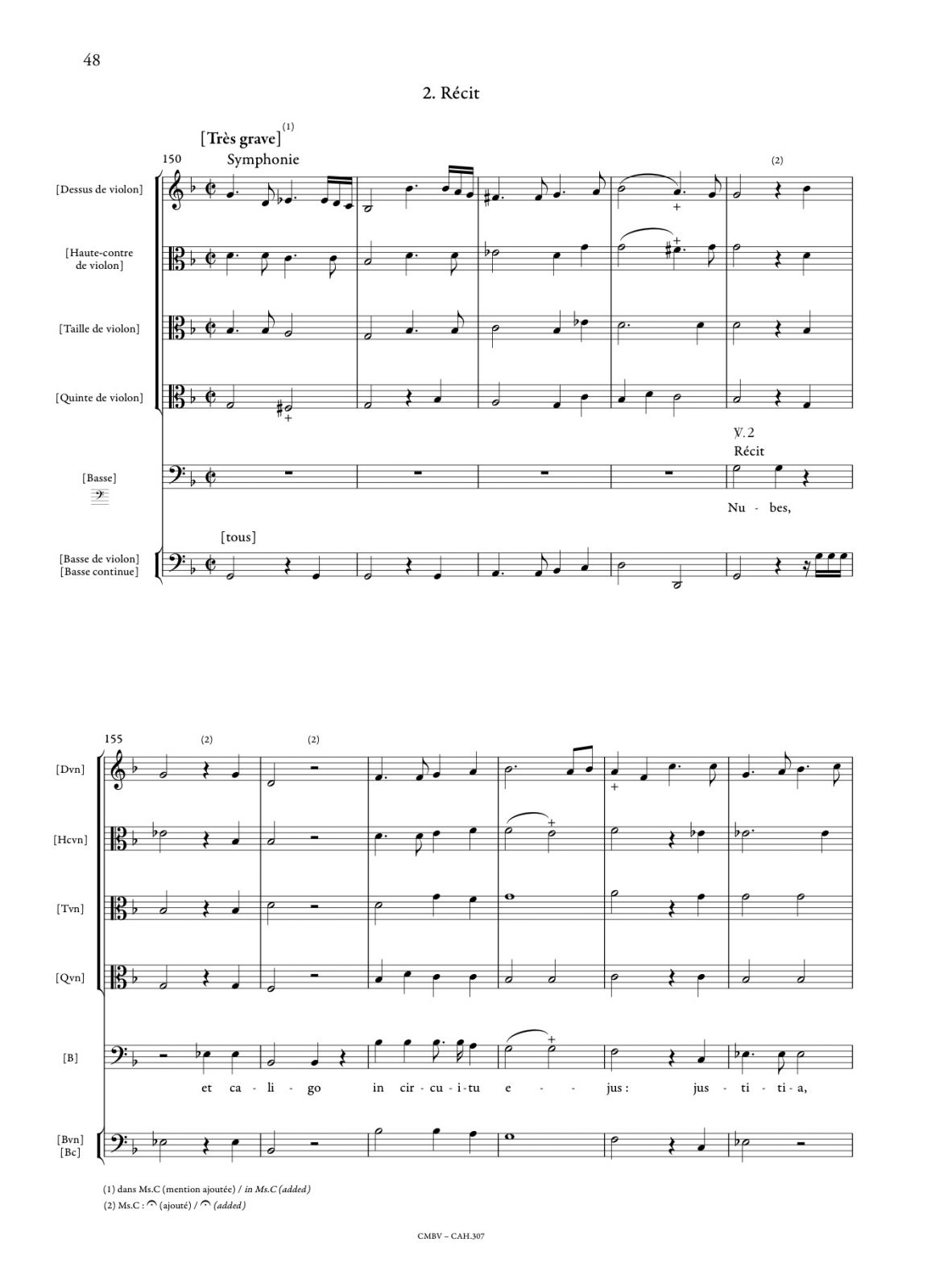
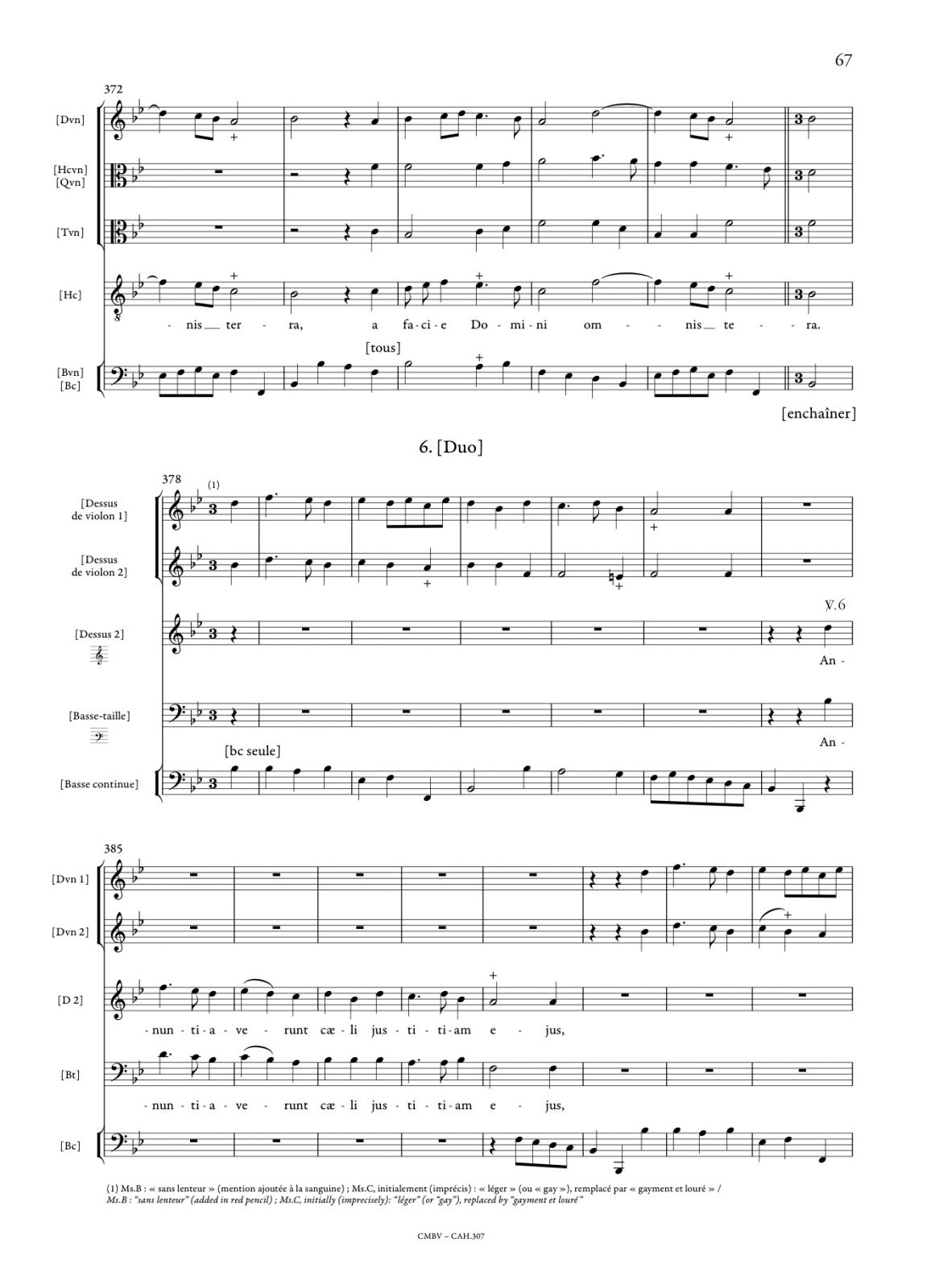
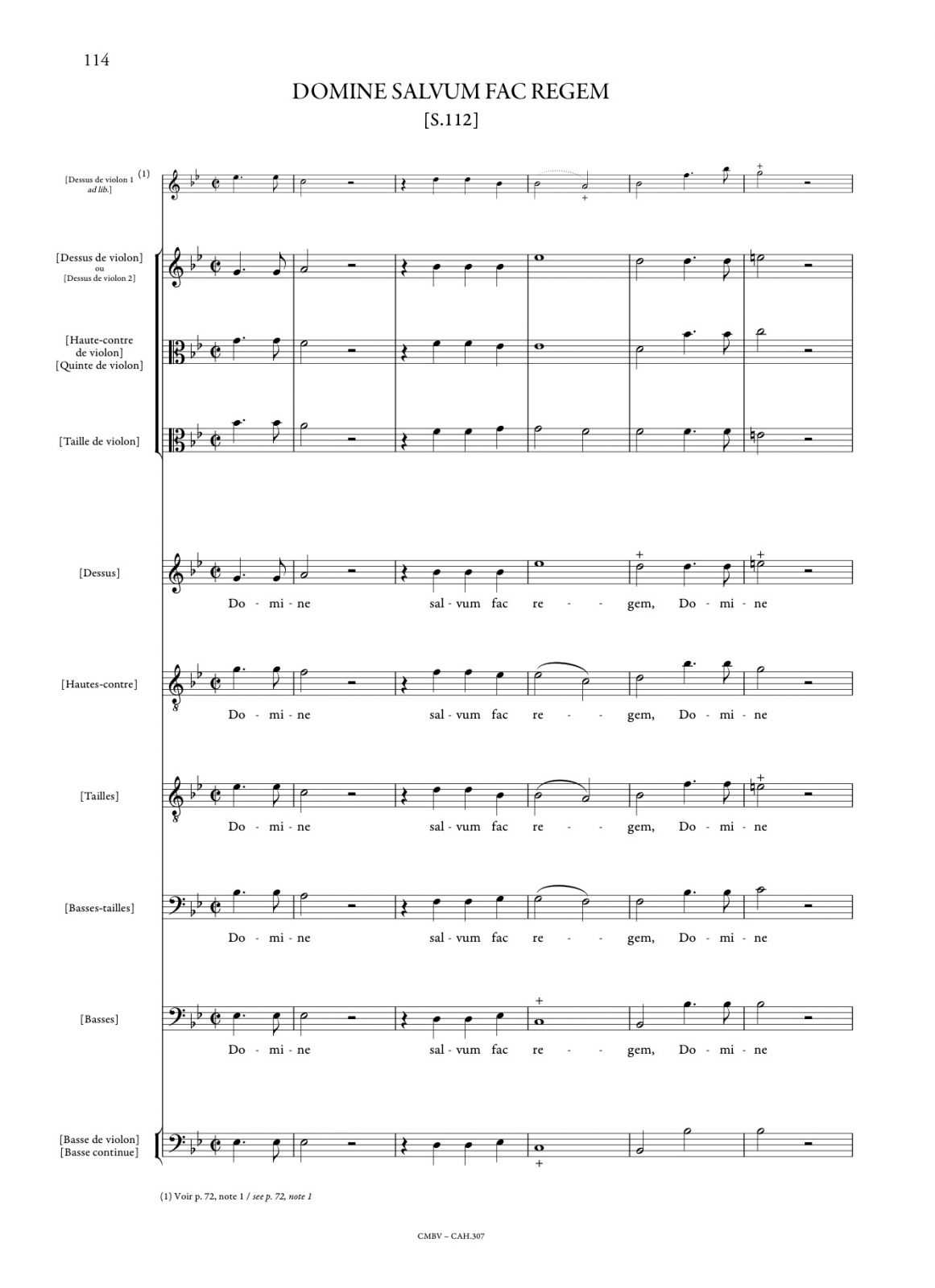


The Centre de musique baroque de Versailles publishes the first known version of the Dominus regnavit, one of the most famous "grands motets" by Michel-Richard de Lalande, a major composer at the end of the reign of Louis XIV. Composed in 1704, it is also one of the three motets by Lalande most often performed at the Concert Spirituel, with at least 47 performances between 1725 and 1770.----
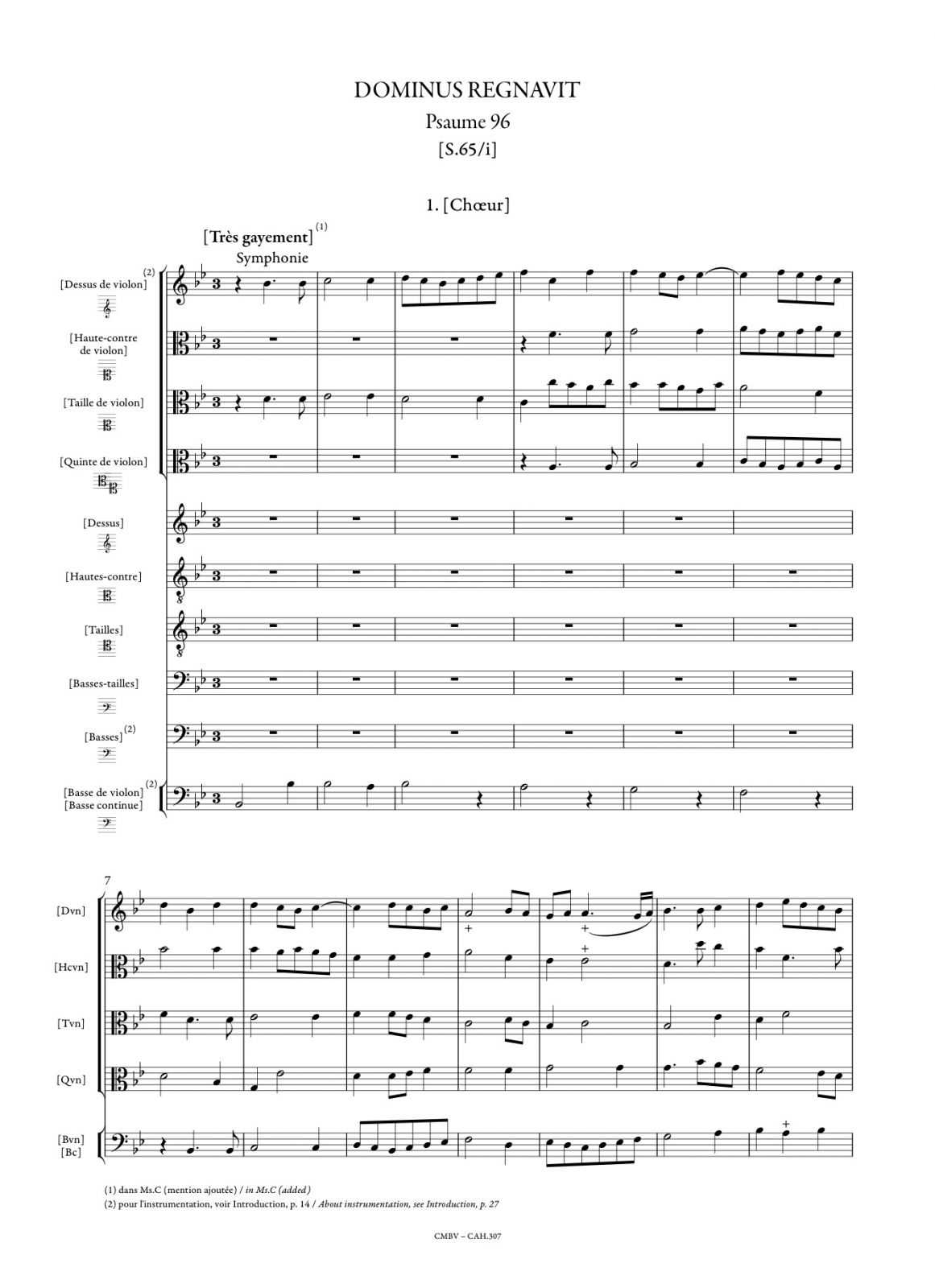
The copies of the Dominus regnavit bear witness to an important phase in the evolution of the composer’s language, in search of an orchestral texture that mixes the hitherto relatively homogeneous 5-part writing with new combinations, allowing for more varied colours, of 4 to 6 parts. This great motet requires 5 violin parts (dessus – often divided, haute-contre, taille, quinte and basse) coloured by flûtes allemandes (traversos) and oboes, 6 (or 4) solo voices (1 or 2 dessus, haute-contre, taille, basse-taille and/or basse), a chorus in 5 parts (dessus – often divided, hautes-contres, tailles, basses-tailles, basses) and the basso continuo.
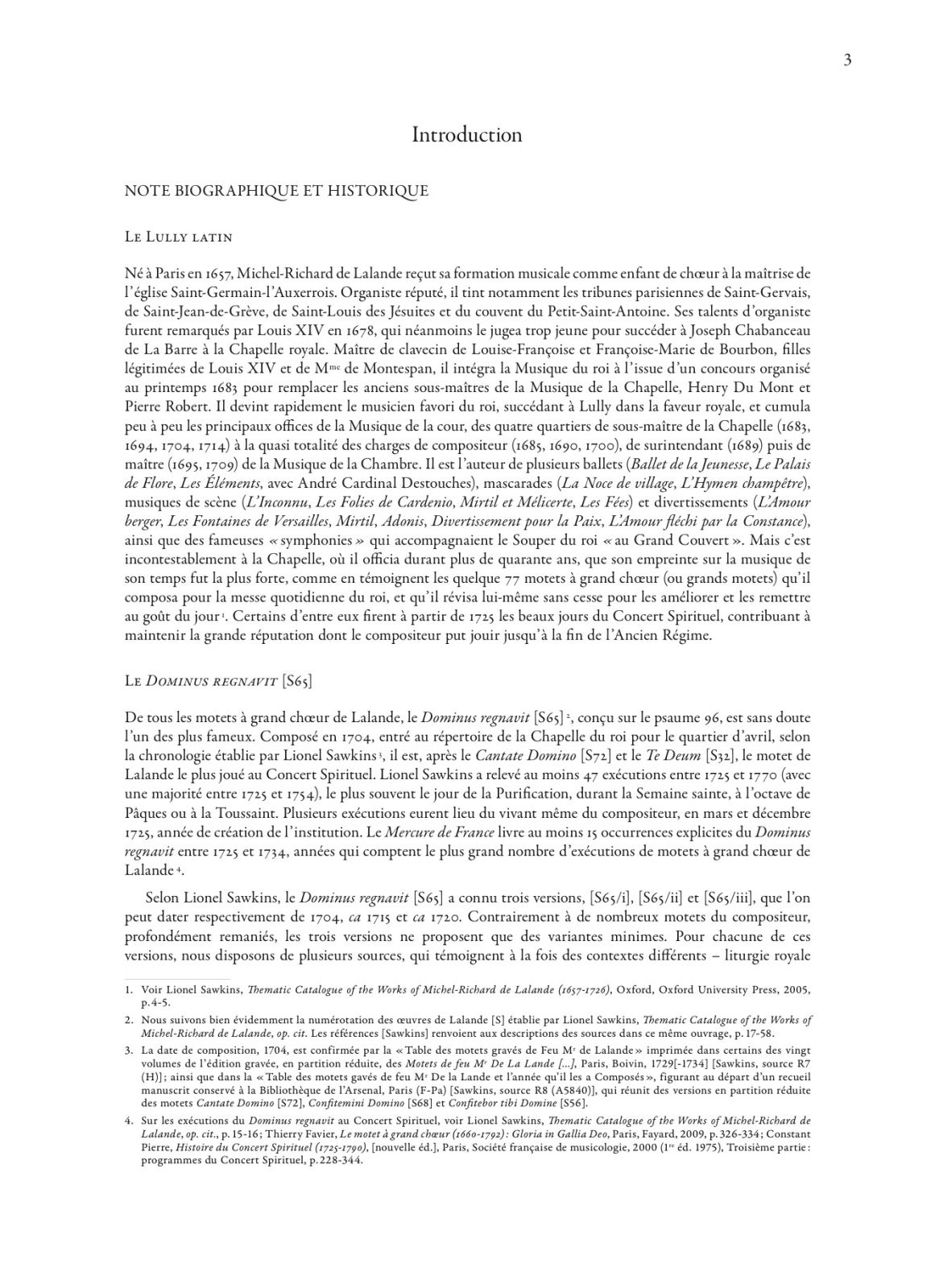
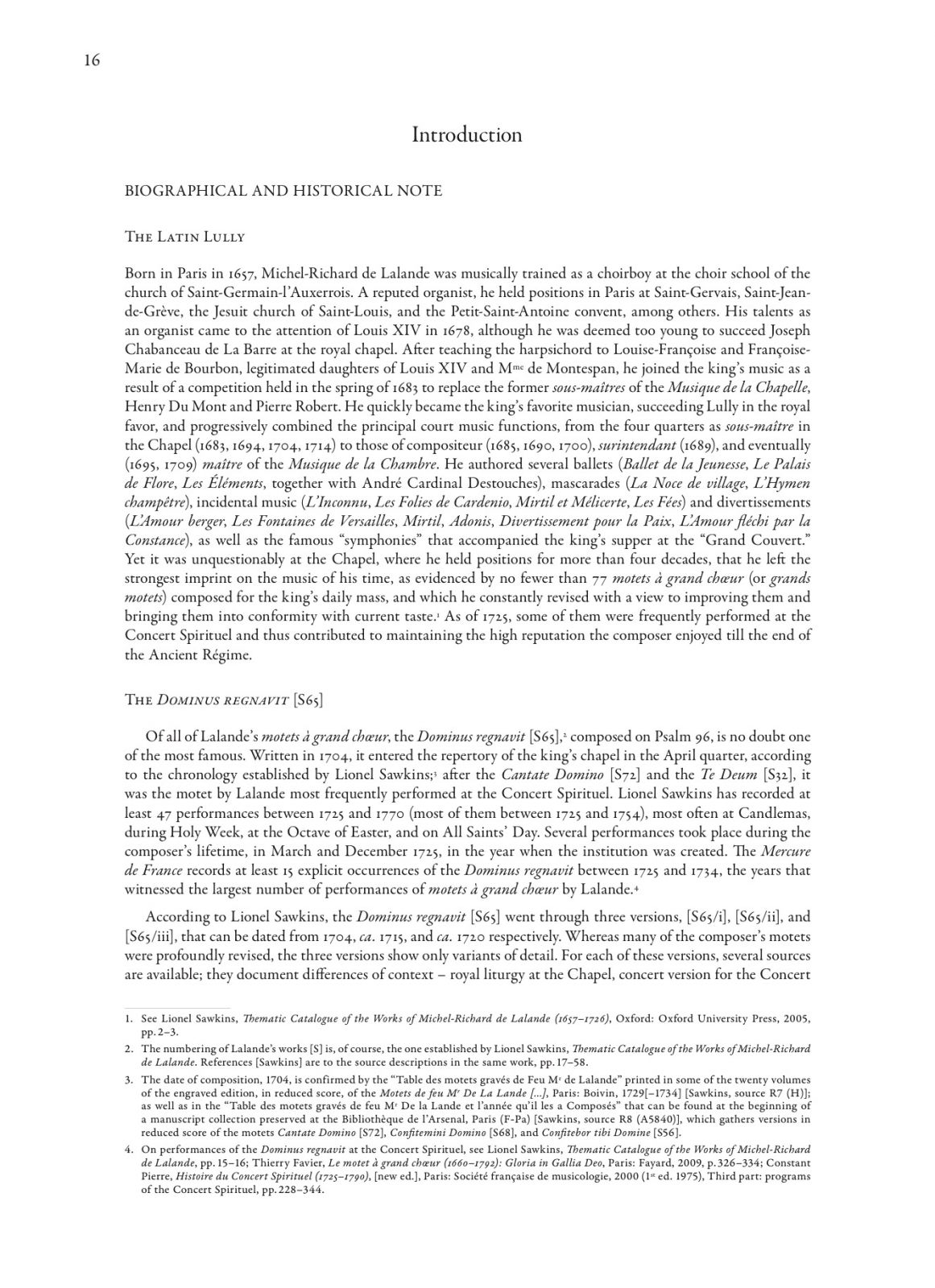
Born in Paris in 1657, Michel-Richard de Lalande (1657–1726) received his musical training in the choir of Saint Germain l'Auxerrois. A renowned organist, he held several Parisian organist posts. Harpsichord master to the legitimated daughters of Louis XIV, he joined the Musique du roi in 1683. He then gradually combined the offices of the Musique de la cour, four quarters as sous-maître of the Chapel, and the three mains posts (superintendent, master and composer) of the Musique de la Chambre. He was the composer of ballets, masquerades, incidental music and court entertainments, as well as the famous Symphonies for the King’s Suppers. It was in the Chapelle that his legacy was strongest. Of the 77 great motets he composed, some were part of the core repertoire of the Concert Spirituel until the end of the Ancien Régime.
Les œuvres
Recommandations


