

Partition
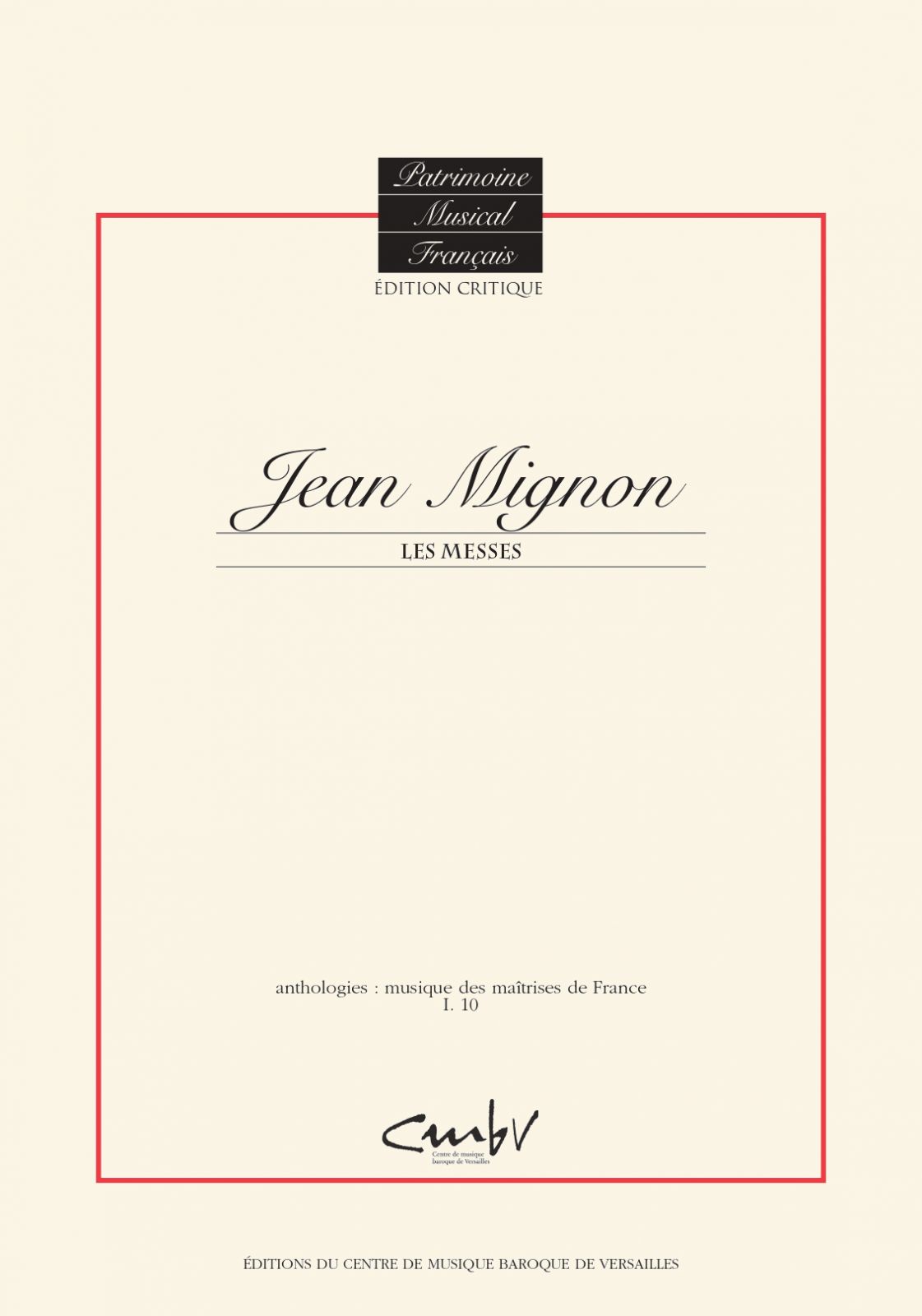
Les Messes
Jean MIGNON
(ca 1640-1708)


Référence : CMBV_060
Format :
19,2x27,4 cm
Reliure : Broché
92,00 € TTC
En stock
Jean MIGNON
(ca 1640-1708)
Editeur(s) :
Inge FORST
Collection :
Anthologies
Musique des maîtrises de France
Type d’édition :
Édition critique
Maison d'édition :
Editions du Centre de musique baroque de Versailles
Présentation :
The edition of the 6 preserved masses by Jean Mignon, maître de musique at Notre-Dame Cathedral in Paris from 1664 to 1694, has just been published by Éditions du Centre de musique baroque de Versailles. This critical edition is the 10th volume in the Anthologies (I) : musique des maîtrises de France collection, which the CMBV devotes to the repertoire sung in the great cathedrals of the kingdom in the 17th and 18th centuries. Inge Forst, the volume’s scholarly editor, has already published in the same collection the complete works of Henri Frémart, one of Mignon’s important predecessors at the Notre Dame choir school.
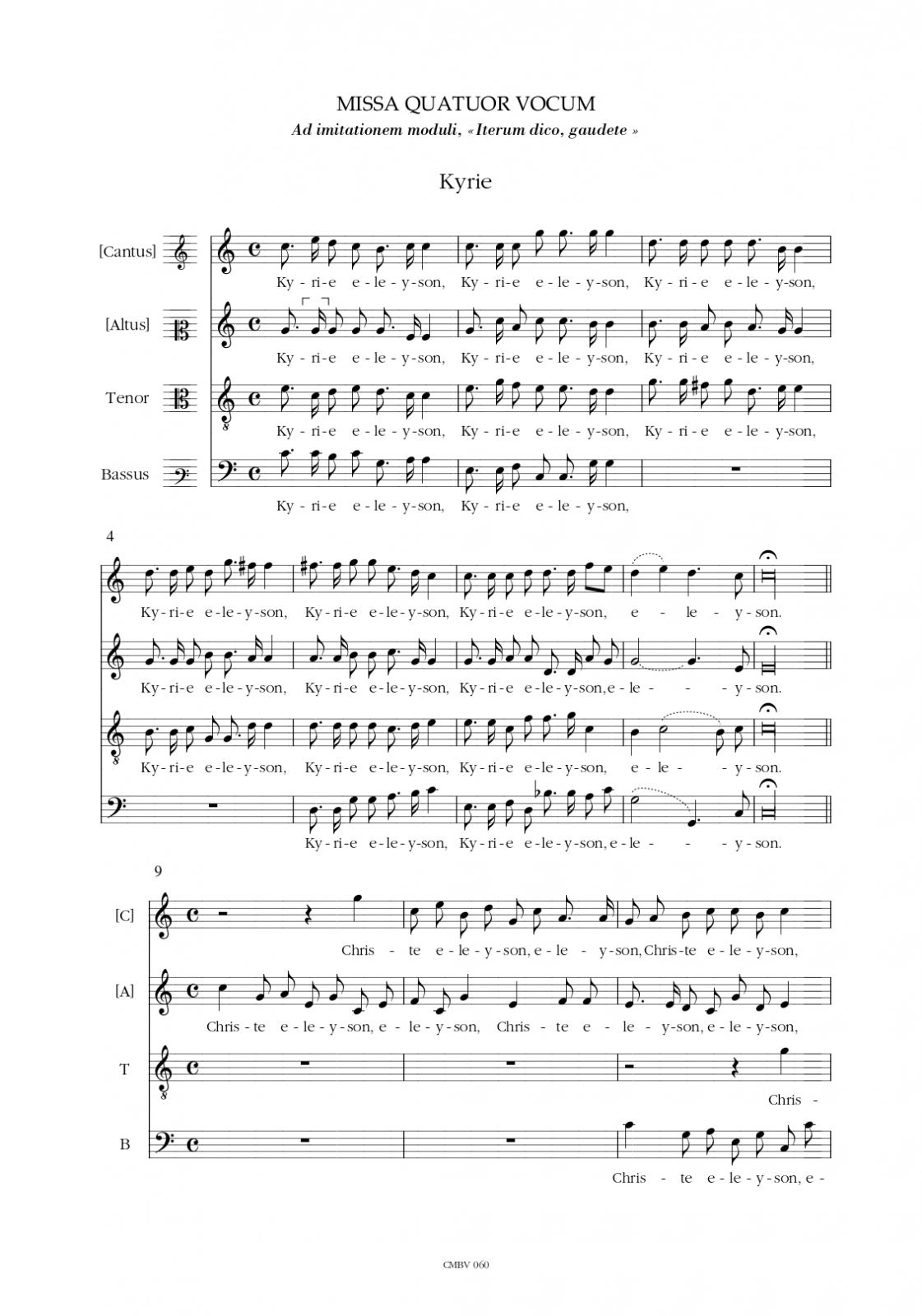
Born around 1640, died in 1708, Jean Mignon belongs to the same generation as Marc-Antoine Charpentier; successor to Pierre Robert and predecessor to André Campra at Notre Dame, this Parisian composer directed the cathedral’s music for 30 years and forged himself a fine reputation. After a collection of 4-part Airs (1664), Jean Mignon had at least 7 a cappella masses printed by Ballard, 6 of which have survived: four with 4 parts (Cantus, Altus, Tenor and Bassus), one with 5 parts (Cantus, Quinta pars, Altus, Tenor and Bassus) and one with 6 parts (Cantus, Sexta pars, Altus, Tenor, Quinta pars and Bassus). Two of these were copied by Sébastien de Brossard, who added a basso continuo, which the scholarly editor offers ad libitum, thus giving performers the key to adding a basso continuo to the other masses. Published in "livre de chœur" form, these masses are part of a publishing tradition that began in the 16th century and continued until the mid-18th century. A place of expression for the great contrapuntal tradition inherited from the Renaissance, and a witness to the liturgical practices of the Church of France, the collection of masses published by Ballard also bears witness to the evolution of musical language in the Baroque period: the 6 masses by Jean Mignon, published between 1676 and 1707, some of which were reissued in 1728 and 1729, are magnificent examples.
The volume opens with an introduction in which the scholarly editor draws up the first detailed biography of the composer, in the light of numerous archive documents, mostly unpublished, patiently transcribed and analysed. The musical sources are rigorously presented, and Professor Günther Massenkeil’s comparison between Sébastien de Brossard’s manuscript copies and Ballard’s printed scores sheds important light on the evolution of musical language in this period, as well as on the interpretation of the a cappella mass at the end of the 17th century. The trilingual introduction (French, English, German) is illustrated by numerous facsimile examples. Presented in chronological order, Jean Mignon’s 6 masses are published in score, with critical notes and appendices. Each mass is also available separately for performance (with, for the two masses copied by Brossard, a separate basso continuo part ad libitum).
Inge Forst holds a degree in musicology from the University of Bonn. Her research into French sacred music of the 17th and 18th centuries led her to write articles for the latest edition of the encyclopedia Die Musik in Geschichte und Gegenwart. Editor of the "Kirchenmusikalischen Jahrbuchs", she is also one of the founding members of the Ferdinand Ries Society (Bonn), dedicated to the works of Beethoven’s famous pupil. She has also published several volumes of works by Beethoven’s teacher, Christian Gottlob Neefe (Verlag Dohr), as part of the Denkmäler rheinischer Musikgeschichte heritage collection.
Born around 1640, died in 1708, Jean Mignon belongs to the same generation as Marc-Antoine Charpentier; successor to Pierre Robert and predecessor to André Campra at Notre Dame, this Parisian composer directed the cathedral’s music for 30 years and forged himself a fine reputation. After a collection of 4-part Airs (1664), Jean Mignon had at least 7 a cappella masses printed by Ballard, 6 of which have survived: four with 4 parts (Cantus, Altus, Tenor and Bassus), one with 5 parts (Cantus, Quinta pars, Altus, Tenor and Bassus) and one with 6 parts (Cantus, Sexta pars, Altus, Tenor, Quinta pars and Bassus). Two of these were copied by Sébastien de Brossard, who added a basso continuo, which the scholarly editor offers ad libitum, thus giving performers the key to adding a basso continuo to the other masses. Published in "livre de chœur" form, these masses are part of a publishing tradition that began in the 16th century and continued until the mid-18th century. A place of expression for the great contrapuntal tradition inherited from the Renaissance, and a witness to the liturgical practices of the Church of France, the collection of masses published by Ballard also bears witness to the evolution of musical language in the Baroque period: the 6 masses by Jean Mignon, published between 1676 and 1707, some of which were reissued in 1728 and 1729, are magnificent examples.
The volume opens with an introduction in which the scholarly editor draws up the first detailed biography of the composer, in the light of numerous archive documents, mostly unpublished, patiently transcribed and analysed. The musical sources are rigorously presented, and Professor Günther Massenkeil’s comparison between Sébastien de Brossard’s manuscript copies and Ballard’s printed scores sheds important light on the evolution of musical language in this period, as well as on the interpretation of the a cappella mass at the end of the 17th century. The trilingual introduction (French, English, German) is illustrated by numerous facsimile examples. Presented in chronological order, Jean Mignon’s 6 masses are published in score, with critical notes and appendices. Each mass is also available separately for performance (with, for the two masses copied by Brossard, a separate basso continuo part ad libitum).
Inge Forst holds a degree in musicology from the University of Bonn. Her research into French sacred music of the 17th and 18th centuries led her to write articles for the latest edition of the encyclopedia Die Musik in Geschichte und Gegenwart. Editor of the "Kirchenmusikalischen Jahrbuchs", she is also one of the founding members of the Ferdinand Ries Society (Bonn), dedicated to the works of Beethoven’s famous pupil. She has also published several volumes of works by Beethoven’s teacher, Christian Gottlob Neefe (Verlag Dohr), as part of the Denkmäler rheinischer Musikgeschichte heritage collection.
Pagination :
XCIX-239
Date de parution :
2010-11
Illustrations, fac similés (nbre) :
11
Introduction (langue) :
Français/Anglais/Allemand
ISMN 979-0-707034-60-6
Collaborateur(s) de l'édition :
Pr. Günther MASSENKEIL
Annexes :
Hymne Procul maligni cedite Spiritus
Motet Audite populi
Motet Audite populi
Les œuvres
Langue du texte :
Latin
Genre :
messe
Temps liturgique :
Messe
Ton :
Do Majeur
Durée :
entre 10' et 19'
Langue du texte :
Latin
Genre :
messe
Temps liturgique :
Messe
Ton :
sol mineur
Durée :
entre 10' et 19'
Langue du texte :
Latin
Genre :
messe
Temps liturgique :
Messe
Ton :
Do Majeur
Durée :
entre 10' et 19'
Langue du texte :
Latin
Genre :
messe
Temps liturgique :
Messe
Ton :
ré mineur
Durée :
entre 10' et 19'
Langue du texte :
Latin
Genre :
messe
Temps liturgique :
Messe
Ton :
Fa Majeur
Durée :
entre 10' et 19'
Langue du texte :
Latin
Genre :
messe
Temps liturgique :
Messe
Ton :
sol mineur
Durée :
entre 10' et 19'
Recommandations


10€
Disponible en version numérique


28€
Disponible en version numérique


