

Musique instrumentale
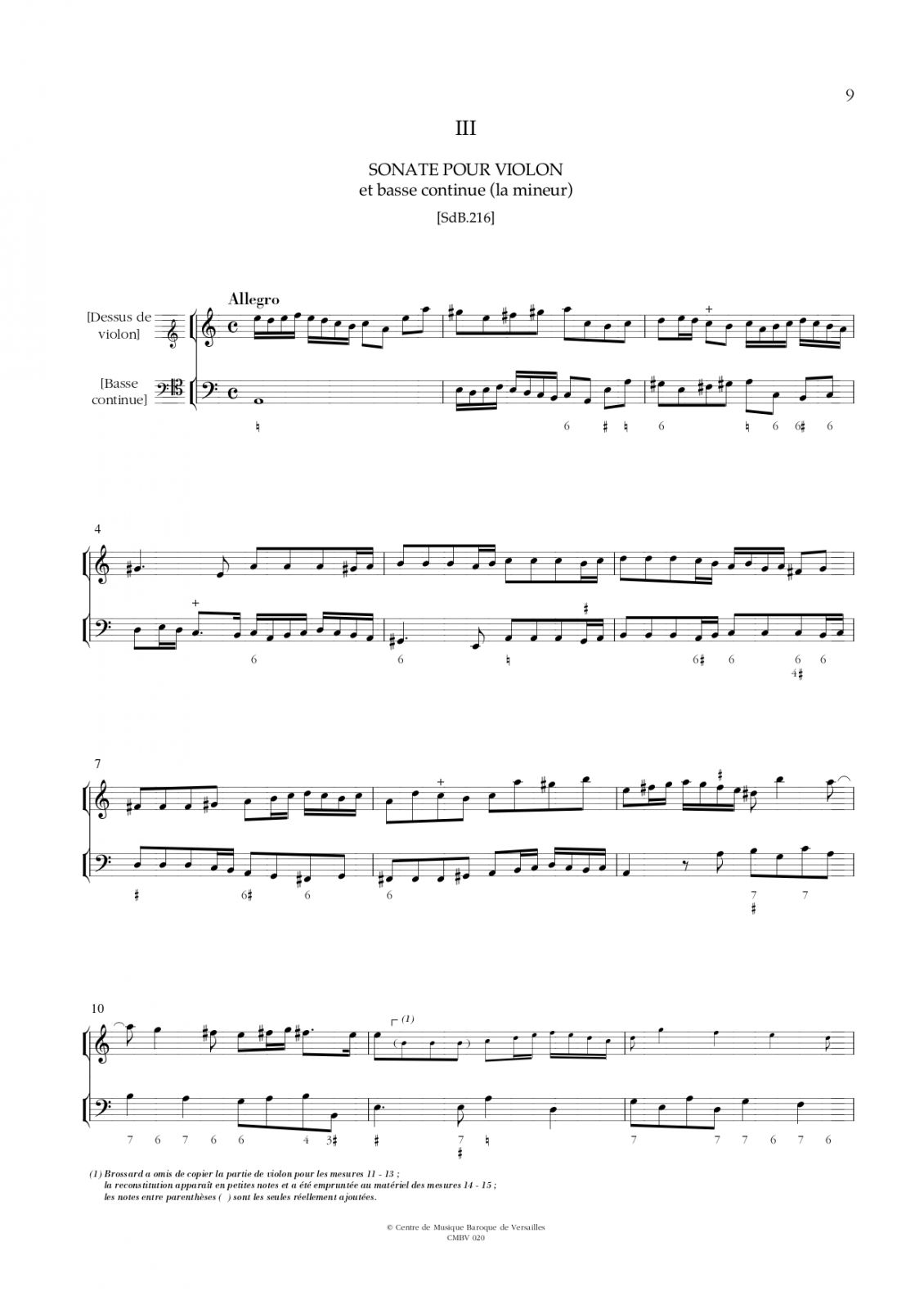
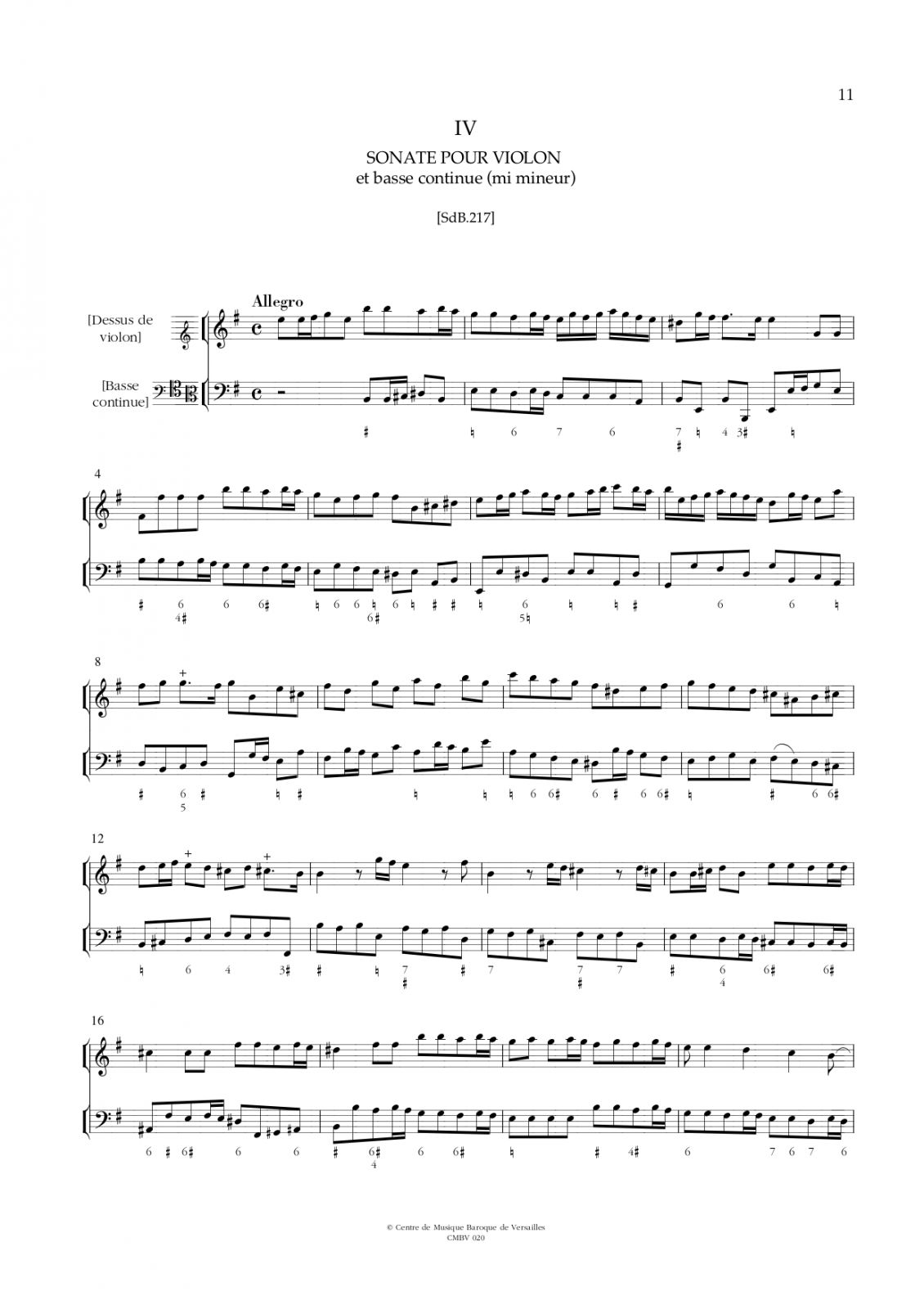
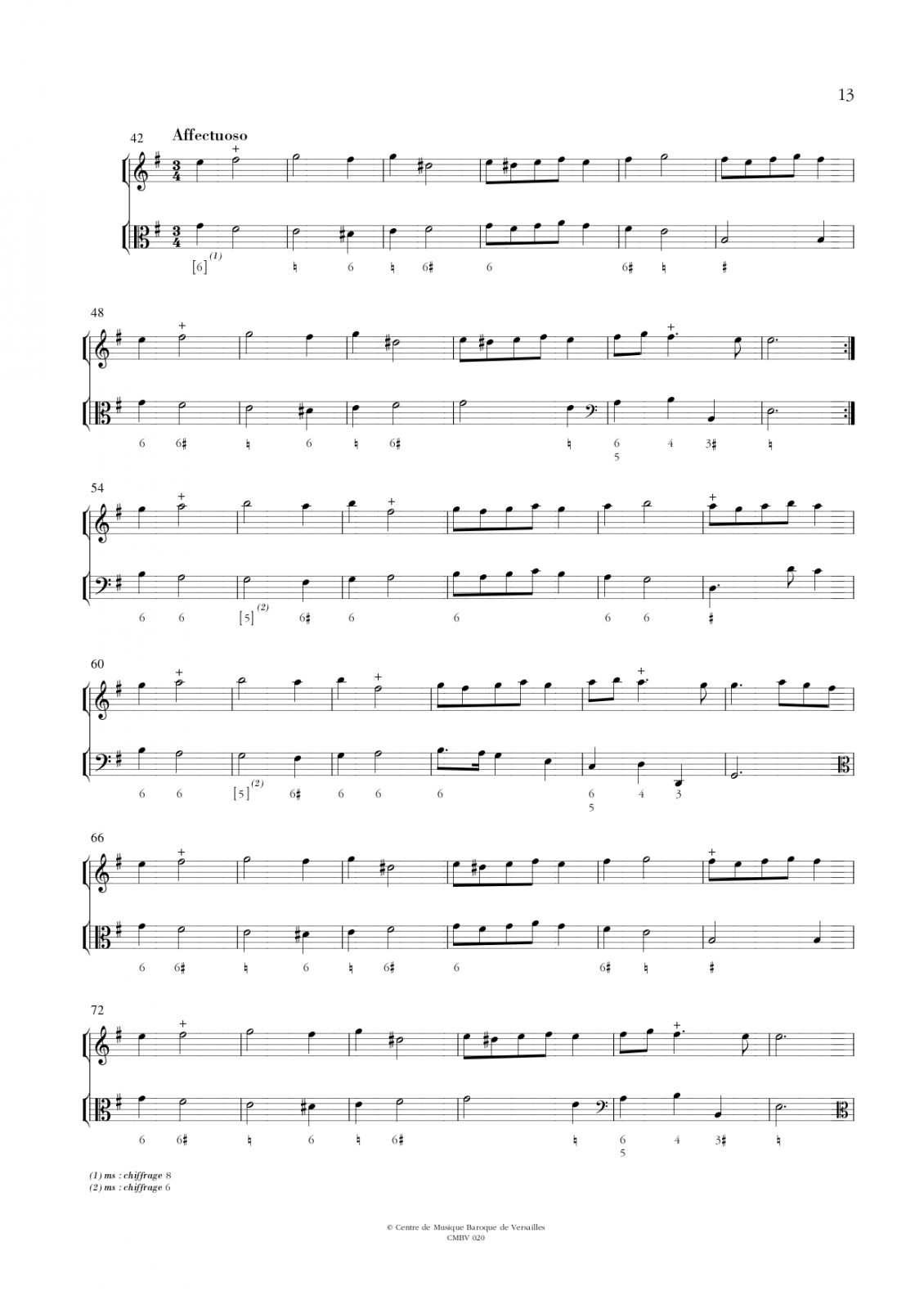
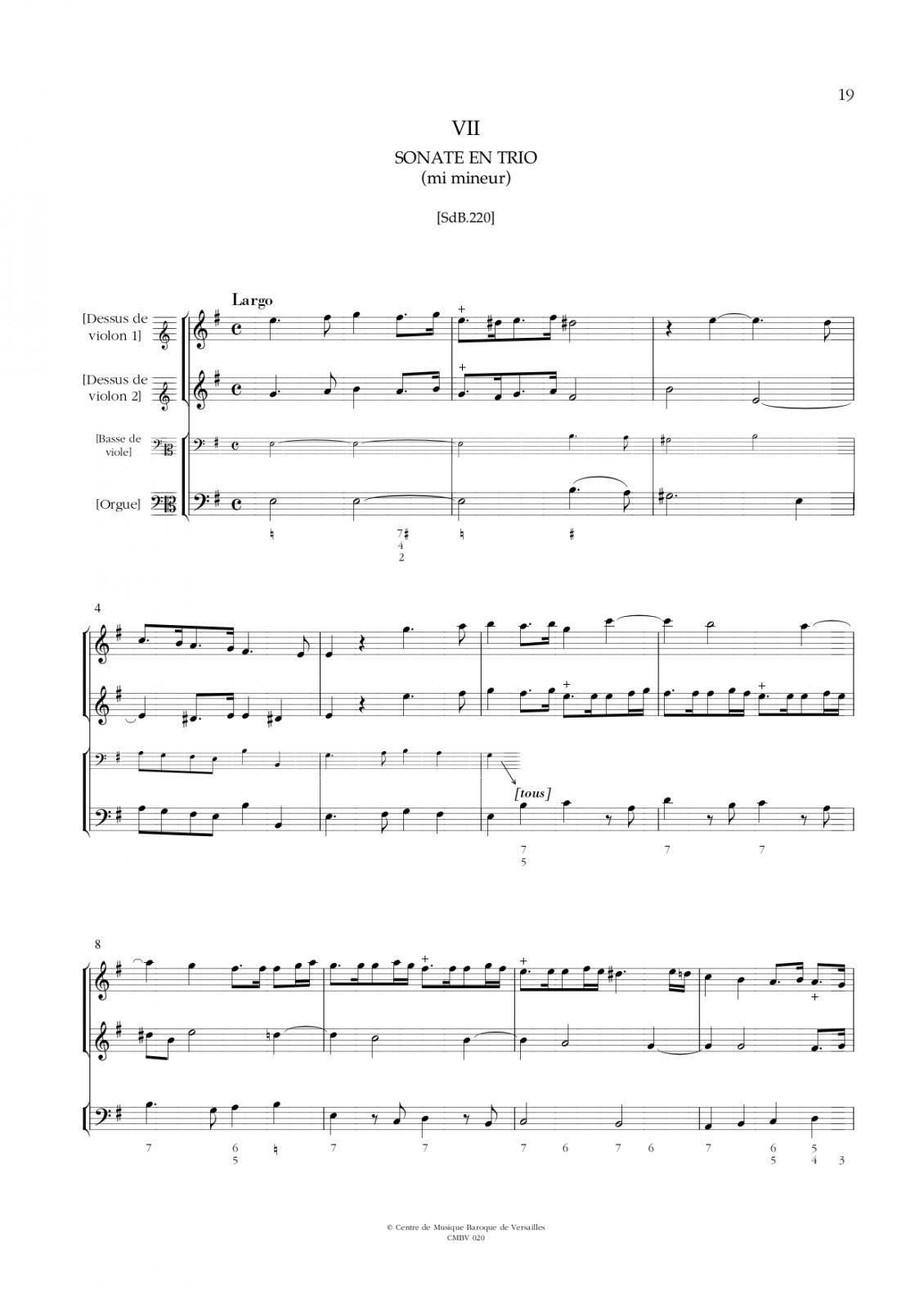
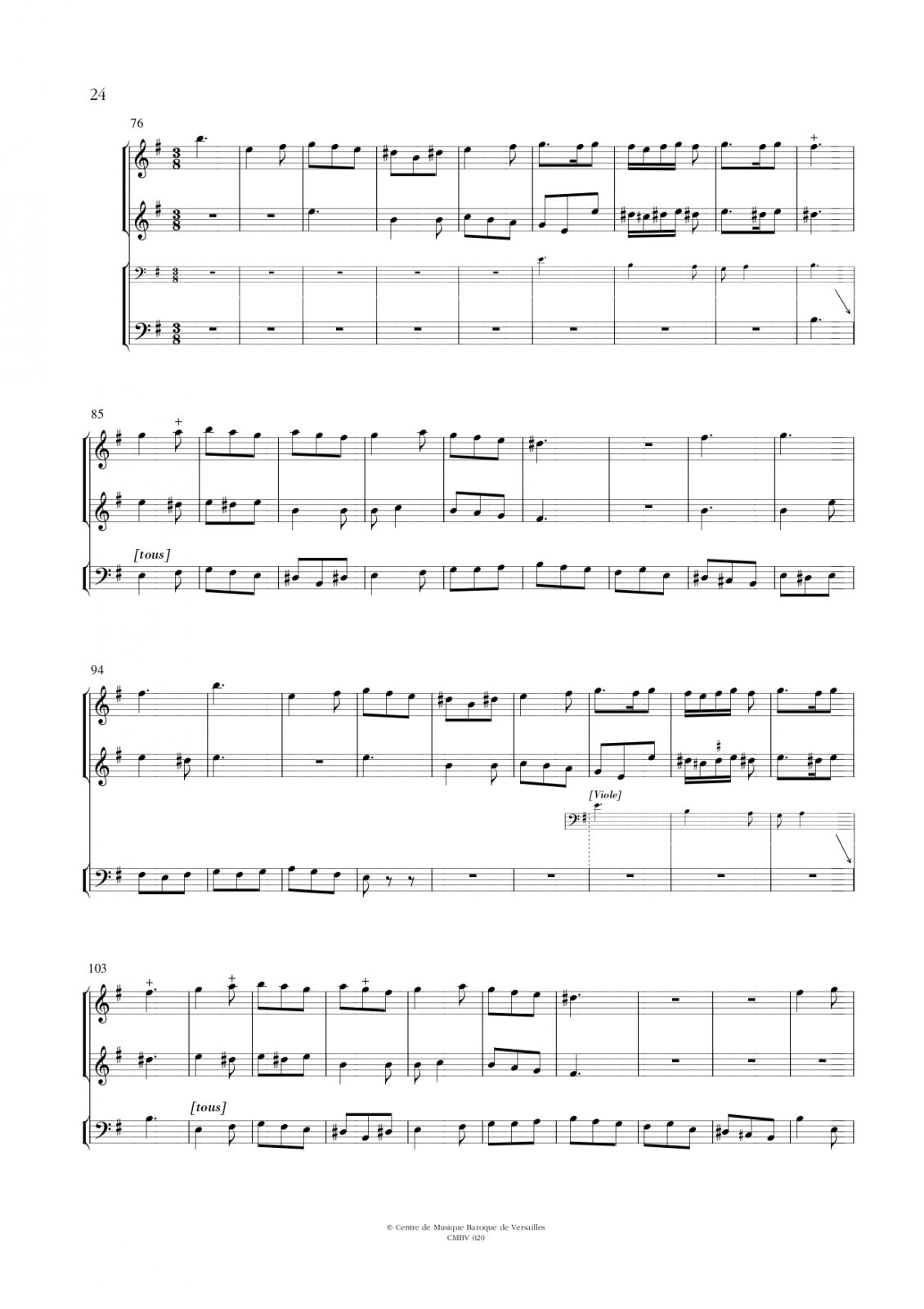
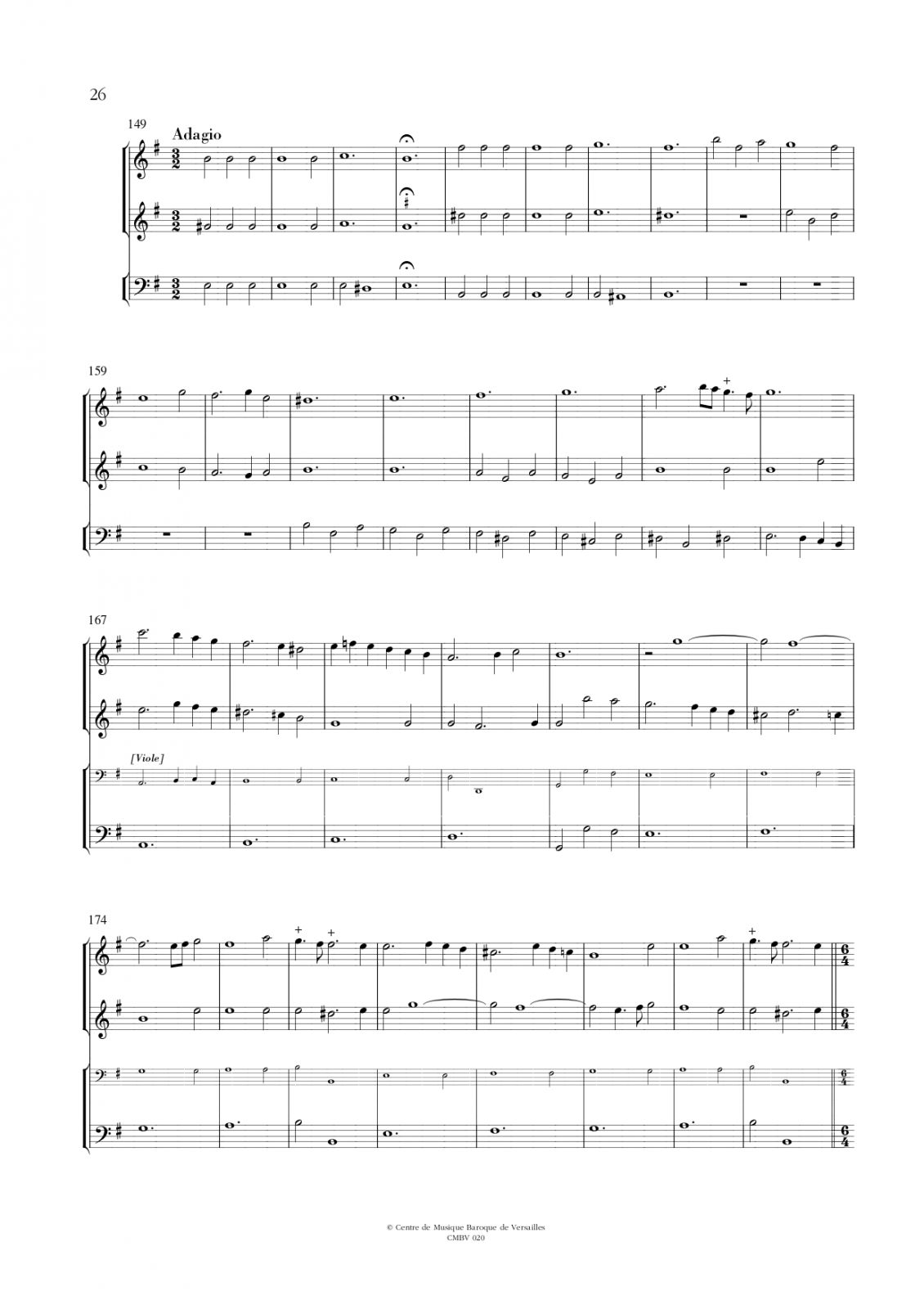
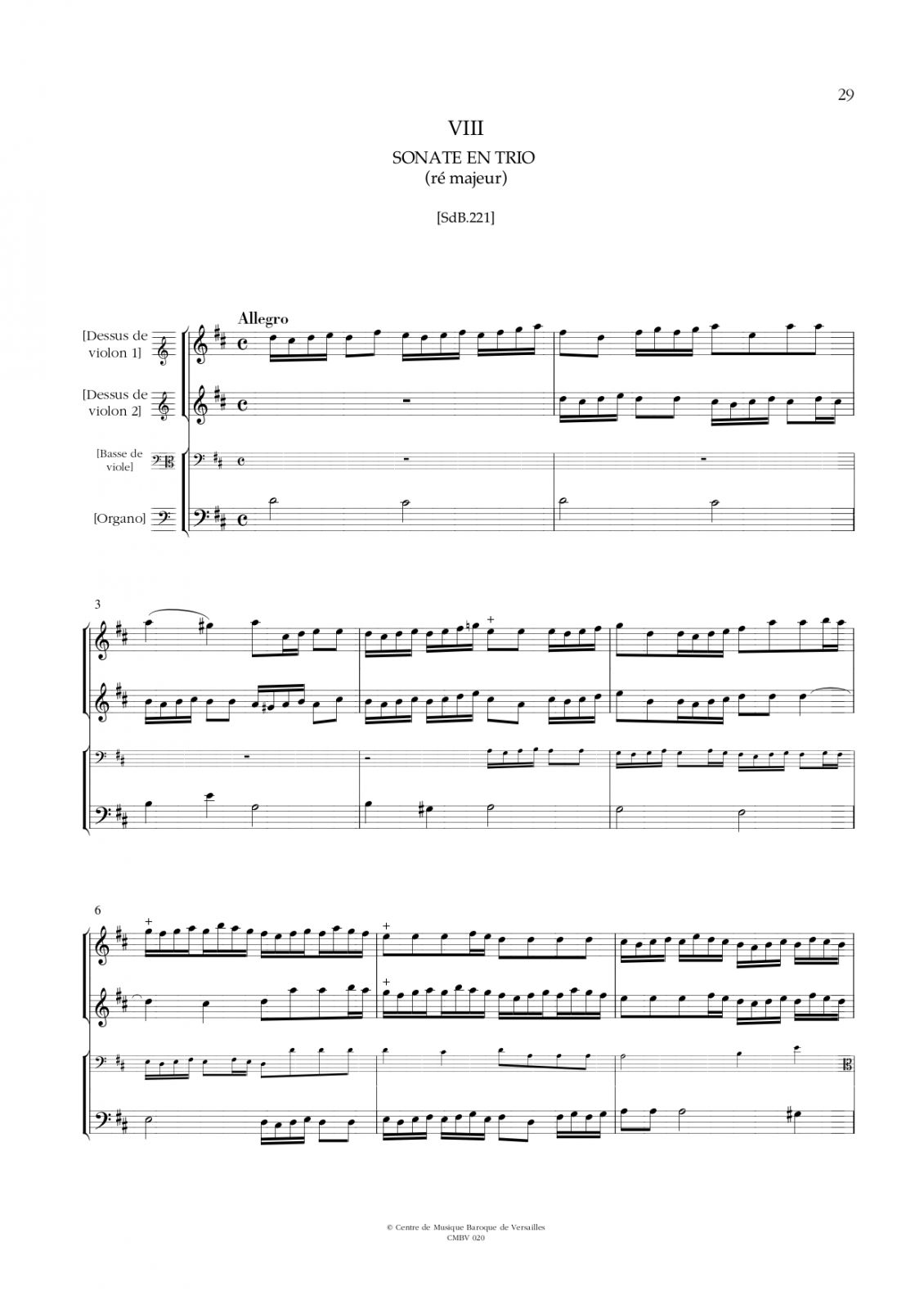
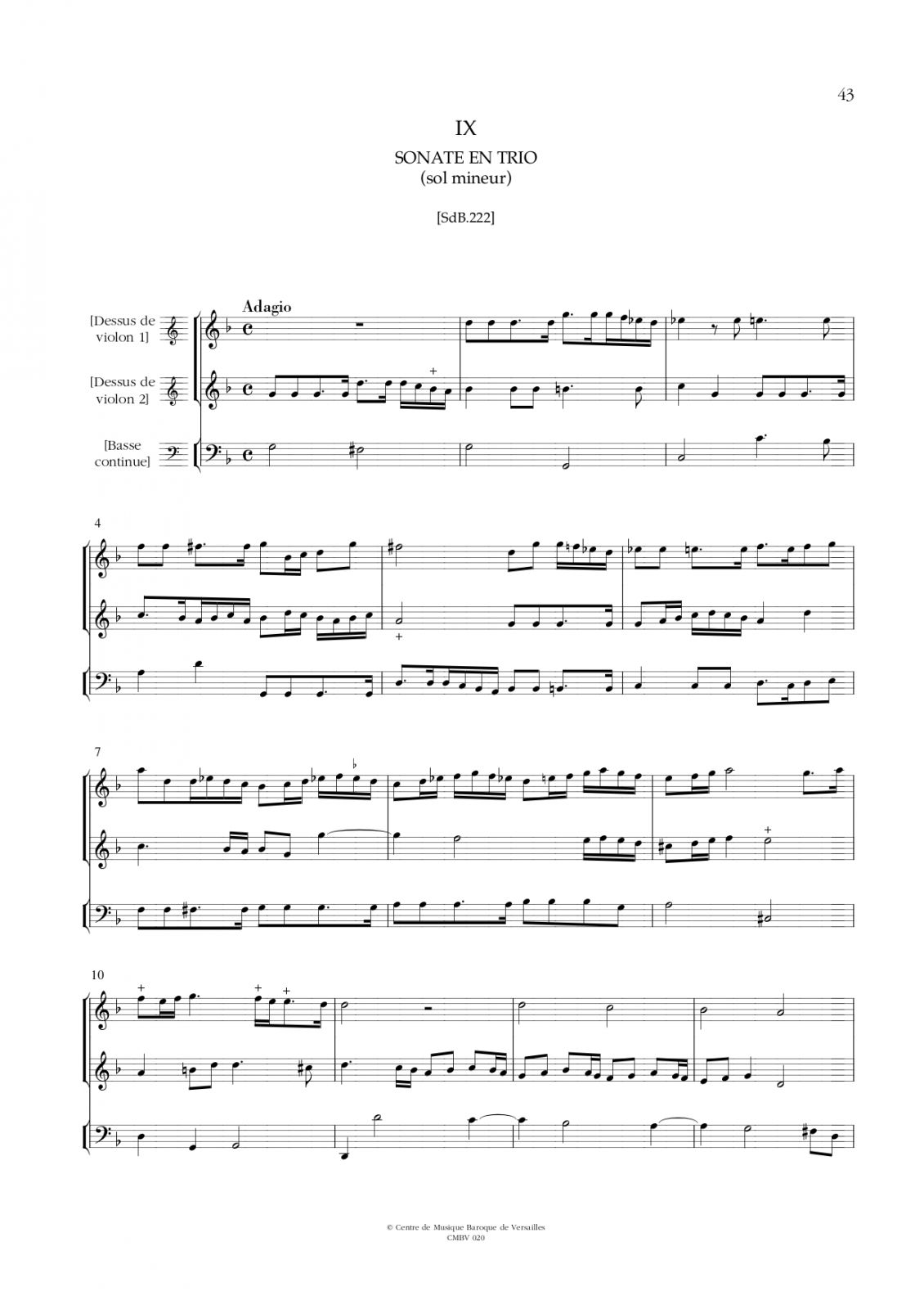
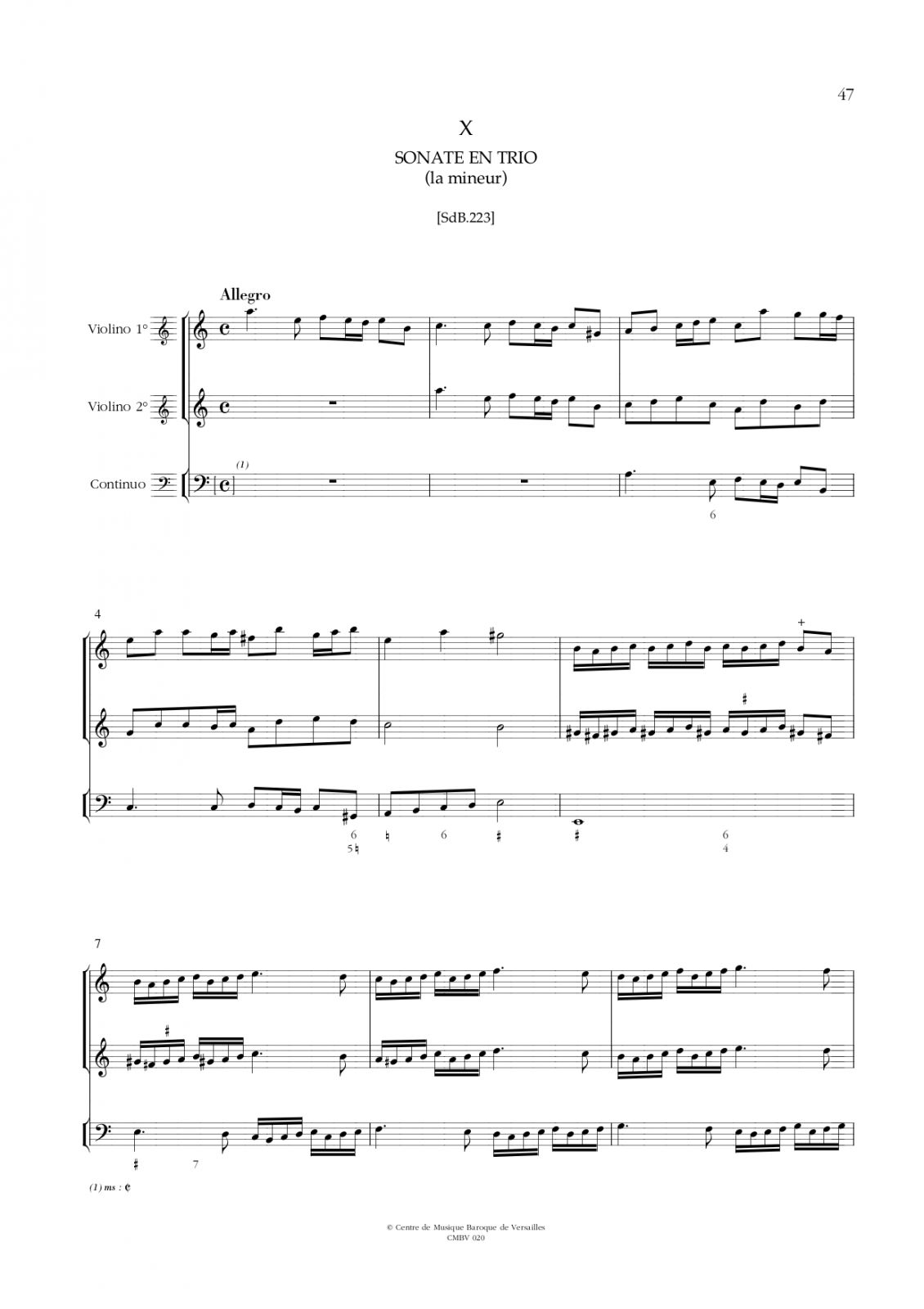
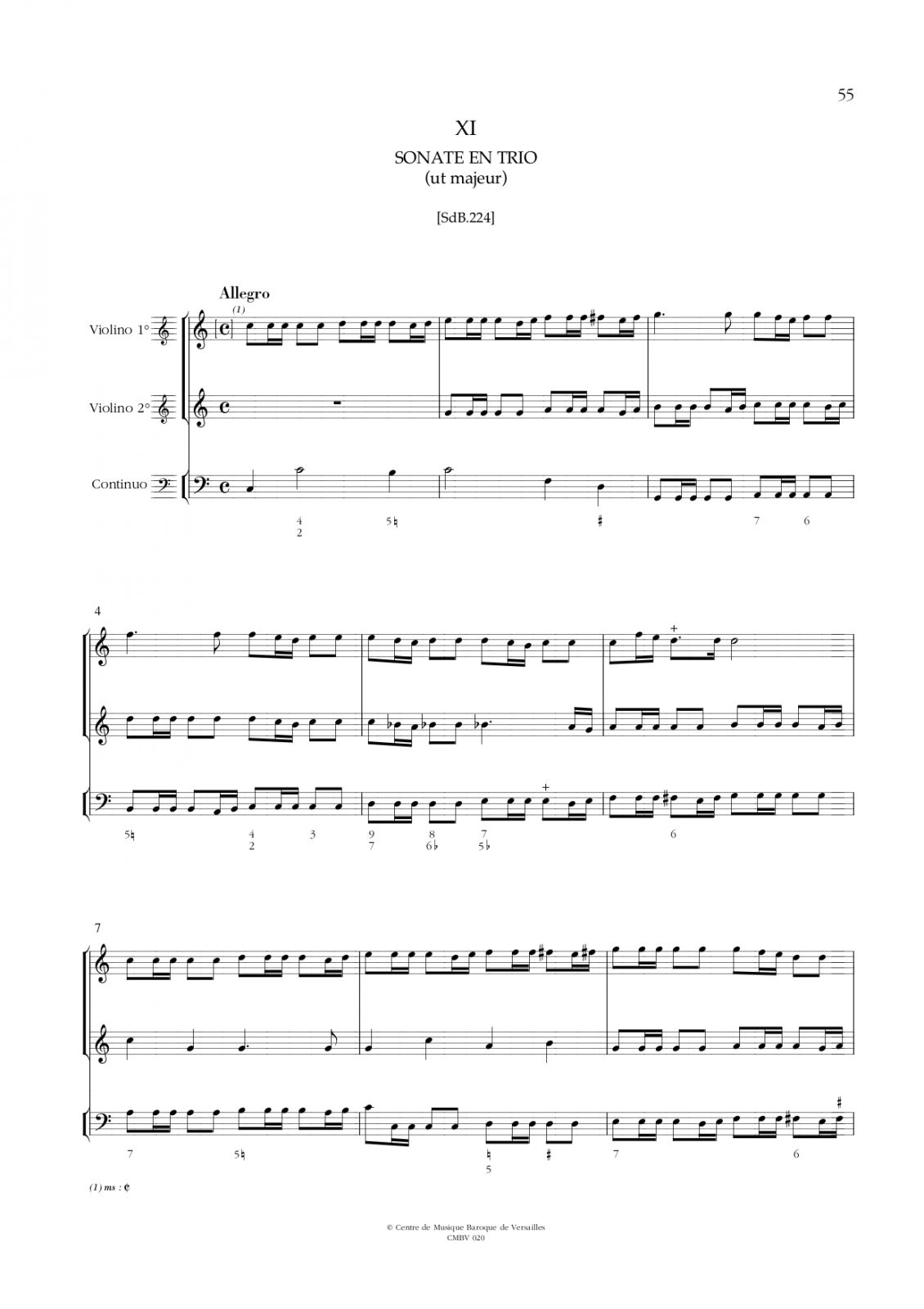
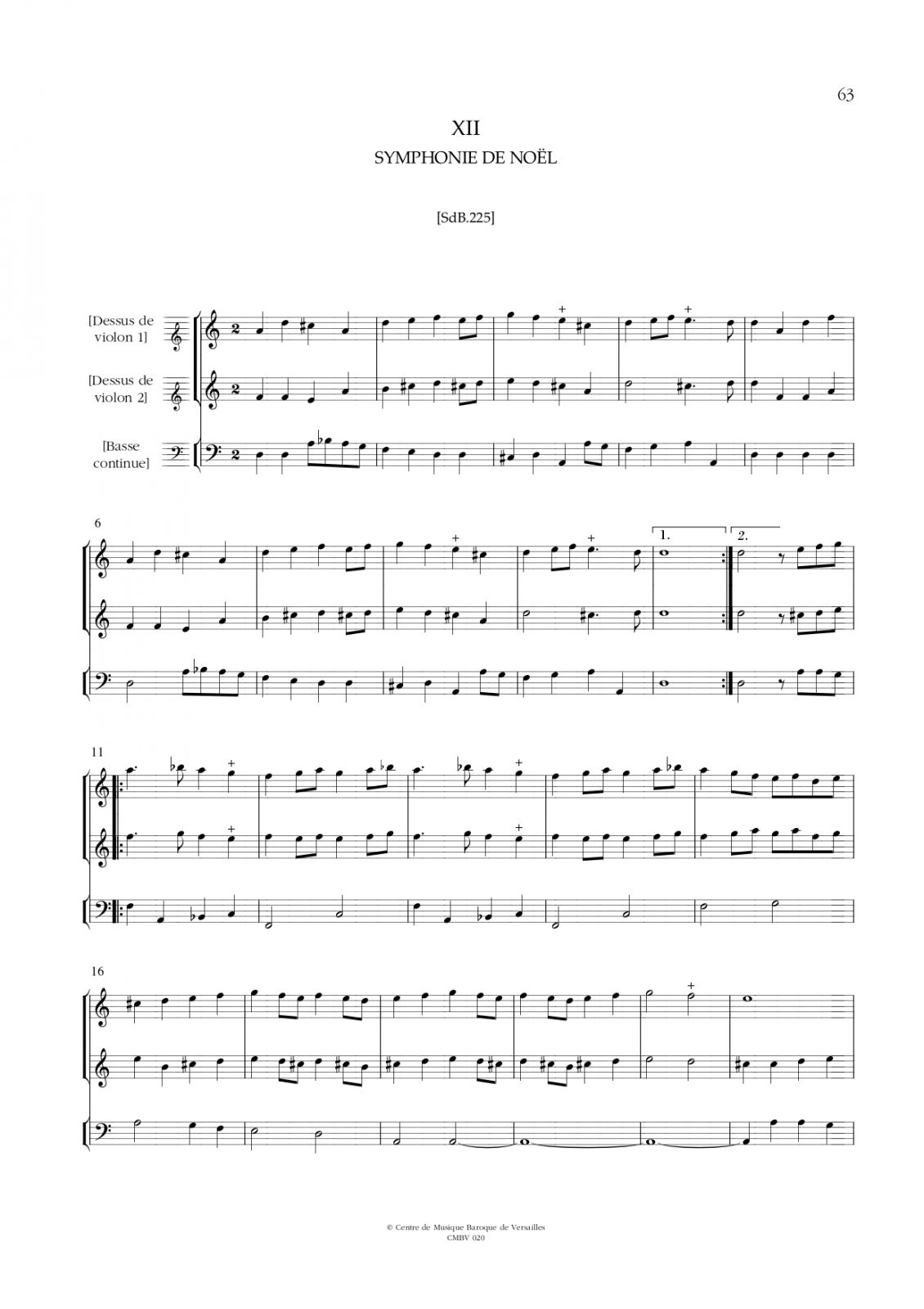
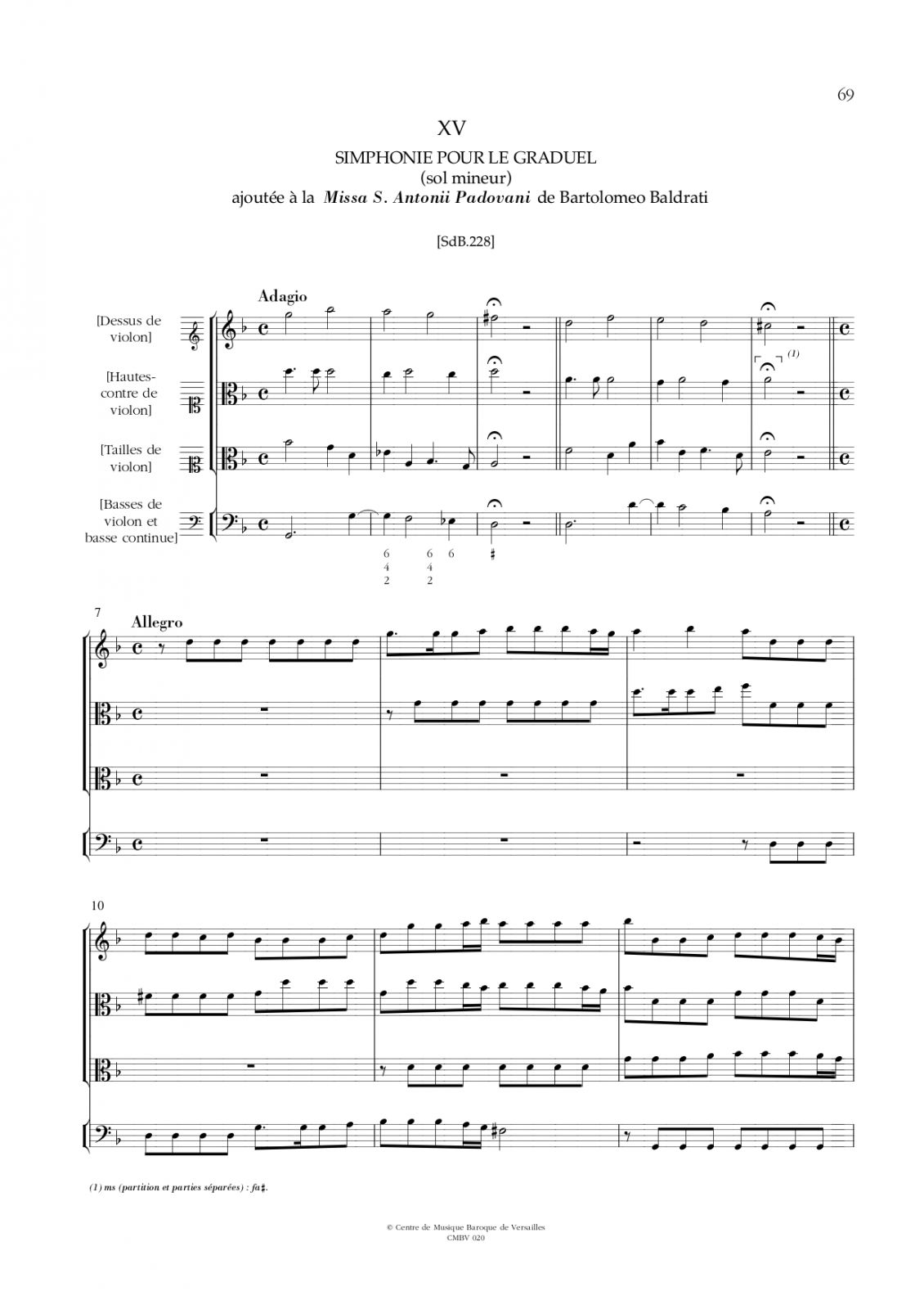


Sébastien de Brossard composed mainly for the voice. The 5 volumes previously published in the monumental edition devoted to him by the Centre de Musique Baroque de Versailles are proof enough of this: grands and petits motets, cantatas, oratorios, choral works etc. Yet his instrumental music highlights the enigma of the composer’s musical training. This immense theorist, supporter of tonal modernism and one of the few 17th-century musicians to make extensive collections of the music of his French, German and Italian contemporaries, was, by his own admission, self-taught. We still know nothing of this atypical curriculum in an age of guilds, corporations and apprenticeships with masters of counterpoint. It seems, however, that it was the lute that led him down the musical path; his unusual way of compiling, recopying and analysing his contemporaries’ musical to form his own style can be found as early as the 1670s, in connection with a collection for this family of instruments.
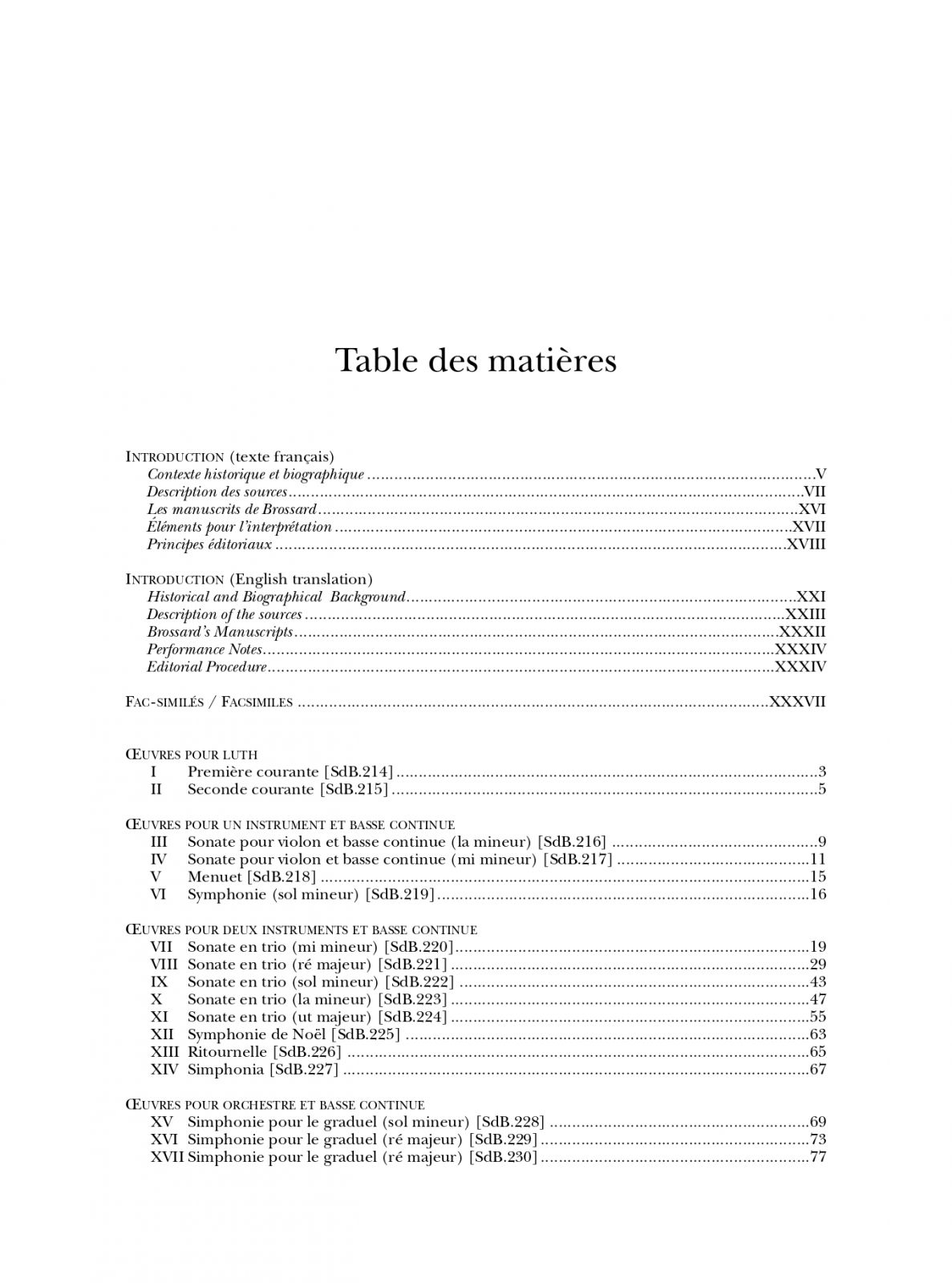
This critical edition brings together all the composer’s known instrumental pieces: pieces for lute and, above all, sonatas for 1 or 2 violins with continuo accompaniment, and music for orchestra. Sébastien de Brossard, always on the lookout for new developments, seized on the nascent sonata genre right from the start. He owned Corelli’s opus 3, Bassani’s opus 5, had had copied Bononcini’s Sinfonie, and (among his compatriots) possessed scores by Couperin, Rebel, Clérambault and Jacquet de la Guerre, whose music and performing he particularly admired. The legacy of his own work proves, as usual, to be equal to his models.
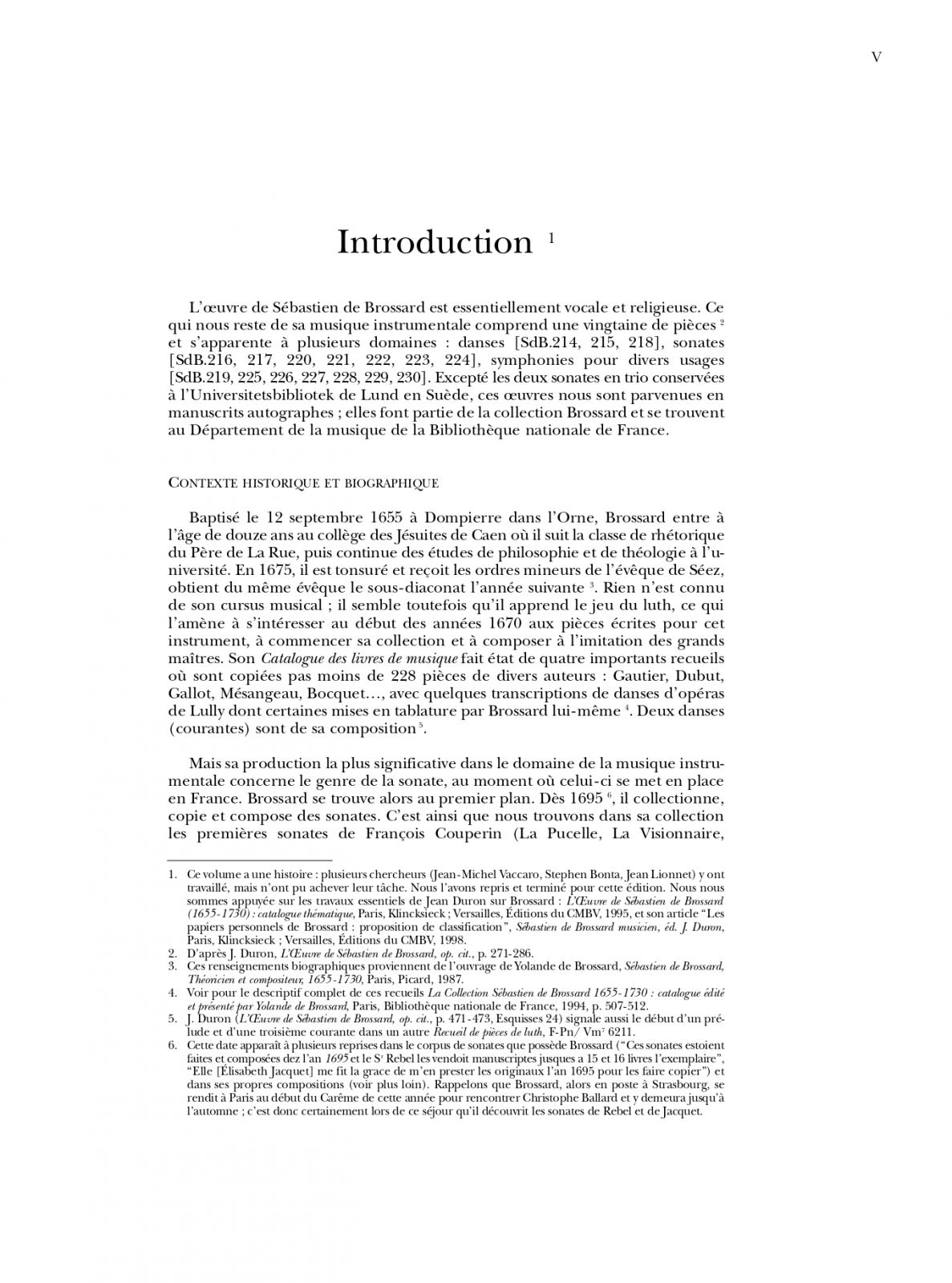
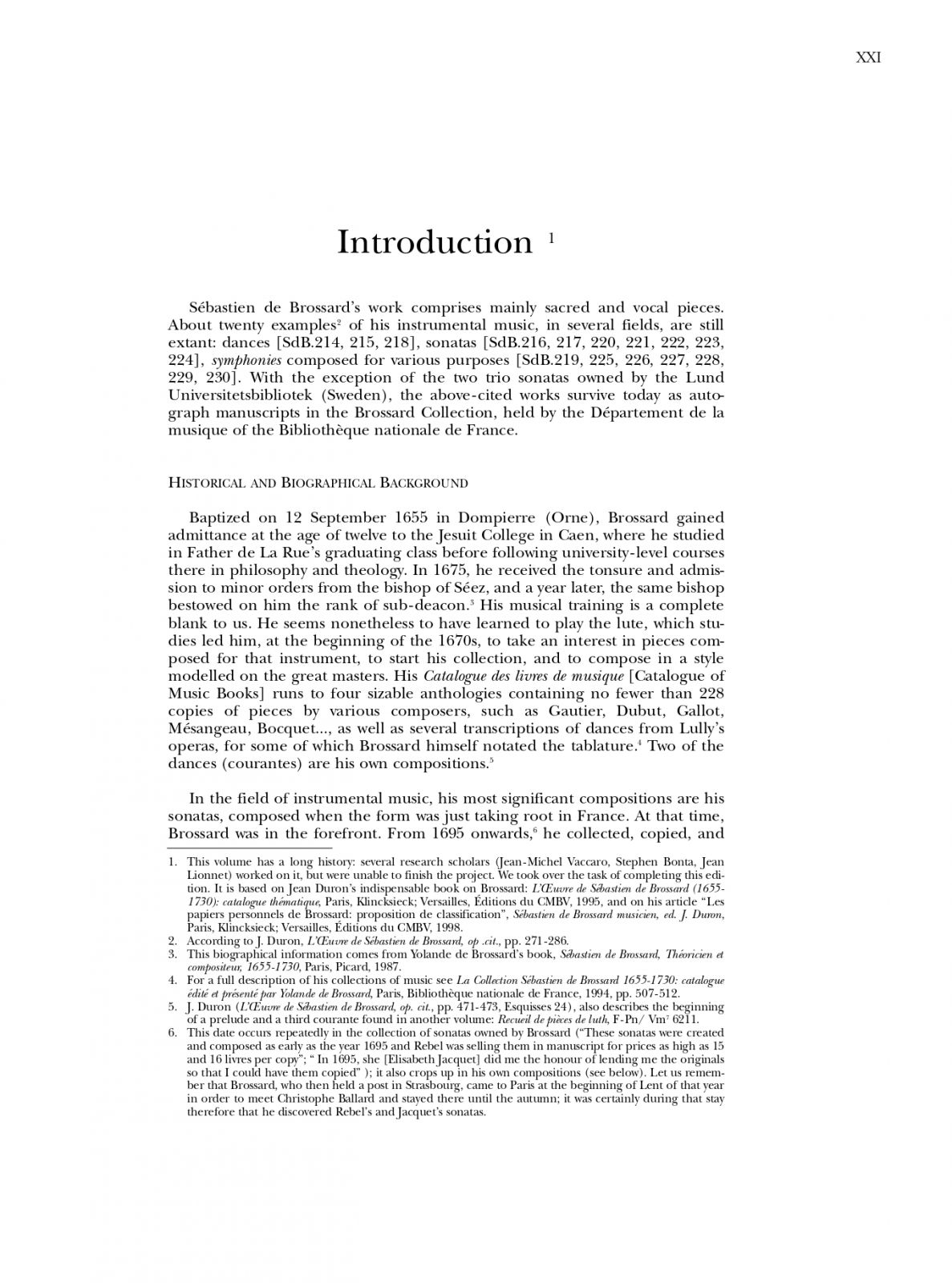
Catherine Cessac, director of research at the CNRS and a specialist in Marc-Antoine Charpentier, offers here, for the first time, the restoration of these pieces, Brossard’s manuscripts often being overloaded. To do this, she draws on the various sources of the works and on research carried out at the Centre de Musique Baroque de Versailles, where she works. In the preface to the volume, she sets out the historical and biographical context, describes the state of the sources, and discusses the problems posed by the manuscripts, all illustrated with numerous facsimile examples. The transcriptions are also available separately as sets of orchestral parts for performers.
Les œuvres
Recommandations


