

Le Triomphe d'Iris


Silvandre is the key player of this evening. He is both stage director and conductor. We watch the preparations.
Amour (Love) has taken on the amiable persona of a lady (Venus), the muse of all hearts, who is omnipresent. She inspires Silvandre, she even inspired Clérambault, she comes down to us from the 18th century and makes herself visible only when she so desires. And when she does, it is by borrowing other equally pleasing masks, like that of the Italian woman who will soon make her appearance, which allows her to be invited by Silvandre and thus take part in the evening without yet revealing anything of her scheme. Her plan – as we shall soon discover – is to give an amiable mortal the power that, until now, only Love has held. Iris, the lucky chosen one, has all the charms, embodies all women, and all women will therefore benefit from her triumph. From now on, Love will find a place in each and every one of them ...
For the moment, Silvandre is receiving the "shepherds and shepherdesses" who have been invited. The aim is to celebrate Love in his temple, and to present various stories of budding love, all in fine company.
For the first of these stories, Silvandre has chosen Silvie and Daphnis: "How difficult it is for a lover to be heard by the one he loves, and for his beloved to confess her feelings ...".
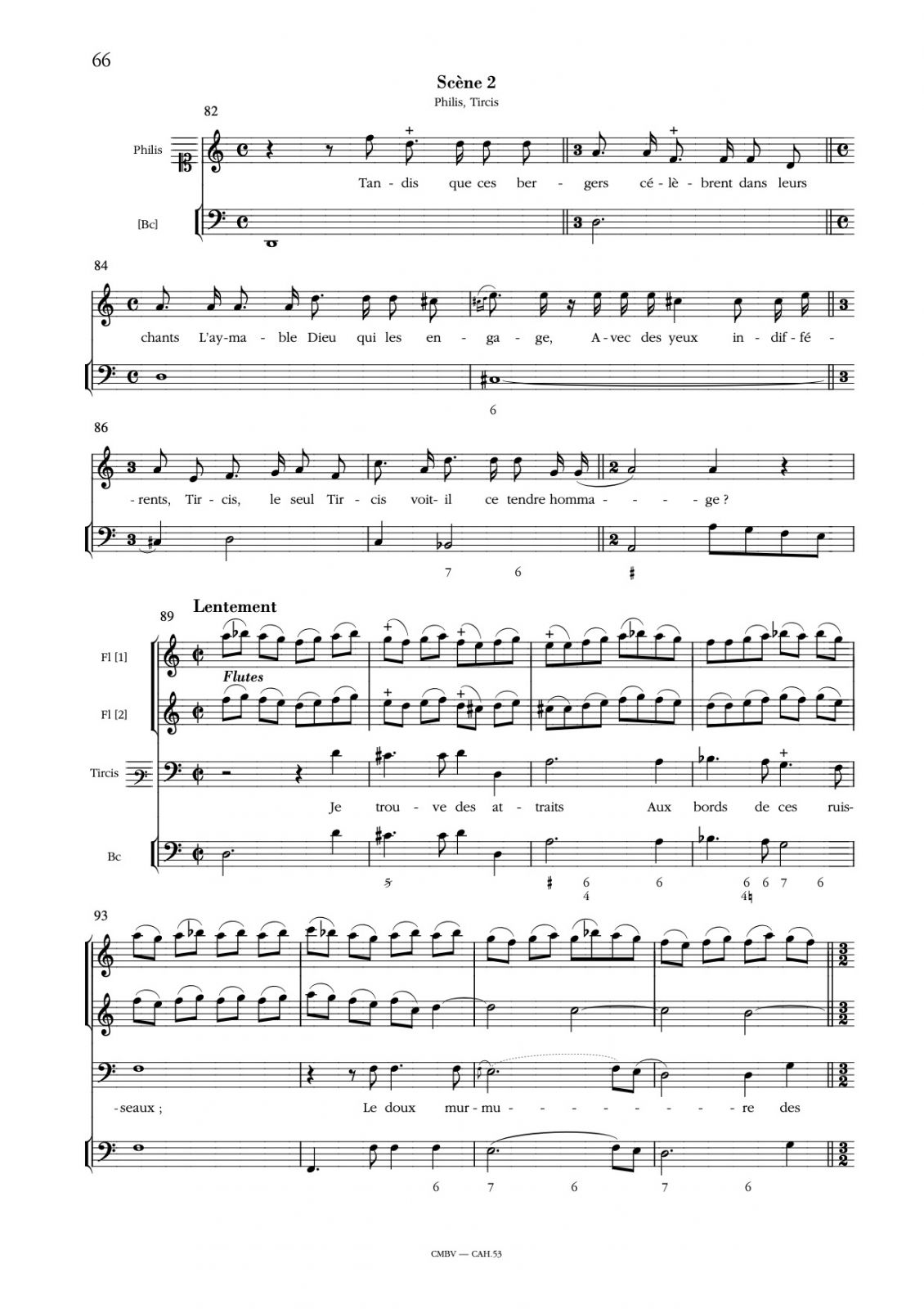
Tircis and Philis give substance to the couple of the second entrée: the melancholy one is rewarded for his constancy by his beloved. This will delight the company.
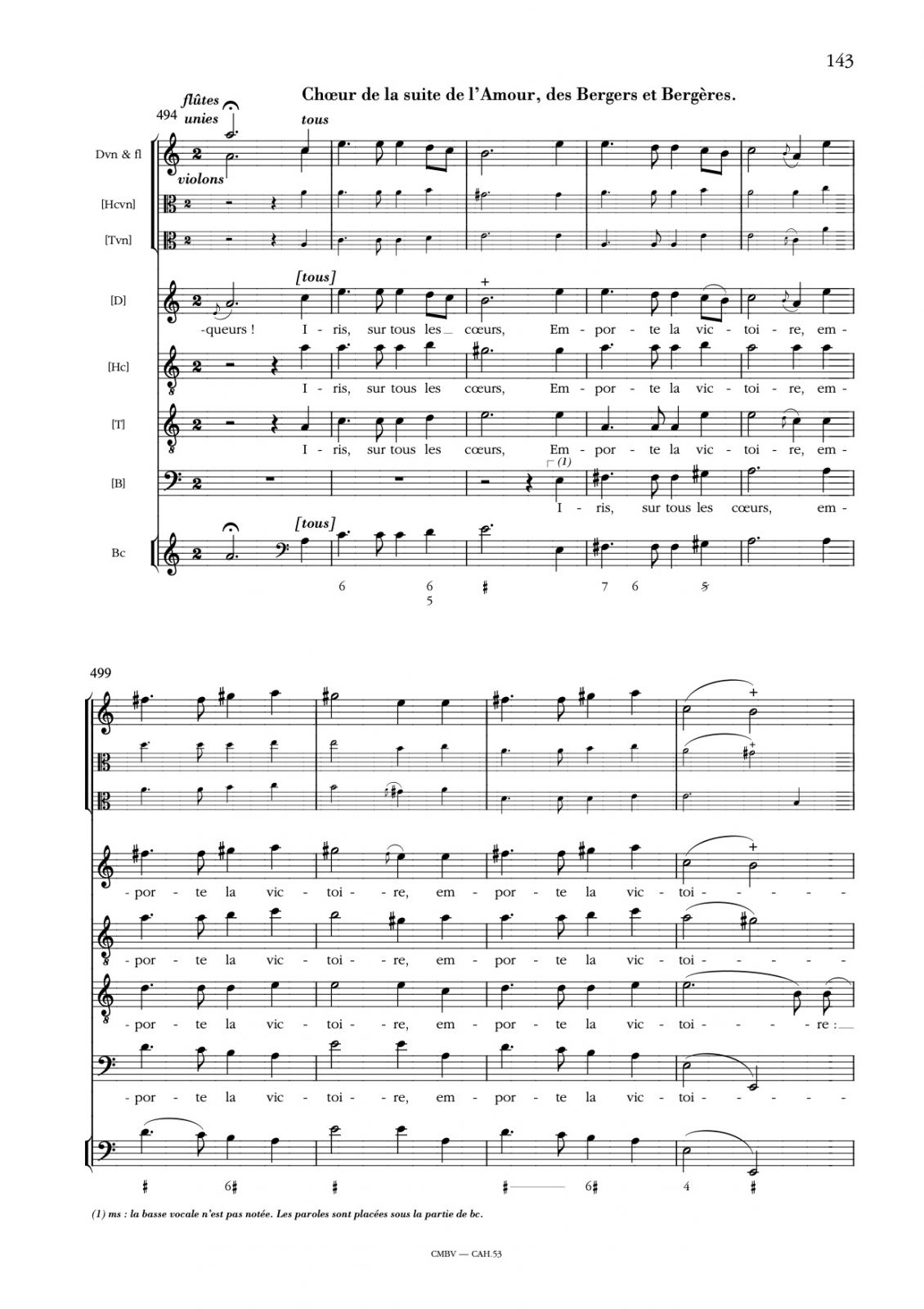
Silvie and Daphnis finally meet again in the third entrée, but without any witnesses. Left to their own feelings, they will recognise that they are both driven by the same love. Love had not abandoned them – far from it. He will reveal himself in broad daylight (under the guise of Venus once more) and give to each of the "shepherdesses" present a piece of himself – a bow or a quiver – or perhaps simply a mask. Each of them turns into a triumphant Iris.
(Christophe Galland – 1998)
Les œuvres
Recommandations


