
Partition
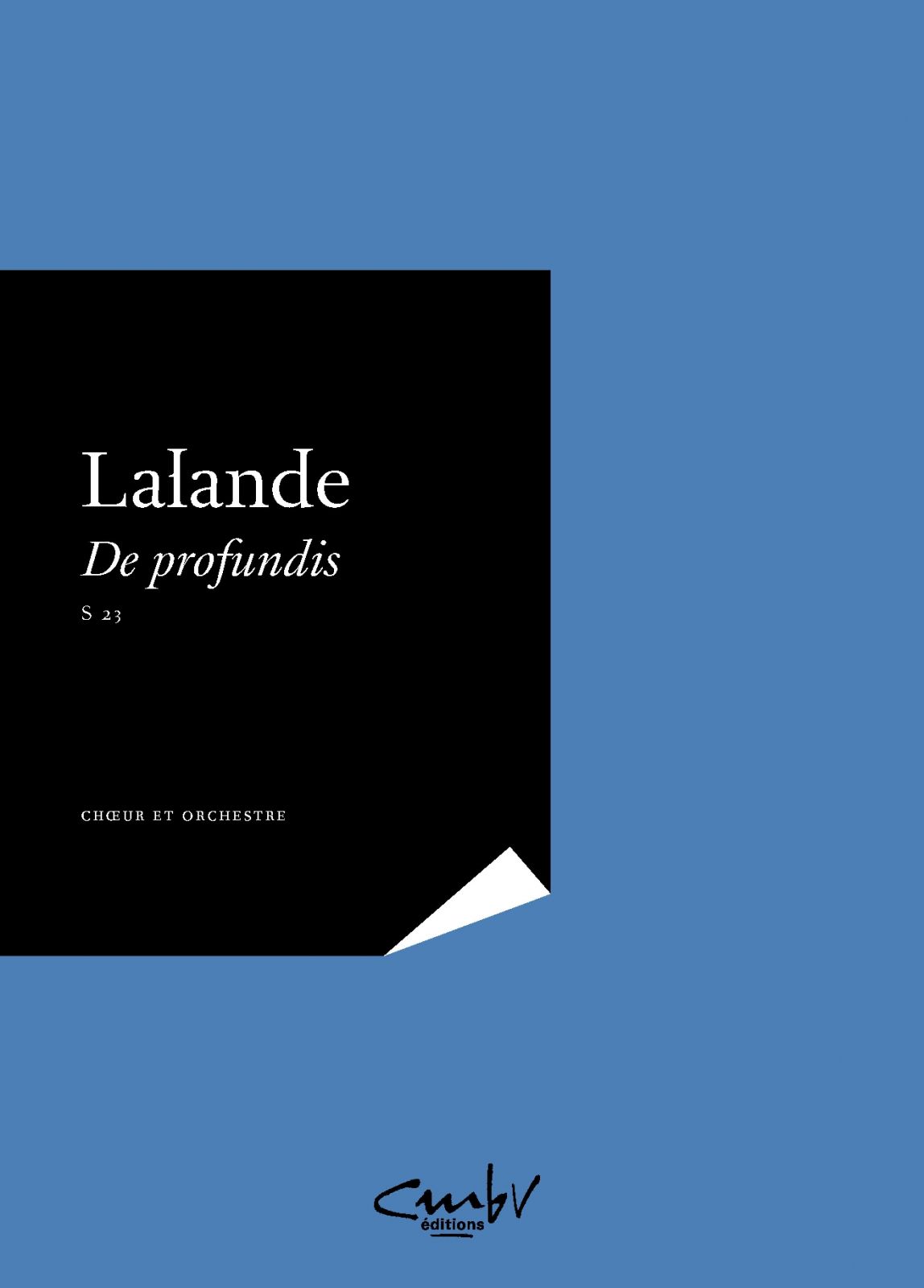
De Profundis (1689) (Expodcast#1)
Michel-Richard de LALANDE
(1657-1726)
Référence : CAHIERS-223
Format :
22,5x31 cm
Reliure : Broché
37,50 € TTC
En stock
Michel-Richard de LALANDE
(1657-1726)
Editeur(s) :
Louis CASTELAIN
Collection :
Chœur et orchestre
Type d’édition :
Conducteur
Maison d'édition :
Editions du Centre de musique baroque de Versailles
Présentation :
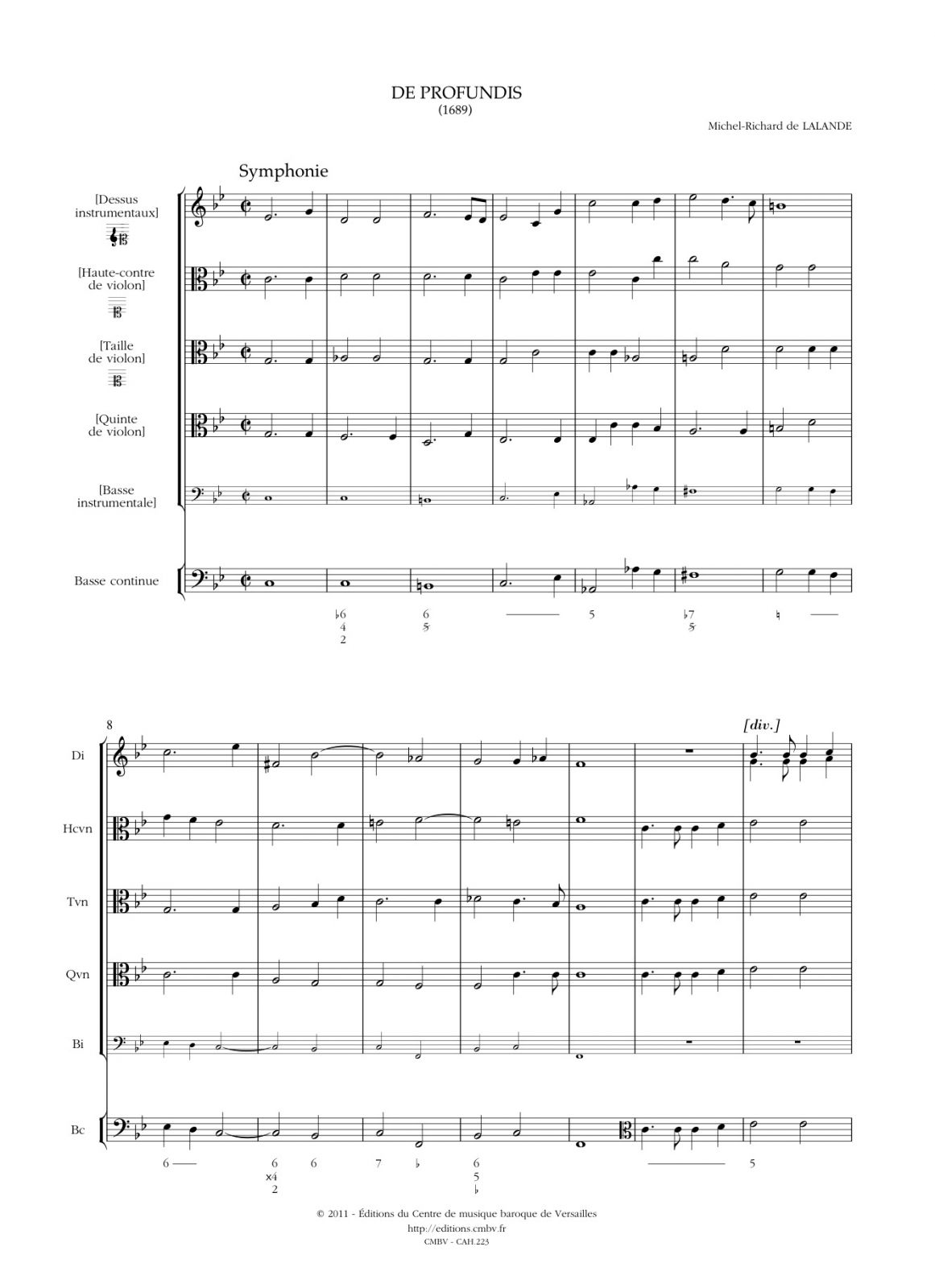
Lalande’s De profundis, based on Psalm 129, is one of the masterpieces of the French repertoire, at once majestic, grave and poignant. It requires 8 soloists (3 dessus, 2 hautes-contre, 1 taille, 1 basse-taille and 1 basse), a 5-voice choir (divided dessus, hautes-contre, tailles, basses-tailles and basses) and a 5-part French orchestra (with hautes-contre, tailles and quintes de violons).----
According to Lionel Sawkins, this earliest known version of Lalande’s De profundis (from the Philidor collection, copied in 1689-1690) may have been composed for the funeral of Queen Marie-Louise of Spain, daughter of Louis XIV’s brother Philippe, Duc d'Orléans, and Henriette of England. Lalande later revised his work extensively. The interest of this version, hitherto unpublished due to the complexity of the copy, is in a style that remains ambiguous between the 17th-century double-choir motet and the 18th-century grand motet, where the "petit chœur" tends to disappear in favour of more distinct solo and choral sections.
A Parisian by birth, Michel-Richard de Lalande (1657–1726) began his musical career as organist at several of the capital’s churches, notably Saint-Gervais, where he took over from the late Charles Couperin and the latter’s son, François Couperin, who was too young to take on the task. He then became harpsichord master to Mademoiselle de Noailles and the recognised daughters of Louis XIV, before being called to the Court, where he held a number of important positions, including Sous-maître de la Chapelle royale, Compositeur, Superintendant and Maître de la Musique de la Chambre. He was one of the most important musicians of his time, and probably the most influential composer of sacred music.
According to Lionel Sawkins, this earliest known version of Lalande’s De profundis (from the Philidor collection, copied in 1689-1690) may have been composed for the funeral of Queen Marie-Louise of Spain, daughter of Louis XIV’s brother Philippe, Duc d'Orléans, and Henriette of England. Lalande later revised his work extensively. The interest of this version, hitherto unpublished due to the complexity of the copy, is in a style that remains ambiguous between the 17th-century double-choir motet and the 18th-century grand motet, where the "petit chœur" tends to disappear in favour of more distinct solo and choral sections.
A Parisian by birth, Michel-Richard de Lalande (1657–1726) began his musical career as organist at several of the capital’s churches, notably Saint-Gervais, where he took over from the late Charles Couperin and the latter’s son, François Couperin, who was too young to take on the task. He then became harpsichord master to Mademoiselle de Noailles and the recognised daughters of Louis XIV, before being called to the Court, where he held a number of important positions, including Sous-maître de la Chapelle royale, Compositeur, Superintendant and Maître de la Musique de la Chambre. He was one of the most important musicians of his time, and probably the most influential composer of sacred music.
Pagination :
88
Date de parution :
2011-05
Introduction (langue) :
Français
ISMN 979-0-56016-223-2
Les œuvres
Langue du texte :
Latin
Genre :
motet
Temps liturgique
Défunts
Ton :
do mineur
Durée :
entre 20' et 29'